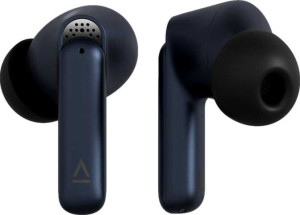
Creative Aurvana Ace Mimi
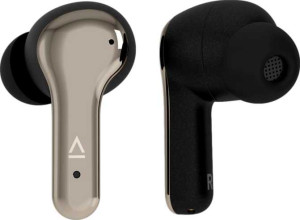
Creative Aurvana Ace SXFI

Creative Aurvana Ace Mimi Creative Aurvana Ace SXFI

Overview

Choosing between the Creative Aurvana Ace Mimi and the Creative Aurvana Ace SXFI is no easy task, as both earbuds share a remarkably similar foundation — from their IPX5 water resistance and ANC capabilities to their 6-microphone setup and wireless charging support. Yet several key distinctions set them apart, including differences in weight, audio frequency range, codec support, and battery performance. This detailed spec comparison will help you determine which of these two in-ear companions is the right fit for your lifestyle and listening needs.

Common Features

  • Both products use an in-ear fit design.
  • Both products have an IPX5 ingress protection rating, making them water resistant.
  • Both products are fully wireless with no wires or cables.
  • Neither product is a neckband earbud style.
  • Neither product includes wingtips.
  • Neither product features RGB lighting.
  • Both products have stereo speakers.
  • Both products support active noise cancellation (ANC).
  • Both products offer passive noise reduction.
  • Both products use a 10 mm driver unit size.
  • Both products have a lowest frequency of 5 Hz.
  • Spatial audio is not supported on either product.
  • Dolby Atmos is not available on either product.
  • Dirac Virtuo is not available on either product.
  • Neither product uses a neodymium magnet.
  • Both products have a charge time of 1.5 hours.
  • Wireless charging is available on both products.
  • Neither product has a solar power battery.
  • Both products have a battery level indicator.
  • Both products have a rechargeable battery.
  • Fast pairing is not available on either product.
  • Both products have a USB Type-C connector.
  • Both products use Bluetooth version 5.3.
  • LDHC support is not available on either product.
  • aptX Adaptive support is not available on either product.
  • aptX Low Latency support is not available on either product.
  • aptX HD support is not available on either product.
  • aptX support is not available on either product.
  • Both products have an ambient sound mode.
  • Neither product has in/on-ear detection.
  • Both products support fast charging.
  • Neither product can read notifications.
  • Both products have a mute function.
  • Both products can be used as a headset.
  • Both products have a control panel placed on the device.
  • Both products come with a 1-year warranty.
  • Both products have 6 microphones.
  • Both products feature a noise-canceling microphone.

Main Differences

  • Weight is 9.4 g on Creative Aurvana Ace Mimi and 12 g on Creative Aurvana Ace SXFI.
  • The highest frequency reaches 40000 Hz on Creative Aurvana Ace Mimi and 20000 Hz on Creative Aurvana Ace SXFI.
  • Battery life is 7 hours on Creative Aurvana Ace Mimi and 8 hours on Creative Aurvana Ace SXFI.
  • Battery life of the charging case is 21 hours on Creative Aurvana Ace Mimi and 20 hours on Creative Aurvana Ace SXFI.
  • LDAC support is present on Creative Aurvana Ace Mimi but not available on Creative Aurvana Ace SXFI.
  • Bluetooth LE Audio support is present on Creative Aurvana Ace Mimi but not available on Creative Aurvana Ace SXFI.
Specs Comparison
Creative Aurvana Ace Mimi

Creative Aurvana Ace Mimi

Creative Aurvana Ace SXFI

Creative Aurvana Ace SXFI

Design:
Fit In-ear In-ear
Ingress Protection (IP) rating IPX5 IPX5
water resistance Water resistant Water resistant
weight 9.4 g 12 g
has no wires or cables
are neckband earbuds
wingtips included
has RGB lighting
has stereo speakers
has UV light
Has a display

From a design standpoint, the Creative Aurvana Ace Mimi and the Creative Aurvana Ace SXFI share a nearly identical profile: both are true wireless in-ear earbuds with an IPX5 water-resistance rating, meaning they can handle sweat and rain splashes without issue — a solid standard for active use. Neither model uses a neckband, includes wingtips, features RGB lighting, or incorporates a display, so the overall form factor and feature set are essentially the same on paper.

The only concrete differentiator within this group is weight. The Ace Mimi comes in at 9.4 g per earbud, while the Ace SXFI is noticeably heavier at 12 g. That roughly 2.6 g difference per ear may sound trivial, but for in-ear earbuds worn for extended sessions, lighter units reduce listener fatigue and ear canal pressure over time — a meaningful comfort advantage, particularly for long commutes or workouts.

On design, the Ace Mimi holds a clear edge strictly due to its lower per-earbud weight. All other design attributes — fit type, water resistance, wireless build, and form factor — are evenly matched between the two.

Sound quality:
has active noise cancellation (ANC)
has passive noise reduction
driver unit size 10 mm 10 mm
lowest frequency 5 Hz 5 Hz
highest frequency 40000 Hz 20000 Hz
supports spatial audio
has Dolby Atmos
has Dirac Virtuo
has a neodymium magnet

Both earbuds share a strong common foundation for sound quality: identical 10 mm driver units, a low-end floor of 5 Hz that reaches well below the threshold of human hearing, and dual-layer noise isolation via both active noise cancellation and passive noise reduction. The ANC implementation on each model addresses ambient noise electronically, while the physical in-ear fit contributes additional passive blocking — a combination that meaningfully improves perceived audio clarity in noisy environments.

The single but significant divergence is the upper frequency ceiling. The Ace Mimi extends to 40,000 Hz, double the 20,000 Hz ceiling of the Ace SXFI. Human hearing typically tops out around 20,000 Hz, so neither product delivers frequencies you can consciously hear — however, the extended high-frequency response of the Ace Mimi can contribute to a subtly more natural, airy reproduction of high-frequency harmonics, a characteristic often noted in hi-res audio discussions even if its perceptual impact is debated.

Neither model supports spatial audio, Dolby Atmos, or Dirac Virtuo, so the soundstage experience is limited to standard stereo on both. Overall, the Ace Mimi holds a technical edge in this group solely due to its wider frequency range — all other sound quality specifications are evenly matched.

Power:
Battery life 7 hours 8 hours
Battery life of charging case 21 hours 20 hours
charge time 1.5 hours 1.5 hours
has wireless charging
Has a solar power battery
has a battery level indicator
has a rechargeable battery

Power management is remarkably close between these two models, with a few nuances worth unpacking. Both charge in 1.5 hours, support wireless charging, and include a battery level indicator — conveniences that put them on equal footing for day-to-day usability. Wireless charging in particular is a practical perk at this product tier, eliminating cable dependency for top-ups.

Where they diverge is in the balance between earbud and case endurance. The Ace SXFI delivers 8 hours of per-earbud playback versus 7 hours for the Ace Mimi — a one-hour gap that matters if you regularly push through long flights or full workdays without reaching for the case. The Ace Mimi partially compensates with a case that provides 21 hours of additional charge compared to the SXFI's 20 hours, but that single extra hour in the case does not offset the earbud deficit in total combined endurance (28 hours vs. 28 hours — effectively a wash when totaled).

In practical terms, the deciding factor comes down to usage pattern: if you frequently need extended single-session listening without case access, the Ace SXFI holds a narrow edge. For most users who recase their earbuds regularly, the two are functionally tied on power.

Connectivity:
has fast pairing
Has USB Type-C
Bluetooth version 5.3 5.3
has LDAC
has LDHC
has Bluetooth LE Audio
has aptX Adaptive
has aptX Low Latency
has aptX HD
has aptX
has aptX Lossless
has aptX Voice
has Auracast
maximum Bluetooth range 10 m 10 m
supports Bluetooth pairing using NFC
Can be used wirelessly
has AAC

At the infrastructure level, these two earbuds are identical: both run on Bluetooth 5.3, top out at a 10 m wireless range, support AAC, use USB-C for wired charging, and lack fast pairing or NFC. For most listeners, this shared baseline delivers reliable, modern wireless connectivity without friction.

The meaningful separation comes from two codec and protocol advantages exclusive to the Ace Mimi. First, it supports LDAC — Sony's high-resolution wireless codec capable of transmitting up to three times the data of standard Bluetooth audio — which can yield noticeably more detail and fidelity when paired with a compatible source playing high-res audio files. Second, the Ace Mimi includes Bluetooth LE Audio, a next-generation standard built on the LC3 codec that promises improved audio quality at lower power consumption and lays the groundwork for multi-stream and broadcast audio features. The Ace SXFI supports neither, leaving it reliant solely on AAC for compression.

Connectivity is a clear win for the Ace Mimi. LDAC alone is a substantial advantage for audiophile-leaning users, and LE Audio adds longer-term compatibility headroom. Users satisfied with standard AAC streaming will find the SXFI adequate, but those who prioritize wireless audio fidelity have a definitive reason to choose the Mimi.

Features:
release date January 2025 January 2025
has ambient sound mode
has in/on-ear detection
Supports fast charging
can read notifications
has a mute function
can be used as a headset
control panel placed on a device
warranty period 1 years 1 years
Has voice prompts
travel bag is included
Has an in-line control panel
Has a temperature sensor
Has a built-in camera remote control function

Across every feature in this category, the Creative Aurvana Ace Mimi and the Creative Aurvana Ace SXFI are a perfect match. Both offer ambient sound mode for situational awareness, fast charging, a mute function, on-device controls, voice prompts, headset capability for calls, and even a travel bag included in the box — all under the same 1-year warranty.

A few notable absences apply equally to both: neither model includes in-ear detection, which means audio will not automatically pause when an earbud is removed — a convenience gap that some competing earbuds in this segment do address. Notification readout is also absent on both, keeping the feature set focused rather than assistant-heavy.

This group is a complete tie. There is no differentiator here whatsoever — a user choosing between these two models based solely on features will find identical utility on every measurable point in this category.

Microphone:
number of microphones 6 6
has a noise-canceling microphone

Microphone hardware is identical across both models: each earbud array totals 6 microphones combined with noise-canceling processing. A six-mic configuration is a strong count for true wireless earbuds, enabling more sophisticated beamforming and wind noise rejection compared to simpler two- or four-mic setups — a genuine asset for call quality in busy or outdoor environments.

The noise-canceling microphone designation on both confirms that the mic array is actively processed to isolate the speaker's voice and suppress background noise, rather than relying purely on passive pickup. This matters practically for anyone using these as a work headset or taking calls on the move.

With no differences to distinguish them, this category is a straightforward tie. Both the Ace Mimi and the Ace SXFI arrive equally equipped for voice capture, and neither holds any advantage here.

Comparison Summary & Verdict

Both the Creative Aurvana Ace Mimi and the Creative Aurvana Ace SXFI deliver a strong shared feature set, but their differences reveal distinct audiences. The Creative Aurvana Ace Mimi stands out for audiophiles and connectivity-focused users: it is notably lighter at 9.4 g, reaches an impressive 40000 Hz high frequency, and supports both LDAC and Bluetooth LE Audio — making it ideal for those who demand premium wireless audio quality and future-proof connectivity. The Creative Aurvana Ace SXFI, on the other hand, edges ahead with a slightly longer per-charge battery life of 8 hours and may appeal to users who value endurance over extended codec support. Ultimately, the Mimi suits the discerning listener who wants the widest audio range and advanced Bluetooth features, while the SXFI is a solid pick for those prioritizing battery stamina in a slightly more compact daily-use package.

Creative Aurvana Ace Mimi
Buy Creative Aurvana Ace Mimi if...

Buy the Creative Aurvana Ace Mimi if you want a lighter fit, a wider frequency range up to 40000 Hz, and advanced codec support with LDAC and Bluetooth LE Audio.

Creative Aurvana Ace SXFI
Buy Creative Aurvana Ace SXFI if...

Buy the Creative Aurvana Ace SXFI if you prioritize a longer per-charge battery life of 8 hours and do not rely on LDAC or Bluetooth LE Audio connectivity.