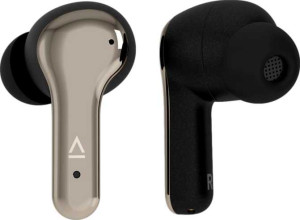
Creative Aurvana Ace SXFI
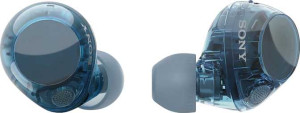
Sony WF-C710N

Creative Aurvana Ace SXFI Sony WF-C710N

Overview

When choosing between the Creative Aurvana Ace SXFI and the Sony WF-C710N, buyers are faced with two capable true wireless earbuds that share a strong common foundation yet diverge in meaningful ways. Both offer active noise cancellation, Bluetooth 5.3, and fast charging, but key distinctions around battery life, driver size, water resistance, and smart features make this a genuinely interesting comparison for anyone seeking their next pair of earbuds.

Common Features

  • Both products have an in-ear fit.
  • Both products are wireless with no cables.
  • Neither product is a neckband earbud design.
  • Neither product includes wingtips.
  • Neither product features RGB lighting.
  • Both products have stereo speakers.
  • Neither product has a UV light.
  • Neither product has a display.
  • Both products support active noise cancellation (ANC).
  • Both products offer passive noise reduction.
  • Both products reach a highest frequency of 20000 Hz.
  • Neither product supports spatial audio.
  • Neither product supports Dolby Atmos.
  • Neither product has a Dirac Virtuo feature.
  • Neither product uses a neodymium magnet.
  • Both products have a charge time of 1.5 hours.
  • Neither product has a solar power battery.
  • Both products have a battery level indicator.
  • Both products have a rechargeable battery.
  • Both products use USB Type-C.
  • Both products use Bluetooth version 5.3.
  • Neither product supports LDAC.
  • Neither product supports LDHC.
  • Neither product supports Bluetooth LE Audio.
  • Neither product supports aptX Adaptive.
  • Neither product supports aptX Low Latency.
  • Neither product supports aptX HD.
  • Both products have an ambient sound mode.
  • Both products support fast charging.
  • Neither product can read notifications.
  • Both products have a mute function.
  • Both products can be used as a headset.
  • Both products have a control panel placed on the device.
  • Both products have voice prompts.
  • A travel bag is included with both products.
  • Both products have a noise-canceling microphone.

Main Differences

  • Ingress Protection rating is IPX5 on Creative Aurvana Ace SXFI and IPX4 on Sony WF-C710N.
  • Water resistance is rated as water resistant on Creative Aurvana Ace SXFI, while Sony WF-C710N is rated as sweat resistant.
  • Weight is 12 g on Creative Aurvana Ace SXFI and 10.4 g on Sony WF-C710N.
  • Driver unit size is 10 mm on Creative Aurvana Ace SXFI and 5 mm on Sony WF-C710N.
  • Lowest frequency reaches 5 Hz on Creative Aurvana Ace SXFI and 20 Hz on Sony WF-C710N.
  • Battery life is 8 hours on Creative Aurvana Ace SXFI and 12 hours on Sony WF-C710N.
  • Battery life of the charging case is 20 hours on Creative Aurvana Ace SXFI and 21.5 hours on Sony WF-C710N.
  • Wireless charging is supported on Creative Aurvana Ace SXFI but not available on Sony WF-C710N.
  • Fast pairing is available on Sony WF-C710N but not available on Creative Aurvana Ace SXFI.
  • In/on-ear detection is present on Sony WF-C710N but not available on Creative Aurvana Ace SXFI.
Specs Comparison
Creative Aurvana Ace SXFI

Creative Aurvana Ace SXFI

Sony WF-C710N

Sony WF-C710N

Design:
Fit In-ear In-ear
Ingress Protection (IP) rating IPX5 IPX4
water resistance Water resistant Sweat resistant
weight 12 g 10.4 g
has no wires or cables
are neckband earbuds
wingtips included
has RGB lighting
has stereo speakers
has UV light
Has a display

Both the Creative Aurvana Ace SXFI and the Sony WF-C710N share the same core design philosophy: fully wireless, in-ear earbuds with no neckband, no wingtips, no RGB lighting, and stereo audio. For most users, the form factor experience will feel broadly similar out of the box.

Where they diverge is in two practical areas: water resistance and weight. The Aurvana Ace SXFI carries an IPX5 rating, meaning it can withstand sustained, low-pressure water jets — offering solid protection during intense workouts or getting caught in rain. The WF-C710N is rated IPX4, which covers splashing from any direction but not directed water streams. In everyday use the gap is modest, but for high-sweat or outdoor activities the Aurvana has a measurable edge. On weight, the WF-C710N is slightly lighter at 10.4 g versus 12 g per earbud, a difference that can matter during extended listening sessions where fatigue accumulates.

Overall, the Creative Aurvana Ace SXFI holds a narrow design advantage thanks to its stronger IP rating, which is the more consequential differentiator for durability. The Sony WF-C710N marginally wins on wearability comfort due to its lighter build, making the choice between them largely dependent on whether the user prioritizes durability or long-wear comfort.

Sound quality:
has active noise cancellation (ANC)
has passive noise reduction
driver unit size 10 mm 5 mm
lowest frequency 5 Hz 20 Hz
highest frequency 20000 Hz 20000 Hz
supports spatial audio
has Dolby Atmos
has Dirac Virtuo
has a neodymium magnet

At the noise isolation level, both earbuds are evenly matched — each offers active noise cancellation paired with passive noise reduction, and neither supports spatial audio formats like Dolby Atmos or Dirac Virtuo. For the typical user, the noise-blocking foundation is comparable on paper.

The most telling differentiator is driver size. The Creative Aurvana Ace SXFI uses a 10 mm driver versus the Sony WF-C710N's 5 mm driver — a significant size gap. Larger drivers generally move more air, which translates to stronger low-end presence and more dynamic range, though tuning and implementation ultimately determine the final sound signature. Reinforcing this, the Aurvana extends down to 5 Hz at its low end, well below the 20 Hz floor of the WF-C710N. While frequencies below 20 Hz are technically sub-audible to most humans, a lower tuned floor often correlates with a more authoritative, pressurized bass response in the audible range. Both top out at 20,000 Hz, so treble extension is identical.

The Creative Aurvana Ace SXFI holds a clear advantage in this category. Its larger driver and wider frequency floor suggest greater potential for bass depth and dynamic headroom, making it the stronger choice for users who prioritize a full, impactful sound profile.

Power:
Battery life 8 hours 12 hours
Battery life of charging case 20 hours 21.5 hours
charge time 1.5 hours 1.5 hours
has wireless charging
Has a solar power battery
has a battery level indicator
has a rechargeable battery

Earbud battery life is where the Sony WF-C710N pulls ahead meaningfully. It delivers 12 hours per charge compared to the Aurvana Ace SXFI's 8 hours — a 50% gap that in practice means the Sony can cover a full workday of continuous listening without a top-up, while the Creative may need a mid-day recharge for heavy users. Total combined endurance with the case is close — 21.5 hours versus 20 hours — so over a full day the systems are more comparable, but the per-session stamina difference remains real.

The tables turn when it comes to charging convenience. The Aurvana Ace SXFI supports wireless charging, which the WF-C710N entirely lacks. For users already in a Qi charging ecosystem, being able to simply set the case on a pad rather than hunt for a cable is a genuine quality-of-life advantage. Both share an identical 1.5-hour wired charge time, so neither has an edge on wired replenishment speed.

This category ends in a trade-off rather than a clean win. The Sony WF-C710N is the better choice for users who prioritize raw endurance and want to go longer between any form of charging. The Creative Aurvana Ace SXFI is the more convenient option for those with wireless chargers in their routine. Which advantage matters more depends entirely on individual usage habits.

Connectivity:
has fast pairing
Has USB Type-C
Bluetooth version 5.3 5.3
has LDAC
has LDHC
has Bluetooth LE Audio
has aptX Adaptive
has aptX Low Latency
has aptX HD
has aptX
has aptX Lossless
has aptX Voice
has Auracast
maximum Bluetooth range 10 m 10 m
supports Bluetooth pairing using NFC
Can be used wirelessly
has AAC

Connectivity is the most evenly matched category of this comparison. Both earbuds run Bluetooth 5.3, support AAC as their highest-quality audio codec, share a 10 m maximum wireless range, and charge via USB-C. Neither product supports advanced codecs like LDAC, aptX, or Bluetooth LE Audio, so users on either side are working with the same ceiling for wireless audio transmission quality.

The sole differentiator here is fast pairing, which the Sony WF-C710N supports and the Creative Aurvana Ace SXFI does not. Fast pairing streamlines the initial device connection process — particularly useful on Android — reducing setup friction when connecting to a new device for the first time. It is a convenience feature rather than a performance one, but it is the only connectivity advantage either product holds over the other.

The Sony WF-C710N takes a narrow edge in this category solely on the strength of fast pairing. For users who frequently switch between devices or simply value a smoother out-of-box experience, it is a tangible plus. That said, the gap is minimal — anyone who pairs their earbuds once and rarely reconnects to new devices will find both products functionally identical in day-to-day wireless use.

Features:
release date January 2025 March 2025
has ambient sound mode
has in/on-ear detection
Supports fast charging
can read notifications
has a mute function
can be used as a headset
control panel placed on a device
Has voice prompts
travel bag is included
Has an in-line control panel
Has a temperature sensor
Has a built-in camera remote control function

Feature parity is remarkably high in this category. Both earbuds offer ambient sound mode, fast charging, a mute function, on-device controls, voice prompts, headset capability, and even include a travel bag. For the vast majority of daily use cases, users of either product will have access to the same functional toolkit.

The single point of difference is in/on-ear detection, which the Sony WF-C710N has and the Creative Aurvana Ace SXFI lacks. This sensor automatically pauses playback when an earbud is removed and resumes when it is reinserted — a small but genuinely useful quality-of-life feature for anyone who frequently takes earbuds out mid-session for brief conversations. Without it, the Aurvana requires manual playback control in those moments.

The Sony WF-C710N earns a narrow edge here, with in/on-ear detection being the only meaningful differentiator in an otherwise identical feature set. It is not a deal-breaking gap, but for users who value seamless, hands-free interaction throughout their day, it is a practical advantage the Creative Aurvana Ace SXFI simply does not offer.

Microphone:
has a noise-canceling microphone

With only one data point available for this category, the verdict is straightforward: both the Creative Aurvana Ace SXFI and the Sony WF-C710N include a noise-canceling microphone, making them equally equipped for calls and voice input in noisy environments. This is a standard but important feature for true wireless earbuds used as headsets, ensuring that background noise is filtered during calls rather than transmitted to the other party.

The provided specs offer no further microphone details — such as microphone count or beam-forming technology — to differentiate the two. Based solely on the available data, this category is a complete tie, and neither product holds any measurable advantage over the other in microphone specification.

Comparison Summary & Verdict

After examining the full specification set, both earbuds prove to be well-rounded options, but they cater to slightly different priorities. The Creative Aurvana Ace SXFI stands out with its larger 10 mm driver and an impressively wide frequency range starting as low as 5 Hz, making it a compelling pick for audio enthusiasts who value richer sound reproduction. It also adds wireless charging convenience. The Sony WF-C710N, on the other hand, pulls ahead with a longer 12-hour battery life, a lighter build at 10.4 g, fast pairing support, and in/on-ear detection for smarter daily usability. Both products are strong all-rounders, so the right choice ultimately comes down to whether you prioritize audio depth and wireless charging or everyday practicality and extended battery endurance.

Creative Aurvana Ace SXFI
Buy Creative Aurvana Ace SXFI if...

Buy the Creative Aurvana Ace SXFI if you prioritize a larger driver for a wider frequency range and want the added convenience of wireless charging.

Sony WF-C710N
Buy Sony WF-C710N if...

Buy the Sony WF-C710N if longer battery life, a lighter design, fast pairing, and in/on-ear detection matter most to you in daily use.