Cubot A40
Nothing Phone (3a)

Cubot A40 Nothing Phone (3a)

Overview

Welcome to our in-depth spec comparison of the Cubot A40 and the Nothing Phone (3a). These two Android 15 smartphones share some common ground — including 256GB of storage, NFC, stereo speakers, and dual-SIM support — but they take very different approaches to display quality, processing power, and overall camera capability. Read on to see how every key specification stacks up before you decide which device is right for you.

Common Features

  • Neither product has a rugged build.
  • Neither product can be folded.
  • Both products have a 120Hz display refresh rate.
  • Neither product has branded damage-resistant glass.
  • Neither product supports Dolby Vision.
  • Neither product has a secondary screen.
  • Both products have a touchscreen display.
  • Both products come with 256GB of internal storage.
  • Both products have integrated LTE support.
  • Both products support 64-bit processing.
  • Both products use DirectX 12.
  • Both products have integrated graphics.
  • Both products use big.LITTLE CPU technology.
  • Both products have 8 CPU threads.
  • Both products have a multi-lens main camera.
  • Both products have a CMOS sensor.
  • Both products support continuous autofocus during video recording.
  • Both products support phase-detection autofocus for photos.
  • Both products support slow-motion video recording.
  • Both products run Android 15.
  • Both products have clipboard warnings.
  • Both products offer location privacy options.
  • Both products offer camera and microphone privacy options.
  • Neither product has Mail Privacy Protection.
  • Both products support theme customization.
  • Both products can block app tracking.
  • Neither product blocks cross-site tracking.
  • Neither product supports wireless charging.
  • Neither product has a removable battery.
  • Both products have a battery level indicator.
  • Both products have a rechargeable battery.
  • Neither product has a 3.5mm audio jack.
  • Both products have stereo speakers.
  • Neither product supports aptX, aptX HD, aptX Adaptive, aptX Lossless, or LDAC.
  • Neither product has a built-in radio.
  • Both products support dual SIM cards.
  • Both products have USB Type-C.
  • Both products have NFC.
  • Neither product has emergency SOS via satellite.
  • Neither product has crash detection.
  • Both products have a video light.
  • Neither product has a sapphire glass display.
  • Neither product has a curved display.
  • Neither product has an e-paper display.

Main Differences

  • Water resistance is present on Nothing Phone (3a) but not available on Cubot A40.
  • Thickness is 8.8 mm on Cubot A40 and 8.4 mm on Nothing Phone (3a).
  • Width is 78.1 mm on Cubot A40 and 77.5 mm on Nothing Phone (3a).
  • Height is 172.3 mm on Cubot A40 and 163.5 mm on Nothing Phone (3a).
  • Volume is 118.42 cm³ on Cubot A40 and 106.44 cm³ on Nothing Phone (3a).
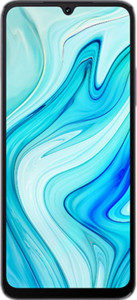
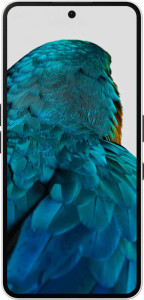
  • Display type is LCD IPS on Cubot A40 and OLED/AMOLED on Nothing Phone (3a).
  • Screen size is 6.88″ on Cubot A40 and 6.77″ on Nothing Phone (3a).
  • Pixel density is 260 ppi on Cubot A40 and 387 ppi on Nothing Phone (3a).
  • Resolution is 720 x 1640 px on Cubot A40 and 1080 x 2392 px on Nothing Phone (3a).
  • HDR10 support is present on Nothing Phone (3a) but not available on Cubot A40.
  • HDR10+ support is present on Nothing Phone (3a) but not available on Cubot A40.
  • Always-On Display is available on Nothing Phone (3a) but not on Cubot A40.
  • RAM is 8GB on Cubot A40 and 12GB on Nothing Phone (3a).
  • The chipset is Unisoc T606 on Cubot A40 and Qualcomm Snapdragon 7s Gen 3 on Nothing Phone (3a).
  • The GPU is Mali G57 MP1 on Cubot A40 and Adreno 710 on Nothing Phone (3a).
  • Geekbench 6 multi-core score is 1391 on Cubot A40 and 3239 on Nothing Phone (3a).
  • Geekbench 6 single-core score is 371 on Cubot A40 and 1162 on Nothing Phone (3a).
  • Semiconductor size is 12 nm on Cubot A40 and 4 nm on Nothing Phone (3a).
  • Maximum memory bandwidth is 12.8 GB/s on Cubot A40 and 25.6 GB/s on Nothing Phone (3a).
  • RAM speed is 1600 MHz on Cubot A40 and 3200 MHz on Nothing Phone (3a).
  • GPU clock speed is 650 MHz on Cubot A40 and 1050 MHz on Nothing Phone (3a).
  • Main camera resolution is 48 & 2 MP on Cubot A40 and 50 & 50 & 8 MP on Nothing Phone (3a).
  • Front camera resolution is 16MP on Cubot A40 and 32MP on Nothing Phone (3a).
  • Optical image stabilization is present on Nothing Phone (3a) but not available on Cubot A40.
  • Optical zoom is 0x on Cubot A40 and 2x on Nothing Phone (3a).
  • Battery capacity is 5100 mAh on Cubot A40 and 5000 mAh on Nothing Phone (3a).
  • Fast charging is supported on Nothing Phone (3a) but not on Cubot A40.
  • 5G support is present on Nothing Phone (3a) but not available on Cubot A40.
  • Wi-Fi 6 (802.11ax) support is present on Nothing Phone (3a) but not available on Cubot A40.
  • Bluetooth version is 5.0 on Cubot A40 and 5.4 on Nothing Phone (3a).
  • An external memory slot is available on Cubot A40 but not on Nothing Phone (3a).
  • Download speed is 300 Mbit/s on Cubot A40 and 2900 Mbit/s on Nothing Phone (3a).
  • A fingerprint scanner is present on Nothing Phone (3a) but not on Cubot A40.
  • A gyroscope is present on Nothing Phone (3a) but not on Cubot A40.
  • A compass is present on Nothing Phone (3a) but not on Cubot A40.
Specs Comparison
Cubot A40

Cubot A40

Nothing Phone (3a)

Nothing Phone (3a)

Design:
water resistance None Water resistant
thickness 8.8 mm 8.4 mm
width 78.1 mm 77.5 mm
height 172.3 mm 163.5 mm
volume 118.418344 cm³ 106.4385 cm³
has a rugged build
can be folded

In terms of physical footprint, the Cubot A40 is noticeably larger across every dimension — taller at 172.3 mm, wider at 78.1 mm, and thicker at 8.8 mm — resulting in a volume of roughly 118.4 cm³ compared to the Nothing Phone (3a)'s more compact 106.4 cm³. In practice, this means the Cubot A40 will feel bulkier and less pocketable, which matters for one-handed use and all-day comfort.

The most meaningful real-world differentiator in this group, however, is water resistance. The Nothing Phone (3a) carries a water-resistant rating, while the Cubot A40 has none. This is not a trivial distinction: even basic water resistance provides meaningful protection against rain, spills, and everyday moisture exposure, reducing the risk of accidental damage significantly.

Both phones share a non-rugged, non-foldable design, so neither targets durability-focused or form-factor-experimental users. Overall, the Nothing Phone (3a) holds a clear advantage in this group — it is more compact and the only one offering water resistance, making it the better-designed option for everyday handling and resilience.

Display:
Display type LCD, IPS OLED/AMOLED
screen size 6.88" 6.77"
pixel density 260 ppi 387 ppi
resolution 720 x 1640 px 1080 x 2392 px
refresh rate 120Hz 120Hz
has branded damage-resistant glass
supports HDR10
supports HDR10+
Always-On Display
supports Dolby Vision
Has a secondary screen
has a touch screen

The panel technology gap here is substantial. The Cubot A40 uses an LCD IPS display, while the Nothing Phone (3a) features an OLED/AMOLED panel — a difference that cascades through the entire viewing experience. OLED delivers true blacks, higher contrast, and more vibrant colors by lighting pixels individually, whereas LCD relies on a backlight that limits contrast and color depth regardless of resolution.

That resolution gap compounds the advantage: the Nothing Phone (3a) resolves at 1080 x 2392 px with a pixel density of 387 ppi, against the Cubot A40's 720 x 1640 px at just 260 ppi — a difference clearly visible when reading text or viewing detailed images. The Nothing Phone (3a) also supports HDR10 and HDR10+ and includes an Always-On Display, adding both richer content playback and practical convenience the Cubot A40 simply lacks. Both share a 120Hz refresh rate, meaning scrolling smoothness is equally fluid on either device.

The Nothing Phone (3a) wins this category decisively. Despite having a slightly smaller screen, its OLED panel, significantly sharper resolution, HDR support, and Always-On Display make it the far superior choice for anyone who values display quality.

Performance:
internal storage 256GB 256GB
RAM 8GB 12GB
Chipset (SoC) name Unisoc T606 Qualcomm Snapdragon 7s Gen 3
GPU name Mali G57 MP1 Adreno 710
CPU speed 2 x 1.6 & 6 x 1.6 GHz 1 x 2.5 & 3 x 2.4 & 4 x 1.8 GHz
Geekbench 6 result (multi) 1391 3239
Geekbench 6 result (single) 371 1162
Geekbench 5 result (multi) 1175 3242
Geekbench 5 result (single) 313 893
GPU clock speed 650 MHz 1050 MHz
Has integrated LTE
RAM speed 1600 MHz 3200 MHz
semiconductor size 12 nm 4 nm
Supports 64-bit
DirectX version DirectX 12 DirectX 12
Has integrated graphics
OpenGL ES version 3.2 3.2
Uses big.LITTLE technology
CPU threads 8 threads 8 threads
Uses HMP
Has TrustZone
maximum memory bandwidth 12.8 GB/s 25.6 GB/s
OpenCL version 2 2
maximum memory amount 14GB 16GB
Thermal Design Power (TDP) 10W 5W
DDR memory version 4 5
shading units 64 128

The chipset divide between these two phones is generational in every meaningful sense. The Cubot A40 runs on a Unisoc T606 built on a 12 nm process, while the Nothing Phone (3a) uses a Snapdragon 7s Gen 3 on a modern 4 nm node. A smaller semiconductor size directly translates to greater power efficiency and thermal headroom — reflected in the TDP figures: the Snapdragon chip operates at just 5W versus the Unisoc's 10W, meaning the Nothing Phone (3a) delivers far more performance per watt, running cooler and preserving battery life more effectively under load.

Benchmark results make the performance gap concrete. The Nothing Phone (3a) scores 1162 single-core and 3239 multi-core on Geekbench 6, compared to the Cubot A40's 371 and 1391 respectively — roughly a 3x advantage in both categories. This translates to snappier app launches, smoother multitasking, and significantly better handling of demanding workloads. The GPU story follows the same pattern: the Adreno 710 clocked at 1050 MHz with 128 shading units outguns the Mali G57 MP1 at 650 MHz with 64 units, making a tangible difference in gaming and graphics-intensive tasks. The Nothing Phone (3a) also carries 12 GB of DDR5 RAM at 3200 MHz versus 8 GB of DDR4 at 1600 MHz, doubling memory bandwidth to 25.6 GB/s — a meaningful edge for keeping more apps alive in the background.

The Nothing Phone (3a) wins this category comprehensively. Across CPU performance, GPU capability, RAM capacity and speed, and power efficiency, it outclasses the Cubot A40 at every level — this is not a marginal gap but a fundamental difference in what each device can sustain day to day.

Cameras:
megapixels (main camera) 48 & 2 MP 50 & 50 & 8 MP
Has a dual-lens (or multi-lens) main camera
megapixels (front camera) 16MP 32MP
has built-in optical image stabilization
Has a dual-tone LED flash
number of flash LEDs 1 1
has a BSI sensor
has a CMOS sensor
has continuous autofocus when recording movies
Has phase-detection autofocus for photos
supports slow-motion video recording
has a built-in HDR mode
has manual exposure
has a flash
optical zoom 0x 2x
has manual ISO
has a serial shot mode
has manual focus
has a front camera
Has laser autofocus
Shoots 360° panorama
has manual white balance
shoots raw
has touch autofocus
has manual shutter speed
can create panoramas in-camera
Has timelapse function
Has a front-facing LED flash
has a dual-lens (or multi-lens) front camera
supports HDR10 recording
supports Dolby Vision recording
has a front-facing camera under the display
Has a RGB LED flash
has 3D photo/video recording capabilities

Both phones field multi-lens rear systems, but the Nothing Phone (3a) takes a more versatile approach with a triple camera setup (50 & 50 & 8 MP) versus the Cubot A40's dual system anchored by a 48 MP primary and a 2 MP secondary. The practical implication is significant: the Nothing Phone (3a)'s third lens enables 2x optical zoom, meaning it can reach closer subjects without the image degradation that accompanies digital zoom — a capability the Cubot A40 entirely lacks at 0x optical zoom.

Two further differentiators stand out beyond lens count. First, the Nothing Phone (3a) includes optical image stabilization (OIS) while the Cubot A40 does not — OIS physically compensates for hand movement during shooting, meaningfully reducing blur in low-light photos and stabilizing video footage. Second, the Nothing Phone (3a) offers a 32 MP front camera against the Cubot A40's 16 MP, doubling the pixel count for selfies and video calls. Where the two phones genuinely converge is in their feature sets: both support phase-detection autofocus, continuous autofocus during video, slow-motion recording, HDR mode, and a full manual controls suite including ISO, focus, and exposure.

The Nothing Phone (3a) holds a clear edge in this category. The addition of optical zoom, OIS, and a higher-resolution front camera are all hardware-level advantages that directly affect real-world photo and video quality in ways the Cubot A40's spec sheet cannot compensate for.

Operating system:
Android version Android 15 Android 15
has clipboard warnings
has location privacy options
has camera/microphone privacy options
has Mail Privacy Protection
has theme customization
can block app tracking
blocks cross-site tracking
has on-device machine learning
has notification permissions
has media picker
Can play games while they download
has dark mode
has Wi-Fi password sharing
has battery health check
has an extra dim mode
has focus modes
has dynamic theming
can offload apps
Has customizable notifications
has Live Text
has full-page screenshots
supports split screen
gets direct OS updates
has PiP
Can be used as a PC
Has sharing intents
has a child lock
Supports widgets
Is free and open source
Has offline voice recognition
has voice commands
Tracks the current position of a mobile device
is a multi-user system
has Quick Start

Across every single data point in this category, the Cubot A40 and Nothing Phone (3a) are in complete lockstep. Both ship with Android 15, share an identical privacy feature set — including location controls, camera and microphone permissions, and app tracking blocking — and offer the same productivity and usability tools such as split-screen, Picture-in-Picture, dynamic theming, and offline voice recognition.

This is a genuine tie with no distinguishing factors within the provided specs. Neither device gets direct OS updates, neither supports Wi-Fi password sharing or focus modes, and every capability listed — from battery health checks to multi-user support — is present on both. When two products mirror each other this completely across a spec group, it signals that the Android platform itself is the common denominator, delivering a consistent baseline regardless of the manufacturer.

No winner can be declared here: this category is a dead heat. Users should weigh OS experience based on factors outside this data set, such as software skin differences or update commitments, as the raw feature parity gives neither phone an advantage on paper.

Battery:
battery power 5100 mAh 5000 mAh
has wireless charging
Supports fast charging
has a removable battery
has a battery level indicator
has a rechargeable battery

On raw capacity, the two phones are nearly identical — the Cubot A40 edges ahead with 5100 mAh against the Nothing Phone (3a)'s 5000 mAh. A 100 mAh difference is negligible in practice and unlikely to produce any noticeable gap in real-world endurance. Both are non-removable cells, so neither offers the niche advantage of carrying a spare.

Where they genuinely diverge is charging. The Nothing Phone (3a) supports fast charging, while the Cubot A40 does not. This is a meaningful quality-of-life distinction: fast charging can replenish a large battery in a fraction of the time conventional charging requires, making top-ups during short breaks practical rather than futile. For users who frequently find themselves low on battery mid-day, this capability matters considerably more than a marginal mAh advantage.

Factoring in both longevity and replenishment speed, the Nothing Phone (3a) holds the edge here. The Cubot A40's slightly larger battery is too small a difference to offset the absence of fast charging — a feature that meaningfully shapes the day-to-day charging experience.

Audio:
has a socket for a 3.5 mm audio jack
has stereo speakers
has aptX
has LDAC
has aptX HD
has aptX Adaptive
has aptX Lossless
Has a radio

The audio specifications for these two phones are completely identical. Both feature stereo speakers, omit a 3.5 mm headphone jack, lack any high-resolution Bluetooth audio codec support — no aptX, LDAC, or any of their variants — and neither includes an FM radio. Wired audio users on either device will need to rely on USB-C adapters or wireless headphones.

The absence of advanced Bluetooth codecs like LDAC or aptX HD means that audiophiles using wireless headphones will be limited to standard SBC or AAC transmission, which imposes a ceiling on wireless audio quality regardless of headphone quality. This is a shared limitation, not a differentiator, but worth noting for users who prioritize high-fidelity listening.

This category is a complete tie — the spec data offers no basis to favor either device over the other for audio.

Connectivity & Features:
release date July 2025 March 2025
has 5G support
Wi-Fi version Wi-Fi 4 (802.11n), Wi-Fi 5 (802.11ac) Wi-Fi 4 (802.11n), Wi-Fi 5 (802.11ac), Wi-Fi 6 (802.11ax)
SIM cards 2 SIM 2 SIM
Bluetooth version 5 5.4
has an external memory slot
Has USB Type-C
has NFC
download speed 300 MBits/s 2900 MBits/s
Has a fingerprint scanner
has emergency SOS via satellite
has crash detection
is DLNA-certified
has a gyroscope
supports ANT+
Has a heart rate monitor
has GPS
has a compass
supports Wi-Fi
Has an infrared sensor
has an accelerometer
has a cellular module
Has a barometer
has an HDMI output
Uses 3D facial recognition
Has an iris scanner
Stylus included
supports Galileo
Has motion tracking
Has optical tracking
Has a built-in projector

Cellular and wireless connectivity is where the Nothing Phone (3a) pulls decisively ahead. It supports 5G, while the Cubot A40 is limited to 4G LTE with a maximum download speed of 300 Mbits/s — compared to the Nothing Phone (3a)'s 2900 Mbits/s. That nearly 10x throughput ceiling matters in 5G-covered areas for large downloads, streaming, and latency-sensitive tasks. The Nothing Phone (3a) also adds Wi-Fi 6 (802.11ax) to its stack, bringing better performance in congested network environments such as offices or public spaces, while the Cubot A40 tops out at Wi-Fi 5.

Sensor and security differences are equally notable. The Nothing Phone (3a) includes a fingerprint scanner, a gyroscope, and a compass — none of which are present on the Cubot A40. The fingerprint scanner is a direct security and convenience feature for daily unlocking; the gyroscope enables more accurate motion-based apps and gaming; and the compass is essential for proper navigation app functionality. The Cubot A40 counters with one meaningful exclusive: an external memory slot for expandable storage, which the Nothing Phone (3a) lacks — a practical advantage for users who carry large media libraries or want flexible storage management.

Both phones share NFC, dual-SIM support, USB Type-C, GPS with Galileo, Bluetooth 5.x, and an accelerometer, forming a solid shared baseline. Still, the Nothing Phone (3a) wins this category clearly — 5G connectivity, Wi-Fi 6, a fingerprint scanner, and additional sensors represent a broader and more future-proof feature set. The Cubot A40's expandable storage is a genuine differentiator but not enough to offset the gap.
Miscellaneous:
has a video light
Has sapphire glass display
Has a curved display
Has an e-paper display

The miscellaneous specs for the Cubot A40 and Nothing Phone (3a) are entirely identical across every data point provided. Both feature a video light, and neither carries a sapphire glass display, a curved screen, or an e-paper panel — meaning no differentiation exists within this group whatsoever.

This is a complete tie, and with only four data points — all shared — there is no basis to favor either device here. Users should look to the other spec categories to inform their decision.

Comparison Summary & Verdict

After examining every specification, a clear picture emerges. The Nothing Phone (3a) is the stronger all-round performer: its OLED display with HDR10+ support, Snapdragon 7s Gen 3 chipset, and Geekbench 6 multi-core score of 3239 place it well ahead of the Cubot A40 in both visual quality and raw processing power. It also adds optical image stabilization, a 32MP front camera, 5G connectivity, Wi-Fi 6, fast charging, water resistance, and a fingerprint scanner — features the Cubot A40 lacks entirely. The Cubot A40, however, is not without merit: it offers a slightly larger 6.88″ screen, a bigger 5100 mAh battery, and a microSD card slot for expandable storage, making it a pragmatic choice for users on a tight budget who prioritize storage flexibility. Choose the Cubot A40 if budget and expandable storage are your top concerns; choose the Nothing Phone (3a) if you want a well-rounded, future-proof smartphone experience.

Cubot A40
Buy Cubot A40 if...

Buy the Cubot A40 if you are on a tight budget and need expandable storage via a microSD card slot, and can live without 5G or fast charging.

Nothing Phone (3a)
Buy Nothing Phone (3a) if...

Buy the Nothing Phone (3a) if you want a sharper OLED display, significantly faster performance, 5G support, optical image stabilization, fast charging, and water resistance.