Cubot KingKong ES 3
Infinix Note 50 Pro 4G

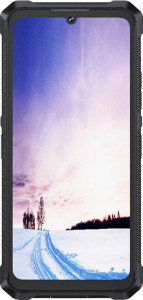
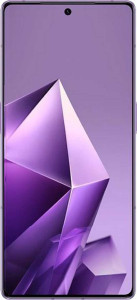
Cubot KingKong ES 3 Infinix Note 50 Pro 4G

Overview

When comparing the Cubot KingKong ES 3 and the Infinix Note 50 Pro 4G, two very different design philosophies come into focus. One device is built to endure the toughest conditions, while the other targets everyday users who demand a premium display and fast charging. In this head-to-head, we examine key battlegrounds including build quality, screen performance, camera capabilities, processing power, and battery stamina to help you decide which phone truly fits your lifestyle.

Common Features

  • Neither product can be folded.
  • Both products run Android 15.
  • Both products have 256GB of internal storage.
  • Both products use a Mali G57 GPU.
  • Both products have integrated LTE.
  • Both products support 64-bit processing.
  • Both products use big.LITTLE CPU technology with 8 threads.
  • Both products have integrated graphics with OpenGL ES version 3.2.
  • Both products have a touchscreen display.
  • HDR10 support is not available on either product.
  • HDR10+ support is not available on either product.
  • Dolby Vision support is not available on either product.
  • Neither product has a secondary screen.
  • Both products have a dual-lens main camera.
  • A dual-tone LED flash is not present on either product.
  • A BSI sensor is not featured on either product.
  • Both products have a CMOS sensor.
  • Both products support continuous autofocus during video recording.
  • Both products have phase-detection autofocus for photos.
  • Both products have a built-in HDR mode and manual exposure.
  • Fast charging is supported on both products.
  • Both products come with a charger included.
  • Neither product has a removable battery.
  • Both products have a rechargeable battery with a battery level indicator.
  • Neither product has a 3.5mm audio jack.
  • Neither product supports aptX, aptX HD, aptX Adaptive, aptX Lossless, or LDAC.
  • Neither product supports 5G.
  • Both products support Wi-Fi 4 (802.11n) and Wi-Fi 5 (802.11ac).
  • Both products have dual SIM card slots.
  • Both products feature a USB Type-C port.
  • NFC is present on both products.
  • Both products have an upload speed of 150 MBits/s.
  • Both products have a fingerprint scanner.
  • Emergency SOS via satellite is not available on either product.
  • Both products have a video light.
  • Sapphire glass display is not featured on either product.
  • Neither product has a curved or e-paper display.
  • Both products include clipboard warnings and location privacy options.
  • Camera and microphone privacy options are available on both products.
  • Mail Privacy Protection is not available on either product.
  • Both products support theme customization and can block app tracking.
  • Cross-site tracking blocking is not available on either product.

Main Differences

  • Water resistance is rated as fully waterproof on Cubot KingKong ES 3 and only water resistant on Infinix Note 50 Pro 4G.
  • The Ingress Protection rating is IP68 on Cubot KingKong ES 3 and IP64 on Infinix Note 50 Pro 4G.
  • A rugged build is present on Cubot KingKong ES 3 but not on Infinix Note 50 Pro 4G.
  • Weight is 352g on Cubot KingKong ES 3 and 198g on Infinix Note 50 Pro 4G.
  • Thickness is 15.3mm on Cubot KingKong ES 3 and 7.3mm on Infinix Note 50 Pro 4G.
  • Width is 83.7mm on Cubot KingKong ES 3 and 74.4mm on Infinix Note 50 Pro 4G.
  • Height is 177.4mm on Cubot KingKong ES 3 and 163.3mm on Infinix Note 50 Pro 4G.
  • Volume is 227.18 cm³ on Cubot KingKong ES 3 and 88.69 cm³ on Infinix Note 50 Pro 4G.
  • The display type is LCD IPS on Cubot KingKong ES 3 and OLED/AMOLED on Infinix Note 50 Pro 4G.
  • Screen size is 6.75″ on Cubot KingKong ES 3 and 6.78″ on Infinix Note 50 Pro 4G.
  • Pixel density is 260 ppi on Cubot KingKong ES 3 and 393 ppi on Infinix Note 50 Pro 4G.
  • Resolution is 720x1600px on Cubot KingKong ES 3 and 1080x2436px on Infinix Note 50 Pro 4G.
  • Refresh rate is 90Hz on Cubot KingKong ES 3 and 144Hz on Infinix Note 50 Pro 4G.
  • Branded damage-resistant glass is present on Cubot KingKong ES 3 but not on Infinix Note 50 Pro 4G.
  • Always-On Display is available on Infinix Note 50 Pro 4G but not on Cubot KingKong ES 3.
  • RAM is 6GB on Cubot KingKong ES 3 and 12GB on Infinix Note 50 Pro 4G.
  • The chipset is Unisoc T615 on Cubot KingKong ES 3 and MediaTek Helio G100 on Infinix Note 50 Pro 4G.
  • CPU speed is 2x1.8 & 6x1.6 GHz on Cubot KingKong ES 3 and 2x2.2 & 6x2 GHz on Infinix Note 50 Pro 4G.
  • GPU clock speed is 850MHz on Cubot KingKong ES 3 and 1000MHz on Infinix Note 50 Pro 4G.
  • RAM speed is 1866MHz on Cubot KingKong ES 3 and 4266MHz on Infinix Note 50 Pro 4G.
  • Semiconductor size is 12nm on Cubot KingKong ES 3 and 6nm on Infinix Note 50 Pro 4G.
  • Thermal Design Power is 10W on Cubot KingKong ES 3 and 5W on Infinix Note 50 Pro 4G.
  • Main camera megapixels are 48 & 2MP on Cubot KingKong ES 3 and 50 & 8MP on Infinix Note 50 Pro 4G.
  • Front camera resolution is 16MP on Cubot KingKong ES 3 and 32MP on Infinix Note 50 Pro 4G.
  • Optical image stabilization is present on Infinix Note 50 Pro 4G but not on Cubot KingKong ES 3.
  • The number of flash LEDs is 1 on Cubot KingKong ES 3 and 2 on Infinix Note 50 Pro 4G.
  • Slow-motion video recording is supported on Infinix Note 50 Pro 4G but not on Cubot KingKong ES 3.
  • A timelapse function is available on Infinix Note 50 Pro 4G but not on Cubot KingKong ES 3.
  • Battery capacity is 10200mAh on Cubot KingKong ES 3 and 5200mAh on Infinix Note 50 Pro 4G.
  • Wireless charging is supported on Infinix Note 50 Pro 4G but not on Cubot KingKong ES 3.
  • Charging speed is 33W on Cubot KingKong ES 3 and 90W on Infinix Note 50 Pro 4G.
  • Reverse wireless charging is available on Infinix Note 50 Pro 4G but not on Cubot KingKong ES 3.
  • Stereo speakers are present on Infinix Note 50 Pro 4G but not on Cubot KingKong ES 3.
  • A radio is available on Infinix Note 50 Pro 4G but not on Cubot KingKong ES 3.
  • Bluetooth version is 5.0 on Cubot KingKong ES 3 and 5.4 on Infinix Note 50 Pro 4G.
  • Download speed is 300 MBits/s on Cubot KingKong ES 3 and 650 MBits/s on Infinix Note 50 Pro 4G.
  • A gyroscope is present on Infinix Note 50 Pro 4G but not on Cubot KingKong ES 3.
  • A heart rate monitor is available on Infinix Note 50 Pro 4G but not on Cubot KingKong ES 3.
Specs Comparison
Cubot KingKong ES 3

Cubot KingKong ES 3

Infinix Note 50 Pro 4G

Infinix Note 50 Pro 4G

Design:
water resistance Waterproof Water resistant
weight 352 g 198 g
thickness 15.3 mm 7.3 mm
width 83.7 mm 74.4 mm
height 177.4 mm 163.3 mm
volume 227.180214 cm³ 88.691496 cm³
Ingress Protection (IP) rating IP68 IP64
has a rugged build
can be folded

These two phones represent fundamentally different design philosophies. The Cubot KingKong ES 3 is built as a rugged device, and its numbers reflect that: at 352 g and 15.3 mm thick, it is more than twice as heavy and more than twice as thick as the Infinix. Its volume of 227.18 cm³ versus the Infinix's 88.69 cm³ means it is roughly 2.5× bulkier overall. In day-to-day use, this translates to a noticeably heavy, tank-like handset that will dominate a pocket and may cause fatigue during extended one-handed use.

The protection gap is the most practically significant differentiator in this group. The KingKong ES 3 carries an IP68 rating with a fully waterproof designation, meaning it can withstand submersion in water — typically beyond one metre for extended periods. The Infinix Note 50 Pro 4G, rated IP64, is only splash- and dust-resistant; it can handle water jets from any direction but must not be submerged. For users who work outdoors, in wet environments, or need a genuinely durable device, this is a decisive difference.

The Infinix Note 50 Pro 4G holds a clear edge in everyday ergonomics: at 198 g and just 7.3 mm thin, it sits comfortably in a slim, mainstream-smartphone form factor. Unless ruggedness and deep water protection are explicit requirements, most users will find the Infinix significantly more comfortable to carry and handle. The KingKong ES 3's bulk is a deliberate trade-off for durability — worth it in demanding conditions, but a real usability cost in normal daily life.

Display:
Display type LCD, IPS OLED/AMOLED
screen size 6.75" 6.78"
pixel density 260 ppi 393 ppi
resolution 720 x 1600 px 1080 x 2436 px
refresh rate 90Hz 144Hz
has branded damage-resistant glass
supports HDR10
supports HDR10+
Always-On Display
supports Dolby Vision
Has a secondary screen
has a touch screen

The display gap between these two phones is substantial. The Infinix Note 50 Pro 4G uses an OLED/AMOLED panel, which delivers true blacks, higher contrast, and more vibrant colours than the KingKong ES 3's LCD IPS screen — a technology difference that is immediately visible when watching video or viewing photos. More telling still is the pixel density: 393 ppi on the Infinix versus 260 ppi on the Cubot, the result of a full 1080 x 2436 resolution against a modest 720 x 1600. At typical viewing distances, text and fine detail will appear noticeably crisper on the Infinix.

Motion handling also favours the Infinix decisively. Its 144Hz refresh rate produces smoother scrolling and more fluid gaming animations compared to the KingKong ES 3's 90Hz panel. Additionally, the Infinix supports an Always-On Display, a small but genuinely useful convenience for glancing at notifications without waking the screen — made power-efficient precisely because OLED only lights active pixels. The Cubot offers neither feature.

The one area where the KingKong ES 3 pushes back is glass protection: it ships with branded damage-resistant glass, while the Infinix does not specify any equivalent protection. For a rugged-use context this matters, but in terms of overall display quality and experience, the Infinix Note 50 Pro 4G holds a commanding and clear advantage across every meaningful display metric.

Performance:
internal storage 256GB 256GB
RAM 6GB 12GB
Chipset (SoC) name Unisoc T615 MediaTek Helio G100
GPU name Mali G57 Mali G57
CPU speed 2 x 1.8 & 6 x 1.6 GHz 2 x 2.2 & 6 x 2 GHz
GPU clock speed 850 MHz 1000 MHz
Has integrated LTE
RAM speed 1866 MHz 4266 MHz
semiconductor size 12 nm 6 nm
Supports 64-bit
Has integrated graphics
OpenGL ES version 3.2 3.2
Uses big.LITTLE technology
CPU threads 8 threads 8 threads
Has TrustZone
OpenCL version 2 2
maximum memory amount 12GB 12GB
Thermal Design Power (TDP) 10W 5W
DDR memory version 4 4

Under the hood, the Infinix Note 50 Pro 4G pulls ahead on every core performance metric. Its MediaTek Helio G100, built on a 6 nm process, is a full generation ahead of the KingKong ES 3's Unisoc T615 at 12 nm. A smaller node means more transistors per area, translating into higher computational throughput and, critically, better power efficiency. The CPU clock speeds reinforce this: the Infinix's cores run at up to 2.2 GHz versus the Cubot's 1.8 GHz peak, which compounds the raw performance gap in CPU-bound tasks like app loading, multitasking, and processing-heavy applications.

RAM is another area of clear separation. The Infinix ships with 12 GB of RAM running at 4266 MHz, while the KingKong ES 3 provides 6 GB at 1866 MHz — less than half the memory bandwidth. In practice, more RAM at higher speeds means more apps can stay loaded in the background simultaneously, and data moves between memory and the processor far more quickly. The GPU clock speed difference follows the same pattern: 1000 MHz on the Infinix against 850 MHz on the Cubot, favouring the Infinix in graphics-intensive tasks and gaming.

One genuinely interesting counter-point is thermal efficiency. The KingKong ES 3 carries a 10W TDP against the Infinix's 5W, meaning the Cubot's chip dissipates twice as much heat under load despite delivering less performance — a direct consequence of its older, less efficient process node. Both phones share 256 GB of internal storage and identical thread counts, but those similarities do little to close the gap. Overall, the Infinix Note 50 Pro 4G holds a commanding performance advantage, offering faster processing, double the RAM, significantly higher memory bandwidth, and a more thermally efficient chipset.
Cameras:
megapixels (main camera) 48 & 2 MP 50 & 8 MP
Has a dual-lens (or multi-lens) main camera
megapixels (front camera) 16MP 32MP
has built-in optical image stabilization
Has a dual-tone LED flash
number of flash LEDs 1 2
has a BSI sensor
has a CMOS sensor
has continuous autofocus when recording movies
Has phase-detection autofocus for photos
supports slow-motion video recording
has a built-in HDR mode
has manual exposure
has a flash
optical zoom 0x 0x
has manual ISO
has a serial shot mode
has manual focus
has a front camera
Has laser autofocus
Shoots 360° panorama
has manual white balance
shoots raw
has touch autofocus
has manual shutter speed
can create panoramas in-camera
Has timelapse function
Has a front-facing LED flash
has a dual-lens (or multi-lens) front camera
supports HDR10 recording
supports Dolby Vision recording
has a front-facing camera under the display
Has a RGB LED flash
has 3D photo/video recording capabilities

Both phones field dual rear cameras and share a solid common base: phase-detection autofocus, continuous autofocus during video, HDR mode, and a comparable suite of manual controls. The main lens resolution is close — 50 MP on the Infinix versus 48 MP on the Cubot — but the secondary camera tells a more meaningful story. The Infinix pairs its main sensor with an 8 MP secondary lens, while the KingKong ES 3's secondary drops to just 2 MP, a resolution so low it contributes little beyond depth sensing for portrait effects.

Two features decisively separate the Infinix in real-world shooting. First, it includes optical image stabilization (OIS), which the Cubot lacks entirely. OIS physically compensates for hand movement during capture, producing noticeably sharper handheld shots in low light and significantly smoother video footage — an advantage no software processing can fully replicate. Second, the Infinix supports slow-motion video recording and a timelapse function, neither of which are available on the KingKong ES 3, expanding its creative range for video-oriented users. The Infinix also carries a two-LED flash versus the Cubot's single LED, which typically provides more even and powerful illumination in dark environments.

On the front camera, the gap widens further: the Infinix offers a 32 MP selfie sensor against the Cubot's 16 MP, doubling the pixel count for portrait and video-call clarity. Taking everything together, the Infinix Note 50 Pro 4G holds a clear camera advantage, particularly due to OIS, the stronger secondary lens, and the broader video feature set.

Operating system:
Android version Android 15 Android 15
has clipboard warnings
has location privacy options
has camera/microphone privacy options
has Mail Privacy Protection
has theme customization
can block app tracking
blocks cross-site tracking
has on-device machine learning
has notification permissions
has media picker
Can play games while they download
has dark mode
has Wi-Fi password sharing
has battery health check
has an extra dim mode
has focus modes
has dynamic theming
can offload apps
Has customizable notifications
has Live Text
has full-page screenshots
supports split screen
gets direct OS updates
has PiP
Can be used as a PC
Has sharing intents
has a child lock
Supports widgets
Is free and open source
Has offline voice recognition
has voice commands
Tracks the current position of a mobile device
is a multi-user system
has Quick Start

Rarely in a product comparison does a spec group produce a complete tie, but that is exactly the case here. Both the Cubot KingKong ES 3 and the Infinix Note 50 Pro 4G run Android 15 and share an identical feature set across every single data point in this group — from privacy controls like location and camera/microphone permissions, to productivity features like split-screen, Picture-in-Picture, and widgets, to quality-of-life additions like dark mode, dynamic theming, and battery health check.

The shared strengths are worth noting for buyers coming from other platforms: both phones offer on-device machine learning, offline voice recognition, Live Text, and app tracking controls — a well-rounded Android 15 foundation that covers the vast majority of daily software needs. Neither phone receives direct OS updates, which is the one area where both fall short equally, meaning long-term software support will depend entirely on the manufacturers' own update schedules rather than a guaranteed pipeline.

With no differentiating data point across the entire group, this category is a complete tie. A buyer's software experience will be effectively identical on both devices, and this group should carry no weight in any purchase decision between the two.

Battery:
battery power 10200 mAh 5200 mAh
has wireless charging
Supports fast charging
charging speed 33W 90W
has reverse wireless charging
comes with a charger
has a removable battery
has a battery level indicator
has a rechargeable battery

Battery capacity is where the Cubot KingKong ES 3 makes its most dramatic statement. Its 10200 mAh cell is nearly double the Infinix Note 50 Pro 4G's 5200 mAh, and in raw endurance terms that gap is real: under similar usage conditions, the Cubot should last significantly longer between charges, making it a compelling option for users who are away from a power source for extended periods — field workers, travellers, or anyone who simply dislikes charging daily.

The Infinix counters with a charging system that is far more capable. Its 90W fast charging will replenish the 5200 mAh cell in a fraction of the time it takes the Cubot's 33W charger to work through a battery nearly twice as large. Beyond wired speed, the Infinix also supports wireless charging and reverse wireless charging — neither of which the KingKong ES 3 offers at all. Reverse wireless charging is particularly useful as it turns the phone into a pad for topping up earbuds or a friend's device in a pinch.

This group presents a genuine trade-off rather than a clear winner. The Cubot KingKong ES 3 wins outright on endurance — its massive battery is purpose-built for users who prioritise going the distance. The Infinix Note 50 Pro 4G wins on charging versatility, offering faster refuelling and wireless convenience that suits users who are near outlets regularly but want the flexibility of cutting the cord. The right choice depends entirely on which constraint matters more: time between charges, or time spent charging.

Audio:
has a socket for a 3.5 mm audio jack
has stereo speakers
has aptX
has LDAC
has aptX HD
has aptX Adaptive
has aptX Lossless
Has a radio

Audio is a lean category for both phones, but the Infinix Note 50 Pro 4G edges ahead on the two points that matter most for everyday listening. It features stereo speakers, which the KingKong ES 3 lacks — a meaningful difference when watching videos, playing games, or listening to music without headphones. Stereo output creates a sense of width and spatial separation that a single mono speaker simply cannot replicate, regardless of its volume.

The Infinix also includes a built-in radio, a feature that remains genuinely useful in areas with patchy data coverage or during emergencies when network infrastructure may be unavailable. The Cubot offers neither stereo speakers nor radio. Both phones omit a 3.5 mm headphone jack, so wired audio requires an adapter or a USB-C solution on either device — a shared limitation worth flagging for users who rely on traditional wired headphones.

Neither phone supports advanced Bluetooth audio codecs such as aptX or LDAC, so high-resolution wireless audio is off the table for both. Given the limited data in this group, the Infinix Note 50 Pro 4G holds a modest but clear advantage — stereo speakers and FM radio are tangible, everyday features that the Cubot simply does not offer.

Connectivity & Features:
release date August 2025 March 2025
has 5G support
Wi-Fi version Wi-Fi 4 (802.11n), Wi-Fi 5 (802.11ac) Wi-Fi 4 (802.11n), Wi-Fi 5 (802.11ac)
SIM cards 2 SIM 2 SIM
Bluetooth version 5 5.4
Has USB Type-C
has NFC
download speed 300 MBits/s 650 MBits/s
upload speed 150 MBits/s 150 MBits/s
Has a fingerprint scanner
has emergency SOS via satellite
has crash detection
is DLNA-certified
has a gyroscope
supports ANT+
Has a heart rate monitor
has GPS
has a compass
supports Wi-Fi
Has an infrared sensor
has an accelerometer
has a cellular module
Has a barometer
has an HDMI output
Uses 3D facial recognition
Has an iris scanner
Stylus included
supports Galileo
Has motion tracking
Has optical tracking
Has a built-in projector

On the fundamentals — dual SIM, USB-C, NFC, Wi-Fi 4/5, GPS, and a fingerprint scanner — these two phones are evenly matched. The more telling differences emerge in the details. The Infinix Note 50 Pro 4G runs Bluetooth 5.4 versus the KingKong ES 3's Bluetooth 5.0; the newer version brings improved connection stability, lower latency, and better handling of multiple simultaneous device connections, which matters for users who switch frequently between wireless earbuds, speakers, and other peripherals.

Download speed is another meaningful gap. The Infinix supports up to 650 Mbits/s on LTE, more than double the Cubot's 300 Mbits/s ceiling. In areas with a strong 4G signal, this translates to noticeably faster large file downloads, smoother high-quality video streaming, and snappier cloud backups. Upload speeds are identical at 150 Mbits/s for both. The Infinix also includes a gyroscope and a heart rate monitor, neither of which are present on the Cubot. The gyroscope is essential for augmented reality apps and precise motion-based gaming, while the heart rate monitor adds a basic but useful wellness tracking capability without needing a separate wearable.

Taken together, the shared connectivity foundation is solid on both devices, but the Infinix pulls ahead on every point of differentiation in this group. The Infinix Note 50 Pro 4G holds a clear edge thanks to its faster cellular speeds, newer Bluetooth version, and the added sensor capabilities that broaden what the phone can do beyond pure communication.

Miscellaneous:
has a video light
Has sapphire glass display
Has a curved display
Has an e-paper display

The Miscellaneous group offers no grounds for differentiation whatsoever. Both the Cubot KingKong ES 3 and the Infinix Note 50 Pro 4G share identical values across every data point here: both have a video light, and neither features sapphire glass, a curved display, or an e-paper display. This is a complete tie, and this group should carry no weight in a purchase decision between the two devices.

Comparison Summary & Verdict

After a thorough comparison, it is clear that these two phones serve distinct audiences. The Cubot KingKong ES 3 stands out for users who need a rugged, waterproof device with a massive 10200mAh battery and a full IP68 rating — ideal for outdoor workers, adventurers, or anyone who needs a phone that can take a beating and last for days. On the other hand, the Infinix Note 50 Pro 4G excels as a well-rounded daily driver, offering a superior OLED display at 144Hz, a more powerful chipset built on a 6nm process, 12GB of RAM, 90W fast charging with wireless charging support, optical image stabilization, and a richer multimedia experience with stereo speakers. Choose the Cubot KingKong ES 3 for durability and endurance; choose the Infinix Note 50 Pro 4G for performance, display quality, and modern features.

Cubot KingKong ES 3
Buy Cubot KingKong ES 3 if...

Buy the Cubot KingKong ES 3 if you need a rugged, fully waterproof phone with an IP68 rating and an enormous 10200mAh battery for extended use in demanding or outdoor environments.

Infinix Note 50 Pro 4G
Buy Infinix Note 50 Pro 4G if...

Buy the Infinix Note 50 Pro 4G if you prioritize a vibrant OLED display, faster performance, 90W charging, wireless charging, and a richer overall feature set for everyday use.