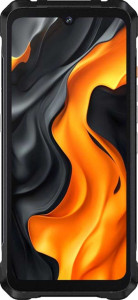
The silicon powering these two devices sits in entirely different performance tiers. The Ulefone Armor 33 Pro runs on the MediaTek Dimensity 7300X, built on a modern 4 nm process, while the Cubot KingKong Power 5 relies on the MediaTek Helio G100 at 6 nm. A smaller semiconductor node generally means greater transistor density, translating to better power efficiency and thermal performance — the Armor 33 Pro's chip can do more work while generating less heat. The Dimensity 7300X also pairs four performance cores clocked at 2.5 GHz against the Helio G100's top speed of 2.2 GHz, giving the Ulefone a tangible edge in CPU-intensive tasks.
The memory story follows the same trajectory. The Armor 33 Pro ships with 16GB of RAM running at 6400 MHz on DDR5, compared to the KingKong Power 5's 6GB at 4266 MHz on DDR4. In practice, more and faster RAM means smoother multitasking, quicker app switching, and more headroom for demanding workloads. Storage is equally lopsided: 512GB on the Armor 33 Pro versus 128GB on the KingKong Power 5 — a fourfold difference that matters for users storing large files, video footage, or extensive offline media. The Armor 33 Pro also supports DirectX 12 versus DirectX 11 on the KingKong Power 5, indicating a more capable GPU pipeline for graphics-intensive applications.
Across every meaningful performance dimension — chipset efficiency, CPU speed, RAM capacity and speed, storage, and GPU capability — the Ulefone Armor 33 Pro holds a commanding advantage. The KingKong Power 5 is not underpowered for basic tasks, but users who multitask heavily, work with large files, or push their device harder will find the Armor 33 Pro significantly more capable.