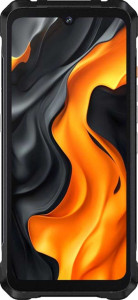
Cubot KingKong Power 5
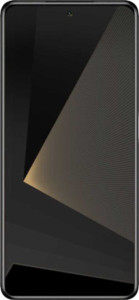
ZTE Nubia Neo 3 GT

Cubot KingKong Power 5 ZTE Nubia Neo 3 GT

Overview

Welcome to our in-depth spec comparison between the Cubot KingKong Power 5 and the ZTE Nubia Neo 3 GT. These two Android 15 smartphones take very different approaches to what matters most in a modern handset. From their contrasting display technologies and raw performance figures to their wildly different strategies around battery capacity and charging speed, this head-to-head covers every key specification to help you decide which device truly fits your lifestyle.

Common Features

  • Neither product can be folded.
  • Both products have a 120Hz refresh rate.
  • HDR10 support is not available on either product.
  • HDR10+ support is not available on either product.
  • Dolby Vision support is not available on either product.
  • Neither product has a secondary screen.
  • Both products have a touchscreen.
  • Both products have integrated LTE.
  • Both products use a 6 nm semiconductor.
  • Both products support 64-bit processing.
  • Both products have integrated graphics.
  • Both products use big.LITTLE technology.
  • Both products have 8 CPU threads.
  • Both products use HMP technology.
  • Both products have TrustZone support.
  • Both products have a dual-lens main camera.
  • Both products have a 16MP front camera.
  • Neither product has built-in optical image stabilization.
  • Both products record main camera video at 1080p 30fps.
  • Neither product has a dual-tone LED flash.
  • Both products have a single flash LED.
  • Neither product has a BSI sensor.
  • Both products have a CMOS sensor.
  • Both products run Android 15.
  • Both products have clipboard warnings.
  • Both products have location privacy options.
  • Both products have camera and microphone privacy options.
  • Mail Privacy Protection is not available on either product.
  • Both products support theme customization.
  • Both products can block app tracking.
  • Cross-site tracking blocking is not available on either product.
  • Neither product supports wireless charging.
  • Both products support fast charging.
  • Both products come with a charger.
  • Neither product has a removable battery.
  • Both products have a battery level indicator.
  • Both products have a rechargeable battery.
  • Neither product has a 3.5mm audio jack.
  • aptX support is not available on either product.
  • LDAC support is not available on either product.
  • Neither product has a radio.
  • Both products support dual SIM.
  • Both products have USB Type-C.
  • Both products have NFC.
  • Both products have a fingerprint scanner.
  • Emergency SOS via satellite is not available on either product.
  • Crash detection is not available on either product.
  • Neither product is DLNA-certified.
  • Both products have a gyroscope.
  • Both products have a video light.
  • Neither product has a sapphire glass display.
  • Neither product has a curved display.
  • Neither product has an e-paper display.

Main Differences

  • The Cubot KingKong Power 5 has a rugged build, while the ZTE Nubia Neo 3 GT does not.
  • The display type is LCD IPS on the Cubot KingKong Power 5 and OLED/AMOLED on the ZTE Nubia Neo 3 GT.
  • Screen size is 6.88″ on the Cubot KingKong Power 5 and 6.8″ on the ZTE Nubia Neo 3 GT.
  • Pixel density is 260 ppi on the Cubot KingKong Power 5 and 386 ppi on the ZTE Nubia Neo 3 GT.
  • Resolution is 720 x 1640 px on the Cubot KingKong Power 5 and 1080 x 2392 px on the ZTE Nubia Neo 3 GT.
  • Damage-resistant glass is present on the Cubot KingKong Power 5 but not on the ZTE Nubia Neo 3 GT.
  • Always-On Display is available on the ZTE Nubia Neo 3 GT but not on the Cubot KingKong Power 5.
  • Internal storage is 128GB on the Cubot KingKong Power 5 and 256GB on the ZTE Nubia Neo 3 GT.
  • RAM is 6GB on the Cubot KingKong Power 5 and 12GB on the ZTE Nubia Neo 3 GT.
  • AnTuTu benchmark score is 412000 on the Cubot KingKong Power 5 and 800000 on the ZTE Nubia Neo 3 GT.
  • The chipset is MediaTek Helio G100 on the Cubot KingKong Power 5 and Unisoc T9100 on the ZTE Nubia Neo 3 GT.
  • The GPU is Mali G57 on the Cubot KingKong Power 5 and Mali G57 MP4 on the ZTE Nubia Neo 3 GT.
  • CPU speed is 2 x 2.2 & 6 x 2 GHz on the Cubot KingKong Power 5 and 1 x 2.7 & 3 x 2.3 & 4 x 2.1 GHz on the ZTE Nubia Neo 3 GT.
  • RAM speed is 4266 MHz on the Cubot KingKong Power 5 and 2133 MHz on the ZTE Nubia Neo 3 GT.
  • OpenGL ES version is 3.2 on the Cubot KingKong Power 5 and 2.3 on the ZTE Nubia Neo 3 GT.
  • Maximum memory amount is 12GB on the Cubot KingKong Power 5 and 8GB on the ZTE Nubia Neo 3 GT.
  • Main camera resolution is 64 & 2 MP on the Cubot KingKong Power 5 and 50 & 2 MP on the ZTE Nubia Neo 3 GT.
  • Battery capacity is 15300 mAh on the Cubot KingKong Power 5 and 6000 mAh on the ZTE Nubia Neo 3 GT.
  • Charging speed is 33W on the Cubot KingKong Power 5 and 80W on the ZTE Nubia Neo 3 GT.
  • Stereo speakers are present on the ZTE Nubia Neo 3 GT but not on the Cubot KingKong Power 5.
  • 5G support is available on the ZTE Nubia Neo 3 GT but not on the Cubot KingKong Power 5.
  • Wi-Fi version supports Wi-Fi 4 and Wi-Fi 5 on the Cubot KingKong Power 5, and Wi-Fi 4, Wi-Fi 5, and Wi-Fi 6 on the ZTE Nubia Neo 3 GT.
  • Bluetooth version is 5.1 on the Cubot KingKong Power 5 and 5.2 on the ZTE Nubia Neo 3 GT.
  • An external memory slot is available on the Cubot KingKong Power 5 but not on the ZTE Nubia Neo 3 GT.
  • Download speed is 650 MBits/s on the Cubot KingKong Power 5 and 750 MBits/s on the ZTE Nubia Neo 3 GT.
  • Upload speed is 150 MBits/s on the Cubot KingKong Power 5 and 210 MBits/s on the ZTE Nubia Neo 3 GT.
Specs Comparison
Cubot KingKong Power 5

Cubot KingKong Power 5

ZTE Nubia Neo 3 GT

ZTE Nubia Neo 3 GT

Design:
has a rugged build
can be folded

The most meaningful design differentiator between these two phones is their build philosophy. The Cubot KingKong Power 5 features a rugged build, meaning it is engineered to withstand harsh conditions — typically offering resistance to drops, dust, and water that a standard consumer smartphone would not survive. The ZTE Nubia Neo 3 GT, by contrast, has no rugged build, placing it in the conventional consumer design category where aesthetics and form factor tend to take priority over physical resilience.

Neither device supports a foldable form factor, so both are traditional candy-bar slabs. This is a minor shared trait worth noting only to confirm that neither product occupies the premium foldable segment.

Based strictly on these design specs, the Cubot KingKong Power 5 holds a clear advantage for users who prioritize durability — outdoor workers, adventurers, or anyone prone to rough handling will find it the more appropriate choice. The Nubia Neo 3 GT is better suited to everyday environments where ruggedness is not a requirement.

Display:
Display type LCD, IPS OLED/AMOLED
screen size 6.88" 6.8"
pixel density 260 ppi 386 ppi
resolution 720 x 1640 px 1080 x 2392 px
refresh rate 120Hz 120Hz
has branded damage-resistant glass
supports HDR10
supports HDR10+
Always-On Display
supports Dolby Vision
Has a secondary screen
has a touch screen

Panel technology is where these two phones diverge most sharply. The ZTE Nubia Neo 3 GT uses an OLED/AMOLED panel, while the Cubot KingKong Power 5 relies on an LCD IPS display. In practice, OLED delivers deeper blacks, higher contrast, and more vibrant colors because each pixel is self-emissive — a meaningful advantage for media consumption and everyday visual experience that no LCD can fully replicate.

The resolution gap reinforces this advantage. The Nubia Neo 3 GT's 1080 x 2392 px resolution translates to a pixel density of 386 ppi, versus the KingKong Power 5's 720 x 1640 px at just 260 ppi. That difference is perceptible to the naked eye — text, fine detail, and images will appear noticeably crisper on the Nubia. Both phones share a 120Hz refresh rate, so scrolling and animations feel equally fluid on either device. The KingKong Power 5 does counter with branded damage-resistant glass, a practical durability perk absent on the Nubia, while the Nubia offers an Always-On Display for at-a-glance notifications without waking the screen.

Overall, the Nubia Neo 3 GT holds a clear display advantage — its superior panel technology and significantly higher pixel density make it the stronger choice for anyone who values screen quality. The KingKong Power 5's damage-resistant glass adds resilience, but cannot offset the gap in visual performance.

Performance:
internal storage 128GB 256GB
RAM 6GB 12GB
AnTuTu benchmark score 412000 800000
Chipset (SoC) name MediaTek Helio G100 Unisoc T9100
GPU name Mali G57 Mali G57 MP4
CPU speed 2 x 2.2 & 6 x 2 GHz 1 x 2.7 & 3 x 2.3 & 4 x 2.1 GHz
Has integrated LTE
RAM speed 4266 MHz 2133 MHz
semiconductor size 6 nm 6 nm
Supports 64-bit
Has integrated graphics
OpenGL ES version 3.2 2.3
Uses big.LITTLE technology
CPU threads 8 threads 8 threads
Uses HMP
Has TrustZone
OpenCL version 2 2
maximum memory amount 12GB 8GB
DDR memory version 4 4

Raw performance tells a decisive story here. The ZTE Nubia Neo 3 GT's Unisoc T9100 chipset achieves an AnTuTu score of approximately 800,000, nearly double the 412,000 posted by the Cubot KingKong Power 5's MediaTek Helio G100. In practical terms, this gap translates to faster app launches, smoother multitasking, and a noticeably more responsive experience under sustained load — particularly relevant for gaming or running demanding applications.

Memory configuration further widens the gap. The Nubia ships with 12GB of RAM and 256GB of storage versus the KingKong Power 5's 6GB RAM and 128GB — meaning the Nubia can keep more apps active in the background without reloading and offers twice the local storage headroom. One nuance worth flagging: the KingKong Power 5 actually runs its RAM at a faster 4266 MHz versus the Nubia's 2133 MHz, and its Helio G100 supports a higher maximum memory ceiling of 12GB compared to the Nubia's 8GB. The KingKong also edges ahead on OpenGL ES 3.2 versus 2.3. However, these are secondary advantages that do not offset the Nubia's overwhelming lead in overall compute throughput.

The Nubia Neo 3 GT is the clear performance winner in this category. Both devices share the same 6nm process node and architectural features like big.LITTLE and HMP, but the Unisoc T9100's raw output and the Nubia's larger RAM complement give it a substantial real-world advantage for anyone prioritizing speed and multitasking capability.

Cameras:
megapixels (main camera) 64 & 2 MP 50 & 2 MP
Has a dual-lens (or multi-lens) main camera
megapixels (front camera) 16MP 16MP
has built-in optical image stabilization
video recording (main camera) 1080 x 30 fps 1080 x 30 fps
Has a dual-tone LED flash
number of flash LEDs 1 1
has a BSI sensor
has a CMOS sensor
has continuous autofocus when recording movies
Has phase-detection autofocus for photos
supports slow-motion video recording
has a built-in HDR mode
has manual exposure
has a flash
optical zoom 0x 0x
has manual ISO
has a serial shot mode
has manual focus
has a front camera
Has laser autofocus
Shoots 360° panorama
has manual white balance
shoots raw
has touch autofocus
has manual shutter speed
can create panoramas in-camera
Has a front-facing LED flash
has a dual-lens (or multi-lens) front camera
supports HDR10 recording
supports Dolby Vision recording
has a front-facing camera under the display
Has a RGB LED flash
has 3D photo/video recording capabilities

Rarely does a camera comparison between two phones come down to a single differentiator, but that is precisely the case here. Both the Cubot KingKong Power 5 and the ZTE Nubia Neo 3 GT share an essentially identical camera feature set — dual-lens rear systems, 16MP front cameras, 1080p/30fps video recording, phase-detection autofocus, slow-motion support, and the same suite of manual controls. Neither offers optical image stabilization, optical zoom, or RAW capture.

The only measurable difference is the main sensor resolution: the KingKong Power 5 leads with a 64MP primary lens versus the Nubia Neo 3 GT's 50MP. On paper, higher megapixels can yield more detail when cropping or printing large, but this advantage is highly dependent on sensor size, lens quality, and image processing — none of which are provided in the specs. A 14MP gap at this resolution tier does not guarantee a meaningfully superior photo in real-world conditions.

Given how thoroughly matched these two phones are across every other camera attribute, this category is effectively a near-tie. The KingKong Power 5 holds a marginal nominal edge due to its higher megapixel count, but users should not expect a dramatic difference in everyday shooting performance between the two.

Operating system:
Android version Android 15 Android 15
has clipboard warnings
has location privacy options
has camera/microphone privacy options
has Mail Privacy Protection
has theme customization
can block app tracking
blocks cross-site tracking
has on-device machine learning
has notification permissions
has media picker
Can play games while they download
has dark mode
has Wi-Fi password sharing
has battery health check
has an extra dim mode
has focus modes
has dynamic theming
can offload apps
Has customizable notifications
has Live Text
has full-page screenshots
supports split screen
gets direct OS updates
has PiP
Can be used as a PC
Has sharing intents
has a child lock
Supports widgets
Is free and open source
Has offline voice recognition
has voice commands
Tracks the current position of a mobile device
is a multi-user system
has Quick Start

On the software front, these two phones are in complete lockstep. Both run Android 15 and share an identical feature set across every tracked specification — from privacy controls like location and camera/microphone permissions, to productivity features like split-screen, picture-in-picture, and widget support, to quality-of-life additions like dynamic theming, extra dim mode, and on-device machine learning.

Notably, neither device receives direct OS updates, meaning both will rely on manufacturer-pushed patches rather than receiving updates straight from Google. This is a shared limitation worth keeping in mind for long-term software support, though it does not differentiate one phone from the other.

This category is an absolute tie. There is no software-based reason to choose one device over the other — every feature present on one is equally present on the other. Buyers should look to other spec groups to inform their decision.

Battery:
battery power 15300 mAh 6000 mAh
has wireless charging
Supports fast charging
charging speed 33W 80W
comes with a charger
has a removable battery
has a battery level indicator
has a rechargeable battery

Battery capacity is where the Cubot KingKong Power 5 makes its most dramatic statement. Its 15,300 mAh cell is more than 2.5 times larger than the ZTE Nubia Neo 3 GT's already-generous 6,000 mAh pack. For context, even 6,000 mAh comfortably exceeds a full day of heavy use for most users — so the KingKong Power 5's capacity pushes it firmly into multi-day territory, making it a compelling choice for heavy users, frequent travelers, or anyone without reliable access to a charger.

The trade-off comes at the charging end. The Nubia Neo 3 GT counters with significantly faster 80W charging versus the KingKong Power 5's 33W. In real-world terms, 80W can replenish a 6,000 mAh battery in well under an hour, while 33W applied to a 15,300 mAh cell will require considerably longer to reach a full charge. Both phones come bundled with a charger and support fast charging, so neither user is left waiting with a completely basic setup — but the recharge time gap is meaningful.

Ultimately, the KingKong Power 5 holds the stronger battery advantage for endurance-focused users. The Nubia's faster charging speed is a practical perk, but it compensates for having far less capacity rather than surpassing the KingKong. For raw longevity between charges, the KingKong Power 5 wins this category decisively.

Audio:
has a socket for a 3.5 mm audio jack
has stereo speakers
has aptX
has LDAC
has aptX HD
has aptX Adaptive
has aptX Lossless
Has a radio

Audio hardware is lean on both devices, but one meaningful difference exists. The ZTE Nubia Neo 3 GT features stereo speakers, while the Cubot KingKong Power 5 does not. Stereo output creates a wider, more immersive soundstage for media playback, gaming, and speakerphone calls — a tangible everyday advantage over a single mono speaker setup.

Beyond that, the two phones are evenly matched in their limitations. Neither includes a 3.5mm headphone jack, so both users are pushed toward wireless or USB-C audio solutions. Advanced wireless audio codecs like aptX, LDAC, and their variants are absent on both, meaning neither device offers high-fidelity Bluetooth audio for discerning listeners with compatible headphones.

The Nubia Neo 3 GT takes a clear edge in this category solely on the strength of its stereo speaker configuration. It is a modest but real-world advantage for anyone who regularly consumes media or plays games without headphones. The KingKong Power 5 offers no compensating audio feature to close that gap.

Connectivity & Features:
release date May 2025 March 2025
has 5G support
Wi-Fi version Wi-Fi 4 (802.11n), Wi-Fi 5 (802.11ac) Wi-Fi 4 (802.11n), Wi-Fi 5 (802.11ac), Wi-Fi 6 (802.11ax)
SIM cards 2 SIM 2 SIM
Bluetooth version 5.1 5.2
has an external memory slot
Has USB Type-C
has NFC
download speed 650 MBits/s 750 MBits/s
upload speed 150 MBits/s 210 MBits/s
Has a fingerprint scanner
has emergency SOS via satellite
has crash detection
is DLNA-certified
has a gyroscope
supports ANT+
Has a heart rate monitor
has GPS
has a compass
supports Wi-Fi
Has an infrared sensor
has an accelerometer
has a cellular module
Has a barometer
has an HDMI output
Uses 3D facial recognition
Has an iris scanner
Stylus included
supports Galileo
Has motion tracking
Has optical tracking
Has a built-in projector

Wireless connectivity is where the ZTE Nubia Neo 3 GT pulls ahead most meaningfully. It supports 5G, while the Cubot KingKong Power 5 is limited to 4G LTE — a gap that matters increasingly as 5G networks expand, and one that is reflected in the cellular speeds: the Nubia reaches 750 Mbps download and 210 Mbps upload versus the KingKong's 650 Mbps and 150 Mbps. The Nubia also adds Wi-Fi 6 support on top of the shared Wi-Fi 5 and Wi-Fi 4 compatibility, offering lower latency and better performance in congested network environments. Its Bluetooth 5.2 edges out the KingKong's 5.1, a minor but forward-compatible advantage for peripheral connectivity.

The KingKong Power 5 counters with one practical feature the Nubia lacks entirely: an external memory slot. For users who need to expand storage affordably or transfer files via card, this is a tangible convenience the Nubia cannot offer — especially relevant given the KingKong ships with only 128GB of internal storage. Both devices share NFC, USB Type-C, GPS with Galileo support, fingerprint scanning, and a standard suite of motion sensors, making them equivalent across the bulk of day-to-day connectivity needs.

The Nubia Neo 3 GT holds the clearer overall advantage here, with 5G, faster speeds, Wi-Fi 6, and a newer Bluetooth version collectively representing a more future-ready connectivity package. The KingKong Power 5's expandable storage is a useful practical offset, but does not outweigh the Nubia's broader wireless superiority.

Miscellaneous:
has a video light
Has sapphire glass display
Has a curved display
Has an e-paper display

The miscellaneous spec group offers no differentiation between these two phones whatsoever. Both the Cubot KingKong Power 5 and the ZTE Nubia Neo 3 GT include a video light, and neither features sapphire glass, a curved display, or an e-paper display — four data points that land identically across the board.

This is a complete tie. None of the specs in this group provide a basis for preferring one device over the other, and buyers should weigh other specification categories when making their decision.

Comparison Summary & Verdict

After examining every specification, these two phones clearly target different types of users. The Cubot KingKong Power 5 is the undisputed champion for anyone who needs longevity above all else, thanks to its enormous 15300 mAh battery, rugged build, and expandable storage — ideal for outdoor enthusiasts, field workers, or frequent travelers far from a power outlet. The ZTE Nubia Neo 3 GT, on the other hand, dominates in pure performance and display quality, offering a sharper OLED screen at 386 ppi, a significantly higher AnTuTu score of 800000, 12GB of RAM, 5G connectivity, stereo speakers, and blazing 80W fast charging. If you need a capable all-rounder with top-tier specs for gaming or multimedia, the Neo 3 GT is the stronger pick. Choose the KingKong Power 5 if endurance and ruggedness are non-negotiable.

Cubot KingKong Power 5
Buy Cubot KingKong Power 5 if...

Buy the Cubot KingKong Power 5 if you need an ultra-high-capacity battery for extended use away from power sources, and want a rugged, durable build with expandable storage.

ZTE Nubia Neo 3 GT
Buy ZTE Nubia Neo 3 GT if...

Buy the ZTE Nubia Neo 3 GT if you prioritize superior performance, a sharper OLED display, 5G connectivity, and faster 80W charging in a feature-rich everyday smartphone.