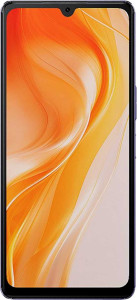
Cubot P90
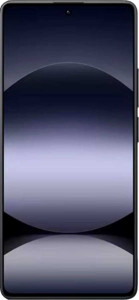
Xiaomi Redmi Note 14S

Cubot P90 Xiaomi Redmi Note 14S

Overview

Welcome to our in-depth specification face-off between the Cubot P90 and the Xiaomi Redmi Note 14S — two Android 15 mid-range smartphones that share a surprising amount of common ground while diverging sharply in key areas. In this comparison, we examine their display quality, camera capabilities, audio features, battery and charging performance, and overall build to help you decide which device better suits your needs.

Common Features

  • Neither product has a rugged build.
  • Neither product can be folded.
  • Both products have a 120Hz refresh rate.
  • HDR10 support is not available on either product.
  • HDR10+ support is not available on either product.
  • Dolby Vision support is not available on either product.
  • Both products have a touch screen.
  • Both products come with 256GB of internal storage.
  • Both products use a Mali G57 GPU.
  • Both products have a CPU speed of 2 x 2.2 & 6 x 2 GHz.
  • Both products have integrated LTE.
  • Both products have RAM speed of 4266 MHz.
  • Both products are built on a 6 nm semiconductor process.
  • Both products support 64-bit computing.
  • Both products support DirectX 11.
  • Both products have a multi-lens main camera.
  • Both products have a 16MP front camera.
  • A dual-tone LED flash is not present on either product.
  • Both products have a single LED flash.
  • A BSI sensor is not present on either product.
  • Both products have a CMOS sensor.
  • Both products support continuous autofocus when recording video.
  • Both products support phase-detection autofocus for photos.
  • Both products run Android 15.
  • Both products display clipboard warnings.
  • Both products offer location privacy options.
  • Both products offer camera and microphone privacy options.
  • Mail Privacy Protection is not available on either product.
  • Both products support theme customization.
  • Both products can block app tracking.
  • Cross-site tracking blocking is not available on either product.
  • Neither product supports wireless charging.
  • Both products support fast charging.
  • Neither product has a removable battery.
  • Both products have a battery level indicator.
  • Both products have a rechargeable battery.
  • aptX support is not available on either product.
  • aptX HD support is not available on either product.
  • aptX Adaptive support is not available on either product.
  • aptX Lossless support is not available on either product.
  • Neither product supports 5G.
  • Both products support Wi-Fi 4 (802.11n) and Wi-Fi 5 (802.11ac).
  • Both products have dual SIM card slots.
  • Both products have Bluetooth 5.2.
  • Both products have an external memory slot.
  • Both products have a USB Type-C connector.
  • Both products have NFC.
  • Both products have a download speed of 650 MBits/s.
  • Both products have a video light.
  • Neither product has a sapphire glass display.
  • Neither product has a curved display.
  • Neither product has an e-paper display.

Main Differences

  • Water resistance is present on Xiaomi Redmi Note 14S but not available on Cubot P90.
  • Weight is 209 g on Cubot P90 and 179 g on Xiaomi Redmi Note 14S.
  • Thickness is 8.6 mm on Cubot P90 and 8 mm on Xiaomi Redmi Note 14S.
  • Width is 78.1 mm on Cubot P90 and 75 mm on Xiaomi Redmi Note 14S.
  • Height is 172.3 mm on Cubot P90 and 161.1 mm on Xiaomi Redmi Note 14S.
  • Volume is 115.727018 cm³ on Cubot P90 and 96.66 cm³ on Xiaomi Redmi Note 14S.
  • Display type is LCD IPS on Cubot P90 and OLED/AMOLED on Xiaomi Redmi Note 14S.
  • Screen size is 6.88″ on Cubot P90 and 6.67″ on Xiaomi Redmi Note 14S.
  • Pixel density is 260 ppi on Cubot P90 and 395 ppi on Xiaomi Redmi Note 14S.
  • Resolution is 720 x 1640 px on Cubot P90 and 1080 x 2400 px on Xiaomi Redmi Note 14S.
  • Damage-resistant glass is present on Xiaomi Redmi Note 14S but not available on Cubot P90.
  • Always-On Display is available on Xiaomi Redmi Note 14S but not on Cubot P90.
  • A secondary screen is present on Cubot P90 but not on Xiaomi Redmi Note 14S.
  • RAM is 12GB on Cubot P90 and 8GB on Xiaomi Redmi Note 14S.
  • The chipset is MediaTek Helio G100 on Cubot P90 and MediaTek Helio G99 on Xiaomi Redmi Note 14S.
  • GPU clock speed is 1000 MHz on Cubot P90 and 950 MHz on Xiaomi Redmi Note 14S.
  • Main camera resolution is 64 & 5 MP on Cubot P90 and 200 & 8 & 2 MP on Xiaomi Redmi Note 14S.
  • Optical image stabilization is present on Xiaomi Redmi Note 14S but not available on Cubot P90.
  • Battery capacity is 5100 mAh on Cubot P90 and 5000 mAh on Xiaomi Redmi Note 14S.
  • Charging speed is 18W on Cubot P90 and 67W on Xiaomi Redmi Note 14S.
  • A 3.5 mm audio jack is present on Xiaomi Redmi Note 14S but not available on Cubot P90.
  • Stereo speakers are present on Xiaomi Redmi Note 14S but not on Cubot P90.
  • A radio is present on Xiaomi Redmi Note 14S but not on Cubot P90.
  • An infrared sensor is present on Xiaomi Redmi Note 14S but not on Cubot P90.
Specs Comparison
Cubot P90

Cubot P90

Xiaomi Redmi Note 14S

Xiaomi Redmi Note 14S

Design:
water resistance None Water resistant
weight 209 g 179 g
thickness 8.6 mm 8 mm
width 78.1 mm 75 mm
height 172.3 mm 161.1 mm
volume 115.727018 cm³ 96.66 cm³
has a rugged build
can be folded

In terms of physical footprint, the Xiaomi Redmi Note 14S is notably more compact across every dimension — 161.1 mm tall, 75 mm wide, and 8 mm thick — compared to the Cubot P90 at 172.3 × 78.1 × 8.6 mm. This translates to a volume difference of roughly 19 cm³, which is significant: the Redmi Note 14S occupies meaningfully less space in a pocket or hand, making one-handed use and everyday carry noticeably more comfortable.

The weight gap reinforces this advantage. At 179 g, the Redmi Note 14S is 30 g lighter than the Cubot P90's 209 g. Over the course of a day — extended calls, scrolling, or holding the phone up — that difference is genuinely perceptible. The P90's heft isn't extreme, but it edges toward the heavier end of modern smartphones, which can cause hand fatigue during prolonged use.

Perhaps the most practically important differentiator is water resistance: the Redmi Note 14S carries a water resistant rating, while the P90 has none. This provides real-world protection against rain, splashes, and accidental spills — a meaningful daily-life advantage. Neither phone features a rugged build or foldable form factor. Overall, the Redmi Note 14S holds a clear edge in design: it is slimmer, lighter, more pocketable, and better protected against moisture.

Display:
Display type LCD, IPS OLED/AMOLED
screen size 6.88" 6.67"
pixel density 260 ppi 395 ppi
resolution 720 x 1640 px 1080 x 2400 px
refresh rate 120Hz 120Hz
has branded damage-resistant glass
supports HDR10
supports HDR10+
Always-On Display
supports Dolby Vision
Has a secondary screen
has a touch screen

The panel technology gap here is substantial. The Redmi Note 14S uses an OLED/AMOLED display, which delivers true blacks, superior contrast, and more vibrant colors compared to the LCD IPS panel on the Cubot P90. For everyday tasks like browsing, streaming, or viewing photos, the perceptual difference is immediately noticeable — OLED pixels emit their own light and switch off completely for dark content, producing a visual richness that LCD simply cannot replicate.

Resolution sharpness is another decisive gap: the Redmi Note 14S resolves at 1080 × 2400 px with a pixel density of 395 ppi, versus the P90's 720 × 1640 px at just 260 ppi. At typical viewing distances, text and fine detail on the P90 will appear visibly softer — a real-world limitation when reading small text or viewing detailed images. The P90 does offer a slightly larger 6.88″ screen versus the Note 14S's 6.67″, but screen real estate gains are largely negated when pixel density is this far apart. Both panels share a 120Hz refresh rate, meaning scrolling and animations feel equally fluid on each device.

The Redmi Note 14S also brings two meaningful extras: branded damage-resistant glass for scratch and impact protection, and an Always-On Display for at-a-glance notifications without waking the screen. The Cubot P90 counters with a secondary screen — a niche but potentially useful feature for quick info or controls without turning on the main panel. Still, taken as a whole, the Redmi Note 14S has a commanding display advantage, with superior panel technology, far greater sharpness, and better durability.

Performance:
internal storage 256GB 256GB
RAM 12GB 8GB
Chipset (SoC) name MediaTek Helio G100 Mediatek Helio G99
GPU name Mali G57 Mali G57
CPU speed 2 x 2.2 & 6 x 2 GHz 2 x 2.2 & 6 x 2 GHz
GPU clock speed 1000 MHz 950 MHz
Has integrated LTE
RAM speed 4266 MHz 4266 MHz
semiconductor size 6 nm 6 nm
Supports 64-bit
DirectX version DirectX 11 DirectX 11
Has integrated graphics
OpenGL ES version 3.2 3.2
Uses big.LITTLE technology
CPU threads 8 threads 8 threads
Uses HMP
Has TrustZone
maximum memory bandwidth 17.1 GB/s 17.1 GB/s
OpenCL version 2 2
maximum memory amount 12GB 12GB
Thermal Design Power (TDP) 5W 5W
DDR memory version 4 4

These two phones are built on remarkably similar silicon foundations — both use a 6 nm MediaTek Helio chip with an identical 8-thread big.LITTLE CPU configuration running at 2 x 2.2 GHz + 6 x 2 GHz, the same Mali G57 GPU, and matching memory bandwidth, TDP, and DDR4 memory architecture. For the vast majority of everyday tasks — app launching, multitasking, social media, and casual gaming — users of either device will experience near-indistinguishable day-to-day performance.

The meaningful distinctions are narrow but real. The Cubot P90 runs the Helio G100 to the Redmi Note 14S's Helio G99, and pairs it with a marginally faster GPU clock of 1000 MHz versus 950 MHz — a ~5% advantage that is unlikely to be perceptible outside of sustained GPU-intensive workloads. More practically significant is the RAM difference: the P90 ships with 12 GB of RAM compared to the Note 14S's 8 GB. Extra RAM doesn't speed up individual tasks, but it does allow more apps to stay resident in the background, reducing reload times when switching between multiple applications — a tangible quality-of-life benefit for heavy multitaskers.

Both devices cap out at 256 GB of internal storage and share the same maximum addressable memory ceiling. On balance, the Cubot P90 holds a modest performance edge — its RAM advantage is the most practically impactful differentiator in this group, even if the overall performance tier of both phones is effectively the same.

Cameras:
megapixels (main camera) 64 & 5 MP 200 & 8 & 2 MP
Has a dual-lens (or multi-lens) main camera
megapixels (front camera) 16MP 16MP
has built-in optical image stabilization
Has a dual-tone LED flash
number of flash LEDs 1 1
has a BSI sensor
has a CMOS sensor
has continuous autofocus when recording movies
Has phase-detection autofocus for photos
supports slow-motion video recording
has a built-in HDR mode
has manual exposure
has a flash
optical zoom 0x 0x
has manual ISO
has a serial shot mode
has manual focus
has a front camera
Has laser autofocus
Shoots 360° panorama
has manual white balance
shoots raw
has touch autofocus
has manual shutter speed
can create panoramas in-camera
Has timelapse function
Has a front-facing LED flash
has a dual-lens (or multi-lens) front camera
supports HDR10 recording
supports Dolby Vision recording
has a front-facing camera under the display
Has a RGB LED flash
has 3D photo/video recording capabilities

The headline difference in this group is raw resolution. The Redmi Note 14S leads with a 200 MP primary sensor — a figure that dwarfs the Cubot P90's 64 MP main shooter. In practice, 200 MP sensors typically use pixel-binning to produce well-exposed default shots, but they unlock exceptional detail retrieval when cropping or shooting in full-resolution mode. The Note 14S also fields a three-lens system (200 + 8 + 2 MP) versus the P90's two-lens setup (64 + 5 MP), giving it greater compositional flexibility across shooting scenarios.

Arguably more impactful than megapixel count is the Redmi Note 14S's inclusion of optical image stabilization (OIS) — a feature absent on the P90. OIS physically compensates for hand movement during capture, meaningfully reducing blur in low-light photography and producing smoother video footage. It is one of the most consequential camera hardware differences a mid-range phone can have, and the P90's lack of it is a real limitation for handheld shots in challenging conditions.

Where the two phones converge is broad: identical 16 MP front cameras, matching feature sets covering phase-detection autofocus, continuous AF during video, slow-motion, HDR, and a full suite of manual controls. Neither shoots RAW or supports optical zoom. Given the combination of a dramatically higher-resolution main sensor and the presence of OIS, the Redmi Note 14S holds a clear camera advantage — particularly for users who prioritize image detail and low-light or video performance.

Operating system:
Android version Android 15 Android 15
has clipboard warnings
has location privacy options
has camera/microphone privacy options
has Mail Privacy Protection
has theme customization
can block app tracking
blocks cross-site tracking
has on-device machine learning
has notification permissions
has media picker
Can play games while they download
has dark mode
has Wi-Fi password sharing
has battery health check
has an extra dim mode
has focus modes
has dynamic theming
can offload apps
Has customizable notifications
has Live Text
has full-page screenshots
supports split screen
gets direct OS updates
has PiP
Can be used as a PC
Has sharing intents
has a child lock
Supports widgets
Is free and open source
Has offline voice recognition
has voice commands
Tracks the current position of a mobile device
is a multi-user system
has Quick Start

Across every single spec in this group, the Cubot P90 and Xiaomi Redmi Note 14S are in complete lockstep — both ship with Android 15 and share an identical feature set without a single point of divergence. From privacy controls like location and camera/microphone permissions to productivity features like split-screen, Picture-in-Picture, and dynamic theming, users of either device get precisely the same software foundation.

That shared baseline is worth acknowledging for what it includes: on-device machine learning, offline voice recognition, customizable notifications, a media picker, child lock, and multi-user support all come standard. Neither phone receives direct OS updates — meaning both rely on manufacturer-mediated update pipelines, which is a consideration for long-term software support regardless of which device is chosen.

With zero differentiators between them, this group is an unambiguous tie. A buyer's OS experience will be functionally identical on both devices, so software preference plays no role in distinguishing the two products here.

Battery:
battery power 5100 mAh 5000 mAh
has wireless charging
Supports fast charging
charging speed 18W 67W
has a removable battery
has a battery level indicator
has a rechargeable battery

Battery capacity is nearly identical — the Cubot P90 edges ahead with 5100 mAh versus the Redmi Note 14S's 5000 mAh. A 100 mAh difference is negligible in real-world usage; both phones sit in the same endurance tier and can be expected to deliver comparable screen-on time under similar workloads.

Where these two devices sharply diverge is charging speed. The Redmi Note 14S supports 67W fast charging, compared to just 18W on the Cubot P90. That is nearly a fourfold difference in charging rate — translating in practice to the Note 14S topping up its battery in a fraction of the time the P90 requires. For users who charge opportunistically throughout the day, or who frequently find themselves needing a quick top-up before heading out, this gap is highly consequential.

Neither phone offers wireless charging or a removable battery, so those are non-factors in this comparison. On balance, the Redmi Note 14S holds a clear advantage here: the marginal capacity lead of the P90 is effectively irrelevant, while the charging speed difference is substantial and directly felt in daily use.

Audio:
has a socket for a 3.5 mm audio jack
has stereo speakers
has aptX
has aptX HD
has aptX Adaptive
has aptX Lossless
Has a radio

Audio is one of the more lopsided categories in this comparison. The Redmi Note 14S brings three meaningful hardware features that the Cubot P90 lacks entirely: a 3.5 mm headphone jack, stereo speakers, and a built-in radio. The P90, by contrast, scores a clean sweep of negatives across every spec in this group.

Each of these omissions carries real-world weight. The absence of a headphone jack on the P90 means wired audio requires a USB-C adapter or Bluetooth headphones — an added friction point and extra cost for users who prefer wired listening. Stereo speakers on the Note 14S produce spatial, directional sound for media consumption, gaming, and calls, whereas a single-speaker setup delivers a noticeably flatter and less immersive audio experience. The FM radio, while a niche feature, adds offline listening capability without any data consumption — useful in areas with poor connectivity or for users who simply prefer it. Neither device supports any aptX codec variant, so Bluetooth audio quality is on equal footing.

The Redmi Note 14S wins this category decisively. Every audio-relevant feature present in the data belongs exclusively to it, leaving the Cubot P90 with no advantages to claim here.

Connectivity & Features:
release date June 2025 March 2025
has 5G support
Wi-Fi version Wi-Fi 4 (802.11n), Wi-Fi 5 (802.11ac) Wi-Fi 4 (802.11n), Wi-Fi 5 (802.11ac)
SIM cards 2 SIM 2 SIM
Bluetooth version 5.2 5.2
has an external memory slot
Has USB Type-C
has NFC
download speed 650 MBits/s 650 MBits/s
upload speed 150 MBits/s 150 MBits/s
Has a fingerprint scanner
has emergency SOS via satellite
has crash detection
is DLNA-certified
has a gyroscope
supports ANT+
Has a heart rate monitor
has GPS
has a compass
supports Wi-Fi
Has an infrared sensor
has an accelerometer
has a cellular module
Has a barometer
has an HDMI output
Uses 3D facial recognition
Has an iris scanner
Stylus included
supports Galileo
Has motion tracking
Has optical tracking
Has a built-in projector

Connectivity parity is the dominant story here. Both phones share an identical spec sheet across nearly every entry in this group: dual SIM, Bluetooth 5.2, Wi-Fi 5, USB Type-C, NFC, expandable storage, and matching LTE download and upload speeds of 650 Mbps / 150 Mbps. For the vast majority of users, this means real-world connectivity performance — whether browsing, streaming, file transfers, or contactless payments — will be functionally indistinguishable between the two devices.

The sensor suites are equally matched, with both packing GPS, Galileo, a gyroscope, accelerometer, compass, and fingerprint scanner. The sole differentiator in the entire group is the Redmi Note 14S's infrared sensor, which the Cubot P90 lacks. An IR blaster allows the phone to act as a universal remote for TVs, air conditioners, and other home appliances — a niche but genuinely convenient feature for users who want it, requiring no additional hardware or apps beyond what ships with the device.

Neither phone supports 5G, satellite SOS, crash detection, or a barometer. Given how closely matched these two devices are, the Redmi Note 14S holds a narrow edge solely by virtue of its infrared sensor — a small but exclusive addition that gives it a functional capability the P90 simply cannot replicate.

Miscellaneous:
has a video light
Has sapphire glass display
Has a curved display
Has an e-paper display

This group offers no basis for differentiation whatsoever. The Cubot P90 and Xiaomi Redmi Note 14S match on every single spec: both have a video light, and neither features sapphire glass, a curved display, or an e-paper display. This is a complete tie with no distinguishing factors between the two products.

Comparison Summary & Verdict

After reviewing every specification, a clear picture emerges for each device. The Xiaomi Redmi Note 14S is the stronger all-rounder: its OLED display with 395 ppi, 200MP main camera with optical image stabilization, 67W fast charging, stereo speakers, 3.5mm audio jack, water resistance, and infrared sensor make it a feature-rich choice for users who want a premium experience in a compact, lighter body. The Cubot P90, on the other hand, appeals to a different kind of user — one who values a larger 6.88-inch screen, more RAM (12GB), a secondary display, and a slightly bigger 5100 mAh battery, all at what is typically a lower price point. If display sharpness, fast charging, and multimedia quality are your priorities, the Redmi Note 14S wins convincingly. If you prefer a bigger screen, more RAM, and a secondary display, the Cubot P90 holds its own as a practical alternative.

Cubot P90
Buy Cubot P90 if...

Buy the Cubot P90 if you want a larger screen, more RAM (12GB), a secondary display, and a slightly larger battery, while keeping costs down.

Xiaomi Redmi Note 14S
Buy Xiaomi Redmi Note 14S if...

Buy the Xiaomi Redmi Note 14S if you prioritize a sharper OLED display, a higher-resolution camera with optical image stabilization, significantly faster 67W charging, stereo speakers, a headphone jack, and water resistance.