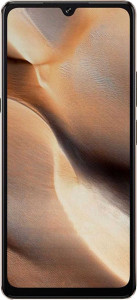
Both phones field dual rear cameras, but their approaches differ in meaningful ways. The Cubot X100 leads with a 64 MP primary sensor, which sounds impressive on paper, but high megapixel counts on budget sensors often rely on pixel binning and don't inherently guarantee better image quality. The Infinix Note 50 Pro 4G opts for a 50 MP main shooter — a figure commonly associated with larger individual pixels that can capture more light per pixel, potentially benefiting low-light performance. The more telling difference is that the Infinix includes optical image stabilization (OIS), while the Cubot has none. OIS is one of the most impactful real-world camera features, physically compensating for hand shake during handheld shots and video — its absence on the Cubot is a genuine limitation for anyone who shoots in motion or in dim conditions.
Video capability also separates them clearly. The Infinix records at up to 1440p at 30 fps, while the Cubot tops out at 1080p at 30 fps. Higher resolution video retains more detail and offers more flexibility for cropping in post. Combined with OIS, the Infinix is the more capable video device by a notable margin. On the front camera, the Infinix again pulls ahead with a 32 MP selfie sensor versus the Cubot's 16 MP — a straightforward resolution advantage for portrait and video call clarity. The Infinix also has two flash LEDs compared to the Cubot's single LED, which can improve flash evenness and coverage.
The feature parity across manual controls, autofocus modes, and shooting modes is extensive — both support phase-detection autofocus, continuous AF during recording, HDR, panorama, slow-motion, and a full suite of manual controls. These shared capabilities mean the Infinix's edge is structural rather than feature-list deep. Overall, the Infinix Note 50 Pro 4G holds a clear camera advantage, driven primarily by OIS, higher video resolution, and a stronger front camera.