Cubot X100
Oppo A5i Pro 5G

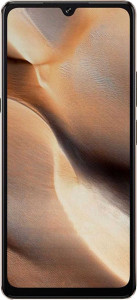
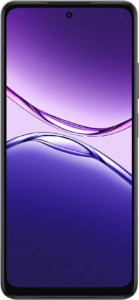
Cubot X100 Oppo A5i Pro 5G

Overview

Welcome to our in-depth comparison of the Cubot X100 and the Oppo A5i Pro 5G, two mid-range 5G smartphones that share a surprising amount of common ground while diverging sharply in a few critical areas. Both devices offer 256GB of storage, 120Hz LCD IPS displays, and fast charging, but the real debate begins when you examine their display sharpness, battery capacity, camera capabilities, and overall performance. Read on to find out which of these contenders best matches your priorities.

Common Features

  • Both products have a 256GB internal storage.
  • Both products support 64-bit architecture.
  • Both products use big.LITTLE technology.
  • Both products have integrated graphics.
  • Both products support LTE.
  • Both products support fast charging.
  • Both products have a rechargeable battery.
  • Both products have a fingerprint scanner.
  • Both products support dual SIM cards.
  • Both products have stereo speakers.
  • Both products have a 3.5 mm audio jack absent.
  • Both products support 5G.
  • Both products support NFC.
  • Both products have a touchscreen display.
  • Both products use LCD, IPS display type.
  • Both products have branded damage-resistant glass.
  • Both products support Dolby Vision.
  • Both products have a CMOS sensor in their main camera.
  • Both products support slow-motion video recording.

Main Differences

  • Cubot X100 has no water resistance, while Oppo A5i Pro 5G is water resistant.
  • Cubot X100 weighs 207 g, while Oppo A5i Pro 5G weighs 194 g.
  • Cubot X100 is 8.9 mm thick, while Oppo A5i Pro 5G is 8 mm thick.
  • Cubot X100 is 78.1 mm wide, while Oppo A5i Pro 5G is 76.2 mm wide.
  • Cubot X100 has a height of 171.9 mm, while Oppo A5i Pro 5G has a height of 165.7 mm.
  • Cubot X100 has a volume of 119.49 cm³, while Oppo A5i Pro 5G has a volume of 101.01 cm³.
  • Cubot X100 has a 6.88″ screen size, while Oppo A5i Pro 5G has a 6.67″ screen size.
  • Cubot X100 has a pixel density of 260 ppi, while Oppo A5i Pro 5G has a pixel density of 394 ppi.
  • Cubot X100 has a resolution of 720 x 1640 px, while Oppo A5i Pro 5G has a resolution of 720 x 1604 px.
  • Cubot X100 has a secondary screen, while Oppo A5i Pro 5G does not.
  • Cubot X100 has 12GB of RAM, while Oppo A5i Pro 5G has 8GB of RAM.
  • Cubot X100 uses the MediaTek Dimensity 7025 chipset, while Oppo A5i Pro 5G uses the MediaTek Dimensity 6300 chipset.
  • Cubot X100 has an IMG BXM-8-256 GPU, while Oppo A5i Pro 5G has an Arm Mali-G57 MC2 GPU.
  • Cubot X100 has a CPU speed of 2 x 2.5 & 6 x 2 GHz, while Oppo A5i Pro 5G has a CPU speed of 2 x 2.4 & 6 x 2 GHz.
  • Cubot X100 scores 2291 in Geekbench 6 multi-core test, while Oppo A5i Pro 5G scores 2012.
  • Cubot X100 scores 884 in Geekbench 6 single-core test, while Oppo A5i Pro 5G scores 782.
  • Cubot X100 has a GPU clock speed of 900 MHz, while Oppo A5i Pro 5G has a GPU clock speed of 950 MHz.
  • Cubot X100 has 2750 MHz RAM speed, while Oppo A5i Pro 5G has 2133 MHz RAM speed.
  • Cubot X100 has a maximum memory bandwidth of 51.2 GB/s, while Oppo A5i Pro 5G has a maximum memory bandwidth of 17.07 GB/s.
  • Cubot X100 supports a maximum memory amount of 16GB, while Oppo A5i Pro 5G supports a maximum memory amount of 12GB.
  • Cubot X100 uses DDR5 memory, while Oppo A5i Pro 5G uses DDR4 memory.
  • Cubot X100 has 64 & 5 & 2 MP main cameras, while Oppo A5i Pro 5G has 50 & 2 MP main cameras.
  • Cubot X100 has a 16MP front camera, while Oppo A5i Pro 5G has a 5MP front camera.
  • Cubot X100 lacks built-in optical image stabilization, while Oppo A5i Pro 5G has built-in optical image stabilization.
  • Cubot X100 records 1080 x 30 fps video with the main camera, while Oppo A5i Pro 5G records 1080 x 60 fps video with the main camera.
  • Cubot X100 runs on Android 15, while Oppo A5i Pro 5G runs on Android 16.
  • Cubot X100 has a 5100 mAh battery, while Oppo A5i Pro 5G has a 6000 mAh battery.
  • Cubot X100 supports 33W charging speed, while Oppo A5i Pro 5G supports 45W charging speed.
  • Cubot X100 lacks aptX, LDAC, and aptX HD support, while Oppo A5i Pro 5G supports aptX, LDAC, and aptX HD.
  • Cubot X100 has Bluetooth 5.1, while Oppo A5i Pro 5G has Bluetooth 5.4.
  • Cubot X100 has a download speed of 2770 MBits/s, while Oppo A5i Pro 5G has a download speed of 3300 MBits/s.
Specs Comparison
Cubot X100

Cubot X100

Oppo A5i Pro 5G

Oppo A5i Pro 5G

Design:
water resistance None Water resistant
weight 207 g 194 g
thickness 8.9 mm 8 mm
width 78.1 mm 76.2 mm
height 171.9 mm 165.7 mm
volume 119.485971 cm³ 101.01072 cm³
has a rugged build
can be folded

In terms of physical footprint, the Oppo A5i Pro 5G is the more compact device across every dimension — shorter at 165.7 mm versus 171.9 mm, narrower at 76.2 mm versus 78.1 mm, and slimmer at 8 mm versus 8.9 mm. The cumulative effect is significant: the Oppo displaces roughly 101 cm³ of volume compared to the Cubot X100's 119.5 cm³ — about 15% less bulk. In practice, this translates to a phone that sits more naturally in a hand or pocket, particularly for users with smaller hands or those who prioritize one-handed usability.

The weight gap reinforces this advantage. At 194 g, the Oppo is noticeably lighter than the Cubot's 207 g. While 13 grams may sound trivial on paper, it becomes meaningful during extended use — think long phone calls, navigation sessions, or reading — where a heavier device causes hand fatigue more quickly. Neither phone qualifies as featherweight by modern standards, but the Oppo edges toward the more comfortable end of the mid-range weight spectrum.

The single most impactful differentiator in this group, however, is water resistance. The Oppo A5i Pro 5G carries a water-resistant rating, while the Cubot X100 has none. This is not a minor detail — it means the Oppo can survive rain, splashes, or accidental spills without immediate risk of damage, offering a meaningful durability advantage in everyday scenarios. Neither device has a rugged build or a foldable form factor. Overall, the Oppo A5i Pro 5G holds a clear and well-rounded edge in design: it is slimmer, lighter, more compact, and crucially, water resistant.

Display:
Display type LCD, IPS LCD, IPS
screen size 6.88" 6.67"
pixel density 260 ppi 394 ppi
resolution 720 x 1640 px 720 x 1604 px
refresh rate 120Hz 120Hz
has branded damage-resistant glass
supports HDR10
supports HDR10+
Always-On Display
supports Dolby Vision
Has a secondary screen
has a touch screen

Both phones share the same panel technology — IPS LCD — and match on refresh rate at 120Hz, which delivers smooth scrolling and responsive touch interaction on either device. Damage-resistant glass is also present on both, offering baseline protection against everyday scratches. These commonalities mean the real battle here comes down to screen size versus sharpness, and that trade-off is starker than it might first appear.

The Cubot X100 offers a larger canvas at 6.88″, which benefits media consumption and multitasking, but it pays a steep price in clarity. Despite sharing a similarly modest 720p resolution, the Cubot's bigger panel stretches those pixels much further, resulting in a pixel density of just 260 ppi. The Oppo A5i Pro 5G, with its 6.67″ screen, packs those same pixels into a smaller area, yielding a substantially sharper 394 ppi. That gap — over 130 pixels per inch — is perceptible to the naked eye, especially when reading text, viewing detailed images, or browsing the web. At 260 ppi, individual pixels can become distinguishable at normal viewing distances; at 394 ppi, the image looks notably crisper and more refined.

The Cubot does introduce one genuinely distinctive feature: a secondary screen, which the Oppo lacks entirely. Depending on implementation, this could display notifications, media controls, or other at-a-glance information — adding a layer of utility that the Oppo simply cannot match. Still, this is a niche advantage that won't sway most users. On balance, the Oppo A5i Pro 5G holds the stronger display edge thanks to its dramatically superior pixel density, which directly and consistently improves everyday visual quality.

Performance:
internal storage 256GB 256GB
RAM 12GB 8GB
Chipset (SoC) name MediaTek Dimensity 7025 MediaTek Dimensity 6300
GPU name IMG BXM-8-256 Arm Mali-G57 MC2
CPU speed 2 x 2.5 & 6 x 2 GHz 2 x 2.4 & 6 x 2 GHz
Geekbench 6 result (multi) 2291 2012
Geekbench 6 result (single) 884 782
GPU clock speed 900 MHz 950 MHz
Has integrated LTE
RAM speed 2750 MHz 2133 MHz
semiconductor size 6 nm 6 nm
Supports 64-bit
DirectX version DirectX 12 DirectX 12
Has integrated graphics
Uses big.LITTLE technology
Uses HMP
maximum memory bandwidth 51.2 GB/s 17.07 GB/s
maximum memory amount 16GB 12GB
uses multithreading
DDR memory version 5 4

Under the hood, both phones are built on the same 6 nm manufacturing process and share a structurally similar octa-core CPU layout, but the chipsets themselves sit in meaningfully different performance tiers. The Cubot X100 runs on the MediaTek Dimensity 7025, while the Oppo A5i Pro 5G uses the Dimensity 6300 — a step down in the lineup. Geekbench 6 scores confirm the gap: the Cubot leads in both single-core (884 vs 782) and multi-core performance (2291 vs 2012). In practice, single-core scores reflect responsiveness in everyday tasks like app launches and UI interactions, while multi-core scores matter for heavier workloads. The Cubot's ~13% lead in both metrics is noticeable, though neither phone is targeting flagship territory.

Where the Cubot X100 pulls further ahead is in memory configuration. It ships with 12 GB of RAM versus the Oppo's 8 GB, and critically, it uses DDR5 memory running at 2750 MHz compared to the Oppo's DDR4 at 2133 MHz. The downstream effect on memory bandwidth is dramatic: the Cubot reaches 51.2 GB/s, nearly three times the Oppo's 17.07 GB/s. Higher bandwidth means the CPU and GPU can feed on data more quickly, reducing bottlenecks during demanding tasks like gaming, video processing, or heavy multitasking. More RAM also allows more apps to remain active in the background without being force-closed.

The Cubot X100 holds a clear and comprehensive performance advantage in this category. Its faster chipset, larger RAM pool, newer memory standard, and vastly superior memory bandwidth combine to make it the more capable device for users who push their phones hard — whether through gaming, intensive multitasking, or future-proofing against increasingly demanding apps.

Cameras:
megapixels (main camera) 64 & 5 & 2 MP 50 & 2 MP
Has a dual-lens (or multi-lens) main camera
megapixels (front camera) 16MP 5MP
has built-in optical image stabilization
video recording (main camera) 1080 x 30 fps 1080 x 60 fps
Has a dual-tone LED flash
number of flash LEDs 1 1
has a BSI sensor
has a CMOS sensor
has continuous autofocus when recording movies
Has phase-detection autofocus for photos
supports slow-motion video recording
has a built-in HDR mode
has manual exposure
has a flash
optical zoom 0x 0x
has manual ISO
has a serial shot mode
has manual focus
has a front camera
Has laser autofocus
Shoots 360° panorama
has manual white balance
shoots raw
has touch autofocus
has manual shutter speed
can create panoramas in-camera
Has a front-facing LED flash
has a dual-lens (or multi-lens) front camera
supports HDR10 recording
supports Dolby Vision recording
has a front-facing camera under the display
Has a RGB LED flash
has 3D photo/video recording capabilities

The main camera systems tell an interesting story. The Cubot X100 leads on raw resolution with a 64 MP primary sensor, compared to the Oppo A5i Pro 5G's 50 MP shooter — a gap that can yield finer detail in well-lit conditions and more flexibility when cropping. Both phones add a secondary depth sensor, making them dual-lens setups in name, though neither offers optical zoom. Where the Oppo meaningfully punches back is with optical image stabilization (OIS), a feature the Cubot entirely lacks. OIS physically compensates for hand movement during capture, which reduces blur in low-light photography and produces smoother handheld video — a real-world advantage that often matters more than extra megapixels.

On video, the Oppo again differentiates itself by supporting 1080p at 60 fps, versus the Cubot's cap of 1080p at 30 fps. Shooting at 60 fps produces visibly smoother motion in fast-moving scenes — sports, kids, pets — and also provides more usable footage for slow-motion edits in post. For users who prioritize video quality, this is a tangible distinction. Both phones share the same manual control toolkit — ISO, exposure, white balance, and focus — as well as HDR mode, panorama, phase-detection autofocus, and continuous autofocus during recording, so neither holds an edge in shooting flexibility.

The selfie camera swings decisively in the Cubot's favor: its 16 MP front sensor dwarfs the Oppo's 5 MP unit. For users who frequently take selfies or participate in video calls, this gap is hard to ignore — more megapixels on the front camera directly translate to sharper, more detailed self-portraits. Taken together, this category is genuinely split: the Cubot X100 wins on selfie resolution and main camera megapixel count, while the Oppo A5i Pro 5G holds the edge in video quality and stabilization. The better choice depends on whether the user prioritizes stills or video.

Operating system:
Android version Android 15 Android 16
has clipboard warnings
has location privacy options
has camera/microphone privacy options
has Mail Privacy Protection
has theme customization
can block app tracking
blocks cross-site tracking
has on-device machine learning
has notification permissions
has media picker
Can play games while they download
has dark mode
has Wi-Fi password sharing
has battery health check
has an extra dim mode
has focus modes
has dynamic theming
can offload apps
Has customizable notifications
has Live Text
has full-page screenshots
supports split screen
gets direct OS updates
has PiP
Can be used as a PC
Has sharing intents
has a child lock
Supports widgets
Is free and open source
Has offline voice recognition
has voice commands
Tracks the current position of a mobile device
is a multi-user system
has Quick Start

Across this entire specification group, the two phones are virtually identical — sharing the same privacy controls, productivity features, accessibility options, and core Android capabilities. Both support split-screen multitasking, picture-in-picture, dynamic theming, customizable notifications, on-device machine learning, and a full suite of privacy tools including camera and microphone access controls. For the vast majority of users, day-to-day software experience on either device will feel functionally equivalent.

The one differentiator — and it is a meaningful one — is the base Android version. The Oppo A5i Pro 5G ships with Android 16, while the Cubot X100 launches on Android 15. A newer Android version typically brings incremental improvements to performance tuning, security patches, and system-level features. More importantly, starting from a higher version means the Oppo has a longer runway before it reaches the end of mainstream Android support, assuming both devices receive a similar number of future updates. Neither phone receives direct OS updates according to the provided data, which limits the long-term software longevity of both.

The Oppo A5i Pro 5G takes a narrow but real edge here solely on the basis of its newer Android version. In a category where every other spec is tied, shipping with Android 16 out of the box represents a modest but tangible head start in terms of recency and potential support lifespan.

Battery:
battery power 5100 mAh 6000 mAh
has wireless charging
Supports fast charging
charging speed 33W 45W
has reverse wireless charging
comes with a charger
has a removable battery
has a battery level indicator
has a rechargeable battery

Battery is one of the cleaner-cut categories in this comparison, and the Oppo A5i Pro 5G leads on both key metrics. Its 6000 mAh cell outpaces the Cubot X100's 5100 mAh by a substantial 900 mAh — roughly a 17% larger reserve. In practical terms, that difference can translate to several additional hours of screen-on time over a full day, or the confidence to stretch into a second day of lighter use without reaching for a cable. For heavy users who stream, game, or navigate frequently, that headroom is genuinely meaningful.

Charging speed follows the same pattern. The Oppo supports 45W fast charging versus the Cubot's 33W, meaning it can replenish its larger battery in less time — a doubly efficient outcome. Both phones include a charger in the box and support fast charging, so neither user is left scrambling for accessories. Wireless charging and reverse wireless charging are absent on both devices, which is typical at this price tier and not a meaningful differentiator.

The Oppo A5i Pro 5G holds a clear and unambiguous advantage here: a bigger battery and faster charging together make it the stronger choice for users who prioritize longevity and quick top-ups. The Cubot's 5100 mAh is by no means inadequate, but it simply cannot match the Oppo's combination of capacity and replenishment speed.

Audio:
has a socket for a 3.5 mm audio jack
has stereo speakers
has aptX
has LDAC
has aptX HD
has aptX Adaptive
has aptX Lossless
Has a radio

For speaker output and wired connectivity, the two phones are on equal footing — both offer stereo speakers and both have dropped the 3.5 mm headphone jack, meaning wireless audio is the primary listening path for each. The stereo speaker setup on both is a welcome feature for media consumption, providing a wider, more immersive soundstage than a single mono driver.

Where the Oppo A5i Pro 5G decisively separates itself is in wireless audio codec support. It carries aptX and aptX HD, which deliver lower-latency and higher-quality Bluetooth audio to compatible headphones — the latter capable of transmitting up to 24-bit audio, bringing it closer to lossless quality over a wireless connection. More notably, the Oppo also supports LDAC, Sony's high-resolution Bluetooth codec that transmits up to three times more data than standard SBC. For users with quality wireless headphones that support LDAC, this unlocks a noticeably richer, more detailed listening experience. The Cubot X100 supports none of these codecs, defaulting to standard Bluetooth audio quality regardless of the headphones paired with it.

The Oppo A5i Pro 5G wins this category outright. While both phones share the same speaker configuration and lack a headphone jack, the Oppo's support for LDAC, aptX, and aptX HD makes it a meaningfully better choice for anyone who listens through quality wireless headphones and wants to get the most out of them.

Connectivity & Features:
release date August 2025 June 2025
has 5G support
Wi-Fi version Wi-Fi 4 (802.11n), Wi-Fi 5 (802.11ac) Wi-Fi 4 (802.11n), Wi-Fi 5 (802.11ac)
SIM cards 2 SIM 2 SIM
Bluetooth version 5.1 5.4
has an external memory slot
Has USB Type-C
USB version 2 2
has NFC
download speed 2770 MBits/s 3300 MBits/s
Has a fingerprint scanner
has emergency SOS via satellite
has crash detection
is DLNA-certified
has a gyroscope
supports ANT+
Has a heart rate monitor
has GPS
has a compass
supports Wi-Fi
Has an infrared sensor
has an accelerometer
has a cellular module
Has a barometer
has an HDMI output
Uses 3D facial recognition
Has an iris scanner
Stylus included
supports Galileo
Has motion tracking
Has optical tracking
Has a built-in projector

At a high level, these two phones share a remarkably similar connectivity profile: both support 5G, dual SIM, NFC, USB Type-C, Wi-Fi 5, GPS with Galileo support, and an identical sensor suite including gyroscope, accelerometer, and compass. For most users, this common ground means neither phone will feel limited in day-to-day connectivity scenarios — payments, navigation, and wireless networking all work equivalently on both.

The gaps, while modest, consistently favor the Oppo A5i Pro 5G. Its Bluetooth 5.4 implementation is newer than the Cubot X100's 5.1, bringing improvements in connection stability, reduced interference, and more efficient power consumption during wireless audio and peripheral use. The Oppo also edges ahead on cellular throughput, with a peak download speed of 3300 Mbits/s versus the Cubot's 2770 Mbits/s — a difference that matters most in congested networks or when pulling large files, where the Oppo can sustain higher speeds for shorter transfer times.

Neither device offers expandable storage, advanced biometrics beyond a fingerprint scanner, or specialized sensors like a barometer or infrared emitter — so those absences are a wash. Overall, the Oppo A5i Pro 5G holds a slight but consistent connectivity edge, courtesy of its newer Bluetooth version and higher peak download speeds. It is not a dramatic gap, but in a category where so much is identical, these incremental advantages are all that separate the two.
Miscellaneous:
has a video light
Has sapphire glass display
Has a curved display
Has an e-paper display

This specification group is a complete tie. Every data point — video light presence, absence of sapphire glass, flat display, and no e-paper panel — is identical across the Cubot X100 and the Oppo A5i Pro 5G. There are no differentiators here, meaningful or otherwise.

The shared video light is worth a brief note: it functions as a continuous illumination source during video recording rather than a single-burst flash, which is useful for close-up filming in dim environments. Its presence on both phones is a minor practical perk, but since it is common to both, it does not shift the scales either way.

Based strictly on the provided specs, this category is a dead heat. Neither product holds any advantage, and this group has no bearing on the overall comparison between the two devices.

Comparison Summary & Verdict

After examining every specification, a clear picture emerges for each device. The Cubot X100 stands out for users who value raw performance headroom, offering more RAM, a faster memory subsystem with DDR5 and 51.2 GB/s bandwidth, a unique secondary screen, and a triple-lens camera with a higher-resolution 16MP front camera. It is the better pick for multitaskers and selfie enthusiasts. The Oppo A5i Pro 5G, on the other hand, wins decisively on everyday usability: its 6000 mAh battery with 45W charging, sharper 394 ppi display, water resistance, optical image stabilization, superior Bluetooth 5.4 with LDAC and aptX HD audio codecs, and a more compact, lighter body make it the smarter long-term companion for users who prioritize endurance, portability, and multimedia quality.

Cubot X100
Buy Cubot X100 if...

Buy the Cubot X100 if you want more RAM, a higher-resolution front camera, a unique secondary screen, and a superior memory bandwidth for demanding multitasking.

Oppo A5i Pro 5G
Buy Oppo A5i Pro 5G if...

Buy the Oppo A5i Pro 5G if you prioritize a larger battery with faster charging, a sharper display, water resistance, optical image stabilization, and premium audio codec support.