Dangbei D7X Pro
XGIMI MoGo 4 Laser

Dangbei D7X Pro XGIMI MoGo 4 Laser

Overview

Welcome to our head-to-head comparison of the Dangbei D7X Pro and the XGIMI MoGo 4 Laser, two laser projectors that share a strong common foundation yet diverge in meaningful ways. Both offer laser-powered visuals, built-in smart TV platforms, and wireless connectivity including AirPlay and Chromecast. However, key battlegrounds such as output resolution, maximum projection size, and refresh rate reveal very different design priorities. Read on to find out which one fits your setup best.

Common Features

  • Both the Dangbei D7X Pro and XGIMI MoGo 4 Laser use a laser light source.
  • Both products have a dedicated smartphone app.
  • Both projectors can display 3D content with glasses.
  • HDR10+ support is not available on either product.
  • Dolby Vision support is not available on either product.
  • HDR10 support is available on both products.
  • Both products have exactly 1 HDMI port.
  • AirPlay is supported on both the Dangbei D7X Pro and XGIMI MoGo 4 Laser.
  • Bluetooth is available on both products.
  • Wi-Fi is supported on both products.
  • Chromecast is built into both the Dangbei D7X Pro and XGIMI MoGo 4 Laser.
  • Neither product has a VGA connector.
  • Neither product has a DVI connector.
  • Both projectors are DLNA-certified.
  • Both products include stereo speakers.
  • Vertical lens shift is not available on either product.
  • Horizontal lens shift is not available on either product.
  • Both products come with a remote control.
  • Both products have a built-in smart TV platform.
  • The audio output power on both products is 2 x 6W.
  • A 3.5mm audio jack socket is present on both products.

Main Differences

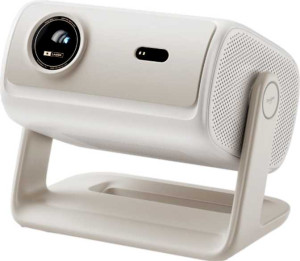
  • Output resolution is 4K on the Dangbei D7X Pro and 1080p on the XGIMI MoGo 4 Laser.
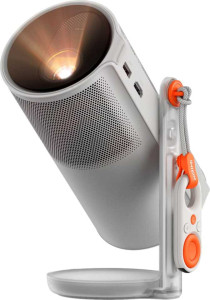
  • Maximum projection size is 120″ on the Dangbei D7X Pro and 200″ on the XGIMI MoGo 4 Laser.
  • Refresh rate is 120Hz on the Dangbei D7X Pro and 60Hz on the XGIMI MoGo 4 Laser.
  • USB ports number 1 on the Dangbei D7X Pro and 2 on the XGIMI MoGo 4 Laser.
Specs Comparison
Dangbei D7X Pro

Dangbei D7X Pro

XGIMI MoGo 4 Laser

XGIMI MoGo 4 Laser

General info:
has laser light source
release date October 2025 June 2025
Has a dedicated smartphone app

In terms of general technology and ecosystem features, the Dangbei D7X Pro and the XGIMI MoGo 4 Laser share an identical profile: both rely on a laser light source and both offer a dedicated smartphone app. These are not minor footnotes — laser technology fundamentally separates these projectors from LED or lamp-based competitors, delivering superior color accuracy, longer usable lifespan, and near-instant on/off behavior without a warm-up or cool-down period.

The presence of a dedicated app on both units is equally significant for the modern user. App-based control typically enables remote setup, firmware updates, content management, and sometimes advanced calibration features that go well beyond what a physical remote allows. It also signals that both manufacturers are committed to ongoing software support — an important factor for a device you expect to use for years.

Based strictly on the data provided for this group, these two projectors are in a dead tie. Neither holds an advantage here; both deliver the same foundational technology pillars. The differentiating factors between them will need to be found in other specification groups such as brightness, resolution, portability, or audio.

Projection quality:
output resolution 4K 1080p
displays 3D with glasses
maximum projection size 120" 200"
supports HDR10+
refresh rate 120Hz 60Hz
supports Dolby Vision
supports HDR10

The single most consequential difference in this group is resolution. The Dangbei D7X Pro outputs at 4K, while the XGIMI MoGo 4 Laser is capped at 1080p — a fourfold difference in pixel count. In practice, this gap becomes most visible on larger screens and at closer viewing distances, where 1080p images can appear noticeably softer. For cinephiles or users investing in a home theater setup, 4K is a meaningful upgrade, not just a marketing number.

The refresh rate gap reinforces this divide. The D7X Pro's 120Hz panel versus the MoGo 4 Laser's 60Hz is especially relevant for gaming and fast-motion content, where higher refresh rates translate directly into smoother, less blurry visuals. On the flip side, the MoGo 4 Laser compensates in one notable area: a maximum projection size of 200″ versus the D7X Pro's 120″. For users prioritizing an enormous screen in a large room, this is a real advantage — though projecting 1080p content at 200″ will require adequate viewing distance to maintain perceived sharpness.

Both units share 3D support and HDR10 compatibility, with neither supporting HDR10+ or Dolby Vision, so those traits cancel out. The clear winner in this group is the Dangbei D7X Pro, offering a significantly higher resolution and refresh rate — advantages that matter for most primary use cases. The MoGo 4 Laser's larger maximum projection size is a meaningful counterpoint, but only for a specific subset of users with the room and distance to take advantage of it.

Connectivity:
HDMI ports 1 1
has AirPlay
Has Bluetooth
supports Wi-Fi
USB ports 1 2
has Chromecast built-in
has a VGA connector
is DLNA-certified
has a DVI connector
supports Miracast
RJ45 ports 0 0
Has S/PDIF Out port

Wireless connectivity is where both projectors genuinely shine, and largely in lockstep. AirPlay, Chromecast built-in, Miracast, DLNA, Bluetooth, and Wi-Fi are all present on both the Dangbei D7X Pro and the XGIMI MoGo 4 Laser — a comprehensive suite that covers virtually every mainstream streaming and casting scenario, whether you are an Apple, Android, or PC user. For most households, this level of wireless flexibility removes any practical need for additional adapters or streaming sticks.

Where the two part ways — modestly but meaningfully — is in physical ports. Both carry a single HDMI input, which is sufficient for one dedicated source like a gaming console or Blu-ray player, but leaves no room for simultaneous connections without a switch. On USB, however, the MoGo 4 Laser offers 2 ports versus the D7X Pro's 1. That extra USB port is a practical convenience: it means you can power a streaming dongle and still have a free port for a flash drive or other peripheral without juggling cables. Neither unit includes an RJ45 ethernet port or S/PDIF audio output, which are omissions worth noting for users who prefer wired network stability or external audio routing.

Overall, connectivity is a near-tie, but the XGIMI MoGo 4 Laser earns a slim edge thanks to its additional USB port. It is a small difference in isolation, but in day-to-day use it can reduce the friction of managing multiple peripherals — a real-world convenience the D7X Pro does not match in this category.
Features:
has stereo speakers
has lens shift (vertical)
has lens shift (horizontal)
has a remote control
has built-in smart TV
has a built-in speaker
audio output power 2 x 6W 2 x 6W
has a socket for a 3.5 mm audio jack
has Dolby Atmos
has an external memory slot
has voice commands

Rarely does a feature comparison yield a result this definitive: the Dangbei D7X Pro and the XGIMI MoGo 4 Laser are identical across every single spec in this group. Both deliver 2 x 6W stereo audio with Dolby Atmos support — a combination that punches above its wattage on paper, as Atmos processing adds spatial depth that raw power figures alone do not capture. For a projector's built-in audio, this is a genuinely capable setup for casual viewing, though serious home theater users will still want an external sound system.

Both units also include a built-in smart TV platform, a remote control, and a 3.5mm audio jack for wired headphone or external speaker output — covering the full range of audio routing options most users will ever need. Neither offers lens shift in any direction, which means precise placement flexibility depends entirely on zoom and keystone correction rather than optical adjustment. And neither supports voice commands or an external memory slot, which are features some competing projectors do include.

This group is an unambiguous tie. Every feature and every number matches exactly, leaving no basis to favor one over the other here. Users prioritizing audio quality or smart platform features will need to look at other specification groups — particularly projection quality and design — to differentiate these two projectors.

Comparison Summary & Verdict

After reviewing all the specifications, both the Dangbei D7X Pro and the XGIMI MoGo 4 Laser prove to be capable laser projectors with shared strengths in connectivity, audio, and smart features. The Dangbei D7X Pro stands out with its 4K resolution and 120Hz refresh rate, making it the stronger choice for viewers who prioritize sharp image detail and smoother motion. The XGIMI MoGo 4 Laser, on the other hand, supports a larger maximum projection size of 200″ and offers two USB ports, appealing to users who want a more expansive screen experience and greater peripheral flexibility. Neither product supports HDR10+ or Dolby Vision, so both sit at a similar ceiling for HDR performance. Your ideal pick ultimately depends on whether resolution and fluidity or sheer screen scale and connectivity breadth matter more to you.

Dangbei D7X Pro
Buy Dangbei D7X Pro if...

Buy the Dangbei D7X Pro if you want the sharpest possible image with 4K resolution and a smoother 120Hz refresh rate for detailed, fluid visuals.

XGIMI MoGo 4 Laser
Buy XGIMI MoGo 4 Laser if...

Buy the XGIMI MoGo 4 Laser if you prioritize a larger projection size of up to 200″ and need two USB ports for greater peripheral connectivity.