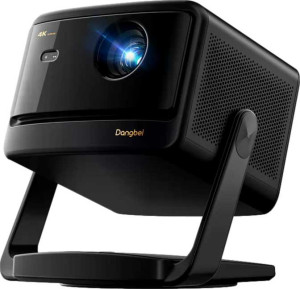
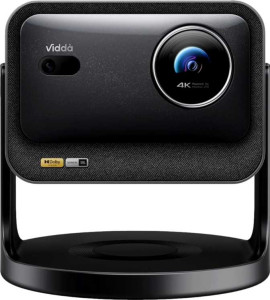
Feature parity is high between these two projectors: both ship with stereo speakers, a built-in smart TV platform, a remote control, a 3.5 mm headphone jack, and a sleep timer. For most users, this shared baseline means either projector functions as a fully self-contained entertainment unit straight out of the box, with no immediate need for external audio or streaming hardware.
The differences, though few, are meaningful. The DBOX02 Pro's built-in amplifier delivers 2 x 12W of audio output compared to the Vidda C3 Pro's 2 x 10W — a modest but real 20% power advantage per channel. In practice this translates to slightly more headroom for louder playback in larger rooms before distortion becomes a factor. More significantly, the DBOX02 Pro supports Dolby Atmos, while the Vidda C3 Pro does not. Dolby Atmos is an object-based surround sound format that adds a sense of height and spatial depth to audio, and it is natively encoded in a large and growing share of streaming content on platforms like Netflix, Disney+, and Apple TV+. Without it, the Vidda C3 Pro will still play that content, but the immersive audio layer will be downmixed to standard stereo.
For users who intend to rely on the projector's built-in speakers as their primary audio system, the DBOX02 Pro holds a clear advantage in this group — both in raw output power and in audio format support. The Vidda C3 Pro is not deficient by any means, but it concedes ground on the one dimension where the listening experience could be meaningfully elevated without any additional equipment.