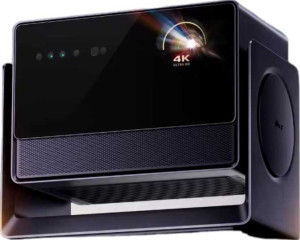
Dangbei S7 Ultra Max
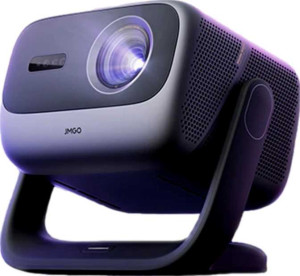
JMGO N3 Ultra

Dangbei S7 Ultra Max JMGO N3 Ultra

Overview

Welcome to our in-depth spec comparison between the Dangbei S7 Ultra Max and the JMGO N3 Ultra, two premium laser projectors targeting the high-end home cinema market. Both share an impressive foundation of 4K resolution, 240Hz refresh rate, and Dolby Vision support, yet they diverge in meaningful ways when it comes to audio performance, connectivity options, and overall form factor. Read on to discover which projector best suits your setup and viewing needs.

Common Features

  • Both the Dangbei S7 Ultra Max and JMGO N3 Ultra use a laser light source.
  • Both projectors output at 4K resolution.
  • Both support a maximum projection size of 300″.
  • Both feature motorized focus.
  • Neither projector offers motorized zoom.
  • Neither projector supports manual focus.
  • Both support a refresh rate of 240Hz.
  • Both support Dolby Vision.
  • Both support HDR10.
  • Both projectors support AirPlay.
  • Both projectors include Bluetooth connectivity.
  • Both support Wi-Fi.
  • Both have 1 USB port.
  • Both have Chromecast built-in.
  • Neither projector has a VGA connector.
  • Both have a DVI connector.
  • Both support Miracast.
  • Both feature stereo speakers.
  • Both include a remote control.
  • Both have a built-in smart TV platform.
  • Both have a built-in speaker.
  • Both have a 3.5mm audio jack socket.

Main Differences

  • Width is 336 mm on the Dangbei S7 Ultra Max and 210 mm on the JMGO N3 Ultra.
  • Height is 287 mm on the Dangbei S7 Ultra Max and 238 mm on the JMGO N3 Ultra.
  • Thickness is 202 mm on the Dangbei S7 Ultra Max and 243 mm on the JMGO N3 Ultra.
  • Weight is 8200 g on the Dangbei S7 Ultra Max and 6800 g on the JMGO N3 Ultra.
  • Volume is 19479.264 cm³ on the Dangbei S7 Ultra Max and 12145.14 cm³ on the JMGO N3 Ultra.
  • HDR10+ support is present on the Dangbei S7 Ultra Max but not available on the JMGO N3 Ultra.
  • HDMI ports number 2 on the Dangbei S7 Ultra Max and 1 on the JMGO N3 Ultra.
  • Audio output power is 2 x 15W on the Dangbei S7 Ultra Max and 2 x 12.5W on the JMGO N3 Ultra.
  • Dolby Atmos support is present on the Dangbei S7 Ultra Max but not available on the JMGO N3 Ultra.
Specs Comparison
Dangbei S7 Ultra Max

Dangbei S7 Ultra Max

JMGO N3 Ultra

JMGO N3 Ultra

General info:
has laser light source
release date September 2025 May 2025
width 336 mm 210 mm
height 287 mm 238 mm
thickness 202 mm 243 mm
weight 8200 g 6800 g
volume 19479.264 cm³ 12145.14 cm³

Both the Dangbei S7 Ultra Max and the JMGO N3 Ultra share a laser light source, putting them on equal footing in terms of projection technology fundamentals. Where they diverge meaningfully is in their physical footprint and mass.

The S7 Ultra Max is notably larger and heavier, with a volume of 19,479 cm³ and a weight of 8,200 g, compared to the N3 Ultra's 12,145 cm³ and 6,800 g. In practical terms, the S7 Ultra Max is roughly 60% bulkier and about 1.4 kg heavier. This makes the N3 Ultra meaningfully easier to move between rooms, carry for travel, or fit into tighter shelf or cabinet spaces. The S7 Ultra Max's wider and taller chassis may hint at a larger optical or cooling assembly, which can sometimes correlate with higher brightness or more robust thermal management — but that cannot be confirmed from these specs alone.

On physical form factor alone, the JMGO N3 Ultra has a clear edge: it is more compact and lighter, making it the more flexible and portable option. The S7 Ultra Max's larger build may suit a dedicated home theater setup where portability is not a priority, but for users who value placement flexibility, the N3 Ultra wins this category decisively.

Projection quality:
output resolution 4K 4K
has motorized focus
maximum projection size 300" 300"
has motorized zoom
supports HDR10+
has manual focus
refresh rate 240Hz 240Hz
supports Dolby Vision
supports HDR10

At their core, these two projectors are closely matched on projection quality fundamentals: both output at 4K resolution, cap out at a 300″ maximum image size, run at a fluid 240Hz refresh rate, and rely entirely on motorized focus with no manual fallback. For everyday home theater use, this common ground is substantial — users of either device will enjoy a sharp, large-screen image with smooth motion handling.

The only differentiator in this group is HDR support. Both handle Dolby Vision and HDR10, but the Dangbei S7 Ultra Max adds HDR10+ support, which the JMGO N3 Ultra lacks. HDR10+ is a dynamic metadata format — unlike the static tone-mapping of standard HDR10, it adjusts brightness and contrast on a scene-by-scene or even frame-by-frame basis, resulting in more nuanced highlight and shadow detail on compatible content. While HDR10+ content is less widespread than Dolby Vision, its presence alongside Dolby Vision makes the S7 Ultra Max more future-proof and versatile across streaming platforms and disc releases.

The S7 Ultra Max holds a narrow but real edge here. For most viewers, the difference will rarely surface in daily use given Dolby Vision's broad ecosystem — but for enthusiasts who want maximum HDR format coverage, the S7 Ultra Max's HDR10+ support tips the balance in its favor.

Connectivity:
HDMI ports 2 1
has AirPlay
Has Bluetooth
supports Wi-Fi
USB ports 1 1
has Chromecast built-in
has a VGA connector
has a DVI connector
supports Miracast
RJ45 ports 0 0
Has S/PDIF Out port

Wireless connectivity is a dead heat between these two projectors. AirPlay, Chromecast built-in, Miracast, Bluetooth, and Wi-Fi are all present on both the Dangbei S7 Ultra Max and the JMGO N3 Ultra, meaning users of either device enjoy the full spectrum of mainstream screen-mirroring and casting options — no dongles or workarounds required regardless of whether you are in the Apple, Google, or Android ecosystem.

On wired connections, a meaningful gap emerges. The S7 Ultra Max offers 2 HDMI ports versus the N3 Ultra's 1 HDMI port. In a typical home theater setup, a single HDMI port forces users to choose between sources — a gaming console, a Blu-ray player, an Apple TV — or to add an external HDMI switch. The S7 Ultra Max's dual HDMI inputs eliminate that friction entirely, a genuine quality-of-life advantage for users with multiple source devices. USB and DVI port counts are identical across both, and neither unit includes a LAN port or S/PDIF output, so those omissions are a wash.

The S7 Ultra Max takes a clear edge in connectivity, purely on the strength of its extra HDMI port. For minimalist setups with a single source, the difference is negligible — but for anyone building a more involved home theater system, the added HDMI input removes a recurring practical inconvenience that the N3 Ultra cannot avoid.

Features:
has stereo speakers
has a remote control
has built-in smart TV
has a built-in speaker
audio output power 2 x 15W 2 x 12.5W
has a socket for a 3.5 mm audio jack
has Dolby Atmos

Feature parity is high between these two projectors: stereo speakers, a built-in smart TV platform, a remote control, and a 3.5mm audio jack are all present on both the Dangbei S7 Ultra Max and the JMGO N3 Ultra. For most users, this shared foundation means neither device feels stripped-down out of the box.

Two audio specs separate them, however. The S7 Ultra Max outputs 2 x 15W compared to the N3 Ultra's 2 x 12.5W — a modest but real difference that translates to slightly greater headroom for filling larger rooms without distortion. More significantly, the S7 Ultra Max supports Dolby Atmos, while the N3 Ultra does not. Dolby Atmos is an object-based audio format that adds a sense of height and spatial dimensionality to compatible content, delivering a noticeably more immersive soundstage than standard stereo. For users streaming Atmos-encoded content from services like Netflix or Apple TV+, this is a tangible, audible upgrade — not just a spec checkmark.

The S7 Ultra Max wins this category on the strength of both its higher speaker output and Dolby Atmos support. The wattage gap alone would be a minor point, but combined with Atmos compatibility, the S7 Ultra Max offers a meaningfully more capable built-in audio experience for users who prioritize sound quality without adding an external speaker system.

Comparison Summary & Verdict

After examining every specification, these two laser projectors reveal clearly distinct personalities. The Dangbei S7 Ultra Max is the stronger choice for home cinema enthusiasts who demand the most complete audio-visual package: its Dolby Atmos support, HDR10+ compatibility, dual HDMI ports, and higher 2x15W audio output make it the more feature-rich option for a dedicated theater room. The JMGO N3 Ultra, on the other hand, wins on compactness and lighter weight at 6800g versus 8200g, and its significantly smaller volume makes it far easier to position, move, or integrate into tighter spaces. Both projectors deliver 4K at 240Hz with Dolby Vision, HDR10, and a full smart platform, so neither compromises on core image quality. Choose the Dangbei S7 Ultra Max if premium audio and richer HDR coverage are priorities; opt for the JMGO N3 Ultra if portability and a smaller footprint matter most.

Dangbei S7 Ultra Max
Buy Dangbei S7 Ultra Max if...

Buy the Dangbei S7 Ultra Max if you want the most complete home cinema experience, with Dolby Atmos, HDR10+ support, dual HDMI ports, and more powerful stereo audio output.

JMGO N3 Ultra
Buy JMGO N3 Ultra if...

Buy the JMGO N3 Ultra if you prefer a lighter, more compact laser projector that is easier to place or relocate while still delivering 4K quality with Dolby Vision.