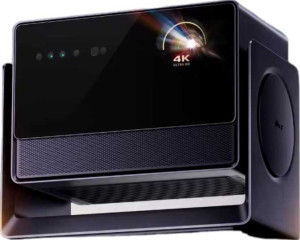
Dangbei S7 Ultra Max
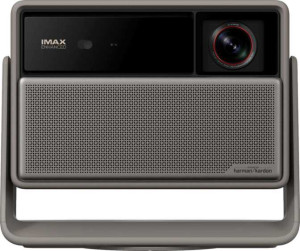
XGIMI Horizon 20 Max

Dangbei S7 Ultra Max XGIMI Horizon 20 Max

Overview

When choosing between the Dangbei S7 Ultra Max and the XGIMI Horizon 20 Max, prospective buyers face a compelling clash of two high-end 4K laser projectors. Both machines share an impressive common foundation, yet they diverge in meaningful ways across physical footprint, audio capabilities, and connectivity options. This detailed spec comparison will help you determine which projector truly fits your home theater ambitions.

Common Features

  • Both products use a laser light source.
  • Both products have a dedicated smartphone app.
  • Both products output at 4K resolution.
  • Both products support a maximum projection size of 300″.
  • Both products support HDR10+.
  • Both products have a 240Hz refresh rate.
  • Both products support Dolby Vision.
  • Both products support HDR10.
  • Both products support HLG.
  • Both products have 2 HDMI ports.
  • AirPlay is available on both products.
  • Bluetooth is available on both products.
  • Wi-Fi is supported on both products, with Wi-Fi 6 (802.11ax), Wi-Fi 5 (802.11ac), and Wi-Fi 4 (802.11n).
  • Chromecast built-in is available on both products.
  • A VGA connector is not present on either product.
  • Both products are DLNA-certified.
  • Both products have stereo speakers.
  • Both products support vertical and horizontal lens shift.
  • Both products include a remote control.
  • Both products have a built-in smart TV platform.
  • Both products have a built-in speaker.
  • Both products include a 3.5mm audio jack socket.

Main Differences

  • Width is 336 mm on Dangbei S7 Ultra Max and 218 mm on XGIMI Horizon 20 Max.
  • Height is 287 mm on Dangbei S7 Ultra Max and 208 mm on XGIMI Horizon 20 Max.
  • Thickness is 202 mm on Dangbei S7 Ultra Max and 136 mm on XGIMI Horizon 20 Max.
  • Weight is 8200 g on Dangbei S7 Ultra Max and 4900 g on XGIMI Horizon 20 Max.
  • Volume is 19479.264 cm³ on Dangbei S7 Ultra Max and 6166.784 cm³ on XGIMI Horizon 20 Max.
  • Warranty period is 1 year on Dangbei S7 Ultra Max and 2 years on XGIMI Horizon 20 Max.
  • USB ports number 1 on Dangbei S7 Ultra Max and 2 on XGIMI Horizon 20 Max.
  • Audio output power is 2 x 15W on Dangbei S7 Ultra Max and 2 x 12W on XGIMI Horizon 20 Max.
  • Dolby Atmos support is present on Dangbei S7 Ultra Max but not available on XGIMI Horizon 20 Max.
Specs Comparison
Dangbei S7 Ultra Max

Dangbei S7 Ultra Max

XGIMI Horizon 20 Max

XGIMI Horizon 20 Max

General info:
has laser light source
release date September 2025 September 2025
width 336 mm 218 mm
height 287 mm 208 mm
thickness 202 mm 136 mm
weight 8200 g 4900 g
Has a dedicated smartphone app
volume 19479.264 cm³ 6166.784 cm³
warranty period 1 years 2 years

Both the Dangbei S7 Ultra Max and the XGIMI Horizon 20 Max share a laser light source and a dedicated smartphone app, placing them in the same tier of smart laser projectors. These shared traits signal a premium, app-driven experience on both sides, so neither product holds a meaningful edge on those fronts alone.

Where they diverge sharply is in physical footprint and weight. The S7 Ultra Max is a substantially larger unit — its volume of 19,479 cm³ is roughly three times that of the Horizon 20 Max at 6,167 cm³ — and it weighs in at 8,200 g compared to the Horizon 20 Max's 4,900 g. In practical terms, the S7 Ultra Max demands considerably more shelf or cabinet space and is noticeably harder to reposition. The Horizon 20 Max's more compact and lighter build makes it a more flexible choice for users who need to move the projector between rooms or travel with it.

On after-sales protection, the Horizon 20 Max holds a clear edge with a 2-year warranty versus the S7 Ultra Max's 1-year warranty — a meaningful difference for an expensive piece of hardware, as it doubles the manufacturer-backed coverage period. Overall, the Horizon 20 Max wins this group on form factor and warranty value, while the S7 Ultra Max suits buyers who have a fixed, dedicated installation space and are less concerned about portability or warranty length.

Projection quality:
output resolution 4K 4K
maximum projection size 300" 300"
supports HDR10+
refresh rate 240Hz 240Hz
supports Dolby Vision
supports HDR10
supports HLG

Across every projection quality specification in this group, the Dangbei S7 Ultra Max and the XGIMI Horizon 20 Max are an exact match. Both output at 4K resolution, cap out at a 300″ maximum projection size, and run at a 240Hz refresh rate — the latter being particularly noteworthy, as it ensures exceptionally smooth motion rendering for fast-paced content like sports and action films.

The HDR ecosystem support is equally identical: both projectors cover Dolby Vision, HDR10, HDR10+, and HLG. This full-spectrum HDR compatibility is a strong suite — Dolby Vision delivers dynamic, scene-by-scene tone mapping for the highest fidelity on supported content, while HDR10+ and HLG ensure broad compatibility across streaming platforms and broadcast sources. Neither product leaves a gap that the other fills.

This group is a complete tie. A buyer cannot use projection quality specs as a differentiator between these two projectors — every measurable capability here is shared. The decision will need to rest on other spec groups, such as brightness, audio, or the physical and value considerations covered elsewhere.

Connectivity:
HDMI ports 2 2
has AirPlay
Has Bluetooth
supports Wi-Fi
Wi-Fi version Wi-Fi 6 (802.11ax), Wi-Fi 5 (802.11ac), Wi-Fi 4 (802.11n) Wi-Fi 6 (802.11ax), Wi-Fi 5 (802.11ac), Wi-Fi 4 (802.11n)
USB ports 1 2
has Chromecast built-in
has a VGA connector
is DLNA-certified
has a DVI connector
supports Miracast
RJ45 ports 0 0
Has S/PDIF Out port

The wireless connectivity story is virtually identical for both projectors. Each supports Wi-Fi 6 (with backwards compatibility through Wi-Fi 5 and Wi-Fi 4), which ensures fast, low-latency streaming and future-proofed network performance. On top of that, both carry the full modern casting suite — AirPlay, Chromecast, Miracast, and DLNA — meaning users across Apple, Android, and PC ecosystems can mirror or cast content without friction or added hardware.

The wired side is equally matched at a high level: both offer 2 HDMI ports, no Ethernet, and the same legacy connector profile. The one tangible difference is that the XGIMI Horizon 20 Max ships with 2 USB ports versus the Dangbei S7 Ultra Max's single 1 USB port. In practice, this matters when a user wants to simultaneously connect a USB storage drive and a USB peripheral — a scenario where the S7 Ultra Max would require a hub.

The Horizon 20 Max holds a narrow edge in this group purely on account of the extra USB port. For most users the difference will be minor, but for those who regularly connect multiple USB devices directly to their projector, the Horizon 20 Max offers more out-of-the-box flexibility without the need for an adapter.

Features:
has stereo speakers
has lens shift (vertical)
has lens shift (horizontal)
has a remote control
has built-in smart TV
has a built-in speaker
audio output power 2 x 15W 2 x 12W
has a socket for a 3.5 mm audio jack
has Dolby Atmos

Setup flexibility is identical on both projectors: full horizontal and vertical lens shift, a remote control, and a built-in smart TV platform are shared across the board. Lens shift in both axes is a meaningful convenience feature for permanent installs — it allows users to physically offset the projected image without moving the unit, which is far more practical than relying solely on digital keystone correction that can degrade image quality.

On audio, the differences are small but real. The Dangbei S7 Ultra Max outputs 2 × 15W of stereo power versus the XGIMI Horizon 20 Max's 2 × 12W — a modest gap that, at projector-class volume levels, translates to a slightly fuller, more room-filling sound. More significantly, the S7 Ultra Max adds Dolby Atmos support, which the Horizon 20 Max lacks entirely. Dolby Atmos enables object-based, three-dimensional audio on compatible content from streaming services, and its absence on the Horizon 20 Max means that spatial audio tracks will be downmixed to standard stereo regardless of the source.

The Dangbei S7 Ultra Max takes a clear edge in this group. The combination of higher amplifier wattage and Dolby Atmos support makes it the stronger choice for users who prioritize built-in audio performance and want to take full advantage of premium soundtracks without a separate sound system.

Comparison Summary & Verdict

Both the Dangbei S7 Ultra Max and the XGIMI Horizon 20 Max deliver an identical and outstanding 4K projection experience with a 240Hz refresh rate, Dolby Vision, HDR10+, and a laser light source — leaving little to argue about on the image quality front. The key distinctions lie elsewhere. The Dangbei S7 Ultra Max stands out with its more powerful 2x15W stereo audio output and Dolby Atmos support, making it the stronger choice for users who demand immersive, room-filling sound without an external sound system. On the other hand, the XGIMI Horizon 20 Max is considerably more compact and lighter, offers an extra USB port, and comes with a 2-year warranty, making it more attractive for users who value portability, a tidier setup, and better long-term coverage.

Dangbei S7 Ultra Max
Buy Dangbei S7 Ultra Max if...

Buy the Dangbei S7 Ultra Max if you prioritize superior audio performance, with its more powerful 2x15W speakers and Dolby Atmos support, and do not mind a larger, heavier unit.

XGIMI Horizon 20 Max
Buy XGIMI Horizon 20 Max if...

Buy the XGIMI Horizon 20 Max if you want a more compact and lightweight projector with an extra USB port and a longer 2-year warranty.