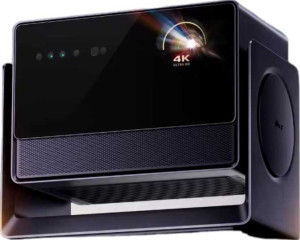
Dangbei S7 Ultra Max
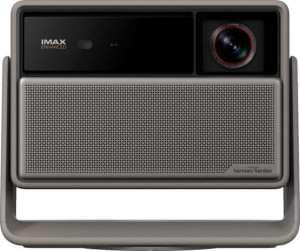
XGIMI Horizon 20 Pro

Dangbei S7 Ultra Max XGIMI Horizon 20 Pro

Overview

Welcome to this in-depth specification comparison between the Dangbei S7 Ultra Max and the XGIMI Horizon 20 Pro — two premium 4K laser projectors targeting the high-end home theater market. Both machines share a surprisingly long list of advanced features, yet key differences in size, weight, and audio capabilities set them apart in meaningful ways. Read on to discover which projector best fits your setup and viewing needs.

Common Features

  • Both projectors use a laser light source.
  • Both projectors have a dedicated smartphone app.
  • Both projectors output at 4K resolution.
  • Both projectors support a maximum projection size of 300″.
  • Both projectors support HDR10+.
  • Both projectors have a 240Hz refresh rate.
  • Both projectors support Dolby Vision.
  • Both projectors support HDR10.
  • Both projectors support HLG.
  • Both projectors have 2 HDMI ports.
  • AirPlay is available on both projectors.
  • Bluetooth is available on both projectors.
  • Wi-Fi is supported on both projectors, with Wi-Fi 6 (802.11ax), Wi-Fi 5 (802.11ac), and Wi-Fi 4 (802.11n).
  • Chromecast built-in is available on both projectors.
  • Neither projector has a VGA connector.
  • Both projectors are DLNA-certified.
  • Both projectors have stereo speakers.
  • Both projectors have vertical and horizontal lens shift.
  • Both projectors include a remote control.
  • Both projectors have a built-in smart TV platform.
  • Both projectors have a 3.5mm audio jack.

Main Differences

  • Width is 336 mm on the Dangbei S7 Ultra Max and 218 mm on the XGIMI Horizon 20 Pro.
  • Height is 287 mm on the Dangbei S7 Ultra Max and 208 mm on the XGIMI Horizon 20 Pro.
  • Thickness is 202 mm on the Dangbei S7 Ultra Max and 136 mm on the XGIMI Horizon 20 Pro.
  • Weight is 8200 g on the Dangbei S7 Ultra Max and 4900 g on the XGIMI Horizon 20 Pro.
  • Volume is 19479.264 cm³ on the Dangbei S7 Ultra Max and 6166.784 cm³ on the XGIMI Horizon 20 Pro.
  • Warranty period is 1 year on the Dangbei S7 Ultra Max and 2 years on the XGIMI Horizon 20 Pro.
  • USB ports number 1 on the Dangbei S7 Ultra Max and 2 on the XGIMI Horizon 20 Pro.
  • Audio output power is 2 x 15W on the Dangbei S7 Ultra Max and 2 x 12W on the XGIMI Horizon 20 Pro.
  • Dolby Atmos support is present on the Dangbei S7 Ultra Max but not available on the XGIMI Horizon 20 Pro.
Specs Comparison
Dangbei S7 Ultra Max

Dangbei S7 Ultra Max

XGIMI Horizon 20 Pro

XGIMI Horizon 20 Pro

General info:
has laser light source
release date September 2025 September 2025
width 336 mm 218 mm
height 287 mm 208 mm
thickness 202 mm 136 mm
weight 8200 g 4900 g
Has a dedicated smartphone app
volume 19479.264 cm³ 6166.784 cm³
warranty period 1 years 2 years

Both the Dangbei S7 Ultra Max and the XGIMI Horizon 20 Pro share a laser light source and a dedicated smartphone app, placing them firmly in the premium projector tier. These shared traits signal similar ambitions in picture quality longevity and user convenience, so the real differentiation in this group comes down to physical footprint and ownership terms.

The most striking contrast is size and weight. The Dangbei is a substantially larger device — its volume of roughly 19,479 cm³ is more than three times the Horizon 20 Pro's 6,167 cm³, and at 8,200 g it is nearly 70% heavier than the XGIMI's 4,900 g. In practice, this means the S7 Ultra Max is a fixed-installation projector: it demands a dedicated shelf or cabinet and is not realistically portable. The Horizon 20 Pro, by contrast, is compact and light enough to move between rooms or take to a friend's place without much effort.

On warranty, the XGIMI holds a clear edge with a 2-year coverage period versus the Dangbei's 1-year — a meaningful difference for a high-value laser device where component repairs can be costly. Overall, the Horizon 20 Pro has the advantage in this group: it offers a far more versatile and portable form factor and stronger post-purchase protection, making it the more practical choice for most living environments.

Projection quality:
output resolution 4K 4K
maximum projection size 300" 300"
supports HDR10+
refresh rate 240Hz 240Hz
supports Dolby Vision
supports HDR10
supports HLG

On paper, projection quality is where this comparison gets remarkably simple: every single spec in this group is identical. Both the Dangbei S7 Ultra Max and the XGIMI Horizon 20 Pro output at 4K resolution, cap out at a 300″ maximum image size, and run at a 240Hz refresh rate — a figure that enables exceptionally smooth motion, relevant for both high-frame-rate content and gaming.

The HDR ecosystem support is equally matched across the board. Both projectors cover the full modern HDR stack: HDR10 as the baseline, HDR10+ for dynamic metadata scene-by-scene, HLG for broadcast and streaming compatibility, and Dolby Vision — the most demanding certification, typically requiring additional licensing and tone-mapping hardware. Covering all four formats means neither projector will be caught off-guard by any streaming platform or disc format currently on the market.

This group is a complete tie. There is no differentiator here whatsoever, and a buyer cannot use projection quality specs to choose between these two models. The decision will need to rest entirely on other factors such as form factor, brightness, audio, or smart features.

Connectivity:
HDMI ports 2 2
has AirPlay
Has Bluetooth
supports Wi-Fi
Wi-Fi version Wi-Fi 6 (802.11ax), Wi-Fi 5 (802.11ac), Wi-Fi 4 (802.11n) Wi-Fi 6 (802.11ax), Wi-Fi 5 (802.11ac), Wi-Fi 4 (802.11n)
USB ports 1 2
has Chromecast built-in
has a VGA connector
is DLNA-certified
has a DVI connector
supports Miracast
RJ45 ports 0 0
Has S/PDIF Out port

Wireless connectivity is a dead heat between these two projectors. Both support Wi-Fi 6 (with backwards compatibility through Wi-Fi 5 and Wi-Fi 4), Bluetooth, AirPlay, Chromecast built-in, Miracast, and DLNA certification. That is a genuinely comprehensive wireless stack — Wi-Fi 6 ensures lower latency and better performance in congested network environments, while the combination of AirPlay, Chromecast, and Miracast means virtually any smartphone, tablet, or laptop can mirror or cast to either projector regardless of operating system.

Wired options are nearly identical too, with both units offering 2 HDMI ports — enough to keep a streaming stick and a games console connected simultaneously without swapping cables. The one concrete difference is USB: the XGIMI Horizon 20 Pro provides 2 USB ports versus the Dangbei S7 Ultra Max's single port. In practice, an extra USB port matters when you want to connect a storage drive for local media playback while also powering a streaming dongle or wireless keyboard receiver, removing the need for a USB hub.

The Horizon 20 Pro holds a narrow edge here solely due to the additional USB port. For users who rely heavily on wired peripherals or local storage, that extra port eliminates a small but real friction point. Otherwise, the connectivity suites of these two projectors are effectively equivalent.

Features:
has stereo speakers
has lens shift (vertical)
has lens shift (horizontal)
has a remote control
has built-in smart TV
has a built-in speaker
audio output power 2 x 15W 2 x 12W
has a socket for a 3.5 mm audio jack
has Dolby Atmos

Feature parity is high between these two projectors — both offer built-in smart TV, stereo speakers, full lens shift in both axes, a remote, and a 3.5mm audio jack. The lens shift support in particular is worth noting: having both vertical and horizontal optical shift means either unit can be positioned off-center without distorting the image via digital keystone correction, which degrades resolution. That is a premium installation feature that many projectors at this level still omit.

Audio is where the gap opens up. The Dangbei S7 Ultra Max outputs 2 × 15W compared to the XGIMI Horizon 20 Pro's 2 × 12W — a 25% power advantage that translates to noticeably more headroom for filling larger rooms with sound. More significantly, the S7 Ultra Max supports Dolby Atmos, while the Horizon 20 Pro does not. Dolby Atmos delivers object-based spatial audio that, even through stereo speakers, produces a more immersive soundstage via virtualization processing. For viewers who watch Atmos-encoded content from streaming services or Blu-ray, this is a meaningful differentiator.

The Dangbei S7 Ultra Max has a clear edge in this group. Higher amplifier wattage and exclusive Dolby Atmos support make it the stronger all-in-one audio performer — an important consideration for anyone who wants to avoid a separate soundbar.

Comparison Summary & Verdict

After examining the full specification set, both the Dangbei S7 Ultra Max and the XGIMI Horizon 20 Pro prove to be highly capable 4K laser projectors with identical projection quality credentials. The Dangbei S7 Ultra Max stands out with its higher audio output of 2x15W and exclusive Dolby Atmos support, making it the stronger choice for users who prioritize immersive, cinematic sound. However, it is significantly larger and heavier, and only comes with a 1-year warranty. The XGIMI Horizon 20 Pro, on the other hand, offers a far more compact and lightweight form factor, an extra USB port, and a reassuring 2-year warranty, making it better suited for users who value portability and long-term peace of mind. Neither product compromises on core projection performance, so your decision will ultimately come down to whether superior audio or a sleeker build matters more to you.

Dangbei S7 Ultra Max
Buy Dangbei S7 Ultra Max if...

Buy the Dangbei S7 Ultra Max if you want the most powerful audio experience, with higher 2x15W stereo output and Dolby Atmos support for a truly cinematic sound stage.

XGIMI Horizon 20 Pro
Buy XGIMI Horizon 20 Pro if...

Buy the XGIMI Horizon 20 Pro if you prefer a compact, lightweight projector with an extra USB port and a longer 2-year warranty for added reliability and convenience.