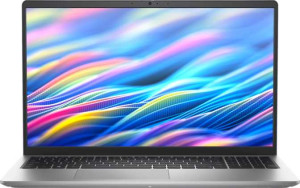
Dell 15 DC15250 (2025) 15.6" (Core i7-1355U / 16GB RAM / 512GB)
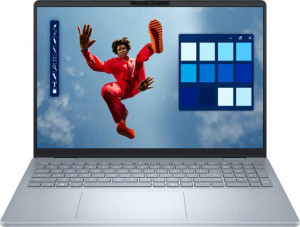
Dell 16 Plus DB16250 (2025) 16"

Dell 15 DC15250 (2025) 15.6" (Core i7-1355U / 16GB RAM / 512GB) Dell 16 Plus DB16250 (2025) 16"

Common Features

  • Both products are designed for productivity.
  • Both products use a fan in their cooling design.
  • Both products have a backlit keyboard.
  • Both products are not weather-sealed and are not splashproof.
  • Both products do not have a rugged build.
  • Both products do not have a touch screen.
  • Both products have an anti-reflection coating on the display.
  • Both products use flash storage.
  • Both products use NVMe SSDs.
  • Both products support multithreading.
  • Both products do not have XeSS (XMX) support.
  • Both products support 64-bit computing.
  • Both products have an HDMI output.
  • Both products have USB Type-C ports.
  • Both products support Wi-Fi connectivity.
  • Both products have sleep-and-charge USB ports.
  • Both products do not have a MagSafe power adapter.
  • Both products have stereo speakers.
  • Both products have a socket for a 3.5 mm audio jack.
  • Both products do not support ray tracing.

Main Differences

  • Weight is 1900 g on Dell 15 DC15250 (2025) 15.6″ (Core i7-1355U / 16GB RAM / 512GB) and 1870 g on Dell 16 Plus DB16250 (2025) 16″.
  • Volume is 1514.34 cm³ on Dell 15 DC15250 (2025) 15.6″ (Core i7-1355U / 16GB RAM / 512GB) and 1424 cm³ on Dell 16 Plus DB16250 (2025) 16″.
  • Width is 358 mm on Dell 15 DC15250 (2025) 15.6″ (Core i7-1355U / 16GB RAM / 512GB) and 356 mm on Dell 16 Plus DB16250 (2025) 16″.
  • Height is 235 mm on Dell 15 DC15250 (2025) 15.6″ (Core i7-1355U / 16GB RAM / 512GB) and 250 mm on Dell 16 Plus DB16250 (2025) 16″.
  • Thickness is 18 mm on Dell 15 DC15250 (2025) 15.6″ (Core i7-1355U / 16GB RAM / 512GB) and 16 mm on Dell 16 Plus DB16250 (2025) 16″.
  • Screen size is 15.6″ on Dell 15 DC15250 (2025) 15.6″ (Core i7-1355U / 16GB RAM / 512GB) and 16″ on Dell 16 Plus DB16250 (2025) 16″.
  • Resolution is 1920 x 1080 px on Dell 15 DC15250 (2025) 15.6″ (Core i7-1355U / 16GB RAM / 512GB) and 2560 x 1600 px on Dell 16 Plus DB16250 (2025) 16″.
  • Brightness is 250 nits on Dell 15 DC15250 (2025) 15.6″ (Core i7-1355U / 16GB RAM / 512GB) and 300 nits on Dell 16 Plus DB16250 (2025) 16″.
  • Supported displays are 4 on Dell 15 DC15250 (2025) 15.6″ (Core i7-1355U / 16GB RAM / 512GB) and 3 on Dell 16 Plus DB16250 (2025) 16″.
  • RAM is 16GB on Dell 15 DC15250 (2025) 15.6″ (Core i7-1355U / 16GB RAM / 512GB) and 32GB on Dell 16 Plus DB16250 (2025) 16″.
  • RAM speed is 3200 MHz on Dell 15 DC15250 (2025) 15.6″ (Core i7-1355U / 16GB RAM / 512GB) and 8533 MHz on Dell 16 Plus DB16250 (2025) 16″.
  • Internal storage is 512GB on Dell 15 DC15250 (2025) 15.6″ (Core i7-1355U / 16GB RAM / 512GB) and 2048GB on Dell 16 Plus DB16250 (2025) 16″.
  • CPU speed is 2 x 1.7 & 8 x 1.2 GHz on Dell 15 DC15250 (2025) 15.6″ (Core i7-1355U / 16GB RAM / 512GB) and 4 x 3.3 & 4 x 3.3 GHz on Dell 16 Plus DB16250 (2025) 16″.
  • CPU threads are 12 on Dell 15 DC15250 (2025) 15.6″ (Core i7-1355U / 16GB RAM / 512GB) and 8 on Dell 16 Plus DB16250 (2025) 16″.
  • DirectX version is DirectX 12 on Dell 15 DC15250 (2025) 15.6″ (Core i7-1355U / 16GB RAM / 512GB) and DirectX 12 Ultimate on Dell 16 Plus DB16250 (2025) 16″.
  • Maximum memory amount is 64GB on Dell 15 DC15250 (2025) 15.6″ (Core i7-1355U / 16GB RAM / 512GB) and 32GB on Dell 16 Plus DB16250 (2025) 16″.
  • DDR memory version is 4 on Dell 15 DC15250 (2025) 15.6″ (Core i7-1355U / 16GB RAM / 512GB) and 5 on Dell 16 Plus DB16250 (2025) 16″.
  • Turbo clock speed is 5GHz on Dell 15 DC15250 (2025) 15.6″ (Core i7-1355U / 16GB RAM / 512GB) and 5.1GHz on Dell 16 Plus DB16250 (2025) 16″.
  • GPU turbo is 1300 MHz on Dell 15 DC15250 (2025) 15.6″ (Core i7-1355U / 16GB RAM / 512GB) and 2050 MHz on Dell 16 Plus DB16250 (2025) 16″.
  • Battery size is 54 Wh on Dell 15 DC15250 (2025) 15.6″ (Core i7-1355U / 16GB RAM / 512GB) and 64 Wh on Dell 16 Plus DB16250 (2025) 16″.
Specs Comparison
Dell 15 DC15250 (2025) 15.6" (Core i7-1355U / 16GB RAM / 512GB)

Dell 15 DC15250 (2025) 15.6" (Core i7-1355U / 16GB RAM / 512GB)

Dell 16 Plus DB16250 (2025) 16"

Dell 16 Plus DB16250 (2025) 16"

Design:
Type Productivity Productivity
weight 1900 g 1870 g
Uses a fanless design
Has a backlit keyboard
volume 1514.34 cm³ 1424 cm³
width 358 mm 356 mm
height 235 mm 250 mm
thickness 18 mm 16 mm
is weather-sealed (splashproof)
has a rugged build

Both the Dell 15 DC15250 and the Dell 16 Plus DB16250 are productivity-focused laptops with similar design features, though there are some differences in their dimensions and weight. The Dell 15 DC15250 weighs 1900 g, while the Dell 16 Plus DB16250 is slightly lighter at 1870 g. The size difference is reflected in their respective volumes, with the 15 DC15250 having a larger volume of 1514.34 cm³ compared to the 1424 cm³ of the 16 Plus DB16250.

In terms of dimensions, the Dell 15 DC15250 measures 358 mm in width, 235 mm in height, and 18 mm in thickness. The Dell 16 Plus DB16250 is a bit wider at 356 mm, taller at 250 mm, and thinner at 16 mm. Both laptops share a fan-based cooling system, meaning neither uses a fanless design. Additionally, both models feature a backlit keyboard for ease of use in low-light conditions.

Neither laptop is weather-sealed or ruggedly built, so they are not designed for harsh environmental conditions. While both are geared towards productivity, the slightly larger form factor of the Dell 15 DC15250 provides more internal space, but the Dell 16 Plus DB16250 offers a thinner profile, which might appeal to those prioritizing portability.

Display:
screen size 15.6" 16"
resolution 1920 x 1080 px 2560 x 1600 px
has a touch screen
brightness (typical) 250 nits 300 nits
has anti-reflection coating
supported displays 4 3

The Dell 15 DC15250 and Dell 16 Plus DB16250 feature different display specifications, starting with screen size. The Dell 15 DC15250 has a 15.6″ screen, while the Dell 16 Plus DB16250 offers a slightly larger 16″ screen. The resolution also differs, with the Dell 15 DC15250 offering 1920 x 1080 px, and the Dell 16 Plus DB16250 providing a higher 2560 x 1600 px, which can result in sharper visuals and more screen real estate for multitasking.

Both laptops feature a non-touch screen, but they differ in typical brightness. The Dell 15 DC15250 has a typical brightness of 250 nits, while the Dell 16 Plus DB16250 is slightly brighter at 300 nits, which could be beneficial for use in brighter environments.

Both models have an anti-reflection coating to reduce glare, and while both support multiple displays, the Dell 15 DC15250 supports up to 4 external displays, while the Dell 16 Plus DB16250 supports up to 3 external displays. This may make the Dell 15 DC15250 a better choice for those needing a multi-display setup.

Performance:
RAM 16GB 32GB
RAM speed 3200 MHz 8533 MHz
Uses flash storage
internal storage 512GB 2048GB
CPU speed 2 x 1.7 & 8 x 1.2 GHz 4 x 3.3 & 4 x 3.3 GHz
CPU threads 12 threads 8 threads
Is an NVMe SSD
DirectX version DirectX 12 DirectX 12 Ultimate
uses multithreading
maximum memory amount 64GB 32GB
DDR memory version 4 5
turbo clock speed 5GHz 5.1GHz
GPU turbo 1300 MHz 2050 MHz
PCI Express (PCIe) version 4 5
semiconductor size 10 nm 3 nm
has XeSS (XMX)
Supports 64-bit

The Dell 15 DC15250 and the Dell 16 Plus DB16250 differ significantly in performance specifications. The Dell 15 DC15250 comes with 16GB of RAM at a speed of 3200 MHz, while the Dell 16 Plus DB16250 has a larger 32GB of RAM running at a much higher speed of 8533 MHz. This difference in RAM could make the 16 Plus DB16250 more capable of handling memory-intensive tasks.

In terms of storage, the Dell 15 DC15250 has 512GB of NVMe SSD storage, while the Dell 16 Plus DB16250 offers a much larger 2048GB of NVMe SSD storage. Both models use flash storage, but the 16 Plus DB16250 provides far more space for files and applications. Both devices support multithreading and DirectX 12, with the 16 Plus DB16250 supporting DirectX 12 Ultimate, offering potential benefits for gaming and graphics-heavy tasks.

When it comes to CPU performance, the Dell 15 DC15250 features a processor with 12 threads, running at speeds of 2 x 1.7 GHz and 8 x 1.2 GHz, with a turbo clock speed of 5 GHz. The Dell 16 Plus DB16250, on the other hand, has a CPU with 8 threads, running at 4 x 3.3 GHz, with a turbo clock speed of 5.1 GHz. The 16 Plus DB16250’s higher base clock speed and slightly higher turbo speed could provide better overall performance. Additionally, the 16 Plus DB16250 uses a 3 nm semiconductor size, while the Dell 15 DC15250 uses a 10 nm semiconductor, which could imply greater efficiency in the 16 Plus DB16250. Both models support 64-bit computing, and the 16 Plus DB16250 has a newer PCIe version (PCIe 5) compared to the PCIe 4 in the 15 DC15250.

Benchmarks:
PassMark result 14252 20093
PassMark result (single) 3436 4333

The Dell 15 DC15250 and the Dell 16 Plus DB16250 show a noticeable difference in their benchmark performance scores. The Dell 15 DC15250 has a PassMark result of 14,252, with a single-threaded score of 3,436. In comparison, the Dell 16 Plus DB16250 achieves a higher PassMark result of 20,093, with a single-threaded score of 4,333. These differences indicate that the 16 Plus DB16250 offers better overall processing power, both in multi-threaded and single-threaded tasks.

Both products display solid performance, but the Dell 16 Plus DB16250’s higher PassMark scores suggest it may be more capable of handling demanding workloads. The higher single-threaded score further highlights its strength in tasks that rely on faster processing of individual tasks.

Overall, the benchmark results show that the Dell 16 Plus DB16250 has a clear edge in performance, particularly in multi-threaded applications and tasks that require high processing speed.

Connectivity:
USB 3.2 Gen 2 ports (USB-C) 0 1
USB 3.2 Gen 2 ports (USB-A) 0 0
USB 4 20Gbps ports 0 0
USB 4 40Gbps ports 0 1
Thunderbolt 4 ports 0 1
USB 3.2 Gen 1 ports (USB-C) 2 0
USB 3.2 Gen 1 ports (USB-A) 1 1
Thunderbolt 3 ports 0 0
has an HDMI output
Has USB Type-C
supports Wi-Fi
Wi-Fi version Wi-Fi 6 (802.11ax), Wi-Fi 5 (802.11ac), Wi-Fi 4 (802.11n) Wi-Fi 7 (802.11be), Wi-Fi 6E (802.11ax), Wi-Fi 6 (802.11ax), Wi-Fi 5 (802.11ac), Wi-Fi 4 (802.11n)
has an external memory slot
RJ45 ports 0 0
HDMI ports 1 1
HDMI version HDMI 1.4 HDMI 2.1
DisplayPort outputs 0 0
USB 2.0 ports 1 0
has AirPlay
mini DisplayPort outputs 0 0
has a VGA connector

The Dell 15 DC15250 and Dell 16 Plus DB16250 have a few key differences in their connectivity options. The Dell 15 DC15250 features two USB 3.2 Gen 1 Type-C ports and one USB 3.2 Gen 1 Type-A port, while the Dell 16 Plus DB16250 offers one USB 3.2 Gen 2 Type-C port, one USB 3.2 Gen 2 Type-A port, and one USB 4 40Gbps port, giving it more high-speed connectivity options. Additionally, the Dell 16 Plus DB16250 includes one Thunderbolt 4 port, while the Dell 15 DC15250 does not have any Thunderbolt ports.

Both laptops support HDMI output, but the Dell 15 DC15250 has an HDMI 1.4 port, while the Dell 16 Plus DB16250 comes with an HDMI 2.1 port, offering potential advantages for higher video resolutions or refresh rates. In terms of wireless connectivity, the Dell 15 DC15250 supports Wi-Fi 6, Wi-Fi 5, and Wi-Fi 4, while the Dell 16 Plus DB16250 supports Wi-Fi 7, Wi-Fi 6E, Wi-Fi 6, Wi-Fi 5, and Wi-Fi 4, providing a broader range of Wi-Fi standards.

Neither laptop has RJ45 ports or VGA connectors, and the Dell 15 DC15250 has one USB 2.0 port, while the Dell 16 Plus DB16250 does not include any USB 2.0 ports. The Dell 15 DC15250 also offers an external memory slot, which is absent in the Dell 16 Plus DB16250. Both models support AirPlay for wireless streaming.

Battery:
battery size 54 Wh 64 Wh
Has sleep-and-charge USB ports
Has a MagSafe power adapter

The Dell 15 DC15250 and the Dell 16 Plus DB16250 have different battery specifications. The Dell 15 DC15250 is equipped with a 54 Wh battery, while the Dell 16 Plus DB16250 has a larger 64 Wh battery. Both laptops feature sleep-and-charge USB ports, allowing users to charge devices even when the laptop is in sleep mode. Neither model includes a MagSafe power adapter.

While the Dell 16 Plus DB16250 offers a slightly larger battery, the difference in size may result in a longer battery life for the 16 Plus DB16250, although this depends on usage patterns and other factors.

Overall, both models provide convenient charging options with sleep-and-charge USB ports, but the Dell 16 Plus DB16250 stands out with its larger battery size.

Features:
release date June 2025 March 2025
has stereo speakers
has a socket for a 3.5 mm audio jack
supports ray tracing
supports DLSS
has Dolby Atmos
Stylus included
Has a fingerprint scanner
number of microphones 1 1
Uses 3D facial recognition
has voice commands
has a front camera
Has S/PDIF Out port
has a gyroscope
has GPS
has an accelerometer
has a compass
Has an optical disc drive

The Dell 15 DC15250 and Dell 16 Plus DB16250 share several features but also have a few differences. Both models are equipped with stereo speakers and a 3.5 mm audio jack for audio connectivity. Neither supports ray tracing or DLSS, and neither includes a stylus. Both laptops have a fingerprint scanner for added security and one microphone for audio input. They also both have a front camera for video calls. The Dell 15 DC15250 and Dell 16 Plus DB16250 do not have an optical disc drive, gyroscope, GPS, accelerometer, or compass.

One notable difference is that the Dell 16 Plus DB16250 includes Dolby Atmos for enhanced sound quality, while the Dell 15 DC15250 does not. Both models do not have an S/PDIF Out port or voice command support, and neither uses 3D facial recognition for login.

In terms of features, the main distinction between the two is the inclusion of Dolby Atmos on the Dell 16 Plus DB16250, which may provide a more immersive audio experience compared to the Dell 15 DC15250.

Miscellaneous:
clock multiplier 17 33
GPU name Iris Xe Graphics 96EU Arc Graphics 140V
Type Laptop Laptop
Has an unlocked multiplier
L3 cache 12 MB 12 MB
Has NX bit
CPU temperature 100 °C 100 °C
OpenCL version 3 3
OpenGL version 4.6 4.6
GPU execution units 96 8
Has integrated graphics
Supports ECC memory
memory channels 2 2
Thermal Design Power (TDP) 15W 30W
Uses big.LITTLE technology
instruction sets SSE 4.2, SSE 4.1, AVX, AES, FMA3, F16C, MMX MMX, F16C, FMA3, AES, AVX, AVX2, SSE 4.1, SSE 4.2
RAM speed (max) 5200 MHz 8533 MHz

The Dell 15 DC15250 and Dell 16 Plus DB16250 differ in several key technical specifications. Both laptops use integrated graphics, with the Dell 15 DC15250 featuring the Iris Xe Graphics 96EU and the Dell 16 Plus DB16250 equipped with Arc Graphics 140V. The Dell 15 DC15250 has 96 GPU execution units, while the Dell 16 Plus DB16250 has 8 GPU execution units, reflecting a difference in the number of processing cores within their respective GPUs.

Both models share a 12 MB L3 cache and support big.LITTLE technology, with both using 2 memory channels. The Dell 15 DC15250 has a clock multiplier of 17, while the Dell 16 Plus DB16250 has a higher multiplier of 33, which could indicate a difference in overall processing potential in certain applications. Both laptops have a CPU temperature of 100 °C, and neither has an unlocked multiplier.

When it comes to power consumption, the Dell 15 DC15250 has a Thermal Design Power (TDP) of 15W, while the Dell 16 Plus DB16250 has a higher TDP of 30W, suggesting the latter may handle more demanding tasks but also generate more heat. Both laptops support a variety of instruction sets, including SSE 4.1, SSE 4.2, AVX, AES, and FMA3, with the Dell 16 Plus DB16250 additionally supporting AVX2. The RAM speed is another point of distinction, with the Dell 15 DC15250 supporting a maximum RAM speed of 5200 MHz, compared to the Dell 16 Plus DB16250's higher maximum RAM speed of 8533 MHz.

Comparison Summary

This is a specification comparison between Dell 15 DC15250 (2025) 15.6″ (Core i7-1355U / 16GB RAM / 512GB) and Dell 16 Plus DB16250 (2025) 16″. Both laptops are designed for productivity, feature backlit keyboards, use NVMe flash storage with multithreading support, have stereo speakers, and include a 3.5 mm audio jack. Key differences include screen size at 15.6″ versus 16″ and resolution at 1920 x 1080 px versus 2560 x 1600 px, RAM of 16GB versus 32GB with differing speeds, internal storage of 512GB versus 2048GB, CPU threads of 12 versus 8, and battery size of 54 Wh versus 64 Wh. Additional distinctions include weight and brightness variations, reflecting differences in portability and display performance.