DJI Flip
Potensic Atom 2

DJI Flip Potensic Atom 2

Overview

When choosing between the DJI Flip and the Potensic Atom 2, you are looking at two compact 249 g drones that share a surprising amount of common ground — yet diverge in some meaningful ways. Both offer 48 MP cameras, RAW shooting, GPS, and intelligent flight modes, but key battlegrounds emerge around obstacle detection and weather resistance, video performance, and overall build size. This side-by-side specification breakdown will help you decide which drone better fits your flying style and creative needs.

Common Features

  • Both drones weigh 249 g.
  • The maximum operating temperature is 40 °C on both drones.
  • Both drones support intelligent flight modes.
  • Return to Home (RTH) is available on both drones.
  • Both drones have a 48 MP main camera.
  • Both drones can shoot in RAW format.
  • Both drones have a built-in HDR mode.
  • Both drones support a serial shot mode.
  • Both drones use a CMOS sensor.
  • Both drones can create panoramas in-camera.
  • Both drones have a 24p cinema mode.
  • Both drones have an FPV camera.
  • Both drones have a removable battery.
  • Both drones have an external memory slot.
  • Both drones have GPS.
  • Both drones support a remote smartphone.
  • Both drones come with a remote control.

Main Differences

  • Weather sealing is present on the DJI Flip but not available on the Potensic Atom 2.
  • Volume is 5153.96 cm³ on the DJI Flip and 1851.36 cm³ on the Potensic Atom 2.
  • The lowest potential operating temperature is -10 °C on the DJI Flip and 0 °C on the Potensic Atom 2.
  • Height is 79 mm on the DJI Flip and 58 mm on the Potensic Atom 2.
  • Thickness is 233 mm on the DJI Flip and 152 mm on the Potensic Atom 2.
  • Width is 280 mm on the DJI Flip and 210 mm on the Potensic Atom 2.
  • Maximum flight time is 31 min on the DJI Flip and 32 min on the Potensic Atom 2.
  • Maximum flight distance is 14 km on the DJI Flip and 10 km on the Potensic Atom 2.
  • Maximum flight speed is 12 m/s on the DJI Flip and 16 m/s on the Potensic Atom 2.
  • Obstacle detection is present on the DJI Flip but not available on the Potensic Atom 2.
  • Maximum ISO is 6400 on the DJI Flip and 25600 on the Potensic Atom 2.
  • Movie bitrate is 150 Mbps on the DJI Flip and 80 Mbps on the Potensic Atom 2.
  • Video recording goes up to 2160p at 100 fps on the DJI Flip and 2160p at 30 fps on the Potensic Atom 2.
  • Field of view is 82.1° on the DJI Flip and 79.4° on the Potensic Atom 2.
  • Battery power is 3110 mAh on the DJI Flip and 2600 mAh on the Potensic Atom 2.
  • A built-in display is present on the DJI Flip but not available on the Potensic Atom 2.
Specs Comparison
DJI Flip

DJI Flip

Potensic Atom 2

Potensic Atom 2

General info:
is weather-sealed (splashproof)
volume 5153.96 cm³ 1851.36 cm³
weight 249 g 249 g
release date January 2025 April 2025
lowest potential operating temperature -10 °C 0 °C
maximum operating temperature 40 °C 40 °C
height 79 mm 58 mm
thickness 233 mm 152 mm
width 280 mm 210 mm

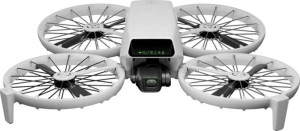
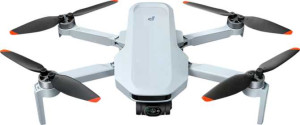
At first glance, the most striking shared trait is that both drones weigh exactly 249 g — a figure that is no coincidence, as it sits just below the 250 g regulatory threshold that triggers stricter drone registration requirements in many countries. In practice, this means both the DJI Flip and the Potensic Atom 2 offer the same legal convenience for casual flyers. However, their physical footprints diverge significantly: the Atom 2 is considerably more compact at 58 × 152 × 210 mm compared to the Flip's 79 × 233 × 280 mm, resulting in the Atom 2 having a volume of roughly 1,851 cm³ versus the Flip's 5,154 cm³ — nearly three times larger. For travelers and hikers prioritizing pack size, the Atom 2 has a clear physical advantage.

Where the DJI Flip pulls decisively ahead is in two operationally important areas. First, it is weather-sealed (splashproof), while the Atom 2 offers no such protection — a real-world difference that determines whether you can fly in light rain or near water features without risking hardware damage. Second, the Flip's minimum operating temperature of -10 °C versus the Atom 2's 0 °C means the Flip can be deployed in freezing conditions where the Atom 2 cannot safely operate. Both share an identical maximum of 40 °C.

Overall, the DJI Flip holds a meaningful environmental durability edge: it tolerates colder temperatures and wet conditions that would sideline the Atom 2. The Atom 2 counters with a much smaller form factor at the same weight, making it the better pick for ultra-portable, fair-weather use. If your flying is strictly done in controlled, dry conditions, the Atom 2's compactness is a genuine perk; for anyone who shoots in variable or harsher conditions, the Flip's resilience is a significant advantage.
Performance:
Maximum flight time 31 min 32 min
Maximum flight distance 14 km 10 km
Maximum flight speed 12 m/s 16 m/s
Obstacle detection
Intelligent flight modes
Return to Home (RTH)

Flight time and range tell very different stories here. The Potensic Atom 2 edges out the DJI Flip on endurance with 32 minutes versus 31 minutes — a negligible one-minute difference that will rarely matter in practice. Range, however, is a more meaningful gap: the Flip reaches up to 14 km while the Atom 2 tops out at 10 km. For most recreational pilots this distinction is academic, since legal line-of-sight rules cap usable range far below either figure, but for those pushing operational boundaries the Flip's transmission headroom is a genuine advantage.

The sharpest performance divergence lies in speed and safety systems. The Atom 2 is noticeably faster at 16 m/s compared to the Flip's 12 m/s — useful for dynamic tracking shots or covering ground quickly. But the Flip counters with obstacle detection, a feature the Atom 2 entirely lacks. This is not a minor omission: obstacle detection is the primary safeguard against costly crashes in cluttered environments like forests, urban areas, or around structures. Flying the Atom 2 in anything but open airspace demands constant pilot vigilance. Both drones share intelligent flight modes and Return to Home, so the core autonomy toolkit is otherwise equivalent.

The performance verdict depends heavily on use case. The Atom 2 wins on raw speed and offers marginally longer air time, making it a capable option for open-sky flying. The DJI Flip, however, holds a decisive safety edge through obstacle detection — a feature that meaningfully expands where and how confidently it can be flown. For pilots who venture into complex environments, that single differentiator tips the balance firmly in the Flip's favor.

Cameras:
megapixels (main camera) 48 MP 48 MP
maximum ISO 6400 ISO 25600 ISO
shoots raw
movie bitrate 150 Mbps 80 Mbps
video recording (main camera) 2160 x 100 fps 2160 x 30 fps
field of view 82.1° 79.4°
has a built-in HDR mode
has a serial shot mode
has a CMOS sensor
can create panoramas in-camera
has a 24p cinema mode
FPV camera

Both drones share a solid common foundation: 48 MP sensors, RAW shooting, HDR, panoramas, 24p cinema mode, and an FPV camera — meaning neither has a meaningful edge on stills versatility or feature breadth. The real divergence emerges in video capability. The DJI Flip records at 4K / 100 fps with a bitrate of 150 Mbps, while the Atom 2 caps at 4K / 30 fps at just 80 Mbps. The frame rate gap is substantial: 100 fps at 4K unlocks smooth ultra-slow-motion footage that 30 fps simply cannot produce, and the nearly double bitrate means the Flip retains far more detail and color data per second — critical for post-production grading and compression resilience.

The one area where the Potensic Atom 2 counters is maximum ISO, reaching 25600 versus the Flip's 6400. A higher ISO ceiling theoretically allows the sensor to capture usable images in dimmer conditions. However, whether that translates to cleaner low-light output in practice depends on sensor quality factors not covered by these specs alone, so this advantage should be treated with some caution. The field of view difference — 82.1° on the Flip versus 79.4° on the Atom 2 — is minor and unlikely to influence most shooting decisions.

On camera performance, the DJI Flip holds a clear and meaningful lead. Its combination of high-frame-rate 4K video and a significantly higher bitrate makes it the stronger tool for anyone prioritizing video quality and creative flexibility in post. The Atom 2's higher ISO ceiling is the only counterpoint, but it does not offset what is a sizable gap in video recording capability.

Battery:
battery power 3110 mAh 2600 mAh
has a removable battery

Battery specs here are straightforward but telling. The DJI Flip carries a 3110 mAh cell versus the Potensic Atom 2's 2600 mAh — a 20% larger capacity that aligns with the Flip's slightly longer advertised flight time seen in the Performance group. A larger battery also tends to degrade more gracefully over charge cycles, meaning the Flip's capacity advantage may compound over the drone's lifespan.

Crucially, both drones feature removable batteries, which is one of the most practical attributes a drone can have. Swappable batteries eliminate the need to pack up and wait for an in-drone charge — pilots can simply carry spares and hot-swap in the field, effectively multiplying usable flight time by however many charged packs they bring. On this point, the two are evenly matched.

The DJI Flip takes the edge in this category purely on capacity. While the Atom 2's removable battery partially offsets its smaller cell — since spares can be swapped in — the Flip's 3110 mAh pack means more flight time per charge and a larger energy reserve under demanding conditions like cold weather or high-speed flying.

Features:
has an external memory slot
has GPS
supports a remote smartphone
has a remote control
Has a display

Across most of this feature set, the two drones are identical: both offer external memory expansion, GPS, a dedicated remote control, and smartphone support. These are table-stakes features for drones in this class, and their presence on both means neither gains an advantage here.

The sole differentiator is that the DJI Flip's remote control includes a built-in display, while the Potensic Atom 2's does not. This is a more meaningful distinction than it might initially appear. A controller with its own screen means the pilot gets a live feed and flight telemetry without needing to mount and rely on a smartphone — useful in bright sunlight where phone screens wash out, and eliminates the dependency on a charged, compatible device. The Atom 2, lacking this, requires a smartphone for any visual feedback, adding a variable to every flight session.

The DJI Flip takes a clear edge in this group. The shared features are equivalent, but the integrated display on the Flip's controller is a genuine usability advantage — particularly for pilots who fly frequently or in challenging lighting conditions where a self-contained, purpose-built screen outperforms a phone.

Comparison Summary & Verdict

After examining all the specifications, both drones carve out distinct niches despite sharing the same weight class. The DJI Flip stands out with its weather sealing, obstacle detection, higher movie bitrate of 150 Mbps, smoother 4K at 100 fps video, a built-in display, greater flight distance of 14 km, and a wider operating temperature range down to -10 °C — making it the stronger choice for serious content creators and pilots who fly in varied conditions. The Potensic Atom 2, on the other hand, offers a higher maximum ISO of 25600, a slightly longer flight time of 32 min, and a faster top speed of 16 m/s, all in a noticeably more compact body — making it well suited for travel-focused flyers who prioritize portability and low-light photo capability over advanced safety features.

DJI Flip
Buy DJI Flip if...

Buy the DJI Flip if you need weather sealing, obstacle detection, and higher-quality video recording with a greater maximum flight distance. It is the better pick for demanding shooting conditions and pilots who value advanced safety features.

Potensic Atom 2
Buy Potensic Atom 2 if...

Buy the Potensic Atom 2 if you prioritize a more compact and lightweight form factor, a higher maximum ISO for low-light photography, and a faster top flight speed. It is ideal for travelers who want a highly portable drone without breaking the bank.