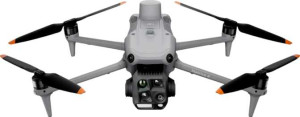
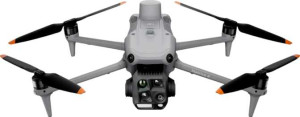
The camera systems on the DJI Matrice 4E and DJI Matrice 4T are nearly identical on paper — both pack a 48 MP main sensor with a 90° field of view, cap out at 4K (2160p) at 30 fps, and share a maximum ISO of 409,600, which signals strong low-light sensitivity for night operations or shadowed environments. HDR mode, in-camera panoramas, a 24p cinema mode, and an FPV camera round out a capable shared feature set suited to demanding professional workflows.
The single but meaningful divergence is RAW capture: the Matrice 4E supports it, while the Matrice 4T does not. For photogrammetry, precision mapping, or any workflow where images are post-processed in software like Lightroom or specialized GIS tools, RAW files preserve far more tonal and detail information than compressed formats. The absence of RAW on the Matrice 4T means its imagery is baked in-camera at capture, limiting flexibility in post-production. Both share the same 60 Mbps video bitrate, so for video workflows the gap narrows — but for still-image-intensive missions, the difference is real.
The Matrice 4E holds a clear edge in this group solely due to its RAW shooting capability. For operators whose missions revolve around high-fidelity image data — inspection analysis, orthomosaic mapping, or asset documentation — this distinction is a practical advantage. The Matrice 4T is not disadvantaged in video or general imaging, but professionals who rely on maximum post-processing latitude should weigh this difference carefully.