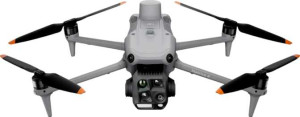
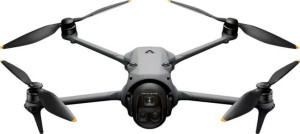
Two of the sharpest contrasts in this group sit at opposite ends of the imaging spectrum. The DJI Mavic 4 Pro leads decisively on resolution — its 100 MP main sensor more than doubles the Matrice 4E's 48 MP — and pairs that with superior video capability, capturing footage at 3384 × 60 fps compared to the Matrice 4E's 2160 × 30 fps. For cinematographers, surveyors, or anyone who needs fine detail in stills or fluid high-resolution motion capture, the Mavic 4 Pro's imaging hardware is in a different league.
Yet the DJI Matrice 4E fires back with a spec that demands attention: a maximum ISO of 409,600, versus the Mavic 4 Pro's 12,800. That is a gap of more than five stops of light sensitivity — a profound real-world advantage in low-light, dusk, or night operations where available light is scarce. The Matrice 4E also offers a wider 90° field of view against the Mavic 4 Pro's 72°, which means more scene coverage per frame — useful for inspection, search and rescue, or wide-area documentation without needing to reposition.
Both drones share a strong baseline of creative and functional features: RAW shooting, HDR, 24p cinema mode, in-camera panoramas, serial shot, and an FPV camera — so neither holds a qualitative edge on versatility. The conclusion here depends entirely on use case: the Mavic 4 Pro is the stronger choice for daytime high-resolution imaging and video, while the Matrice 4E has a commanding advantage wherever low-light sensitivity and wider coverage are mission-critical.