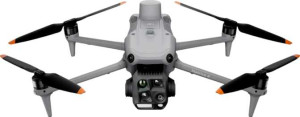
DJI Matrice 4T
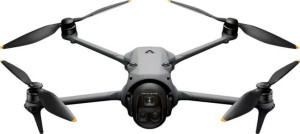
DJI Mavic 4 Pro

DJI Matrice 4T DJI Mavic 4 Pro

Overview

Welcome to our in-depth spec comparison between the DJI Matrice 4T and the DJI Mavic 4 Pro. Both drones share a strong foundation — offering obstacle detection, intelligent flight modes, FPV cameras, and GPS — yet they diverge significantly in areas like camera capability, weight and size, and overall flight performance. Whether you are prioritizing imaging power or operational flexibility, this breakdown will help you find the right fit.

Common Features

  • Neither the DJI Matrice 4T nor the DJI Mavic 4 Pro is weather-sealed or splashproof.
  • Both drones share a maximum operating temperature of 40 °C.
  • Obstacle detection is available on both the DJI Matrice 4T and the DJI Mavic 4 Pro.
  • Intelligent flight modes are supported on both the DJI Matrice 4T and the DJI Mavic 4 Pro.
  • Return to Home (RTH) functionality is present on both the DJI Matrice 4T and the DJI Mavic 4 Pro.
  • Both the DJI Matrice 4T and the DJI Mavic 4 Pro feature a built-in HDR mode.
  • Both the DJI Matrice 4T and the DJI Mavic 4 Pro use a CMOS sensor.
  • In-camera panorama creation is available on both the DJI Matrice 4T and the DJI Mavic 4 Pro.
  • A 24p cinema mode is present on both the DJI Matrice 4T and the DJI Mavic 4 Pro.
  • An FPV camera is included on both the DJI Matrice 4T and the DJI Mavic 4 Pro.
  • Both the DJI Matrice 4T and the DJI Mavic 4 Pro have a removable battery.
  • An external memory slot is available on both the DJI Matrice 4T and the DJI Mavic 4 Pro.
  • GPS is present on both the DJI Matrice 4T and the DJI Mavic 4 Pro.
  • Both the DJI Matrice 4T and the DJI Mavic 4 Pro support a remote smartphone.
  • A remote control is included with both the DJI Matrice 4T and the DJI Mavic 4 Pro.
  • Both the DJI Matrice 4T and the DJI Mavic 4 Pro have a display.

Main Differences

  • Volume is 16464.41 cm³ on the DJI Matrice 4T and 17353.91 cm³ on the DJI Mavic 4 Pro.
  • Weight is 401 g on the DJI Matrice 4T and 1063 g on the DJI Mavic 4 Pro.
  • The lowest potential operating temperature is -20 °C on the DJI Matrice 4T and -10 °C on the DJI Mavic 4 Pro.
  • Height is 307 mm on the DJI Matrice 4T and 135.2 mm on the DJI Mavic 4 Pro.
  • Thickness is 138.4 mm on the DJI Matrice 4T and 328.7 mm on the DJI Mavic 4 Pro.
  • Width is 387.5 mm on the DJI Matrice 4T and 390.5 mm on the DJI Mavic 4 Pro.
  • Maximum flight time is 49 minutes on the DJI Matrice 4T and 51 minutes on the DJI Mavic 4 Pro.
  • Maximum flight distance is 35 km on the DJI Matrice 4T and 41 km on the DJI Mavic 4 Pro.
  • Maximum flight speed is 21 m/s on the DJI Matrice 4T and 25 m/s on the DJI Mavic 4 Pro.
  • The main camera resolution is 48 MP on the DJI Matrice 4T and 100 MP on the DJI Mavic 4 Pro.
  • Maximum ISO is 409600 on the DJI Matrice 4T and 12800 on the DJI Mavic 4 Pro.
  • RAW shooting is available on the DJI Mavic 4 Pro but not on the DJI Matrice 4T.
  • Video recording on the main camera reaches 2160p at 30 fps on the DJI Matrice 4T and 3384p at 60 fps on the DJI Mavic 4 Pro.
  • Field of view is 90° on the DJI Matrice 4T and 72° on the DJI Mavic 4 Pro.
  • Battery power is 6741 mAh on the DJI Matrice 4T and 6654 mAh on the DJI Mavic 4 Pro.
Specs Comparison
DJI Matrice 4T

DJI Matrice 4T

DJI Mavic 4 Pro

DJI Mavic 4 Pro

General info:
is weather-sealed (splashproof)
volume 16464.41 cm³ 17353.91372 cm³
weight 401 g 1063 g
release date January 2025 May 2025
lowest potential operating temperature -20 °C -10 °C
maximum operating temperature 40 °C 40 °C
height 307 mm 135.2 mm
thickness 138.4 mm 328.7 mm
width 387.5 mm 390.5 mm

The most striking physical difference between these two drones is weight. The DJI Matrice 4T comes in at 401 g, while the DJI Mavic 4 Pro is nearly 2.6× heavier at 1063 g. In practical terms, this gap has regulatory consequences in many markets where drones under 500 g or 900 g fall into lighter registration and operational categories — giving the Matrice 4T a meaningful advantage in ease of deployment. The lighter airframe also typically translates to longer flight endurance and greater agility in the field.

Their form factors also diverge significantly. The Matrice 4T is taller and wider (307 × 387.5 mm) but notably thinner (138.4 mm), whereas the Mavic 4 Pro is much flatter and more compact in height (135.2 mm tall) but considerably deeper (328.7 mm). This suggests different folding architectures and portability profiles — the Mavic 4 Pro is likely more pocketable when folded, while the Matrice 4T's dimensions point to a platform-oriented, mission-ready design.

On cold-weather resilience, the Matrice 4T holds a clear edge, rated down to -20 °C versus the Mavic 4 Pro's -10 °C floor. For operators in northern climates or high-altitude environments, this 10-degree difference can be the deciding factor. Both drones share the same 40 °C upper limit and neither offers weather sealing, so wet-condition operations carry risk for both. Overall, the Matrice 4T wins this group on operational range and weight efficiency, while the Mavic 4 Pro may appeal to users prioritizing a more compact footprint.

Performance:
Maximum flight time 49 min 51 min
Maximum flight distance 35 km 41 km
Maximum flight speed 21 m/s 25 m/s
Obstacle detection
Intelligent flight modes
Return to Home (RTH)

Across every core performance metric, the DJI Mavic 4 Pro holds a consistent lead. Its 51-minute maximum flight time edges out the Matrice 4T's 49 minutes — a modest gap on paper, but one that compounds meaningfully in back-to-back mission scenarios where every extra minute in the air reduces battery swap frequency. More consequential is the range differential: 41 km versus 35 km, a roughly 17% advantage that matters for linear infrastructure surveys, corridor mapping, or any operation pushing the boundaries of a single flight envelope.

Speed tells a similar story. The Mavic 4 Pro reaches 25 m/s versus the Matrice 4T's 21 m/s — a gap that translates to faster area coverage and quicker repositioning between waypoints. For time-sensitive missions like search operations or dynamic event coverage, that extra 4 m/s is not trivial. Both drones offer obstacle detection, intelligent flight modes, and Return to Home functionality, so the safety and autonomy baseline is identical.

The performance picture here is straightforward: the Mavic 4 Pro outpaces the Matrice 4T on every measurable flight metric in this group. Given that the Matrice 4T is the heavier, mission-specialized platform, the Mavic 4 Pro's superior raw performance is somewhat unexpected and reinforces its appeal as a high-capability all-rounder. The DJI Mavic 4 Pro takes a clear edge in this category.

Cameras:
megapixels (main camera) 48 MP 100 MP
maximum ISO 409600 ISO 12800 ISO
shoots raw
video recording (main camera) 2160 x 30 fps 3384 x 60 fps
field of view 90° 72°
has a built-in HDR mode
has a CMOS sensor
can create panoramas in-camera
has a 24p cinema mode
FPV camera

Resolution and file format tell the most important story here. The DJI Mavic 4 Pro packs a 100 MP main sensor versus the Matrice 4T's 48 MP — more than double the pixel count — and critically, it shoots RAW, while the Matrice 4T does not. For photographers and professional post-production workflows, RAW capture is a fundamental requirement: it preserves full sensor data, enabling far greater latitude in color grading, exposure recovery, and fine detail rendering. The Matrice 4T's JPEG-only output is a hard ceiling for image quality work.

Video resolution follows the same hierarchy. The Mavic 4 Pro records at 3384 × 60 fps compared to the Matrice 4T's 2160 × 30 fps — a meaningful step up both in pixel density and frame rate flexibility. Sixty frames per second at that resolution enables smooth slow-motion footage and future-proofs content for high-resolution delivery pipelines. Where the Matrice 4T surprises, however, is in low-light versatility: its maximum ISO reaches an extraordinary 409,600 against the Mavic 4 Pro's 12,800. That gap is enormous and suggests the Matrice 4T's sensor is tuned specifically for low-light and thermal/surveillance applications rather than daylight imaging quality.

Both drones share HDR, panorama, 24p cinema mode, CMOS sensors, and FPV cameras — so the creative toolset baseline is matched. The field of view slightly favors the Matrice 4T at 90° versus 72°, useful for wider contextual shots. Overall, the Mavic 4 Pro wins decisively on imaging quality for standard use cases thanks to its higher resolution and RAW support, while the Matrice 4T's extreme ISO ceiling points to a very different, specialized operational purpose.
Battery:
battery power 6741 mAh 6654 mAh
has a removable battery

Battery capacity is essentially a wash between these two drones. The DJI Matrice 4T carries 6741 mAh and the DJI Mavic 4 Pro holds 6654 mAh — a difference of just 87 mAh, or roughly 1.3%. In real-world terms, that gap is too small to produce any noticeable difference in operational behavior and should be treated as a statistical tie.

What matters more than the raw capacity figures is that both drones feature removable batteries. For professional deployments, this is a critical operational advantage: crews can carry pre-charged spare packs and swap them in the field in seconds, effectively decoupling mission duration from charging infrastructure. A drone with a sealed battery is fundamentally constrained by charge cycles; these two are not.

With near-identical capacities and the same swappable design, this group is a dead heat. Neither drone holds a battery advantage over the other — operators can make their choice based on other criteria entirely.

Features:
has an external memory slot
has GPS
supports a remote smartphone
has a remote control
Has a display

This is the most clear-cut group in the entire comparison: every single feature listed is shared identically by both the DJI Matrice 4T and the DJI Mavic 4 Pro. Both offer external memory slots, GPS, remote control with a display, and smartphone support — covering the full checklist of what a professional operator would expect from a modern drone platform.

The presence of a built-in display on the remote controller is worth noting as a shared strength. It eliminates the dependency on a personal smartphone for situational awareness, which matters in bright outdoor conditions where phone screens often wash out, and in professional workflows where a dedicated screen ensures a more reliable and consistent operating experience for both drones equally.

There is no differentiator to declare here — this group is a complete tie. Buyers should weight their decision entirely on the other specification groups, where the two drones diverge more meaningfully.

Comparison Summary & Verdict

After examining the full specification set, both drones serve distinct audiences. The DJI Matrice 4T stands out with its remarkably lightweight 401 g frame, a much higher maximum ISO of 409600 for low-light scenarios, a wider 90° field of view, and a lower operating temperature floor of -20 °C — making it a strong choice for demanding field conditions. The DJI Mavic 4 Pro, on the other hand, pulls ahead with a 100 MP main camera, RAW shooting support, superior video resolution at 3384p and 60 fps, a faster top speed of 25 m/s, and a greater maximum flight distance of 41 km. If portability and cold-weather resilience are your priorities, the Matrice 4T is compelling. If you need professional-grade image quality and extended range, the Mavic 4 Pro is the clear choice.

DJI Matrice 4T
Buy DJI Matrice 4T if...

Buy the DJI Matrice 4T if you need an ultra-lightweight drone that performs in extreme cold down to -20 °C and delivers a wider field of view with a very high maximum ISO for challenging lighting conditions.

DJI Mavic 4 Pro
Buy DJI Mavic 4 Pro if...

Buy the DJI Mavic 4 Pro if you demand the best imaging performance, including a 100 MP camera, RAW shooting, 3384p video at 60 fps, and a longer maximum flight distance of 41 km.