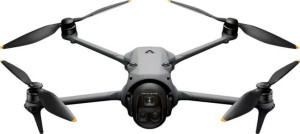
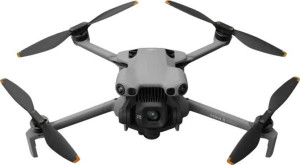
The most immediate and impactful difference between these two drones is their physical footprint and weight. The DJI Mavic 4 Pro is a substantially larger machine — weighing 1,063 g and occupying over 17,353 cm³ of volume — while the DJI Mini 5 Pro comes in at a remarkably lean 249.9 g with a volume of just 4,200 cm³. In practical terms, the Mini 5 Pro is roughly one-quarter the weight of the Mavic 4 Pro. This gap is not merely cosmetic: in many countries, drones under 250 g fall into a significantly lighter regulatory category, meaning Mini 5 Pro pilots may face fewer registration requirements and fly in more locations without special authorization.
Portability is another real-world consequence of this size divide. The Mavic 4 Pro's dimensions (390.5 × 328.7 × 135.2 mm) make it a deliberate, planned-deployment tool — something you bring in a dedicated case for a specific shoot. The Mini 5 Pro (255 × 181 × 91 mm) slips into a backpack or even a large jacket pocket, making it genuinely grab-and-go. For travelers, outdoor adventurers, or run-and-gun creators, this distinction can be decisive.
One notable reversal in this group is weather sealing: despite being the smaller and lighter drone, the Mini 5 Pro is rated as splashproof, while the Mavic 4 Pro is not. This gives the Mini 5 Pro a meaningful durability edge for shooting in light rain or humid coastal conditions. Both drones share an identical operating temperature range of -10 °C to 40 °C, so neither has an advantage in thermal tolerance. Overall, the Mini 5 Pro holds a clear edge in this group for portability, regulatory friendliness, and weather resilience — the Mavic 4 Pro's larger form factor implies greater capability elsewhere, but on general physical specs alone, the Mini 5 Pro is the more versatile everyday companion.