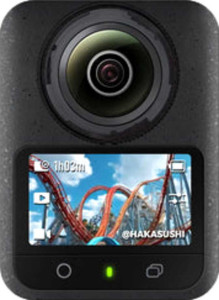
DJI Osmo 360
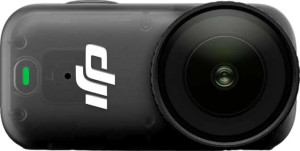
DJI Osmo Nano

DJI Osmo 360 DJI Osmo Nano

Common Features

  • Both products have a touch screen.
  • Both products have an external memory slot.
  • Both products have a display.
  • Both products are waterproof.
  • Both products have 128GB of internal storage.
  • Both products can operate at temperatures as low as -20 °C.
  • Both products have a resolution of 556 x 314 px.
  • Neither product has a secondary screen.
  • Both products are compatible with Android.
  • Both products are compatible with iOS.
  • Both products use Bluetooth 5.1.
  • Both products have first-party support for live streaming.
  • Both products come with a remote control.
  • Both products support Wi-Fi.
  • Both products support Wi-Fi versions 6, 5, and 4.
  • Both products have a rechargeable battery.
  • Both products have a battery level indicator.
  • Both products have an adjustable field of view.
  • Both products have a BSI sensor and a CMOS sensor.

Main Differences

  • Maximum operating temperature is 45 °C on DJI Osmo 360 and 40 °C on DJI Osmo Nano.
  • Screen size is 2″ on DJI Osmo 360 and 1.96″ on DJI Osmo Nano.
  • Volume is 179.3583 cm³ on DJI Osmo 360 and 47.3298 cm³ on DJI Osmo Nano.
  • Weight is 183 g on DJI Osmo 360 and 52 g on DJI Osmo Nano.
  • Thickness is 36.3 mm on DJI Osmo 360 and 28 mm on DJI Osmo Nano.
  • Width is 61 mm on DJI Osmo 360 and 57.3 mm on DJI Osmo Nano.
  • Height is 81 mm on DJI Osmo 360 and 29.5 mm on DJI Osmo Nano.
  • USB version is 0 on DJI Osmo 360 and 3.1 on DJI Osmo Nano.
  • DJI Osmo 360 does not have USB Type-C, while DJI Osmo Nano has USB Type-C.
  • Battery life is 1.6 hours on DJI Osmo 360 and 1.5 hours on DJI Osmo Nano.
  • Battery power is 1950 mAh on DJI Osmo 360 and 530 mAh on DJI Osmo Nano.
  • Number of microphones is 4 on DJI Osmo 360 and 2 on DJI Osmo Nano.
  • Megapixels on the main camera are 120 MP on DJI Osmo 360 and 35 MP on DJI Osmo Nano.
  • Wide aperture on the main camera is 1.9f on DJI Osmo 360 and 2.8f on DJI Osmo Nano.
  • DJI Osmo 360 has a dual-lens (or multi-lens) main camera, while DJI Osmo Nano has a single-lens main camera.
  • Video recording resolution and frame rate is 2160 x 120 fps on DJI Osmo 360 and 2160 x 60 fps on DJI Osmo Nano.
  • Field of view is 170° on DJI Osmo 360 and 143° on DJI Osmo Nano.
  • Movie bitrate is 170 Mbps on DJI Osmo 360 and 120 Mbps on DJI Osmo Nano.
  • DJI Osmo 360 does not shoot raw, while DJI Osmo Nano shoots raw.
Specs Comparison
DJI Osmo 360

DJI Osmo 360

DJI Osmo Nano

DJI Osmo Nano

Design:
has a touch screen
has an external memory slot
Has a display
water resistance Waterproof Waterproof
internal storage 128GB 128GB
maximum operating temperature 45 °C 40 °C
lowest potential operating temperature -20 °C -20 °C
resolution 556 x 314 px 556 x 314 px
screen size 2" 1.96"
Has a secondary screen
Has a flip-out screen
volume 179.3583 cm³ 47.3298 cm³
weight 183 g 52 g
thickness 36.3 mm 28 mm
width 61 mm 57.3 mm
height 81 mm 29.5 mm

The DJI Osmo 360 and DJI Osmo Nano both feature a touch screen, external memory slot, and waterproof build. However, the Osmo 360 has a slightly larger screen size of 2″ compared to the Nano’s 1.96″. Both devices have the same resolution of 556 x 314 px, ensuring similar display quality.

In terms of storage, both models offer 128GB of internal storage, with no secondary screen or flip-out screen on either product. When it comes to size and weight, the Osmo 360 is notably larger and heavier, with a volume of 179.3583 cm³ and weighing 183 g. In contrast, the Osmo Nano is more compact, with a volume of 47.3298 cm³ and a lighter weight of 52 g.

Temperature tolerance also varies slightly, as the Osmo 360 can operate in a maximum temperature of 45°C, whereas the Osmo Nano has a slightly lower maximum of 40°C. Both products have the same lowest operating temperature of -20°C.

Connectivity & Features:
release date August 2025 September 2025
Is compatible with Android
Is compatible with iOS
Bluetooth version 5.1 5.1
has first-party support for live streaming
USB version 0 3.1
Has USB Type-C
has a remote control
has GPS
supports Wi-Fi
Wi-Fi version Wi-Fi 6 (802.11ax), Wi-Fi 5 (802.11ac), Wi-Fi 4 (802.11n) Wi-Fi 6 (802.11ax), Wi-Fi 5 (802.11ac), Wi-Fi 4 (802.11n)
supports a remote smartphone

Both the DJI Osmo 360 and DJI Osmo Nano are compatible with Android and iOS devices, ensuring broad device support for users. They also share Bluetooth 5.1 and first-party support for live streaming, as well as the ability to support a remote smartphone. However, the USB specifications differ between the two: the Osmo 360 uses a USB version 0 and does not feature a USB Type-C port, while the Osmo Nano supports USB version 3.1 and includes a USB Type-C port.

In terms of remote control capabilities, both products include this feature, so users can control the devices without direct interaction. Neither product has GPS functionality.

For Wi-Fi support, both products are equipped with Wi-Fi 6 (802.11ax), Wi-Fi 5 (802.11ac), and Wi-Fi 4 (802.11n), ensuring reliable connectivity on various networks.

Battery:
Battery life 1.6 hours 1.5 hours
battery power 1950 mAh 530 mAh
has a rechargeable battery
has a battery level indicator

The DJI Osmo 360 and DJI Osmo Nano both feature rechargeable batteries with a battery level indicator, making it easy to monitor power status. However, there is a difference in battery life and power capacity. The Osmo 360 offers a slightly longer battery life of 1.6 hours, compared to the Osmo Nano’s 1.5 hours. Additionally, the Osmo 360 is equipped with a more powerful 1950 mAh battery, while the Osmo Nano has a smaller 530 mAh battery.

Despite these differences in capacity and runtime, both products include rechargeable batteries, ensuring users can easily power them up for extended use.

Audio:
number of microphones 4 2
has a microphone input
has a socket for a 3.5 mm audio jack

The DJI Osmo 360 and DJI Osmo Nano both lack a microphone input and a socket for a 3.5 mm audio jack, meaning external microphones cannot be connected directly to either device. However, they do differ in the number of built-in microphones. The Osmo 360 is equipped with 4 microphones, while the Osmo Nano has 2 microphones.

Both products offer internal microphone solutions, but the Osmo 360 has a greater microphone count, potentially providing a more nuanced audio capture experience.

Optics:
megapixels (main camera) 120 MP 35 MP
has an adjustable field of view
wide aperture (main camera) 1.9f 2.8f
Has a dual-lens (or multi-lens) main camera
has a BSI sensor
has a CMOS sensor
has a flash

The DJI Osmo 360 and DJI Osmo Nano differ significantly in terms of their main camera specifications. The Osmo 360 has a much higher megapixel count at 120 MP, compared to the Osmo Nano’s 35 MP. Both devices feature an adjustable field of view and are equipped with BSI (Backside Illumination) and CMOS sensors for improved image quality. However, the Osmo 360 has a dual-lens main camera, while the Osmo Nano has a single-lens camera.

In terms of aperture, the Osmo 360 boasts a wider f/1.9 aperture, allowing for more light to enter the camera, while the Osmo Nano has a narrower f/2.8 aperture. Both devices do not have a flash, which may affect low-light performance.

Videography:
video recording (main camera) 2160 x 120 fps 2160 x 60 fps
field of view 170° 143°
Has timelapse function
supports slow-motion video recording
Has phase-detection autofocus for videos
has continuous autofocus when recording movies
supports horizon leveling
has a 24p cinema mode
movie bitrate 170 Mbps 120 Mbps
shoots raw
has AF tracking
has a video light

The DJI Osmo 360 and DJI Osmo Nano offer impressive videography features, though there are some differences in their capabilities. Both models support 4K video recording with a resolution of 2160p, but the Osmo 360 records at a higher frame rate of 120 fps, compared to the Osmo Nano’s 60 fps. Additionally, the Osmo 360 has a wider field of view at 170°, while the Osmo Nano has a slightly narrower 143° field of view.

Both cameras support timelapse functions, slow-motion video recording, phase-detection autofocus for videos, continuous autofocus, horizon leveling, and a 24p cinema mode, ensuring solid video performance for both. However, the Osmo Nano shoots in raw format, while the Osmo 360 does not. The movie bitrate of the Osmo 360 is also higher at 170 Mbps, compared to the Osmo Nano’s 120 Mbps.

Both devices include AF tracking, but neither comes with a video light to aid in low-light conditions.

Comparison Summary

This is a specification comparison between DJI Osmo 360 and DJI Osmo Nano. Both products share features like a touch screen, 128GB of internal storage, and compatibility with Android and iOS. The DJI Osmo 360 stands out with a larger screen size (2″ vs 1.96″), higher maximum operating temperature (45 °C vs 40 °C), and longer battery life (1.6 hours vs 1.5 hours). In terms of optics, the Osmo 360 offers a higher megapixel count (120 MP vs 35 MP) and a wider field of view (170° vs 143°). The Osmo Nano features USB Type-C support and the ability to shoot raw images, which the Osmo 360 lacks.