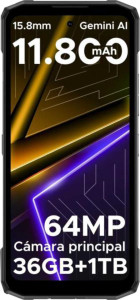
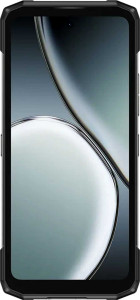
Doogee Blade 20 Max
Doogee Blade 20 Ultra

Doogee Blade 20 Max Doogee Blade 20 Ultra

Overview

Welcome to our in-depth comparison of the Doogee Blade 20 Max and the Doogee Blade 20 Ultra, two rugged Android 15 smartphones that share the same tough IP67-rated chassis but take notably different paths when it comes to performance hardware, camera capabilities, and battery capacity. Whether you are after raw processing power and storage headroom or broader wireless connectivity, this head-to-head breakdown will help you decide which device best matches your needs.

Common Features

  • Both phones are waterproof with an IP67 ingress protection rating.
  • Both phones have a rugged build and cannot be folded.
  • Both phones share the same dimensions: 174 mm tall, 81.2 mm wide, and 15.8 mm thick.
  • Both phones feature a 6.6″ IPS LCD display with a resolution of 720 x 1612 px and a pixel density of 267 ppi.
  • Both phones have a 90Hz display refresh rate.
  • Branded damage-resistant glass is not present on either phone.
  • HDR10 support is not available on either phone.
  • Both phones use an 8-thread CPU with big.LITTLE technology and support 64-bit processing.
  • Both phones feature a Mali G57 GPU with integrated graphics.
  • Both phones run Android 15 with theme customization, clipboard warnings, location privacy options, and camera/microphone privacy options.
  • App tracking can be blocked on both phones, but cross-site tracking blocking is not available on either.
  • Both phones support fast charging at 33W and do not support wireless charging.
  • Neither phone has a removable battery.
  • Both phones lack a 3.5 mm audio jack and do not have stereo speakers.
  • Neither phone supports aptX, aptX HD, aptX Adaptive, aptX Lossless, or LDAC audio codecs.
  • Both phones support 4G LTE but not 5G.
  • Both phones have dual SIM support, NFC, a USB Type-C port (USB 2.0), an external memory slot, and a fingerprint scanner.
  • Both phones share the same upload speed of 150 MBits/s.
  • Main camera video recording is limited to 1080p at 30 fps on both phones.
  • Both phones have phase-detection autofocus for photos and continuous autofocus during video recording.

Main Differences

  • Internal storage is 1024GB on the Doogee Blade 20 Max and 512GB on the Doogee Blade 20 Ultra.
  • RAM is 12GB on the Doogee Blade 20 Max and 8GB on the Doogee Blade 20 Ultra.
  • The chipset is a MediaTek Helio G100 on the Doogee Blade 20 Max and a Unisoc T7250 on the Doogee Blade 20 Ultra.
  • CPU speed is 2 x 2.2 & 6 x 2 GHz on the Doogee Blade 20 Max and 2 x 1.8 & 6 x 1.6 GHz on the Doogee Blade 20 Ultra.
  • GPU clock speed is 1000 MHz on the Doogee Blade 20 Max and 850 MHz on the Doogee Blade 20 Ultra.
  • RAM speed is 4266 MHz on the Doogee Blade 20 Max and 1866 MHz on the Doogee Blade 20 Ultra.
  • Semiconductor size is 6 nm on the Doogee Blade 20 Max and 12 nm on the Doogee Blade 20 Ultra.
  • Thermal Design Power (TDP) is 5W on the Doogee Blade 20 Max and 10W on the Doogee Blade 20 Ultra.
  • Main camera resolution is 64 & 20 MP on the Doogee Blade 20 Max and 50 MP on the Doogee Blade 20 Ultra.
  • The Doogee Blade 20 Max has a dual-lens main camera, while the Doogee Blade 20 Ultra has a single-lens main camera.
  • Front camera resolution is 16 MP on the Doogee Blade 20 Max and 8 MP on the Doogee Blade 20 Ultra.
  • The number of flash LEDs is 4 on the Doogee Blade 20 Max and 2 on the Doogee Blade 20 Ultra.
  • Battery capacity is 11800 mAh on the Doogee Blade 20 Max and 10300 mAh on the Doogee Blade 20 Ultra.
  • Wi-Fi support includes Wi-Fi 4 and Wi-Fi 5 on the Doogee Blade 20 Max, while the Doogee Blade 20 Ultra also adds Wi-Fi 6 support.
  • Bluetooth version is 5.4 on the Doogee Blade 20 Max and 5.0 on the Doogee Blade 20 Ultra.
  • Download speed is 650 MBits/s on the Doogee Blade 20 Max and 300 MBits/s on the Doogee Blade 20 Ultra.
Specs Comparison
Doogee Blade 20 Max

Doogee Blade 20 Max

Doogee Blade 20 Ultra

Doogee Blade 20 Ultra

Design:
water resistance Waterproof Waterproof
thickness 15.8 mm 15.8 mm
width 81.2 mm 81.2 mm
height 174 mm 174 mm
volume 223.23504 cm³ 223.23504 cm³
Ingress Protection (IP) rating IP67 IP67
has a rugged build
can be folded

In terms of design, the Doogee Blade 20 Max and Doogee Blade 20 Ultra are identical across every measurable dimension: both share the same 174 mm × 81.2 mm × 15.8 mm footprint and an identical volume of 223.24 cm³. At 15.8 mm thick, these are notably chunky devices by modern smartphone standards — a trade-off that is typical for rugged handsets where internal reinforcement and larger batteries demand extra bulk.

Both phones carry an IP67 rating, meaning they are fully dustproof and can withstand submersion in up to 1 meter of fresh water for 30 minutes. Combined with their confirmed rugged build, this makes both devices equally well-suited for outdoor, construction, or industrial use cases where exposure to the elements is a daily reality.

Since every design specification — dimensions, volume, water resistance, IP rating, rugged construction, and non-foldable form factor — is perfectly matched between the two models, there is no design-based advantage to either device. Users choosing between them should look to other spec groups to find meaningful differentiators.

Display:
Display type LCD, IPS LCD, IPS
screen size 6.6" 6.6"
pixel density 267 ppi 267 ppi
resolution 720 x 1612 px 720 x 1612 px
refresh rate 90Hz 90Hz
has branded damage-resistant glass
supports HDR10
supports HDR10+
Always-On Display
supports Dolby Vision
Has a secondary screen
has a touch screen

The display hardware on both the Blade 20 Max and Blade 20 Ultra is a carbon copy: a 6.6-inch IPS LCD panel running at 720 x 1612 px with a pixel density of 267 ppi. That resolution sits in the HD+ tier — adequate for everyday browsing and video, but noticeably softer than the Full HD+ panels common on mid-range competitors. Users who regularly read small text or watch high-detail content may find the sharpness ceiling limiting.

A 90Hz refresh rate is a genuine usability plus shared by both devices, delivering smoother scrolling and more responsive touch interaction compared to a standard 60Hz screen. However, neither phone supports HDR10, HDR10+, or Dolby Vision, which means streaming platforms will not unlock enhanced contrast or wide color content — a limitation worth noting for media-heavy users. The absence of branded damage-resistant glass on both models is also consistent with their rugged-phone positioning, where the protection strategy relies on the device's overall build rather than a specialized screen coating.

Notably, both phones include a secondary screen — a feature uncommon in this segment that adds practical utility for rugged use cases, such as checking notifications or status without waking the main display. Since every display specification is identical across both models, this category results in a complete tie with no advantage to either device.

Performance:
internal storage 1024GB 512GB
RAM 12GB 8GB
Chipset (SoC) name MediaTek Helio G100 Unisoc T7250
GPU name Mali G57 Mali G57
CPU speed 2 x 2.2 & 6 x 2 GHz 2 x 1.8 & 6 x 1.6 GHz
GPU clock speed 1000 MHz 850 MHz
Has integrated LTE
RAM speed 4266 MHz 1866 MHz
semiconductor size 6 nm 12 nm
Supports 64-bit
Has integrated graphics
OpenGL ES version 3.2 3.2
Uses big.LITTLE technology
CPU threads 8 threads 8 threads
Has TrustZone
OpenCL version 2 2
maximum memory amount 12GB 12GB
Thermal Design Power (TDP) 5W 10W
DDR memory version 4 4

This is the first spec group where the two phones diverge significantly, and the gap is substantial. The Blade 20 Max is powered by the MediaTek Helio G100 built on a 6 nm process, while the Blade 20 Ultra uses the Unisoc T7250 on a much older 12 nm node. A smaller semiconductor process translates directly into better power efficiency and more transistors in the same space — meaning the Helio G100 can deliver more compute per watt. The CPU clock advantage reinforces this: the Max runs its performance cores at 2.2 GHz versus the Ultra's 1.8 GHz, and its efficiency cores at 2.0 GHz versus 1.6 GHz. In practice, this means snappier app launches, smoother multitasking, and better sustained performance under load.

The memory story follows the same pattern. The Blade 20 Max pairs 12 GB of RAM running at a brisk 4266 MHz with 1024 GB of internal storage, while the Ultra offers only 8 GB of RAM at 1866 MHz and 512 GB of storage. The RAM speed difference is especially impactful — faster memory reduces latency between the CPU and RAM, which benefits everything from browser tab switching to gaming. The Max also doubles the storage, a meaningful advantage for users who store large files, photos, or offline media on their device.

The Blade 20 Ultra's higher 10W TDP versus the Max's 5W suggests the Unisoc chip runs hotter and draws more power despite delivering less performance — a hallmark of the older 12 nm fabrication process. The GPU clock speed gap (1000 MHz vs 850 MHz) further reinforces the Max's edge in graphics-intensive tasks. Across every meaningful performance dimension, the Blade 20 Max holds a clear and decisive advantage.

Cameras:
megapixels (main camera) 64 & 20 MP 50 MP
Has a dual-lens (or multi-lens) main camera
megapixels (front camera) 16MP 8MP
has built-in optical image stabilization
video recording (main camera) 1080 x 30 fps 1080 x 30 fps
Has a dual-tone LED flash
number of flash LEDs 4 2
has a BSI sensor
has a CMOS sensor
has continuous autofocus when recording movies
Has phase-detection autofocus for photos
supports slow-motion video recording
has a built-in HDR mode
has manual exposure
has a flash
optical zoom 0x 0x
has manual ISO
has a serial shot mode
has manual focus
has a front camera
Has laser autofocus
Shoots 360° panorama
has manual white balance
shoots raw
has touch autofocus
has manual shutter speed
can create panoramas in-camera
Has a front-facing LED flash
has a dual-lens (or multi-lens) front camera
supports HDR10 recording
supports Dolby Vision recording
has a front-facing camera under the display
Has a RGB LED flash
has 3D photo/video recording capabilities

The camera systems diverge meaningfully between these two devices. The Blade 20 Max features a dual rear camera setup — 64 MP + 20 MP — giving it both higher primary resolution and a dedicated secondary lens, while the Blade 20 Ultra relies on a single 50 MP shooter. More megapixels on the main sensor means the Max can capture finer detail and has more flexibility for cropping in post. The secondary lens on the Max further expands shooting versatility, enabling different focal lengths or depth-sensing capabilities that the Ultra's solo camera simply cannot replicate.

The selfie camera gap is equally notable. The Max's 16 MP front camera is double the resolution of the Ultra's 8 MP unit — a tangible difference for users who prioritize video calls, self-portraits, or social content. On the flash side, the Max's 4 LED flash array versus the Ultra's 2 LEDs means more light output in low-light scenarios, which can directly improve photo quality in dim environments. Both phones share the same 1080p/30fps video ceiling and identical feature sets across autofocus, HDR, manual controls, and slow-motion — so the parity ends there.

Across every differentiating camera spec in this group, the Blade 20 Max holds a clear advantage: higher-resolution sensors on both front and rear, a multi-lens rear system, and a stronger flash setup. For users who consider camera capability a priority, the Max is the more capable device by a meaningful margin.

Operating system:
Android version Android 15 Android 15
has clipboard warnings
has location privacy options
has camera/microphone privacy options
has Mail Privacy Protection
has theme customization
can block app tracking
blocks cross-site tracking
has on-device machine learning
has notification permissions
has media picker
Can play games while they download
has dark mode
has Wi-Fi password sharing
has battery health check
has an extra dim mode
has focus modes
has dynamic theming
can offload apps
Has customizable notifications
has Live Text
has full-page screenshots
supports split screen
gets direct OS updates
has PiP
Can be used as a PC
Has sharing intents
has a child lock
Supports widgets
Is free and open source
Has offline voice recognition
has voice commands
Tracks the current position of a mobile device
is a multi-user system
has Quick Start

Both the Blade 20 Max and Blade 20 Ultra ship with Android 15, the same base OS version, and their feature sets are completely identical across every listed specification. Both devices cover the essentials users expect from a modern Android experience: dark mode, dynamic theming, split-screen multitasking, Picture-in-Picture, customizable notifications, and widget support. These are not differentiators — they reflect the standard Android 15 feature floor that both phones inherit equally.

On the privacy front, both phones offer the same toolkit: location controls, camera and microphone permission management, app tracking blocks, and clipboard warnings. Neither device supports cross-site tracking blocking or Wi-Fi password sharing, and neither receives direct OS updates — meaning software updates will be dependent on Doogee's own release schedule rather than arriving directly from Google. For security-conscious users, this is a shared limitation worth keeping in mind.

With every OS-level feature perfectly matched, this category is an unambiguous tie. The software experience on both phones is effectively identical, and no advantage can be awarded to either model based on the provided data.

Battery:
battery power 11800 mAh 10300 mAh
has wireless charging
Supports fast charging
charging speed 33W 33W
has a removable battery
has a battery level indicator
has a rechargeable battery

Battery capacity is one area where the two phones part ways noticeably. The Blade 20 Max packs an enormous 11800 mAh cell, compared to the Blade 20 Ultra's already-generous 10300 mAh. To put this in context, most mainstream smartphones ship with batteries in the 4000–5000 mAh range — both of these devices dwarf that benchmark by a wide margin, firmly positioning them as endurance-focused rugged phones designed to last deep into a second day or beyond on a single charge. The Max's extra 1500 mAh represents roughly a 14.5% larger reserve, which in real-world use translates to meaningfully more screen-on time, standby duration, or buffer for power-intensive tasks in the field.

Where the two phones converge is on charging: both support fast charging at 33W and neither offers wireless charging. The identical charging speed means the Max will actually take longer to top up from empty due to its larger cell — a minor trade-off for the extra capacity. The absence of wireless charging is consistent with the rugged device category, where sealed ports and robust builds are prioritized over charging convenience.

On balance, the Blade 20 Max holds a clear edge in this category. Its larger battery capacity is a straightforward advantage for users who need maximum uptime — particularly relevant in outdoor or industrial contexts where access to a power source may be limited for extended periods.

Audio:
has a socket for a 3.5 mm audio jack
has stereo speakers
has aptX
has LDAC
has aptX HD
has aptX Adaptive
has aptX Lossless
Has a radio

Audio is a category defined by shared omissions rather than any differentiating features. Neither the Blade 20 Max nor the Blade 20 Ultra includes a 3.5mm headphone jack, stereo speakers, or any high-resolution Bluetooth audio codec — no aptX, LDAC, aptX HD, or any variant. For users who rely on wired headphones, this means an adapter will be required, and those invested in premium wireless audio gear will find no codec support to unlock higher-quality playback.

The absence of stereo speakers is a practical limitation for media consumption and hands-free use in the field — both phones will be limited to mono audio output. No FM radio support is also notable given the rugged positioning of these devices, where offline radio reception can be a useful utility in remote environments without reliable data connectivity.

Since every audio specification is identical — and uniformly limited — across both models, this category is a complete tie by default. Neither phone offers an audio advantage; prospective buyers who prioritize sound quality or audio flexibility should factor these shared limitations into their decision.

Connectivity & Features:
release date September 2025 March 2025
has 5G support
Wi-Fi version Wi-Fi 4 (802.11n), Wi-Fi 5 (802.11ac) Wi-Fi 4 (802.11n), Wi-Fi 6 (802.11ax), Wi-Fi 5 (802.11ac)
SIM cards 2 SIM 2 SIM
Bluetooth version 5.4 5
has an external memory slot
Has USB Type-C
USB version 2 2
has NFC
download speed 650 MBits/s 300 MBits/s
upload speed 150 MBits/s 150 MBits/s
Has a fingerprint scanner
has emergency SOS via satellite
has crash detection
is DLNA-certified
has a gyroscope
supports ANT+
Has a heart rate monitor
has GPS
has a compass
supports Wi-Fi
Has an infrared sensor
has an accelerometer
has a cellular module
Has a barometer
has an HDMI output
Uses 3D facial recognition
Has an iris scanner
Stylus included
supports Galileo
Has motion tracking
Has optical tracking
Has a built-in projector

Connectivity is where these two phones trade blows rather than one side dominating cleanly. The Blade 20 Ultra supports Wi-Fi 6 (802.11ax) in addition to Wi-Fi 4 and 5, while the Blade 20 Max tops out at Wi-Fi 5 (802.11ac). Wi-Fi 6 delivers better throughput, lower latency, and improved performance in congested environments with many connected devices — a tangible advantage for users on modern routers in busy homes or offices. However, the Max counters with a newer Bluetooth 5.4 versus the Ultra's Bluetooth 5.0. The later Bluetooth version brings improvements to connection reliability, energy efficiency, and support for more simultaneous device pairings — meaningful for users who regularly connect wireless peripherals or audio accessories.

The most striking gap in this group is cellular download speed: the Max supports up to 650 Mbps download versus the Ultra's 300 Mbps — more than double. While real-world LTE speeds rarely saturate either ceiling, the Max's higher theoretical throughput indicates a more capable modem that will perform better in strong-signal environments and handle data-intensive tasks more efficiently. Upload speed is identical at 150 Mbps on both devices.

The remaining connectivity features — dual SIM, NFC, USB Type-C 2.0, expandable storage, GPS with Galileo, and the full sensor suite — are matched across both phones. On balance, the Blade 20 Max holds a narrow overall edge in this category: its superior download speeds and newer Bluetooth version outweigh the Ultra's Wi-Fi 6 advantage for most real-world usage patterns.

Miscellaneous:
has a video light
Has sapphire glass display
Has a curved display
Has an e-paper display

The miscellaneous feature set for both the Blade 20 Max and Blade 20 Ultra is identical across every listed specification. Both devices include a video light — a useful utility for rugged-oriented phones, providing illumination during video recording in low-light or dark environments without relying solely on the camera flash. Neither phone features a curved display, e-paper display, or sapphire glass, all of which are niche or premium inclusions that would be atypical at this segment and use-case.

With no differentiating data points in this group, the result is an unambiguous tie. Users comparing these two devices should weigh the more substantive distinctions found in other spec categories — performance, cameras, and battery — rather than looking to miscellaneous features for a deciding factor.

Comparison Summary & Verdict

After examining every specification, it is clear that both phones serve the rugged smartphone market well, but they cater to slightly different priorities. The Doogee Blade 20 Max stands out with its more powerful MediaTek Helio G100 chipset on a 6 nm process, double the storage at 1024GB, 12GB of RAM, a dual-lens camera system with a 64 MP main sensor, a larger 11800 mAh battery, and a faster 650 MBits/s download speed. The Doogee Blade 20 Ultra, on the other hand, counters with support for Wi-Fi 6, making it a better fit for users on modern wireless networks who can sacrifice some raw performance. Both phones share identical displays, build quality, and software features, so the decision ultimately comes down to whether you value processing muscle and camera versatility or cutting-edge Wi-Fi connectivity.

Doogee Blade 20 Max
Buy Doogee Blade 20 Max if...

Buy the Doogee Blade 20 Max if you want more processing power, larger storage, a bigger battery, and a more versatile dual-lens camera system.

Doogee Blade 20 Ultra
Buy Doogee Blade 20 Ultra if...

Buy the Doogee Blade 20 Ultra if Wi-Fi 6 support is a priority and you are comfortable with a more modest chipset and storage configuration.