Doogee Blade 20 Play
Xiaomi Poco X7 Pro (256GB / 12GB RAM)

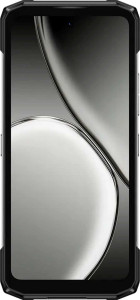
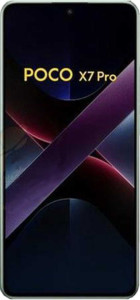
Doogee Blade 20 Play Xiaomi Poco X7 Pro (256GB / 12GB RAM)

Overview

Welcome to our in-depth comparison of the Doogee Blade 20 Play and the Xiaomi Poco X7 Pro (256GB / 12GB RAM) — two 5G Android 15 smartphones that take very different approaches to the mobile experience. From battery capacity versus charging speed to rugged durability versus display quality, these two devices each carve out a distinct identity. Read on as we put their specs head-to-head across design, performance, cameras, audio, and connectivity.

Common Features

  • Both phones are waterproof and neither can be folded.
  • Both devices have an IP rating that qualifies them as waterproof.
  • Neither phone has a secondary screen, but both feature a touchscreen display.
  • Both phones share 256GB of internal storage.
  • Both support 64-bit processing and use big.LITTLE CPU technology with 8 threads.
  • Both use DirectX 12 and OpenGL ES 3.2 for graphics.
  • Both have integrated graphics and an NX bit.
  • Both run Android 15 as their operating system.
  • Both phones have clipboard warnings and location privacy options.
  • Both offer camera and microphone privacy options, and both support theme customization and app tracking blocking.
  • Neither phone supports Mail Privacy Protection or cross-site tracking blocking.
  • Both support fast charging, but neither supports wireless charging.
  • Both have a non-removable battery with a battery level indicator and rechargeable cell.
  • Neither phone has a 3.5mm audio jack or a radio.
  • Neither phone supports aptX Adaptive or aptX Lossless.
  • Both support 5G, dual SIM, USB Type-C (USB 2.0), and NFC.
  • Both have a fingerprint scanner.
  • Neither phone has emergency SOS via satellite or crash detection.
  • Both cameras feature a dual-lens main camera setup, a CMOS sensor, continuous autofocus during video, phase-detection autofocus for photos, and slow-motion video recording support.
  • Both phones have a video light, no sapphire glass display, no curved display, and no e-paper display.

Main Differences

  • Weight is 362 g on Doogee Blade 20 Play and 198 g on Xiaomi Poco X7 Pro (256GB / 12GB RAM).
  • Thickness is 15.8 mm on Doogee Blade 20 Play and 8.3 mm on Xiaomi Poco X7 Pro (256GB / 12GB RAM).
  • IP rating is IP67 on Doogee Blade 20 Play and IP68 on Xiaomi Poco X7 Pro (256GB / 12GB RAM).
  • A rugged build is present on Doogee Blade 20 Play but not on Xiaomi Poco X7 Pro (256GB / 12GB RAM).
  • Display type is LCD IPS on Doogee Blade 20 Play and OLED/AMOLED on Xiaomi Poco X7 Pro (256GB / 12GB RAM).
  • Pixel density is 267 ppi on Doogee Blade 20 Play and 446 ppi on Xiaomi Poco X7 Pro (256GB / 12GB RAM).
  • Resolution is 720 x 1612 px on Doogee Blade 20 Play and 1220 x 2712 px on Xiaomi Poco X7 Pro (256GB / 12GB RAM).
  • Refresh rate is 90Hz on Doogee Blade 20 Play and 120Hz on Xiaomi Poco X7 Pro (256GB / 12GB RAM).
  • Damage-resistant glass is present on Xiaomi Poco X7 Pro (256GB / 12GB RAM) but not on Doogee Blade 20 Play.
  • HDR10, HDR10+, and Dolby Vision support are available on Xiaomi Poco X7 Pro (256GB / 12GB RAM) but not on Doogee Blade 20 Play.
  • Always-On Display is available on Xiaomi Poco X7 Pro (256GB / 12GB RAM) but not on Doogee Blade 20 Play.
  • RAM is 8GB on Doogee Blade 20 Play and 12GB on Xiaomi Poco X7 Pro (256GB / 12GB RAM).
  • Chipset is MediaTek Dimensity 7050 on Doogee Blade 20 Play and MediaTek Dimensity 8400 on Xiaomi Poco X7 Pro (256GB / 12GB RAM).
  • Geekbench 6 multi-core score is 2257 on Doogee Blade 20 Play and 6137 on Xiaomi Poco X7 Pro (256GB / 12GB RAM).
  • Battery capacity is 10300 mAh on Doogee Blade 20 Play and 6000 mAh on Xiaomi Poco X7 Pro (256GB / 12GB RAM).
  • Charging speed is 33W on Doogee Blade 20 Play and 90W on Xiaomi Poco X7 Pro (256GB / 12GB RAM).
  • Main camera megapixels are 50 & 20 MP on Doogee Blade 20 Play and 50 & 8 MP on Xiaomi Poco X7 Pro (256GB / 12GB RAM).
  • Optical image stabilization is present on Xiaomi Poco X7 Pro (256GB / 12GB RAM) but not on Doogee Blade 20 Play.
  • Maximum video resolution is 1080p at 30fps on Doogee Blade 20 Play and 2160p at 60fps on Xiaomi Poco X7 Pro (256GB / 12GB RAM).
  • Stereo speakers are present on Xiaomi Poco X7 Pro (256GB / 12GB RAM) but not on Doogee Blade 20 Play.
  • LDAC, aptX, and aptX HD audio codec support are available on Xiaomi Poco X7 Pro (256GB / 12GB RAM) but not on Doogee Blade 20 Play.
  • An external memory slot is available on Doogee Blade 20 Play but not on Xiaomi Poco X7 Pro (256GB / 12GB RAM).
  • Bluetooth version is 5.2 on Doogee Blade 20 Play and 6.0 on Xiaomi Poco X7 Pro (256GB / 12GB RAM).
  • Download speed is 2770 Mbit/s on Doogee Blade 20 Play and 5700 Mbit/s on Xiaomi Poco X7 Pro (256GB / 12GB RAM).
  • An infrared sensor is present on Xiaomi Poco X7 Pro (256GB / 12GB RAM) but not on Doogee Blade 20 Play.
Specs Comparison
Doogee Blade 20 Play

Doogee Blade 20 Play

Xiaomi Poco X7 Pro (256GB / 12GB RAM)

Xiaomi Poco X7 Pro (256GB / 12GB RAM)

Design:
water resistance Waterproof Waterproof
weight 362 g 198 g
thickness 15.8 mm 8.3 mm
width 81.2 mm 75.2 mm
height 174 mm 160.8 mm
volume 223.23504 cm³ 100.364928 cm³
Ingress Protection (IP) rating IP67 IP68
has a rugged build
can be folded

The most striking contrast between these two phones is their physical footprint. The Doogee Blade 20 Play is a substantially bulkier device at 362 g and 15.8 mm thick, with a volume of roughly 223 cm³ — more than twice the 100 cm³ of the Poco X7 Pro, which weighs only 198 g and measures a slim 8.3 mm. In real-world use, that 164 g weight difference is immediately noticeable: the Doogee will feel heavy and fatiguing in extended one-handed use, while the Poco sits comfortably in a pocket and feels far more like a conventional smartphone.

Both devices are rated waterproof, but the protection levels differ meaningfully. The Poco X7 Pro carries an IP68 certification, which typically means it can withstand submersion at greater depths and for longer durations than the IP67-rated Doogee. However, the Doogee counters with a rugged build — a design philosophy that goes beyond splash resistance to include reinforced corners and resistance to drops or shocks, something the Poco does not offer.

Overall, the right choice depends entirely on the use case. If you need a tough, field-ready device built to survive rough environments, the Doogee's rugged construction is a genuine advantage despite its bulk. But for everyday portability and a more refined, pocketable form factor, the Poco X7 Pro has a clear edge — it is dramatically lighter, slimmer, and carries a stronger water-resistance rating.

Display:
Display type LCD, IPS OLED/AMOLED
screen size 6.6" 6.67"
pixel density 267 ppi 446 ppi
resolution 720 x 1612 px 1220 x 2712 px
refresh rate 90Hz 120Hz
has branded damage-resistant glass
supports HDR10
supports HDR10+
Always-On Display
supports Dolby Vision
Has a secondary screen
has a touch screen

The panel technology alone tells much of the story here. The Doogee Blade 20 Play uses an IPS LCD display, while the Poco X7 Pro features an OLED/AMOLED panel — a fundamental difference that affects contrast, color vibrancy, and power efficiency. OLED screens produce true blacks by turning pixels off entirely, resulting in virtually infinite contrast ratios, whereas IPS LCD panels rely on a backlight, which limits how deep blacks can appear. For media consumption, gaming, or anything visually intensive, this distinction is immediately visible to the naked eye.

The resolution gap compounds this advantage significantly. The Poco's 1220 x 2712 px resolution at 446 ppi is sharply detailed — text is crisp and images are dense with fine detail. The Doogee's 720 x 1612 px panel at 267 ppi is noticeably softer, and on a 6.6-inch screen that pixel density can translate to visible pixelation on fine text or high-resolution content. The Poco also steps up to a 120Hz refresh rate versus the Doogee's 90Hz, producing smoother scrolling and more fluid animations. Beyond that, the Poco supports HDR10+ and Dolby Vision, unlocking richer dynamic range on compatible streaming content — features the Doogee entirely lacks.

The Poco X7 Pro holds a comprehensive and decisive advantage in this category. From panel quality and sharpness to HDR support and screen fluidity, virtually every display metric favors the Poco. The Doogee's screen is functional for basic tasks, but users who care about visual quality — whether for video, gaming, or everyday readability — will find the Poco's display in a different league entirely.

Performance:
internal storage 256GB 256GB
RAM 8GB 12GB
Chipset (SoC) name MediaTek Dimensity 7050 MediaTek Dimensity 8400
GPU name Mali G68 MP4 Mali G720 MC7
CPU speed 2 x 2.6 & 6 x 2 GHz 1 x 3.25 & 3 x 3 & 4 x 2.15 GHz
Geekbench 6 result (multi) 2257 6137
Geekbench 6 result (single) 936 1583
GPU clock speed 950 MHz 1300 MHz
RAM speed 3200 MHz 4267 MHz
semiconductor size 6 nm 4 nm
Supports 64-bit
DirectX version DirectX 12 DirectX 12
Has integrated graphics
OpenGL ES version 3.2 3.2
Uses big.LITTLE technology
CPU threads 8 threads 8 threads
Has NX bit
Uses HMP
Has TrustZone
OpenCL version 2 2
memory channels 4 4
maximum memory amount 16GB 24GB
DDR memory version 5 5
L3 cache 2 MB 6 MB

At the heart of the performance gap is the chipset pairing. The Doogee Blade 20 Play runs on the MediaTek Dimensity 7050, built on a 6 nm process, while the Poco X7 Pro steps up to the Dimensity 8400 on a more advanced 4 nm node. A smaller semiconductor size generally translates to better power efficiency and higher peak performance — and the benchmark numbers confirm this emphatically. The Poco's Geekbench 6 multi-core score of 6137 is nearly three times the Doogee's 2257, and the single-core gap — 1583 vs. 936 — shows the Poco's CPU cores are individually faster as well. In practice, this means the Poco handles demanding tasks like gaming, video editing, and heavy multitasking with substantially more headroom.

Graphics performance tells a similar story. The Poco's Mali G720 MC7 GPU runs at 1300 MHz compared to the Doogee's Mali G68 MP4 at 950 MHz — both in core count and clock speed, the Poco's GPU is meaningfully more capable, which matters for graphically intensive games and GPU-accelerated tasks. Memory bandwidth also favors the Poco: its RAM operates at 4267 MHz versus 3200 MHz on the Doogee, and its 6 MB L3 cache dwarfs the Doogee's 2 MB, reducing latency on repeated data access. Combined with 12 GB of RAM versus 8 GB, the Poco is better equipped to keep more apps resident in memory without reloading.

Both phones share the same storage capacity, DDR5 memory standard, and architectural features like big.LITTLE and HMP, so the foundations are comparable — but the Poco X7 Pro executes on those foundations at a significantly higher level. Across every meaningful performance metric in this data set, the Poco holds a clear and substantial advantage.

Cameras:
megapixels (main camera) 50 & 20 MP 50 & 8 MP
Has a dual-lens (or multi-lens) main camera
megapixels (front camera) 16MP 20MP
has built-in optical image stabilization
video recording (main camera) 1080 x 30 fps 2160 x 60 fps
Has a dual-tone LED flash
number of flash LEDs 2 2
has a BSI sensor
has a CMOS sensor
has continuous autofocus when recording movies
Has phase-detection autofocus for photos
supports slow-motion video recording
has a built-in HDR mode
has manual exposure
has a flash
optical zoom 0x 0x
has manual ISO
has a serial shot mode
has manual focus
has a front camera
Has laser autofocus
Shoots 360° panorama
has manual white balance
shoots raw
has touch autofocus
has manual shutter speed
can create panoramas in-camera
Has a front-facing LED flash
has a dual-lens (or multi-lens) front camera
supports HDR10 recording
supports Dolby Vision recording
has a front-facing camera under the display
Has a RGB LED flash
has 3D photo/video recording capabilities

Both phones share a 50 MP primary sensor and dual-lens rear camera setup, so the on-paper megapixel count looks similar at first glance. The differences, however, lie in the features surrounding that sensor. The Poco X7 Pro adds optical image stabilization (OIS) — a hardware mechanism that physically counteracts hand movement during capture — which the Doogee Blade 20 Play entirely lacks. In practice, OIS produces noticeably sharper handheld shots in low light and significantly smoother video footage. Speaking of video, the gap is wide: the Poco records at up to 4K 60fps, while the Doogee tops out at 1080p 30fps — a meaningful limitation for anyone who values video quality.

Several other differentiators reinforce the Poco's camera advantage. It supports RAW shooting, giving photographers access to uncompressed image data for post-processing — a feature absent on the Doogee. The Poco also includes laser autofocus alongside phase-detection, which can improve focusing speed and accuracy in challenging conditions. For video specifically, the Poco supports HDR10 recording, preserving more dynamic range in high-contrast scenes — again, something the Doogee does not offer. The Doogee counters with a higher-resolution secondary rear camera at 20 MP versus the Poco's 8 MP, though without additional context on lens type, that figure alone is hard to evaluate as a clear advantage.

On the front camera, the Poco edges ahead with 20 MP versus 16 MP on the Doogee — a modest difference, but consistent with the Poco's broader camera positioning. Taken together, the Poco X7 Pro holds a clear advantage in this category, particularly for anyone who shoots video or values stabilization and capture flexibility. The Doogee's camera setup is capable for casual use, but it falls behind on nearly every feature that distinguishes a competent camera system from a great one.
Operating system:
Android version Android 15 Android 15
has clipboard warnings
has location privacy options
has camera/microphone privacy options
has Mail Privacy Protection
has theme customization
can block app tracking
blocks cross-site tracking
has on-device machine learning
has notification permissions
has media picker
Can play games while they download
has dark mode
has Wi-Fi password sharing
has battery health check
has an extra dim mode
has focus modes
has dynamic theming
can offload apps
Has customizable notifications
has Live Text
has full-page screenshots
supports split screen
gets direct OS updates
has PiP
Can be used as a PC
Has sharing intents
has a child lock
Supports widgets
Is free and open source
Has offline voice recognition
has voice commands
Tracks the current position of a mobile device
is a multi-user system
has Quick Start

Across every single data point in this specification group, the Doogee Blade 20 Play and the Poco X7 Pro are identical. Both ship with Android 15, share the same privacy feature set — including location controls, camera and microphone permissions, and app tracking blocks — and offer the same productivity and usability tools such as split-screen, picture-in-picture, widgets, and offline voice recognition.

Notably, neither device receives direct OS updates from Google, meaning both rely on their respective manufacturers to push Android updates. This is a shared limitation worth keeping in mind for users who prioritize long-term software support. Equally, both lack features like Wi-Fi password sharing, focus modes, and Quick Start — so no advantage exists on either side there either.

This is a straightforward tie. Based strictly on the provided data, there is no differentiator between the two phones at the operating system level — every feature and limitation is mirrored exactly. Users should look to other specification groups to inform their decision.

Battery:
battery power 10300 mAh 6000 mAh
has wireless charging
Supports fast charging
charging speed 33W 90W
has a removable battery
has a battery level indicator
has a rechargeable battery

Few spec comparisons are as straightforward to interpret as raw battery capacity, and the Doogee Blade 20 Play makes a bold statement here: its 10300 mAh battery is over 70% larger than the Poco X7 Pro's 6000 mAh cell. All else being equal, a larger battery means more hours between charges — making the Doogee a compelling option for heavy users, frequent travelers, or anyone in situations where reliable access to a charger cannot be guaranteed. The Doogee's bulk and weight, noted in the Design category, are at least partially explained by this oversized cell.

Where the Poco X7 Pro recovers ground is charging speed. Its 90W fast charging is nearly three times faster than the Doogee's 33W, meaning that even with a larger battery to fill, the Doogee will spend considerably more time tethered to a wall. For users who can charge regularly, the Poco's rapid top-up capability effectively reduces the practical gap between the two batteries — a quick charge session on the Poco can restore a substantial portion of its 6000 mAh in a short time. Neither phone supports wireless charging, so that factor is a non-issue for this comparison.

Which phone wins here depends on usage pattern. For raw endurance and maximum time away from a socket, the Doogee's 10300 mAh capacity is a decisive advantage. But for users who charge frequently and value speed over sheer reserve, the Poco's 90W charging makes its 6000 mAh battery far more practical day-to-day. On balance, the Doogee holds the edge in this category purely on capacity grounds — but the Poco closes the gap meaningfully with its charging speed.

Audio:
has a socket for a 3.5 mm audio jack
has stereo speakers
has aptX
has LDAC
has aptX HD
has aptX Adaptive
has aptX Lossless
Has a radio

Both phones drop the 3.5mm headphone jack, so wired audio listeners will need an adapter or USB-C headphones on either device — a shared compromise that levels the playing field on that front. From there, however, the two phones diverge noticeably. The Doogee Blade 20 Play offers only a single speaker with no high-quality Bluetooth audio codecs, while the Poco X7 Pro ships with stereo speakers — a genuine upgrade for media consumption, gaming, and speakerphone calls, where two-channel audio creates a wider, more immersive soundstage compared to the Doogee's mono output.

For wireless headphone users, the Poco again pulls ahead. It supports both aptX HD and LDAC — two of the highest-quality Bluetooth audio codecs available — enabling near-lossless audio transmission to compatible headphones. The Doogee supports none of these codecs, which means Bluetooth audio is limited to standard lossy compression. For casual listeners this may be unnoticeable, but for anyone using quality wireless headphones, the Poco will deliver a meaningfully richer audio signal.

The Poco X7 Pro holds a clear and uncontested advantage in this category. Between its stereo speaker setup and support for premium wireless audio codecs, it outperforms the Doogee on every audio metric provided. The Doogee offers no distinguishing audio feature to offset this gap.

Connectivity & Features:
release date March 2025 January 2025
has 5G support
Wi-Fi version Wi-Fi 4 (802.11n), Wi-Fi 6 (802.11ax), Wi-Fi 5 (802.11ac) Wi-Fi 4 (802.11n), Wi-Fi 5 (802.11ac), Wi-Fi 6 (802.11ax)
SIM cards 2 SIM 2 SIM
Bluetooth version 5.2 6
has an external memory slot
Has USB Type-C
USB version 2 2
has NFC
download speed 2770 MBits/s 5700 MBits/s
Has a fingerprint scanner
has emergency SOS via satellite
has crash detection
is DLNA-certified
has a gyroscope
supports ANT+
Has a heart rate monitor
has GPS
has a compass
supports Wi-Fi
Has an infrared sensor
has an accelerometer
has a cellular module
Has a barometer
has an HDMI output
Uses 3D facial recognition
Has an iris scanner
Stylus included
supports Galileo
Has motion tracking
Has optical tracking
Has a built-in projector

Wireless connectivity is where some meaningful separation emerges. Both phones support 5G, dual SIM, NFC, and the same Wi-Fi standards — but their cellular download speeds tell a different story: the Poco X7 Pro reaches up to 5700 Mbits/s, more than double the Doogee's 2770 Mbits/s. In practice, on a sufficiently fast 5G network, the Poco will pull data noticeably faster. The Poco also carries Bluetooth 6 versus the Doogee's 5.2 — the newer version brings improvements in connection precision and efficiency, which is particularly relevant for audio accessories and location-aware peripherals.

Two features split the devices in opposite directions. The Doogee Blade 20 Play includes an external memory card slot, allowing users to expand storage beyond the built-in 256 GB — a practical advantage the Poco lacks entirely. The Poco X7 Pro counters with a built-in infrared sensor, which lets the phone function as a universal remote control for TVs and home appliances — a small but genuinely useful convenience the Doogee does not offer. Both phones share USB Type-C at USB 2.0 speeds, so neither has an edge on wired data transfer.

This category is the closest to a split decision in the comparison so far. The Poco edges ahead on raw wireless performance and Bluetooth modernity, while the Doogee offers expandable storage — a feature that matters considerably to users who store large amounts of media locally. The Poco holds a slight overall edge in connectivity capability, but the Doogee's memory expansion slot is a practical differentiator that may tip the balance for storage-conscious users.

Miscellaneous:
has a video light
Has sapphire glass display
Has a curved display
Has an e-paper display

The miscellaneous specification group offers no basis for differentiation between these two phones. Every data point — from the presence of a video light to the absence of sapphire glass, a curved display, or an e-paper panel — is identical across both the Doogee Blade 20 Play and the Poco X7 Pro.

This is a complete tie. Neither device offers a distinguishing feature or limitation within this group, and users should weigh other specification categories when making their decision.

Comparison Summary & Verdict

After a thorough comparison, it is clear that each phone excels in a different context. The Doogee Blade 20 Play stands out for its massive 10,300 mAh battery, rugged IP67 build, and expandable storage, making it a compelling pick for users who spend long stretches away from a power outlet or need a durable handset. The Xiaomi Poco X7 Pro, on the other hand, dominates in virtually every performance and multimedia category: it features a superior OLED display with 446 ppi and 120Hz refresh rate, the significantly more powerful Dimensity 8400 chipset, 90W fast charging, OIS-equipped cameras capable of 4K 60fps video, stereo speakers with LDAC and aptX HD audio, and a sleeker 198g form factor. Choose the Doogee for endurance and toughness; choose the Xiaomi for a premium all-round smartphone experience.

Doogee Blade 20 Play
Buy Doogee Blade 20 Play if...

Buy the Doogee Blade 20 Play if you need an exceptionally long-lasting battery and a rugged, durable build with expandable storage for use in demanding environments.

Xiaomi Poco X7 Pro (256GB / 12GB RAM)
Buy Xiaomi Poco X7 Pro (256GB / 12GB RAM) if...

Buy the Xiaomi Poco X7 Pro (256GB / 12GB RAM) if you want a high-performance phone with a sharp OLED display, faster charging, superior cameras, and premium audio features in a slim and lightweight design.