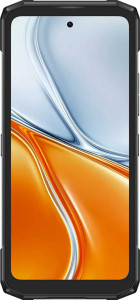
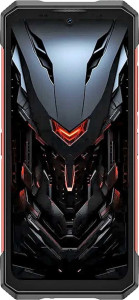
The connectivity foundation is shared and solid on both devices — dual SIM, 5G, NFC, USB Type-C, expandable storage, and a capable sensor suite including GPS, gyroscope, compass, and accelerometer. For most users, this baseline covers all essential connectivity needs. The divergence comes in the finer details of wireless performance. The S200 Plus supports Wi-Fi 6E (802.11ax) in addition to the same Wi-Fi 4/5/6 stack found on the Blade 20 Turbo. Wi-Fi 6E opens access to the 6 GHz band, which offers less congestion and lower latency in environments with many competing wireless devices — an advantage in dense urban settings or busy work environments with heavy network traffic.
Cellular throughput also favors the S200 Plus in a notable way. Both devices quote a download speed of roughly comparable magnitudes, but the S200 Plus's upload speed of 3270 Mbit/s dwarfs the Blade 20 Turbo's 1250 Mbit/s — more than double. For users who regularly push large files, videos, or data to the cloud from the field, this is a tangible real-world difference. Bluetooth tells a similar story: the S200 Plus uses Bluetooth 5.4 versus 5.2 on the Blade 20 Turbo, bringing incremental improvements in connection reliability and efficiency, particularly relevant for users pairing accessories like wireless headsets or peripherals throughout the day.
The S200 Plus edges ahead in connectivity on every axis where a difference exists — faster upload speeds, a newer Bluetooth version, and Wi-Fi 6E support — while matching the Blade 20 Turbo across all shared features. None of these gaps are dramatic in isolation, but collectively they represent a more future-ready wireless package.