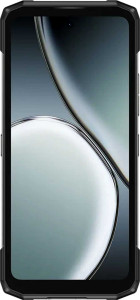
Doogee Blade 20 Ultra
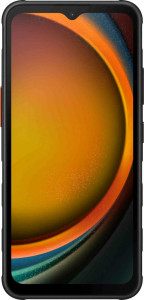
Samsung Galaxy XCover 7 Pro

Doogee Blade 20 Ultra Samsung Galaxy XCover 7 Pro

Overview

When comparing the Doogee Blade 20 Ultra and the Samsung Galaxy XCover 7 Pro, two rugged waterproof smartphones emerge with very different priorities. Both share a 6.6″ LCD IPS display and run Android 15, yet they diverge sharply on performance, battery capacity, and connectivity. Whether you value raw endurance or processing power, this head-to-head breakdown will help you find the right device for your needs.

Common Features

  • Both phones are waterproof and feature a rugged build.
  • Neither phone can be folded.
  • Both phones share the same 6.6″ LCD IPS display type.
  • HDR10 support is not available on either product.
  • HDR10+ support is not available on either product.
  • Always-On Display is not available on either product.
  • Dolby Vision support is not available on either product.
  • Both phones have a touch screen.
  • Both phones support LTE connectivity.
  • Both phones support 64-bit processing.
  • Both phones use big.LITTLE technology with 8 CPU threads.
  • Both phones have TrustZone security.
  • Both phones support OpenGL version 3.2 and OpenGL ES version 3.2.
  • Neither phone has built-in optical image stabilization.
  • Both phones can record video at 1080p at 30 fps on the main camera.
  • Both phones have a CMOS sensor and support phase-detection autofocus.
  • Both phones support continuous autofocus during video recording and slow-motion video.
  • Both phones run Android 15 and share the same privacy features including clipboard warnings, location privacy, camera/microphone privacy options, theme customization, and app tracking blocking.
  • Cross-site tracking blocking is not available on either product.
  • Neither phone supports wireless charging, but both support fast charging and have a rechargeable battery with a battery level indicator.
  • Neither phone has a 3.5 mm audio jack.
  • Neither phone supports aptX, LDAC, aptX HD, aptX Adaptive, aptX Lossless, or FM radio.
  • Both phones have dual SIM support, an external memory slot, USB Type-C, NFC, and a fingerprint scanner.
  • Emergency SOS via satellite and crash detection are not available on either product.
  • Neither phone is DLNA-certified.
  • Both phones have a video light, no sapphire glass display, no curved display, and no e-paper display.

Main Differences

  • Thickness is 15.8 mm on Doogee Blade 20 Ultra and 10.2 mm on Samsung Galaxy XCover 7 Pro.
  • Width is 81.2 mm on Doogee Blade 20 Ultra and 79.9 mm on Samsung Galaxy XCover 7 Pro.
  • Height is 174 mm on Doogee Blade 20 Ultra and 168.6 mm on Samsung Galaxy XCover 7 Pro.
  • Volume is 223.24 cm³ on Doogee Blade 20 Ultra and 137.41 cm³ on Samsung Galaxy XCover 7 Pro.
  • IP rating is IP67 on Doogee Blade 20 Ultra and IP68 on Samsung Galaxy XCover 7 Pro.
  • Pixel density is 267 ppi on Doogee Blade 20 Ultra and 400 ppi on Samsung Galaxy XCover 7 Pro.
  • Resolution is 720 x 1612 px on Doogee Blade 20 Ultra and 1080 x 2408 px on Samsung Galaxy XCover 7 Pro.
  • Refresh rate is 90Hz on Doogee Blade 20 Ultra and 120Hz on Samsung Galaxy XCover 7 Pro.
  • Branded damage-resistant glass is present on Samsung Galaxy XCover 7 Pro but not available on Doogee Blade 20 Ultra.
  • A secondary screen is present on Doogee Blade 20 Ultra but not available on Samsung Galaxy XCover 7 Pro.
  • Internal storage is 512GB on Doogee Blade 20 Ultra and 128GB on Samsung Galaxy XCover 7 Pro.
  • RAM is 8GB on Doogee Blade 20 Ultra and 6GB on Samsung Galaxy XCover 7 Pro.
  • The chipset is Unisoc T7250 on Doogee Blade 20 Ultra and Qualcomm Snapdragon 7s Gen 3 on Samsung Galaxy XCover 7 Pro.
  • The GPU is Mali G57 on Doogee Blade 20 Ultra and Adreno 710 on Samsung Galaxy XCover 7 Pro.
  • CPU speed is 2 x 1.8 & 6 x 1.6 GHz on Doogee Blade 20 Ultra and 1 x 2.5 & 3 x 2.4 & 4 x 1.8 GHz on Samsung Galaxy XCover 7 Pro.
  • Geekbench 6 multi-core score is 1461 on Doogee Blade 20 Ultra and 3239 on Samsung Galaxy XCover 7 Pro.
  • Geekbench 6 single-core score is 437 on Doogee Blade 20 Ultra and 1162 on Samsung Galaxy XCover 7 Pro.
  • Semiconductor size is 12 nm on Doogee Blade 20 Ultra and 4 nm on Samsung Galaxy XCover 7 Pro.
  • RAM speed is 1866 MHz on Doogee Blade 20 Ultra and 3200 MHz on Samsung Galaxy XCover 7 Pro.
  • The main camera is a single 50 MP lens on Doogee Blade 20 Ultra, while Samsung Galaxy XCover 7 Pro has a dual-lens main camera with 50 MP and 8 MP sensors.
  • Front camera resolution is 8 MP on Doogee Blade 20 Ultra and 13 MP on Samsung Galaxy XCover 7 Pro.
  • A dual-tone LED flash is present on Samsung Galaxy XCover 7 Pro but not available on Doogee Blade 20 Ultra.
  • Battery capacity is 10300 mAh on Doogee Blade 20 Ultra and 4350 mAh on Samsung Galaxy XCover 7 Pro.
  • Charging speed is 33W on Doogee Blade 20 Ultra and 15W on Samsung Galaxy XCover 7 Pro.
  • A removable battery is available on Samsung Galaxy XCover 7 Pro but not on Doogee Blade 20 Ultra.
  • Stereo speakers are present on Samsung Galaxy XCover 7 Pro but not available on Doogee Blade 20 Ultra.
  • 5G support is present on Samsung Galaxy XCover 7 Pro but not available on Doogee Blade 20 Ultra.
  • Wi-Fi versions supported include Wi-Fi 4, 5, and 6 on Doogee Blade 20 Ultra, while Samsung Galaxy XCover 7 Pro additionally supports Wi-Fi 6E.
  • Bluetooth version is 5.0 on Doogee Blade 20 Ultra and 5.4 on Samsung Galaxy XCover 7 Pro.
  • USB version is 2.0 on Doogee Blade 20 Ultra and 3.2 on Samsung Galaxy XCover 7 Pro.
  • Download speed is 300 MBits/s on Doogee Blade 20 Ultra and 2900 MBits/s on Samsung Galaxy XCover 7 Pro.
Specs Comparison
Doogee Blade 20 Ultra

Doogee Blade 20 Ultra

Samsung Galaxy XCover 7 Pro

Samsung Galaxy XCover 7 Pro

Design:
water resistance Waterproof Waterproof
thickness 15.8 mm 10.2 mm
width 81.2 mm 79.9 mm
height 174 mm 168.6 mm
volume 223.23504 cm³ 137.405628 cm³
Ingress Protection (IP) rating IP67 IP68
has a rugged build
can be folded

Both the Doogee Blade 20 Ultra and the Samsung Galaxy XCover 7 Pro share the rugged-device fundamentals: waterproof builds, reinforced chassis, and no folding mechanism. For users who need a phone that can survive harsh environments, neither will disappoint on paper. However, the similarities largely end there once you look at the physical dimensions.

The most striking difference is sheer bulk. The Doogee measures 15.8 mm thick with a volume of roughly 223 cm³, while the Samsung comes in at 10.2 mm thick and a much more compact 137 cm³. That is nearly 40% less volume, which in practice means the XCover 7 Pro sits far more comfortably in a pocket and feels closer to a mainstream smartphone despite its rugged credentials. The Doogee's extra mass is a common trade-off in budget-tier rugged devices, where bulkier casings are used to meet protection standards rather than precision engineering.

On water resistance, the Samsung holds a concrete edge: its IP68 rating allows for deeper and longer submersion than the Doogee's IP67, which is relevant for users working near water or in heavy rain for extended periods. Taken together, the Samsung Galaxy XCover 7 Pro has a clear design advantage — it delivers equal or superior protection in a significantly slimmer and more manageable form factor.

Display:
Display type LCD, IPS LCD, IPS
screen size 6.6" 6.6"
pixel density 267 ppi 400 ppi
resolution 720 x 1612 px 1080 x 2408 px
refresh rate 90Hz 120Hz
has branded damage-resistant glass
supports HDR10
supports HDR10+
Always-On Display
supports Dolby Vision
Has a secondary screen
has a touch screen

Sharing the same 6.6-inch IPS LCD panel type and identical screen size, these two devices diverge sharply the moment you look at what that screen actually delivers. The Samsung Galaxy XCover 7 Pro runs at 1080 x 2408 px with a pixel density of 400 ppi, while the Doogee Blade 20 Ultra tops out at 720 x 1612 px and just 267 ppi. That gap is immediately perceptible: text edges look crisper, images render with noticeably more detail, and fine UI elements are easier to read on the Samsung — a meaningful difference for anyone using the device in the field to review documents, maps, or photos.

The refresh rate tells a similar story. The XCover 7 Pro's 120Hz panel produces smoother scrolling and more responsive touch interactions compared to the Doogee's 90Hz screen. Neither supports HDR10 or Dolby Vision, so color-graded content will look the same on both. Where the Samsung adds further real-world value is its branded damage-resistant glass — a significant plus for a rugged device that may take drops or abrasion — while the Doogee offers no such protection on the front panel. Conversely, the Doogee does include a secondary screen, which can be useful for quick notifications without waking the main display, though this is a niche convenience against the Samsung's more impactful core display advantages.

The Samsung Galaxy XCover 7 Pro holds a clear edge in this category. Its higher resolution, sharper pixel density, faster refresh rate, and protected glass combine to deliver a substantially more capable display experience on what is, on paper, the same screen size and panel technology.

Performance:
internal storage 512GB 128GB
RAM 8GB 6GB
Chipset (SoC) name Unisoc T7250 Qualcomm Snapdragon 7s Gen 3
GPU name Mali G57 Adreno 710
CPU speed 2 x 1.8 & 6 x 1.6 GHz 1 x 2.5 & 3 x 2.4 & 4 x 1.8 GHz
Geekbench 6 result (multi) 1461 3239
Geekbench 6 result (single) 437 1162
Geekbench 5 result (multi) 1350 3242
Geekbench 5 result (single) 357 893
GPU clock speed 850 MHz 1050 MHz
Has integrated LTE
RAM speed 1866 MHz 3200 MHz
semiconductor size 12 nm 4 nm
Supports 64-bit
Has integrated graphics
OpenGL version 3.2 3.2
OpenGL ES version 3.2 3.2
Uses big.LITTLE technology
CPU threads 8 threads 8 threads
Has TrustZone
OpenCL version 2 2
maximum memory amount 12GB 16GB
uses multithreading
Thermal Design Power (TDP) 10W 5W
DDR memory version 4 5
shading units 64 128

The silicon gap between these two devices is substantial. The Samsung Galaxy XCover 7 Pro runs on Qualcomm's Snapdragon 7s Gen 3, built on a modern 4 nm process, while the Doogee Blade 20 Ultra relies on the Unisoc T7250 at 12 nm. Smaller fabrication nodes generally translate to better performance per watt, and the benchmark results confirm exactly that: the Samsung scores 3239 multi-core and 1162 single-core in Geekbench 6, compared to the Doogee's 1461 multi-core and 437 single-core. In practical terms, this means the XCover 7 Pro handles demanding apps, multitasking, and on-device processing significantly faster — a relevant consideration for enterprise or fieldwork use cases where software complexity is growing.

The efficiency story is equally telling. Despite its performance lead, the Samsung's TDP is rated at just 5W versus the Doogee's 10W, meaning the Snapdragon 7s Gen 3 delivers roughly twice the CPU throughput while consuming half the thermal budget. On the GPU side, the XCover 7 Pro's Adreno 710 clocks at 1050 MHz with 128 shading units, outpacing the Doogee's Mali G57 at 850 MHz with 64 shading units — a meaningful edge for graphics-intensive tasks. The Samsung also benefits from faster DDR5 memory at 3200 MHz, compared to the Doogee's DDR4 at 1866 MHz, which reduces data bottlenecks under load.

The one area where the Doogee counters is storage: it ships with 512 GB internal storage versus the Samsung's 128 GB, which matters for users who need to store large files locally. However, in raw processing power and efficiency, the Samsung Galaxy XCover 7 Pro holds a commanding and unambiguous advantage across every performance dimension.
Cameras:
megapixels (main camera) 50 MP 50 & 8 MP
Has a dual-lens (or multi-lens) main camera
megapixels (front camera) 8MP 13MP
has built-in optical image stabilization
video recording (main camera) 1080 x 30 fps 1080 x 30 fps
Has a dual-tone LED flash
number of flash LEDs 2 2
has a BSI sensor
has a CMOS sensor
has continuous autofocus when recording movies
Has phase-detection autofocus for photos
supports slow-motion video recording
has a built-in HDR mode
has manual exposure
has a flash
optical zoom 0x 0x
has manual ISO
has a serial shot mode
has manual focus
has a front camera
Has laser autofocus
Shoots 360° panorama
has manual white balance
shoots raw
has touch autofocus
has manual shutter speed
can create panoramas in-camera
Has a front-facing LED flash
has a dual-lens (or multi-lens) front camera
has a front-facing camera under the display
Has a RGB LED flash
has 3D photo/video recording capabilities

Camera hardware is where these two devices are closest, yet the Samsung Galaxy XCover 7 Pro still carves out a meaningful structural advantage. Both lead with a 50 MP main sensor and share an identical feature set for video — capped at 1080p at 30 fps — along with the same autofocus, HDR, and manual control options. For everyday shooting and fieldwork documentation, either device covers the basics competently.

The differentiators lie in the system around the sensor. The Samsung adds a second rear lens (50 & 8 MP dual-camera), which unlocks an additional focal length for more compositional flexibility — useful when documenting worksites, equipment, or environments at varying distances. Its front camera also steps up to 13 MP versus the Doogee's 8 MP, a practical improvement for video calls and identity verification use cases. The Samsung further includes a dual-tone LED flash, which produces more color-accurate lighting in low-light stills compared to a standard single-tone flash — a small but genuine quality-of-life improvement for indoor or nighttime shooting.

Neither device supports optical image stabilization or RAW capture, which caps the ceiling for both in demanding photography scenarios. Still, the Samsung Galaxy XCover 7 Pro holds a clear edge here: the additional rear lens, higher-resolution selfie camera, and better flash system give it more versatility across a wider range of shooting conditions, without any trade-off relative to the Doogee's camera spec sheet.

Operating system:
Android version Android 15 Android 15
has clipboard warnings
has location privacy options
has camera/microphone privacy options
has Mail Privacy Protection
has theme customization
can block app tracking
blocks cross-site tracking
has on-device machine learning
has notification permissions
has media picker
Can play games while they download
has dark mode
has Wi-Fi password sharing
has battery health check
has an extra dim mode
has focus modes
has dynamic theming
can offload apps
Has customizable notifications
has Live Text
has full-page screenshots
supports split screen
gets direct OS updates
has PiP
Can be used as a PC
Has sharing intents
has a child lock
Supports widgets
Is free and open source
Has offline voice recognition
has voice commands
Tracks the current position of a mobile device
is a multi-user system
has Quick Start

Across every single data point in this category, the Doogee Blade 20 Ultra and the Samsung Galaxy XCover 7 Pro are identical. Both ship with Android 15, support the same privacy controls, productivity features, and accessibility options, and neither receives direct OS updates. From split-screen multitasking and Picture-in-Picture to on-device machine learning, dynamic theming, and offline voice recognition — the software experience on paper is a perfect match.

This is a complete tie. There are no differentiators in this spec group to analyze, and declaring an edge for either device would not be supported by the provided data. Users choosing between these two based solely on operating system features will find no reason to favor one over the other.

Battery:
battery power 10300 mAh 4350 mAh
has wireless charging
Supports fast charging
charging speed 33W 15W
has a removable battery
has a battery level indicator
has a rechargeable battery

Battery capacity is where the Doogee Blade 20 Ultra makes its strongest case. Its 10300 mAh cell is more than double the Samsung Galaxy XCover 7 Pro's 4350 mAh — a difference so large that it translates directly into multi-day endurance under typical usage. For field workers, outdoor professionals, or anyone operating far from a power source, that reserve is a genuine operational advantage, reducing dependency on charging infrastructure throughout the day.

The charging dynamic partially offsets the gap. The Doogee tops up at 33W versus the Samsung's 15W, meaning it replenishes energy faster when plugged in — important given its much larger tank. Neither device supports wireless charging. The more strategically interesting differentiator on the Samsung's side is its removable battery, a feature that is increasingly rare and particularly valuable in rugged or enterprise contexts: a spare charged battery in a pocket effectively eliminates downtime entirely, regardless of raw capacity.

These two devices serve different philosophies. The Doogee prioritizes brute endurance through sheer capacity, while the Samsung offers operational flexibility through swappability. For users who can carry a spare battery, the XCover 7 Pro's approach is arguably more practical. For those who cannot, the Doogee's 10300 mAh provides a commanding and clear advantage in outright longevity.

Audio:
has a socket for a 3.5 mm audio jack
has stereo speakers
has aptX
has LDAC
has aptX HD
has aptX Adaptive
has aptX Lossless
Has a radio

Audio is a lean category for both devices, with neither offering a 3.5 mm headphone jack, high-resolution Bluetooth codecs, or a built-in radio. For users who rely on wired headphones, both phones require an adapter or a switch to Bluetooth audio — a limitation they share equally.

The sole differentiator here is that the Samsung Galaxy XCover 7 Pro features stereo speakers, while the Doogee Blade 20 Ultra does not. In practice, stereo output produces wider, more spatially balanced sound for media playback, speakerphone calls, and alerts in noisy environments — all scenarios directly relevant to the rugged device use case. A single mono speaker, by contrast, projects sound in one direction and can feel thin when volume demands increase.

Given how limited this category is overall, the Samsung Galaxy XCover 7 Pro takes a narrow but clear edge purely on the strength of its stereo speaker setup — the only meaningful point of distinction the provided data offers.

Connectivity & Features:
release date March 2025 April 2025
has 5G support
Wi-Fi version Wi-Fi 4 (802.11n), Wi-Fi 6 (802.11ax), Wi-Fi 5 (802.11ac) Wi-Fi 4 (802.11n), Wi-Fi 5 (802.11ac), Wi-Fi 6 (802.11ax), Wi-Fi 6E (802.11ax)
SIM cards 2 SIM 2 SIM
Bluetooth version 5 5.4
has an external memory slot
Has USB Type-C
USB version 2 3.2
has NFC
download speed 300 MBits/s 2900 MBits/s
Has a fingerprint scanner
has emergency SOS via satellite
has crash detection
is DLNA-certified
has a gyroscope
supports ANT+
Has a heart rate monitor
has GPS
has a compass
supports Wi-Fi
Has an infrared sensor
has an accelerometer
has a cellular module
Has a barometer
has an HDMI output
Uses 3D facial recognition
Has an iris scanner
Stylus included
supports Galileo
Has motion tracking
Has optical tracking
Has a built-in projector

Connectivity is another category where the Samsung Galaxy XCover 7 Pro pulls ahead decisively. The most impactful difference is 5G support: the XCover 7 Pro is 5G-capable while the Doogee Blade 20 Ultra is limited to 4G LTE. This directly affects peak download speeds — 2900 Mbits/s versus 300 Mbits/s — a near ten-fold gap that matters for users who transfer large files, stream data, or operate in environments where network speed is a bottleneck. The Samsung also supports Wi-Fi 6E, adding access to the less congested 6 GHz band on top of the Wi-Fi 6 that both devices share, which translates to lower latency and more stable connections in dense wireless environments.

The data transfer story extends to the wired side as well. The Samsung's USB 3.2 port moves files and data significantly faster than the Doogee's USB 2.0 connection — a practical consideration when offloading large volumes of photos, logs, or recorded data to a workstation. On Bluetooth, the XCover 7 Pro's version 5.4 edges out the Doogee's version 5.0, bringing improvements in connection stability and efficiency for paired peripherals and accessories.

The two devices are evenly matched on the fundamentals — dual SIM, NFC, GPS with Galileo support, expandable storage, fingerprint scanner, and core sensors — so neither has a gap in everyday utility. But across every wireless and wired transmission standard, the Samsung Galaxy XCover 7 Pro holds a clear and compounding advantage, making it the stronger choice for connectivity-dependent workflows.

Miscellaneous:
has a video light
Has sapphire glass display
Has a curved display
Has an e-paper display

The Miscellaneous category offers nothing to differentiate these two devices. Every data point — video light presence, the absence of sapphire glass, flat display design, and no e-paper screen — is identical across the Doogee Blade 20 Ultra and the Samsung Galaxy XCover 7 Pro. This is a complete tie, and no advantage can be assigned to either product based solely on the provided specs.

Comparison Summary & Verdict

After examining the full spec sheet, these two rugged phones target distinctly different users. The Doogee Blade 20 Ultra stands out with its massive 10300 mAh battery, 512GB internal storage, and 33W fast charging, making it a compelling choice for those who prioritize endurance and storage capacity above all else. The Samsung Galaxy XCover 7 Pro, however, counters with a significantly faster Snapdragon 7s Gen 3 chipset, a sharper 1080p 120Hz display, 5G connectivity, a removable battery, and stereo speakers — all in a slimmer, lighter body with an IP68 rating. For field workers or outdoor enthusiasts who need a dependable phone that lasts days on a charge, the Doogee is hard to beat. For users who want a high-performance rugged device with modern connectivity and a polished display experience, the Samsung Galaxy XCover 7 Pro is the stronger all-round contender.

Doogee Blade 20 Ultra
Buy Doogee Blade 20 Ultra if...

Buy the Doogee Blade 20 Ultra if you need exceptional battery life and generous storage, as its 10300 mAh battery, 33W fast charging, and 512GB internal storage make it ideal for extended off-grid use.

Samsung Galaxy XCover 7 Pro
Buy Samsung Galaxy XCover 7 Pro if...

Buy the Samsung Galaxy XCover 7 Pro if you want a faster, more capable rugged phone, thanks to its Snapdragon 7s Gen 3 chipset, sharper 120Hz display, 5G support, removable battery, and stereo speakers.