Doogee Blade 20
Oukitel WP35 Pro

Doogee Blade 20 Oukitel WP35 Pro

Overview

Welcome to our in-depth comparison between the Doogee Blade 20 and the Oukitel WP35 Pro, two rugged waterproof smartphones built to handle tough conditions. Both share the same screen size and fast-charging support, yet they diverge significantly in areas like display sharpness, raw processing power, camera capability, and connectivity. Whether you prioritize a secondary screen or a higher-resolution main shooter, this comparison will help you find the right fit for your needs.

Common Features

  • Both phones are waterproof and feature a rugged build.
  • Neither phone can be folded.
  • Both phones have an LCD IPS display with a 6.6″ screen size.
  • Neither phone supports HDR10, HDR10+, Always-On Display, or Dolby Vision.
  • Both phones have a touchscreen display.
  • Both phones have integrated LTE and support 64-bit processing.
  • Both phones use big.LITTLE technology with HMP and have 8 CPU threads.
  • Both phones use DDR4 memory.
  • Both phones have integrated graphics and support DirectX 12.
  • Both phones have a dual-lens or multi-lens main camera.
  • Neither phone has built-in optical image stabilization.
  • Both phones have a CMOS sensor, continuous autofocus when recording, phase-detection autofocus for photos, slow-motion video recording, and a built-in HDR mode.
  • Both phones run Android with clipboard warnings, location privacy options, camera and microphone privacy options, theme customization, and the ability to block app tracking.
  • Neither phone has Mail Privacy Protection or cross-site tracking blocking.
  • Both phones support fast charging at 18W and have a non-removable rechargeable battery with a battery level indicator.
  • Neither phone supports wireless charging.
  • Neither phone has a 3.5mm audio jack, stereo speakers, aptX, LDAC, aptX HD, aptX Adaptive, aptX Lossless, or a radio.
  • Both phones support Wi-Fi 4, Wi-Fi 5, and Wi-Fi 6, have dual SIM slots, an external memory slot, USB Type-C with USB 2.0, NFC, and a fingerprint scanner.
  • Neither phone supports emergency SOS via satellite.
  • Both phones have a video light, no sapphire glass display, no curved display, and no e-paper display.

Main Differences

  • IP rating is IP67 on Doogee Blade 20 and IP68 on Oukitel WP35 Pro.
  • Thickness is 15.8 mm on Doogee Blade 20 and 15.3 mm on Oukitel WP35 Pro.
  • Height is 174 mm on Doogee Blade 20 and 172.2 mm on Oukitel WP35 Pro.
  • Volume is 223.24 cm³ on Doogee Blade 20 and 213.41 cm³ on Oukitel WP35 Pro.
  • Pixel density is 267 ppi on Doogee Blade 20 and 400 ppi on Oukitel WP35 Pro.
  • Resolution is 720 x 1612 px on Doogee Blade 20 and 1080 x 2408 px on Oukitel WP35 Pro.
  • Damage-resistant glass is present on Oukitel WP35 Pro but not available on Doogee Blade 20.
  • A secondary screen is present on Doogee Blade 20 but not available on Oukitel WP35 Pro.
  • Internal storage is 128GB on Doogee Blade 20 and 512GB on Oukitel WP35 Pro.
  • RAM is 4GB on Doogee Blade 20 and 12GB on Oukitel WP35 Pro.
  • The chipset is Unisoc T7200 on Doogee Blade 20 and MediaTek Dimensity 6300 on Oukitel WP35 Pro.
  • CPU speed is 2 x 1.6 & 6 x 1.6 GHz on Doogee Blade 20 and 2 x 2.4 & 6 x 2 GHz on Oukitel WP35 Pro.
  • Geekbench 6 multi-core score is 1391 on Doogee Blade 20 and 2012 on Oukitel WP35 Pro.
  • Geekbench 6 single-core score is 371 on Doogee Blade 20 and 782 on Oukitel WP35 Pro.
  • Semiconductor size is 12 nm on Doogee Blade 20 and 6 nm on Oukitel WP35 Pro.
  • Main camera resolution is 16 & 2 MP on Doogee Blade 20 and 64 & 8 & 2 MP on Oukitel WP35 Pro.
  • Front camera resolution is 8MP on Doogee Blade 20 and 32MP on Oukitel WP35 Pro.
  • A BSI sensor is present on Oukitel WP35 Pro but not available on Doogee Blade 20.
  • Doogee Blade 20 runs Android 15 while Oukitel WP35 Pro runs Android 14.
  • App offloading is supported on Doogee Blade 20 but not available on Oukitel WP35 Pro.
  • Battery capacity is 10300 mAh on Doogee Blade 20 and 11000 mAh on Oukitel WP35 Pro.
  • 5G support is available on Oukitel WP35 Pro but not on Doogee Blade 20.
  • Bluetooth version is 5.0 on Doogee Blade 20 and 5.2 on Oukitel WP35 Pro.
  • Maximum download speed is 300 Mbits/s on Doogee Blade 20 and 3300 Mbits/s on Oukitel WP35 Pro.
Specs Comparison
Doogee Blade 20

Doogee Blade 20

Oukitel WP35 Pro

Oukitel WP35 Pro

Design:
water resistance Waterproof Waterproof
thickness 15.8 mm 15.3 mm
width 81.2 mm 81 mm
height 174 mm 172.2 mm
volume 223.23504 cm³ 213.40746 cm³
Ingress Protection (IP) rating IP67 IP68
has a rugged build
can be folded

Both the Doogee Blade 20 and the Oukitel WP35 Pro share the core identity of rugged, waterproof smartphones — neither can be folded, and both carry a solid physical build designed for demanding environments. The most meaningful design differentiator lies in their water resistance ratings: the Blade 20 carries an IP67 rating, meaning it can withstand immersion in up to 1 meter of water for 30 minutes, while the WP35 Pro steps up to IP68, which typically certifies deeper and/or longer submersion as defined by the manufacturer. For users who work or recreate near water, this distinction is practical and real.

In terms of physical footprint, the differences are modest but present. The Blade 20 is slightly larger across all three dimensions — 174 mm tall, 81.2 mm wide, and 15.8 mm thick — compared to the WP35 Pro at 172.2 × 81 × 15.3 mm. This translates to a noticeably larger overall volume: 223.24 cm³ versus 213.41 cm³, roughly a 4.6% difference. In practice, the WP35 Pro will feel slightly more compact and marginally easier to pocket or grip over long periods, which matters on a device already on the bulkier end of the spectrum.

The WP35 Pro holds a clear edge in this category. Its superior IP68 protection offers more robust water resistance, and its slightly slimmer, more compact form factor is a practical advantage for everyday carry — all while sharing the same rugged-build pedigree as the Blade 20.

Display:
Display type LCD, IPS LCD, IPS
screen size 6.6" 6.6"
pixel density 267 ppi 400 ppi
resolution 720 x 1612 px 1080 x 2408 px
has branded damage-resistant glass
supports HDR10
supports HDR10+
Always-On Display
supports Dolby Vision
Has a secondary screen
has a touch screen

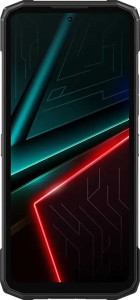
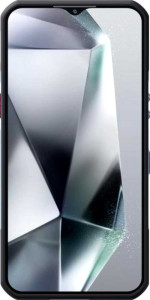
On paper, the Doogee Blade 20 and Oukitel WP35 Pro look nearly identical at first glance — same 6.6-inch LCD IPS panel, same lack of HDR support in any form. But dig one level deeper and a significant gap emerges: the WP35 Pro renders at 1080 x 2408 px at 400 ppi, while the Blade 20 tops out at 720 x 1612 px at just 267 ppi. That 50% jump in pixel density is immediately perceptible — text appears noticeably crisper, images show finer detail, and the overall viewing experience feels substantially more refined on the WP35 Pro.

Screen durability is another point of divergence. The WP35 Pro includes branded damage-resistant glass — a meaningful addition for a rugged device that is, by design, likely to face drops and abrasion. The Blade 20 offers no such protection, which is a notable omission given its rugged positioning. On the flip side, the Blade 20 features a secondary screen — a rarity that can be genuinely useful for notifications or camera previews without waking the main display, offering a functional novelty the WP35 Pro lacks.

The WP35 Pro wins this category decisively. Its full HD+ resolution and damage-resistant glass are substantive, everyday advantages that outweigh the Blade 20's secondary screen — which, while interesting, is a niche feature rather than a core display quality improvement.

Performance:
internal storage 128GB 512GB
RAM 4GB 12GB
Chipset (SoC) name Unisoc T7200 MediaTek Dimensity 6300
GPU name Mali G57 MP1 Arm Mali-G57 MC2
CPU speed 2 x 1.6 & 6 x 1.6 GHz 2 x 2.4 & 6 x 2 GHz
Geekbench 6 result (multi) 1391 2012
Geekbench 6 result (single) 371 782
GPU clock speed 650 MHz 950 MHz
Has integrated LTE
RAM speed 1600 MHz 2133 MHz
semiconductor size 12 nm 6 nm
Supports 64-bit
DirectX version DirectX 12 DirectX 12
Has integrated graphics
Uses big.LITTLE technology
CPU threads 8 threads 8 threads
Uses HMP
maximum memory bandwidth 12.8 GB/s 17.07 GB/s
L2 cache 2 MB 1 MB
L1 cache 128 KB 512 KB
maximum memory amount 14GB 12GB
DDR memory version 4 4
L3 cache 1 MB 2 MB

The performance gap between these two devices is substantial and consistent across every meaningful metric. The Oukitel WP35 Pro runs on the MediaTek Dimensity 6300, built on a modern 6 nm process node, while the Doogee Blade 20 relies on the Unisoc T7200 at 12 nm. That generational difference in fabrication directly translates to greater power efficiency and higher sustained performance — the WP35 Pro can do more while generating less heat and consuming less battery. The CPU clock advantage reinforces this: the WP35 Pro's performance cores run at 2.4 GHz versus the Blade 20's 1.6 GHz, and the Geekbench 6 scores confirm the real-world delta — 782 vs. 371 single-core and 2012 vs. 1391 multi-core, meaning the WP35 Pro is roughly twice as fast in single-threaded tasks and about 45% faster under sustained load.

Memory and storage tell a similarly one-sided story. The WP35 Pro ships with 12 GB of RAM at 2133 MHz and 512 GB of internal storage, against the Blade 20's 4 GB of RAM at 1600 MHz and 128 GB of storage. More RAM means more apps can remain active in the background without being force-reloaded, and the faster memory speed feeds the CPU data more efficiently — reflected in the WP35 Pro's higher memory bandwidth of 17.07 GB/s versus 12.8 GB/s. The GPU picture follows suit: the WP35 Pro's Mali-G57 MC2 at 950 MHz outpaces the Blade 20's single-core Mali G57 at 650 MHz, making a tangible difference in graphics-intensive apps and games.

The WP35 Pro wins this category comprehensively. Its newer silicon, faster clocks, triple the RAM, and quadruple the storage add up to a device that will handle multitasking, gaming, and day-to-day responsiveness noticeably better — and will remain capable for longer as apps grow more demanding over time.

Cameras:
megapixels (main camera) 16 & 2 MP 64 & 8 & 2 MP
Has a dual-lens (or multi-lens) main camera
megapixels (front camera) 8MP 32MP
has built-in optical image stabilization
video recording (main camera) 1080 x 30 fps 1440 x 30 fps
Has a dual-tone LED flash
has a BSI sensor
has a CMOS sensor
has continuous autofocus when recording movies
Has phase-detection autofocus for photos
supports slow-motion video recording
has a built-in HDR mode
has manual exposure
has a flash
optical zoom 0x 0x
has manual ISO
has a serial shot mode
has manual focus
has a front camera
Has laser autofocus
Shoots 360° panorama
has manual white balance
shoots raw
has touch autofocus
has manual shutter speed
can create panoramas in-camera
Has a front-facing LED flash
has a dual-lens (or multi-lens) front camera
supports HDR10 recording
supports Dolby Vision recording
has a front-facing camera under the display
Has a RGB LED flash
has 3D photo/video recording capabilities

The camera systems on these two devices share the same foundational feature set — phase-detection autofocus, continuous autofocus during video, HDR mode, slow-motion, panorama, and a full suite of manual controls — but the hardware behind those features differs considerably. The WP35 Pro fields a triple-lens main camera at 64 & 8 & 2 MP, while the Blade 20 offers a dual-lens setup at 16 & 2 MP. The primary sensor gap is the headline: a 64 MP sensor captures dramatically more detail and provides far greater flexibility for cropping and post-processing compared to a 16 MP shooter. The WP35 Pro's additional 8 MP lens also expands its versatility — likely serving as an ultrawide — giving it a genuine multi-perspective capability the Blade 20 simply cannot match.

Video recording follows the same pattern. The WP35 Pro tops out at 1440p at 30 fps, a step above the Blade 20's ceiling of 1080p at 30 fps. For anyone capturing outdoor or action footage — a plausible use case for rugged phones — that resolution advantage means more detail and better footage quality. On the sensor technology side, the WP35 Pro also adds a BSI (back-side illuminated) sensor, which improves light-gathering efficiency, particularly in low-light conditions. The Blade 20's CMOS-only sensor lacks this design advantage. Selfie capability is similarly lopsided: the WP35 Pro's 32 MP front camera versus the Blade 20's 8 MP is a fourfold difference in resolution.

The WP35 Pro holds a clear and comprehensive advantage across this entire category — more megapixels on every lens, an extra versatile camera, better video resolution, and a superior sensor design. For a rugged phone, having a capable camera system is often secondary, but the WP35 Pro delivers meaningfully more on this front regardless.

Operating system:
Android version Android 15 Android 14
has clipboard warnings
has location privacy options
has camera/microphone privacy options
has Mail Privacy Protection
has theme customization
can block app tracking
blocks cross-site tracking
has on-device machine learning
has notification permissions
has media picker
Can play games while they download
has dark mode
has Wi-Fi password sharing
has battery health check
has an extra dim mode
has focus modes
has dynamic theming
can offload apps
Has customizable notifications
has Live Text
has full-page screenshots
supports split screen
gets direct OS updates
has PiP
Can be used as a PC
Has sharing intents
has a child lock
Supports widgets
Is free and open source
Has offline voice recognition
has voice commands
Tracks the current position of a mobile device
is a multi-user system
has Quick Start

Across the full breadth of OS features, these two devices are remarkably aligned — both run stock-adjacent Android with the same privacy controls, customization options, productivity tools, and accessibility features. The only substantive differences come down to two points: Android version and app offloading. The Doogee Blade 20 ships with Android 15, one generation ahead of the WP35 Pro's Android 14. While neither device receives direct OS updates, launching on a newer version means the Blade 20 starts with more recent security patches, any behavioral or privacy improvements introduced in Android 15, and a longer runway before the OS feels dated.

The other differentiator is app offloading — a feature present on the Blade 20 but absent on the WP35 Pro. This allows unused apps to be temporarily removed from storage while retaining their data, which is a practical space-management tool. Given that the WP35 Pro already ships with 512 GB of storage, however, this advantage is effectively neutralized in practice — WP35 Pro users are far less likely to face storage pressure in the first place.

The Blade 20 holds a narrow edge here, primarily by virtue of its newer OS version. That said, it is a modest advantage — the feature parity between these two devices is high, and neither offers direct OS update support, which limits how meaningful the Android 15 head start will be over the long term.

Battery:
battery power 10300 mAh 11000 mAh
has wireless charging
Supports fast charging
charging speed 18W 18W
has a removable battery
has a battery level indicator
has a rechargeable battery

Battery life is a genuine strength for both of these rugged phones — each packs a massive cell that dwarfs the typical 5000 mAh found in mainstream smartphones. The Oukitel WP35 Pro edges ahead with 11000 mAh versus the Doogee Blade 20's 10300 mAh, a difference of 700 mAh or roughly 6.8%. In real-world terms, both devices are built for multi-day use between charges, and that margin is unlikely to translate into a full extra day of runtime — but for users pushing their device hard in the field, every bit of reserve capacity counts.

Where the two phones are perfectly matched is charging: both top out at 18W wired fast charging, with no wireless charging on either. Filling a battery this large at 18W is a slow affair regardless — expect several hours for a full charge from empty. Neither device offers a removable battery, so there is no option to carry a spare cell as a workaround.

The WP35 Pro holds a slim advantage by virtue of its larger battery, but this category is effectively a near-tie. The charging infrastructure is identical, and the capacity gap is too narrow to be a decisive factor for most users. Those prioritizing absolute endurance will marginally prefer the WP35 Pro, but the Blade 20 is not far behind.

Audio:
has a socket for a 3.5 mm audio jack
has stereo speakers
has aptX
has LDAC
has aptX HD
has aptX Adaptive
has aptX Lossless
Has a radio

Audio is the one category where neither device distinguishes itself — and notably, where both fall short of what many users might expect. The Doogee Blade 20 and Oukitel WP35 Pro share an identical audio spec sheet: no 3.5 mm headphone jack, no stereo speakers, no high-resolution Bluetooth codecs such as aptX, LDAC, or any of their variants, and no built-in radio. For rugged phones that often target outdoor and field use cases, the absence of a headphone jack and stereo output is a meaningful limitation.

The lack of advanced Bluetooth audio codecs means that wireless listening is limited to standard quality — users who rely on high-fidelity wireless headphones will not get the most out of their equipment on either device. Similarly, the absence of stereo speakers restricts media consumption and hands-free audio to a single-channel experience, which is noticeably less immersive for video or music playback.

This category is a complete tie — neither device offers any audio advantage over the other. Both represent a relatively bare-bones audio configuration, and users for whom sound quality or audio flexibility is a priority should factor this shared limitation into their overall decision.

Connectivity & Features:
release date March 2025 March 2025
has 5G support
Wi-Fi version Wi-Fi 4 (802.11n), Wi-Fi 6 (802.11ax), Wi-Fi 5 (802.11ac) Wi-Fi 4 (802.11n), Wi-Fi 6 (802.11ax), Wi-Fi 5 (802.11ac)
SIM cards 2 SIM 2 SIM
Bluetooth version 5 5.2
has an external memory slot
Has USB Type-C
USB version 2 2
has NFC
download speed 300 MBits/s 3300 MBits/s
Has a fingerprint scanner
has emergency SOS via satellite
has crash detection
is DLNA-certified
has a gyroscope
supports ANT+
Has a heart rate monitor
has GPS
has a compass
supports Wi-Fi
Has an infrared sensor
has an accelerometer
has a cellular module
Has a barometer
has an HDMI output
Uses 3D facial recognition
Has an iris scanner
Stylus included
supports Galileo
Has motion tracking
Has optical tracking
Has a built-in projector

The most consequential difference in this category is cellular connectivity. The Oukitel WP35 Pro supports 5G, while the Doogee Blade 20 is limited to 4G LTE — and the download speed figures make that gap vivid: 3300 Mbits/s versus 300 Mbits/s. Even in areas where 5G coverage is still rolling out, the WP35 Pro is future-proofed for the next several years of network infrastructure development, whereas the Blade 20 will be capped at 4G speeds for its entire lifespan. For users in regions with active 5G deployment, this is a meaningful day-to-day advantage in data-heavy tasks.

Bluetooth tells a subtler but still relevant story. The WP35 Pro runs Bluetooth 5.2 against the Blade 20's Bluetooth 5.0, bringing modest improvements in connection stability and audio stream handling. Beyond that, the shared feature list is extensive and well-matched — both devices offer dual SIM, NFC, USB Type-C (USB 2.0), expandable storage, Wi-Fi 6, fingerprint scanning, GPS with Galileo support, gyroscope, and accelerometer. Neither includes more specialized sensors like a barometer or infrared, keeping the feature set practical rather than exhaustive.

The WP35 Pro takes a clear win here, driven almost entirely by its 5G support. The tenfold download speed advantage and network longevity it provides are not trivial — for a device in this price and durability bracket, 5G capability is a standout differentiator that will compound in value as networks continue to mature.
Miscellaneous:
has a video light
Has sapphire glass display
Has a curved display
Has an e-paper display

The miscellaneous specs for the Doogee Blade 20 and Oukitel WP35 Pro are identical across every data point provided. Both include a video light — a useful utility for recording in low-light environments — and neither features sapphire glass, a curved display, or an e-paper panel. There is nothing here to separate them.

This is a complete tie by every available measure in this category. Neither device holds any advantage over the other based on the provided data, and no further differentiation can be drawn without going beyond the specs at hand.

Comparison Summary & Verdict

After examining all the specs, a clear picture emerges for each device. The Doogee Blade 20 stands out with its unique secondary screen, the newer Android 15 operating system, and app offloading support, making it a compelling pick for users who want a more versatile software experience in a rugged shell. The Oukitel WP35 Pro, on the other hand, dominates in nearly every performance category: its MediaTek Dimensity 6300 chipset and 12GB of RAM deliver roughly double the benchmark scores, while its 1080p display, 64MP triple camera system, 32MP selfie camera, 5G connectivity, and larger 11000 mAh battery make it the stronger all-around performer. Buyers who demand the best specs for the money should lean toward the WP35 Pro, while those who value the novelty of a secondary display and the latest Android version may find the Blade 20 a worthy alternative.

Doogee Blade 20
Buy Doogee Blade 20 if...

Buy the Doogee Blade 20 if you want a rugged phone with a secondary screen, the latest Android 15, and app offloading support at a likely lower price point.

Oukitel WP35 Pro
Buy Oukitel WP35 Pro if...

Buy the Oukitel WP35 Pro if you need superior performance, a sharper 1080p display, a high-resolution 64MP camera system, 5G connectivity, and a larger battery for heavy daily use.