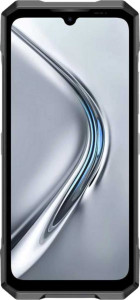
Doogee Blade GT Play
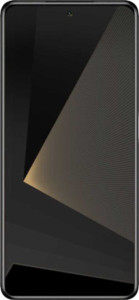
ZTE Nubia Neo 3 GT

Doogee Blade GT Play ZTE Nubia Neo 3 GT

Common Features

  • Both products have a 120Hz refresh rate.
  • Neither product has branded damage-resistant glass.
  • Neither product supports HDR10.
  • Neither product supports HDR10+.
  • Neither product supports Dolby Vision.
  • Both products have a touch screen.
  • Both products have 256GB internal storage.
  • Both products have integrated LTE support.
  • Both products use a 6 nm semiconductor size.
  • Both products support 64-bit processing.
  • Both products have integrated graphics.
  • Both products use big.LITTLE technology.
  • Both products use HMP.
  • Both products support OpenCL version 2.
  • Both products have a 50MP main camera.
  • Both products have a dual-lens main camera.
  • Both products have a 16MP front camera.
  • Both products use a CMOS sensor for the camera.
  • Both products have continuous autofocus when recording movies.
  • Both products have privacy options for location, camera, and microphone.

Main Differences

  • Doogee Blade GT Play has a rugged build while ZTE Nubia Neo 3 GT does not.
  • Doogee Blade GT Play has an LCD, IPS display while ZTE Nubia Neo 3 GT has an OLED/AMOLED display.
  • Doogee Blade GT Play has a 6.72″ screen size while ZTE Nubia Neo 3 GT has a 6.8″ screen size.
  • Doogee Blade GT Play has a pixel density of 392 ppi while ZTE Nubia Neo 3 GT has a pixel density of 386 ppi.
  • Doogee Blade GT Play has a resolution of 1080 x 2400 px while ZTE Nubia Neo 3 GT has a resolution of 1080 x 2392 px.
  • Doogee Blade GT Play does not have an Always-On Display, while ZTE Nubia Neo 3 GT does.
  • Doogee Blade GT Play has 8GB of RAM while ZTE Nubia Neo 3 GT has 12GB of RAM.
  • Doogee Blade GT Play uses the MediaTek Dimensity 7025 chipset while ZTE Nubia Neo 3 GT uses the Unisoc T9100 chipset.
  • Doogee Blade GT Play has the IMG BXM-8-256 GPU while ZTE Nubia Neo 3 GT has the Mali G57 MP4 GPU.
  • Doogee Blade GT Play has a CPU speed of 2 x 2.5 & 6 x 2 GHz while ZTE Nubia Neo 3 GT has a CPU speed of 1 x 2.7 & 3 x 2.3 & 4 x 2.1 GHz.
  • Doogee Blade GT Play has a Geekbench 5 multi-core result of 1890 while ZTE Nubia Neo 3 GT has a result of 8410.
  • Doogee Blade GT Play has a Geekbench 5 single-core result of 690 while ZTE Nubia Neo 3 GT has a result of 2857.
  • Doogee Blade GT Play has RAM speed of 2750 MHz while ZTE Nubia Neo 3 GT has RAM speed of 2133 MHz.
  • Doogee Blade GT Play can support up to 16GB of RAM while ZTE Nubia Neo 3 GT can support up to 8GB of RAM.
  • Doogee Blade GT Play uses DDR5 memory while ZTE Nubia Neo 3 GT uses DDR4 memory.
  • Doogee Blade GT Play has a wide aperture of 1.8 & 1.8f for the main camera while ZTE Nubia Neo 3 GT has an aperture of 2.4 & 1.8f.
  • Doogee Blade GT Play records video at 1440 x 30 fps with the main camera while ZTE Nubia Neo 3 GT records video at 1080 x 30 fps.
  • Doogee Blade GT Play has 4 flash LEDs while ZTE Nubia Neo 3 GT has 1 flash LED.
  • Doogee Blade GT Play does not support slow-motion video recording, while ZTE Nubia Neo 3 GT does.
  • Doogee Blade GT Play does not have a timelapse function, while ZTE Nubia Neo 3 GT does.
  • Doogee Blade GT Play runs on Android 14 while ZTE Nubia Neo 3 GT runs on Android 15.
  • Doogee Blade GT Play cannot offload apps, while ZTE Nubia Neo 3 GT can offload apps.
  • Doogee Blade GT Play has a battery power of 5800 mAh while ZTE Nubia Neo 3 GT has a battery power of 6000 mAh.
  • Doogee Blade GT Play supports fast charging at 18W while ZTE Nubia Neo 3 GT supports fast charging at 80W.
  • Doogee Blade GT Play does not have stereo speakers while ZTE Nubia Neo 3 GT does.
  • Doogee Blade GT Play has a radio while ZTE Nubia Neo 3 GT does not.
  • Doogee Blade GT Play has Wi-Fi 4 (802.11n) and Wi-Fi 5 (802.11ac) while ZTE Nubia Neo 3 GT also supports Wi-Fi 6 (802.11ax).
  • Doogee Blade GT Play has a download speed of 2770 MBits/s while ZTE Nubia Neo 3 GT has a download speed of 750 MBits/s.
  • Doogee Blade GT Play does not have a gyroscope while ZTE Nubia Neo 3 GT does.
Specs Comparison
Doogee Blade GT Play

Doogee Blade GT Play

ZTE Nubia Neo 3 GT

ZTE Nubia Neo 3 GT

Design:
has a rugged build
can be folded

The most significant differentiator in this design group is build philosophy. The Doogee Blade GT Play features a rugged build, meaning it is engineered to withstand harsh conditions — typically including resistance to drops, dust, and water. This makes it a practical choice for outdoor use, physical work environments, or anyone who prioritizes durability over sleek aesthetics.

The ZTE Nubia Neo 3 GT, by contrast, does not have a rugged build, which suggests a more conventional smartphone construction. While this may result in a slimmer or more refined form factor, it also means the device is likely more vulnerable to physical damage without a protective case.

Neither device can be folded, so foldable-form-factor enthusiasts will find no distinction there. Overall, the Doogee Blade GT Play holds a clear edge in this design category for users who need durability, while the Nubia Neo 3 GT targets those comfortable with a standard, non-ruggedized design.

Display:
Display type LCD, IPS OLED/AMOLED
screen size 6.72" 6.8"
pixel density 392 ppi 386 ppi
resolution 1080 x 2400 px 1080 x 2392 px
refresh rate 120Hz 120Hz
has branded damage-resistant glass
supports HDR10
supports HDR10+
Always-On Display
supports Dolby Vision
Has a secondary screen
has a touch screen

The panel technology is where these two devices diverge most meaningfully. The ZTE Nubia Neo 3 GT uses an OLED/AMOLED display, which delivers true blacks, richer contrast, and more vibrant colors compared to the LCD IPS panel on the Doogee Blade GT Play. For media consumption and everyday visual experience, OLED panels are generally more immersive — and they also enable the Nubia Neo 3 GT's Always-On Display feature, which lets users glance at notifications and time without fully waking the screen, a convenience the Doogee lacks entirely.

Where the two converge, the similarities are notable. Both sport a 120Hz refresh rate, ensuring equally smooth scrolling and animations, and their pixel densities — 392 ppi vs 386 ppi — are practically indistinguishable to the naked eye. Screen sizes are also nearly identical at 6.72″ and 6.8″ respectively, so neither has a meaningful footprint advantage. Neither device offers branded damage-resistant glass, HDR10, or Dolby Vision support.

On balance, the Nubia Neo 3 GT holds a clear display edge, driven entirely by its OLED panel and Always-On Display capability. For users who prioritize screen quality and ambient usability, these are tangible real-world advantages that the Blade GT Play's LCD panel simply cannot match at this tier.

Performance:
internal storage 256GB 256GB
RAM 8GB 12GB
Chipset (SoC) name MediaTek Dimensity 7025 Unisoc T9100
GPU name IMG BXM-8-256 Mali G57 MP4
CPU speed 2 x 2.5 & 6 x 2 GHz 1 x 2.7 & 3 x 2.3 & 4 x 2.1 GHz
Geekbench 5 result (multi) 1890 8410
Geekbench 5 result (single) 690 2857
Has integrated LTE
RAM speed 2750 MHz 2133 MHz
semiconductor size 6 nm 6 nm
Supports 64-bit
Has integrated graphics
Uses big.LITTLE technology
Uses HMP
OpenCL version 2 2
maximum memory amount 16GB 8GB
DDR memory version 5 4

Raw processing power tells a stark story here. The ZTE Nubia Neo 3 GT's Unisoc T9100 chip posts a Geekbench 5 multi-core score of 8410 and a single-core score of 2857, dwarfing the Doogee Blade GT Play's MediaTek Dimensity 7025 results of 1890 and 690 respectively. These are not marginal differences — the Nubia outperforms by roughly 4x in multi-core tasks, which translates directly to snappier app launches, smoother multitasking, and considerably better handling of demanding workloads like gaming or video editing.

The RAM picture is more nuanced. The Nubia ships with 12GB of RAM versus the Doogee's 8GB, giving it more headroom for keeping apps active in the background. However, the Doogee supports a maximum expandable RAM of 16GB compared to the Nubia's ceiling of 8GB, meaning the Doogee could theoretically match or exceed the Nubia's RAM capacity through virtual memory expansion. Counterbalancing this, the Doogee's memory runs on faster DDR5 at 2750 MHz versus the Nubia's DDR4 at 2133 MHz — a genuine architectural advantage for memory bandwidth, even if it cannot compensate for the CPU performance gap.

Both chips are fabbed on a 6 nm process and share architectural features like big.LITTLE and HMP, so the efficiency foundation is similar. Still, the Nubia Neo 3 GT holds a commanding performance edge in this category, and for users who prioritize processing capability above all else, that Geekbench gap is decisive.

Cameras:
megapixels (main camera) 50 & 2 MP 50 & 2 MP
wide aperture (main camera) 1.8 & 1.8f 2.4 & 1.8f
Has a dual-lens (or multi-lens) main camera
megapixels (front camera) 16MP 16MP
has built-in optical image stabilization
video recording (main camera) 1440 x 30 fps 1080 x 30 fps
Has a dual-tone LED flash
number of flash LEDs 4 1
has a BSI sensor
has a CMOS sensor
has continuous autofocus when recording movies
Has phase-detection autofocus for photos
supports slow-motion video recording
has a built-in HDR mode
has manual exposure
has a flash
optical zoom 0x 0x
has manual ISO
has a serial shot mode
has manual focus
has a front camera
Has laser autofocus
Shoots 360° panorama
has manual white balance
shoots raw
has touch autofocus
has manual shutter speed
can create panoramas in-camera
Has timelapse function
Has a front-facing LED flash
has a dual-lens (or multi-lens) front camera
supports HDR10 recording
supports Dolby Vision recording
has a front-facing camera under the display
Has a RGB LED flash
has 3D photo/video recording capabilities

On paper, these two cameras look nearly identical — both pack a 50 + 2 MP dual-lens rear system with a 16 MP front camera, phase-detection autofocus, and an equivalent set of manual controls. But a closer look reveals meaningful gaps. The Doogee Blade GT Play gains a tangible low-light advantage from its main lens aperture of f/1.8, compared to the ZTE Nubia Neo 3 GT's wider opening of only f/2.4 — a wider aperture lets in more light, which matters most in dim environments. The Doogee also captures video at up to 1440p @ 30fps, a full resolution tier above the Nubia's ceiling of 1080p @ 30fps, giving it an edge for users who want sharper footage.

Flash capability further separates them: the Doogee carries 4 LED flash units versus the Nubia's single LED, which can produce more even and powerful illumination in dark scenes. The Nubia does fight back on video versatility, however — it supports slow-motion video recording and a timelapse function, both absent on the Doogee. These are niche but genuinely useful creative tools for users who want more cinematic flexibility.

Weighing the tradeoffs, the Doogee Blade GT Play holds the stronger overall camera edge, particularly in still photography light-gathering and maximum video resolution. The Nubia's slow-motion and timelapse features add creative value, but they don't offset the aperture and resolution disadvantages for most shooting scenarios.

Operating system:
Android version Android 14 Android 15
has clipboard warnings
has location privacy options
has camera/microphone privacy options
has Mail Privacy Protection
has theme customization
can block app tracking
blocks cross-site tracking
has on-device machine learning
has notification permissions
has media picker
Can play games while they download
has dark mode
has Wi-Fi password sharing
has battery health check
has an extra dim mode
has focus modes
has dynamic theming
can offload apps
Has customizable notifications
has Live Text
has full-page screenshots
supports split screen
gets direct OS updates
has PiP
Can be used as a PC
Has sharing intents
has a child lock
Supports widgets
Is free and open source
Has offline voice recognition
has voice commands
Tracks the current position of a mobile device
is a multi-user system
has Quick Start

Across the vast majority of software features, these two devices are effectively identical — both run stock Android with the same privacy controls, productivity tools, dark mode, dynamic theming, split-screen, and PiP support. The one version gap, however, is worth noting: the ZTE Nubia Neo 3 GT ships with Android 15, while the Doogee Blade GT Play runs Android 14. A newer Android version typically brings incremental security patches, refined privacy architecture, and quality-of-life improvements, giving the Nubia a modest but real freshness advantage out of the box.

The only other functional differentiator is app offloading, which is available on the Nubia but absent on the Doogee. This feature allows rarely used apps to be temporarily removed from storage while preserving their data, freeing up space without fully uninstalling — a useful tool for users managing device storage over time.

Neither device receives direct OS updates, which limits the long-term software support picture for both. Still, the Nubia Neo 3 GT earns a narrow edge in this category, purely by virtue of launching on a newer Android version and offering app offloading — two advantages that, while not transformative, reflect a slightly more current and flexible software foundation.

Battery:
battery power 5800 mAh 6000 mAh
has wireless charging
Supports fast charging
charging speed 18W 80W
has a removable battery
has a battery level indicator
has a rechargeable battery

Battery capacity between these two is close enough to be a non-issue in daily use — 5800 mAh on the Doogee Blade GT Play versus 6000 mAh on the ZTE Nubia Neo 3 GT. A 200 mAh difference at this scale is unlikely to produce any noticeable real-world gap in screen-on time. Both are large cells by modern standards, and users of either device can reasonably expect strong all-day endurance.

Where the Nubia pulls decisively ahead is charging speed. Its 80W fast charging is in an entirely different league compared to the Doogee's 18W. At 80W, the Nubia can go from near-empty to a substantial charge in well under an hour — a convenience that fundamentally changes how dependent a user needs to be on wall time. The Doogee's 18W is functional but considerably slower, making top-ups a lengthier commitment.

Neither device supports wireless charging, so that's a shared limitation. Overall, the Nubia Neo 3 GT holds a commanding edge in this category — not because its battery is meaningfully larger, but because its 80W charging makes the refueling experience far faster and more flexible for users with busy schedules.

Audio:
has a socket for a 3.5 mm audio jack
has stereo speakers
has aptX
has LDAC
has aptX HD
has aptX Adaptive
has aptX Lossless
Has a radio

Audio is a tale of two trade-offs. Neither device includes a 3.5mm headphone jack, so wired listening requires an adapter or Bluetooth headphones on both — a shared limitation that affects users who prefer traditional audio accessories. High-quality wireless codec support is also absent across the board, with no aptX, LDAC, or any of their variants on either device, meaning Bluetooth audio quality will be capped at standard levels regardless of headphone quality.

The key split comes down to speakers versus radio. The ZTE Nubia Neo 3 GT features stereo speakers, which produce a wider, more spatially immersive soundstage compared to a mono setup — a meaningful upgrade for media playback, gaming, and video calls without headphones. The Doogee Blade GT Play, meanwhile, offers a built-in FM radio, a feature that has largely disappeared from modern smartphones but retains real utility in areas with poor data connectivity or during emergencies where broadcast reception matters.

For most users, the Nubia Neo 3 GT holds the more broadly useful audio advantage — stereo speakers benefit everyday media consumption in a way that radio simply does not for the majority of people. That said, the Doogee's FM radio is a genuine differentiator for a specific audience. The edge goes to the Nubia for general audio experience, while the Doogee serves a niche that values broadcast reception.

Connectivity & Features:
release date June 2025 March 2025
has 5G support
Wi-Fi version Wi-Fi 4 (802.11n), Wi-Fi 5 (802.11ac) Wi-Fi 4 (802.11n), Wi-Fi 5 (802.11ac), Wi-Fi 6 (802.11ax)
SIM cards 2 SIM 2 SIM
Bluetooth version 5.2 5.2
has an external memory slot
Has USB Type-C
has NFC
download speed 2770 MBits/s 750 MBits/s
Has a fingerprint scanner
has emergency SOS via satellite
has crash detection
is DLNA-certified
has a gyroscope
supports ANT+
Has a heart rate monitor
has GPS
has a compass
supports Wi-Fi
Has an infrared sensor
has an accelerometer
has a cellular module
Has a barometer
has an HDMI output
Uses 3D facial recognition
Has an iris scanner
Stylus included
supports Galileo
Has motion tracking
Has optical tracking
Has a built-in projector

Most of the connectivity fundamentals are in lockstep here — both devices offer 5G, dual SIM, USB-C, NFC, Bluetooth 5.2, GPS with Galileo, and an accelerometer. Two differences stand out, however. The ZTE Nubia Neo 3 GT adds Wi-Fi 6 (802.11ax) support on top of the shared Wi-Fi 5 foundation, which means lower latency and better performance in congested network environments like offices or public spaces — a genuine quality-of-life upgrade for heavy Wi-Fi users. The Doogee Blade GT Play, by contrast, tops out at Wi-Fi 5.

Cellular download speed tells the opposite story. The Doogee lists a theoretical maximum of 2770 Mbits/s versus the Nubia's 750 Mbits/s — a substantial gap on paper that reflects the Doogee's broader cellular modem capability. In practice, real-world speeds depend heavily on carrier infrastructure, but a higher ceiling does suggest more headroom on advanced 5G networks. The Nubia also includes a gyroscope absent on the Doogee, which matters for augmented reality apps, immersive gaming, and more accurate navigation orientation.

This category ends in a split rather than a clean winner. The Nubia Neo 3 GT edges ahead on Wi-Fi quality and sensor completeness, while the Doogee Blade GT Play counters with a significantly higher cellular download ceiling. Users who prioritize local wireless performance and motion-based features will favor the Nubia; those who lean on mobile data throughput will find the Doogee more capable.

Miscellaneous:
has a video light
Has sapphire glass display
Has a curved display
Has an e-paper display

The miscellaneous spec group offers no grounds for differentiation whatsoever. Both the Doogee Blade GT Play and the ZTE Nubia Neo 3 GT share an identical feature set here: both include a video light, and neither carries a sapphire glass display, curved display, or e-paper screen.

This is a complete tie. No advantage exists for either device based on the provided data, and no purchasing decision should be influenced by this category alone.

Comparison Summary & Verdict

This is a specification comparison between Doogee Blade GT Play and ZTE Nubia Neo 3 GT. Both devices feature a 120Hz refresh rate and have 256GB of internal storage. The Doogee Blade GT Play has a rugged build, while the ZTE Nubia Neo 3 GT offers an OLED/AMOLED display compared to the Blade GT Play's LCD. The Blade GT Play uses a MediaTek Dimensity 7025 chipset, while the ZTE Nubia Neo 3 GT runs on the Unisoc T9100. Additionally, the Blade GT Play supports fast charging at 18W, whereas the Nubia Neo 3 GT supports 80W fast charging.