Doogee Blade GT Ultra
Doogee S200 Plus

Doogee Blade GT Ultra Doogee S200 Plus

Overview

Welcome to our in-depth spec comparison between the Doogee Blade GT Ultra and the Doogee S200 Plus — two rugged Android 14 smartphones powered by the same MediaTek Dimensity 7300 chipset. While they share a solid common foundation, they diverge sharply in areas like battery capacity, physical dimensions, and multimedia features. Read on to discover which device better matches your priorities.

Common Features

  • Both phones have an IP68 ingress protection rating.
  • Both phones feature a rugged build.
  • Neither phone can be folded.
  • Both phones have an LCD IPS display with a 6.72″ screen size.
  • Both phones share a pixel density of 392 ppi and a resolution of 1080 x 2400 px.
  • Both phones support a 120Hz refresh rate.
  • Neither phone has branded damage-resistant glass.
  • HDR10 support is not available on either phone.
  • HDR10+ support is not available on either phone.
  • Both phones use the MediaTek Dimensity 7300 chipset with a Mali G615 MC2 GPU.
  • Both phones have 512GB of internal storage.
  • Both phones share a CPU speed of 4 x 2.5 & 4 x 2 GHz and a GPU clock speed of 1047 MHz.
  • Both phones achieve the same Geekbench 6 multi-core score of 2932 and single-core score of 1026.
  • Both phones have a dual-lens or multi-lens main camera with a 32MP front camera.
  • Optical image stabilization is not available on either phone.
  • Both phones record video at 2160 x 30 fps and support continuous autofocus during recording.
  • Both phones run Android 14 and support theme customization and app tracking blocking.
  • Neither phone supports wireless charging, but both support 33W fast charging.
  • Neither phone has a removable battery, and both have a rechargeable battery with a level indicator.
  • Neither phone has a 3.5mm audio jack, LDAC, or aptX Lossless, but both include a radio.
  • Both phones support 5G, dual SIM, NFC, USB Type-C (USB 2.0), and an external memory slot.
  • Both phones share the same download and upload speed of 3270 Mbit/s.
  • Neither phone has a sapphire glass display, curved display, or e-paper display.
  • Both phones include a video light.

Main Differences

  • Water resistance is not specified on the Doogee Blade GT Ultra, while the Doogee S200 Plus is waterproof.
  • Weight is 260 g on the Doogee Blade GT Ultra and 379 g on the Doogee S200 Plus.
  • Thickness is 10.5 mm on the Doogee Blade GT Ultra and 19.1 mm on the Doogee S200 Plus.
  • Width is 83.5 mm on the Doogee Blade GT Ultra and 82.5 mm on the Doogee S200 Plus.
  • Height is 178.5 mm on the Doogee Blade GT Ultra and 179.5 mm on the Doogee S200 Plus.
  • Volume is 156.5 cm³ on the Doogee Blade GT Ultra and 282.85 cm³ on the Doogee S200 Plus.
  • A secondary screen is present on the Doogee S200 Plus but not available on the Doogee Blade GT Ultra.
  • RAM is 16GB on the Doogee Blade GT Ultra and 12GB on the Doogee S200 Plus.
  • The main camera setup is 100 & 5 MP on the Doogee Blade GT Ultra and 100 & 20 & 2 MP on the Doogee S200 Plus.
  • Main camera aperture is 2.2 & 1.8f on the Doogee Blade GT Ultra and 1.8 & 1.8 & 2.4f on the Doogee S200 Plus.
  • The number of flash LEDs is 2 on the Doogee Blade GT Ultra and 1 on the Doogee S200 Plus.
  • Battery capacity is 5500 mAh on the Doogee Blade GT Ultra and 10100 mAh on the Doogee S200 Plus.
  • Stereo speakers are present on the Doogee S200 Plus but not available on the Doogee Blade GT Ultra.
  • Wi-Fi support extends up to Wi-Fi 6 (802.11ax) on the Doogee Blade GT Ultra, while the Doogee S200 Plus also adds Wi-Fi 6E (802.11ax).
  • Bluetooth version is 5.2 on the Doogee Blade GT Ultra and 5.4 on the Doogee S200 Plus.
Specs Comparison
Doogee Blade GT Ultra

Doogee Blade GT Ultra

Doogee S200 Plus

Doogee S200 Plus

Design:
water resistance None Waterproof
weight 260 g 379 g
thickness 10.5 mm 19.1 mm
width 83.5 mm 82.5 mm
height 178.5 mm 179.5 mm
volume 156.499875 cm³ 282.847125 cm³
Ingress Protection (IP) rating IP68 IP68
has a rugged build
can be folded

Both the Blade GT Ultra and the S200 Plus share a rugged, non-folding form factor with an IP68 rating, confirming certified protection against dust and sustained water immersion for both devices. However, the S200 Plus is additionally listed with an explicit Waterproof designation under its water resistance field, suggesting a potentially higher practical emphasis on aquatic durability in its design spec, while the Blade GT Ultra lists ″None″ in that same field despite carrying the same IP68 certification — a nuance worth noting if water exposure is a primary concern.

Where the two diverge most dramatically is in physical footprint. The Blade GT Ultra measures just 10.5 mm thick and weighs 260 g, giving it a volume of roughly 156.5 cm³ — impressively slim for a rugged device. The S200 Plus, by contrast, is nearly twice as thick at 19.1 mm, weighs a substantial 379 g, and occupies a volume of 282.8 cm³. In real-world terms, the S200 Plus will feel noticeably dense and bulky in hand or pocket, likely housing a much larger battery or more robust internal hardware, while the Blade GT Ultra trades that mass for everyday wearability. The height and width of both phones are nearly identical (around 178–179.5 mm tall, 82.5–83.5 mm wide), so the bulk difference is almost entirely driven by thickness and internal density.

For users who prioritize portability and pocketability within the rugged segment, the Blade GT Ultra holds a clear design edge. The S200 Plus, however, may appeal to those who need maximum durability and are willing to accept a significantly heavier, chunkier device — the kind of trade-off common in ultra-rugged phones designed for demanding field use.

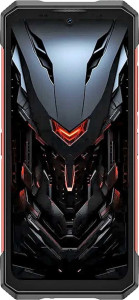
Display:
Display type LCD, IPS LCD, IPS
screen size 6.72" 6.72"
pixel density 392 ppi 392 ppi
resolution 1080 x 2400 px 1080 x 2400 px
refresh rate 120Hz 120Hz
has branded damage-resistant glass
supports HDR10
supports HDR10+
Always-On Display
supports Dolby Vision
Has a secondary screen
has a touch screen

On paper, the display specs of these two phones are virtually identical: both feature a 6.72″ LCD IPS panel running at 1080 x 2400 px, delivering 392 ppi pixel density and a smooth 120Hz refresh rate. That refresh rate is a genuine quality-of-life win in everyday use — scrolling, animations, and UI interactions all feel noticeably more fluid compared to standard 60Hz displays. Since neither phone distinguishes itself on resolution, color science (no HDR10, HDR10+, or Dolby Vision on either), or glass protection, the primary display experience is effectively a dead heat.

The one meaningful differentiator in this group is that the S200 Plus includes a secondary screen, which the Blade GT Ultra lacks entirely. On rugged devices, secondary screens typically serve as low-power status displays — showing notifications, time, or sensor data without waking the main panel. This can be particularly useful in field or outdoor environments where glancing at a notification without unlocking the device saves time and battery. It is a niche but practical feature for the target audience of a rugged phone.

Overall, the two devices are evenly matched on core display quality, but the S200 Plus takes a narrow edge in this category solely due to its secondary screen — a functionally relevant addition that aligns well with the rugged-use context these phones are designed for.

Performance:
internal storage 512GB 512GB
RAM 16GB 12GB
Chipset (SoC) name MediaTek Dimensity 7300 MediaTek Dimensity 7300
GPU name Mali G615 MC2 Mali G615 MC2
CPU speed 4 x 2.5 & 4 x 2 GHz 4 x 2.5 & 4 x 2 GHz
Geekbench 6 result (multi) 2932 2932
Geekbench 6 result (single) 1026 1026
GPU clock speed 1047 MHz 1047 MHz
Has integrated LTE
RAM speed 6400 MHz 6400 MHz
semiconductor size 4 nm 4 nm
Supports 64-bit
DirectX version DirectX 12 DirectX 12
Has integrated graphics
Uses big.LITTLE technology
CPU threads 8 threads 8 threads
Uses HMP
maximum memory amount 16GB 16GB
number of transistors 6200 million 6200 million
DDR memory version 5 5
supported displays 1 1

At the heart of both phones sits the MediaTek Dimensity 7300, a modern 4nm chipset with an octa-core CPU configuration, DDR5 RAM running at 6400 MHz, and a Mali G615 MC2 GPU clocked at 1047 MHz. The Geekbench 6 scores — 1026 single-core and 2932 multi-core — are identical across both devices, as expected when the same SoC is used in the same configuration. For the rugged phone segment, this is a capable mid-range chip: fast enough for demanding apps, smooth multitasking, and even casual gaming, without pushing into flagship territory.

The sole differentiator in this group is RAM. The Blade GT Ultra ships with 16GB, while the S200 Plus comes with 12GB — though notably, both phones share the same maximum memory ceiling of 16GB, meaning the S200 Plus could theoretically be expanded via virtual RAM features at the software level if supported. In practical terms, 16GB of physical RAM gives the Blade GT Ultra a more comfortable headroom for sustained multitasking, keeping more apps live in the background and reducing reload times during heavy use. The difference is unlikely to matter for typical workflows, but becomes relevant for power users or anyone running memory-intensive applications in the field.

Both phones are on equal footing for raw processing power — the chipset, GPU, storage, and benchmark results are a perfect match. The Blade GT Ultra earns a narrow edge here purely on the strength of its 4GB RAM advantage, which translates to a more future-proof and fluid multitasking experience.

Cameras:
megapixels (main camera) 100 & 5 MP 100 & 20 & 2 MP
wide aperture (main camera) 2.2 & 1.8f 1.8 & 1.8 & 2.4f
Has a dual-lens (or multi-lens) main camera
megapixels (front camera) 32MP 32MP
has built-in optical image stabilization
video recording (main camera) 2160 x 30 fps 2160 x 30 fps
Has a dual-tone LED flash
number of flash LEDs 2 1
has a BSI sensor
has a CMOS sensor
has continuous autofocus when recording movies
Has phase-detection autofocus for photos
supports slow-motion video recording
has a built-in HDR mode
has manual exposure
has a flash
optical zoom 0x 0x
has manual ISO
has a serial shot mode
has manual focus
has a front camera
Has laser autofocus
Shoots 360° panorama
has manual white balance
shoots raw
has touch autofocus
has manual shutter speed
can create panoramas in-camera
wide aperture (front camera) 2.3f 2.3f
Has timelapse function
Has a front-facing LED flash
has a dual-lens (or multi-lens) front camera
supports HDR10 recording
supports Dolby Vision recording
has a front-facing camera under the display
Has a RGB LED flash
has 3D photo/video recording capabilities

The camera systems share a common foundation — a 100MP primary sensor, a 32MP front camera, and 4K/30fps video recording — but the rear setups diverge in two meaningful ways. The S200 Plus deploys a triple-lens configuration (100 + 20 + 2 MP), while the Blade GT Ultra uses a dual-lens setup (100 + 5 MP). The 20MP secondary sensor on the S200 Plus is a significantly more capable second lens, offering far greater detail and versatility than the 5MP auxiliary on the Blade GT Ultra, which is typically only useful for depth-mapping or macro shots.

The main lens aperture also favors the S200 Plus: its primary camera opens to f/1.8 compared to the Blade GT Ultra's f/2.2. A wider aperture lets in more light, which translates directly into better low-light performance and shallower depth-of-field capability. In outdoor and field environments — where rugged phones are often used — this difference becomes noticeable when shooting in dim or variable lighting conditions. Interestingly, the Blade GT Ultra counters with 2 flash LEDs versus the S200 Plus's single LED, offering somewhat better flash-assisted illumination at close range.

The manual control feature set, autofocus systems, and video capabilities are identical across both devices. Given the wider aperture main lens and the far more capable secondary camera, the S200 Plus holds a clear overall edge in this category for users who care about photographic versatility and low-light performance.

Operating system:
Android version Android 14 Android 14
has clipboard warnings
has location privacy options
has camera/microphone privacy options
has Mail Privacy Protection
has theme customization
can block app tracking
blocks cross-site tracking
has on-device machine learning
has notification permissions
has media picker
Can play games while they download
has dark mode
has Wi-Fi password sharing
has battery health check
has an extra dim mode
has focus modes
has dynamic theming
can offload apps
Has customizable notifications
has Live Text
has full-page screenshots
supports split screen
gets direct OS updates
has PiP
Can be used as a PC
Has sharing intents
has a child lock
Supports widgets
Is free and open source
Has offline voice recognition
has voice commands
Tracks the current position of a mobile device
is a multi-user system
has Quick Start

This is one of the rare categories where no differentiation exists whatsoever. Both the Blade GT Ultra and the S200 Plus run Android 14 with an identical feature set across every tracked data point — privacy controls, multitasking capabilities, UI customization, and productivity tools all match exactly. Notably, both support useful modern Android staples like split-screen multitasking, Picture-in-Picture, dynamic theming, and on-device machine learning, giving users a reasonably full-featured Android experience out of the box.

It is worth highlighting that neither device receives direct OS updates — meaning software patches and version upgrades are routed through the manufacturer rather than delivered straight from Google. For rugged phones in this segment this is common, but it does mean update cadence depends entirely on Doogee's own release schedule, which may lag behind the broader Android ecosystem. Both phones share this limitation equally.

With every single spec in this group being identical, the operating system category is a complete tie. Neither phone offers any software-level advantage over the other, and a buying decision in this comparison should rest entirely on the hardware differences covered in other categories.

Battery:
battery power 5500 mAh 10100 mAh
has wireless charging
Supports fast charging
charging speed 33W 33W
has a removable battery
has a battery level indicator
has a rechargeable battery

Battery capacity is where these two phones diverge most starkly of all the categories compared so far. The Blade GT Ultra carries a respectable 5500 mAh cell — solid for a mid-range device and comfortably above the mainstream smartphone average. The S200 Plus, however, packs a massive 10100 mAh battery, nearly double the capacity. In practical terms, where the Blade GT Ultra might deliver a full day of heavy use or two days of moderate use, the S200 Plus is firmly in multi-day territory, making it a compelling choice for anyone working in remote or off-grid environments where charging access is limited.

The trade-off, of course, connects directly back to the design category: that enormous battery is a primary reason the S200 Plus is so much heavier and thicker than the Blade GT Ultra. The extra bulk is essentially the physical cost of carrying what amounts to a built-in power bank. Both phones share an identical 33W fast charging speed, which means the S200 Plus will also take significantly longer to charge from empty despite the same wattage — a consideration worth factoring in when planning around power availability.

For battery endurance, the S200 Plus wins this category decisively. The near-double capacity is not a marginal spec bump — it represents a fundamentally different use-case proposition, prioritizing days-long stamina over the more pocketable, lighter form factor of the Blade GT Ultra.

Audio:
has a socket for a 3.5 mm audio jack
has stereo speakers
has LDAC
has aptX Lossless
Has a radio

Audio hardware is lean on both devices, but one distinction stands out: the S200 Plus features stereo speakers, while the Blade GT Ultra makes do with a mono setup. In real-world use, stereo speakers produce noticeably wider, more immersive sound for media playback, speakerphone calls, and outdoor use — all scenarios particularly relevant for a rugged device. The difference is especially apparent when watching video or listening to audio without headphones, where mono output can feel flat and directionally limited by comparison.

Neither phone includes a 3.5mm headphone jack, so wired audio is off the table for both — users will need to rely on Bluetooth or a USB-C adapter. The absence of LDAC and aptX Lossless on both devices means wireless audio tops out at standard Bluetooth codec quality, which is adequate for most everyday listening but not optimized for high-fidelity audio enthusiasts. Both phones do include a built-in FM radio, a practical feature in the field where streaming may not be available.

With the shared limitations factored in, the S200 Plus takes a clear edge in this category. Stereo speakers are a meaningful upgrade for hands-free audio, and in the context of a rugged phone used in outdoor or work environments, that wider soundstage has genuine practical value.

Connectivity & Features:
release date February 2025 March 2025
has 5G support
Wi-Fi version Wi-Fi 4 (802.11n), Wi-Fi 5 (802.11ac), Wi-Fi 6 (802.11ax) Wi-Fi 4 (802.11n), Wi-Fi 5 (802.11ac), Wi-Fi 6 (802.11ax), Wi-Fi 6E (802.11ax)
SIM cards 2 SIM 2 SIM
Bluetooth version 5.2 5.4
has an external memory slot
Has USB Type-C
USB version 2 2
has NFC
download speed 3270 MBits/s 3270 MBits/s
upload speed 3270 MBits/s 3270 MBits/s
Has a fingerprint scanner
has emergency SOS via satellite
has crash detection
is DLNA-certified
has a gyroscope
supports ANT+
Has a heart rate monitor
has GPS
has a compass
supports Wi-Fi
Has an infrared sensor
has an accelerometer
has a cellular module
Has a barometer
has an HDMI output
Uses 3D facial recognition
Has an iris scanner
Stylus included
supports Galileo
Has motion tracking
Has optical tracking
Has a built-in projector

The connectivity foundation is largely shared: both phones support 5G, dual SIM, Wi-Fi 6, NFC, GPS with Galileo, and identical cellular download/upload speeds of 3270 Mbits/s. For a rugged device, this is a well-rounded set — NFC enables contactless payments and field data transfers, while 5G and Wi-Fi 6 ensure the phones are not bottlenecked on fast modern networks.

Two specs separate them. First, the S200 Plus adds Wi-Fi 6E support, extending wireless connectivity into the 6GHz band. In environments with congested 2.4GHz and 5GHz spectrum — busy job sites, warehouses, or event spaces — Wi-Fi 6E can deliver meaningfully less interference and more consistent throughput. Second, the S200 Plus steps up to Bluetooth 5.4 versus the Blade GT Ultra's Bluetooth 5.2. The newer version brings incremental improvements in connection reliability and efficiency, which matters for sustained peripheral use like wireless headsets or external sensors over long shifts. Neither difference is dramatic in isolation, but together they represent a modest but genuine connectivity advantage.

Both phones are on solid, modern footing here, but the S200 Plus earns a slight edge thanks to its Wi-Fi 6E support and newer Bluetooth version — refinements that will have the most practical impact in high-density wireless environments or for users who rely heavily on Bluetooth accessories.

Miscellaneous:
has a video light
Has sapphire glass display
Has a curved display
Has an e-paper display

The miscellaneous feature set for both phones is identical across every tracked data point. Both the Blade GT Ultra and the S200 Plus include a video light — a useful addition for rugged devices, enabling illumination during video recording in low-light field conditions without relying solely on the camera flash. Neither device features sapphire glass, a curved display, or an e-paper secondary panel.

This category is a complete tie. With no differentiating specs present, it contributes nothing to the buying decision between these two phones. Users should weight their choice entirely on the more substantive differences surfaced in other categories.

Comparison Summary & Verdict

Both the Doogee Blade GT Ultra and the Doogee S200 Plus are capable rugged smartphones with identical processors, 512GB storage, 120Hz displays, and 33W fast charging. However, their differences define two very distinct user profiles. The Doogee Blade GT Ultra stands out with its lighter 260 g frame and slimmer 10.5 mm profile, plus a higher 16GB RAM configuration, making it the better pick for users who want a capable rugged phone without the extra bulk. The Doogee S200 Plus, on the other hand, caters to power users who need a massive 10100 mAh battery, a secondary screen, stereo speakers, Wi-Fi 6E, and a more versatile triple-lens camera — all at the cost of significantly greater size and weight. Choose based on whether portability or endurance matters most to you.

Doogee Blade GT Ultra
Buy Doogee Blade GT Ultra if...

Buy the Doogee Blade GT Ultra if you want a lighter, slimmer rugged phone with more RAM and a less bulky everyday carry.

Doogee S200 Plus
Buy Doogee S200 Plus if...

Buy the Doogee S200 Plus if you need an exceptionally long-lasting battery, a secondary screen, stereo speakers, and Wi-Fi 6E support.