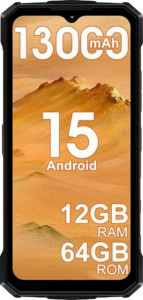
Cellular connectivity is where the Moto G57 Power pulls ahead most decisively. It supports 5G with download speeds up to 2900 Mbits/s and upload speeds of 1500 Mbits/s, versus the Fire 5's 4G-only ceiling of 300/150 Mbits/s. For users in 5G-covered areas, this is not just a theoretical gain — streaming, downloading large files, and cloud-dependent tasks will be dramatically faster on the G57 Power. The G57 Power also supports an eSIM alongside its physical SIM slot, offering flexibility for international travel or carrier switching without needing a physical card. The Fire 5 counters with dual physical SIM slots, which suits users who prefer two traditional SIM cards simultaneously.
Each phone claims a meaningful exclusive on the storage and sensor front. The Fire 5 includes an external memory slot, allowing users to expand storage cheaply — a notable advantage given its limited 64 GB internal storage. The G57 Power, lacking this, offsets it with a gyroscope and compass that the Fire 5 omits entirely. A gyroscope enables more accurate motion-based features including augmented reality apps and gaming tilt controls, while a compass is essential for reliable navigation and map orientation. The Fire 5 does edge out the G57 Power on Bluetooth version 5.4 versus 5.1, though both share the same Wi-Fi standards, NFC, USB-C, GPS, and Galileo support.
Overall, the Moto G57 Power holds the stronger hand in this category. Its 5G capability and dramatically higher data speeds represent a future-facing advantage that affects daily use in meaningful ways, and its sensor complement is more complete. The Fire 5's expandable storage and slightly newer Bluetooth are real wins, but they do not tip the balance.