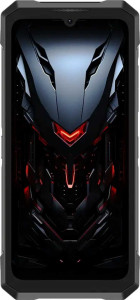
Doogee Fire 6 Max
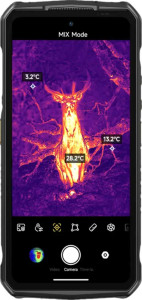
Ulefone Armor 29 Pro Thermal

Doogee Fire 6 Max Ulefone Armor 29 Pro Thermal

Overview

Welcome to our in-depth comparison of the Doogee Fire 6 Max and the Ulefone Armor 29 Pro Thermal, two rugged Android smartphones built to handle demanding conditions. Both share IP68 waterproofing and a 120Hz display, but they take very different paths when it comes to display technology, camera capabilities, and charging speed. Read on as we break down every key specification to help you find the right tough smartphone for your needs.

Common Features

  • Both phones are waterproof with an IP68 ingress protection rating.
  • Both phones feature a rugged build.
  • Neither phone can be folded.
  • Both displays share a resolution of 1080 x 2400 px.
  • Both displays offer a 120Hz refresh rate.
  • Both phones feature damage-resistant glass on their displays.
  • HDR10 support is not available on either phone.
  • HDR10+ support is not available on either phone.
  • Dolby Vision support is not available on either phone.
  • Both phones have a touchscreen display.
  • Both phones have integrated LTE.
  • Both phones support 64-bit processing.
  • Both phones use DirectX 12.
  • Both phones use big.LITTLE technology with HMP and 8 CPU threads.
  • Both phones support a maximum of 16GB of RAM.
  • Both phones have a multi-lens main camera.
  • Optical image stabilization is not available on either phone.
  • Both phones support continuous autofocus and phase-detection autofocus.
  • Both phones support slow-motion video recording and have a built-in HDR mode.
  • Both phones have clipboard warnings and location privacy options.
  • Both phones offer camera and microphone privacy options and theme customization.
  • Both phones can block app tracking.
  • Cross-site tracking blocking is not available on either phone.
  • Both phones feature on-device machine learning.
  • Wireless charging is not available on either phone.
  • Both phones support fast charging.
  • Neither phone has a removable battery.
  • Both phones have a rechargeable battery with a battery level indicator.
  • aptX, LDAC, aptX HD, aptX Adaptive, and aptX Lossless are not available on either phone.
  • Both phones have an FM radio.
  • Both phones support 5G, dual SIM, external memory, USB Type-C (USB 2.0), and NFC.
  • Both phones have a fingerprint scanner.
  • Emergency SOS via satellite is not available on either phone.
  • Both phones have a video light.
  • Neither phone has a sapphire glass display, curved display, or e-paper display.

Main Differences

  • Thickness is 25.5 mm on Doogee Fire 6 Max and 33.8 mm on Ulefone Armor 29 Pro Thermal.
  • Width is 82.5 mm on Doogee Fire 6 Max and 85.6 mm on Ulefone Armor 29 Pro Thermal.
  • Height is 179.5 mm on Doogee Fire 6 Max and 177.4 mm on Ulefone Armor 29 Pro Thermal.
  • Volume is 377.623125 cm³ on Doogee Fire 6 Max and 513.267872 cm³ on Ulefone Armor 29 Pro Thermal.
  • The display type is LCD IPS on Doogee Fire 6 Max and OLED/AMOLED on Ulefone Armor 29 Pro Thermal.
  • Screen size is 6.72″ on Doogee Fire 6 Max and 6.67″ on Ulefone Armor 29 Pro Thermal.
  • Pixel density is 392 ppi on Doogee Fire 6 Max and 395 ppi on Ulefone Armor 29 Pro Thermal.
  • A secondary screen is present on Ulefone Armor 29 Pro Thermal but not available on Doogee Fire 6 Max.
  • Internal storage is 256GB on Doogee Fire 6 Max and 512GB on Ulefone Armor 29 Pro Thermal.
  • RAM is 8GB on Doogee Fire 6 Max and 16GB on Ulefone Armor 29 Pro Thermal.
  • The chipset is MediaTek Dimensity 7050 on Doogee Fire 6 Max and MediaTek Dimensity 7400 on Ulefone Armor 29 Pro Thermal.
  • The GPU is Mali G68 MP4 on Doogee Fire 6 Max and Mali G615 MC2 on Ulefone Armor 29 Pro Thermal.
  • CPU speed is 2 x 2.6 & 6 x 2 GHz on Doogee Fire 6 Max and 4 x 2.6 & 4 x 2 GHz on Ulefone Armor 29 Pro Thermal.
  • GPU clock speed is 950 MHz on Doogee Fire 6 Max and 1047 MHz on Ulefone Armor 29 Pro Thermal.
  • RAM speed is 3200 MHz on Doogee Fire 6 Max and 6400 MHz on Ulefone Armor 29 Pro Thermal.
  • Semiconductor size is 6 nm on Doogee Fire 6 Max and 4 nm on Ulefone Armor 29 Pro Thermal.
  • Main camera resolution is 50 & 20 & 8 MP on Doogee Fire 6 Max and 64 & 50 & 50 MP on Ulefone Armor 29 Pro Thermal.
  • Front camera resolution is 16MP on Doogee Fire 6 Max and 50MP on Ulefone Armor 29 Pro Thermal.
  • Main camera video recording is 1080p at 30 fps on Doogee Fire 6 Max and 2160p at 30 fps on Ulefone Armor 29 Pro Thermal.
  • Dual-tone LED flash is present on Ulefone Armor 29 Pro Thermal but not available on Doogee Fire 6 Max.
  • Number of flash LEDs is 2 on Doogee Fire 6 Max and 4 on Ulefone Armor 29 Pro Thermal.
  • Android version is Android 14 on Doogee Fire 6 Max and Android 15 on Ulefone Armor 29 Pro Thermal.
  • App offloading is supported on Ulefone Armor 29 Pro Thermal but not available on Doogee Fire 6 Max.
  • Battery capacity is 20800 mAh on Doogee Fire 6 Max and 21200 mAh on Ulefone Armor 29 Pro Thermal.
  • Charging speed is 33W on Doogee Fire 6 Max and 120W on Ulefone Armor 29 Pro Thermal.
  • A 3.5mm audio jack is present on Ulefone Armor 29 Pro Thermal but not available on Doogee Fire 6 Max.
  • Stereo speakers are present on Doogee Fire 6 Max but not available on Ulefone Armor 29 Pro Thermal.
  • Wi-Fi versions supported are Wi-Fi 4, 5, and 6 on Doogee Fire 6 Max, and Wi-Fi 4, 5, 6, and 6E on Ulefone Armor 29 Pro Thermal.
  • Bluetooth version is 5.2 on Doogee Fire 6 Max and 5.4 on Ulefone Armor 29 Pro Thermal.
  • An infrared sensor is present on Ulefone Armor 29 Pro Thermal but not available on Doogee Fire 6 Max.
  • A barometer is present on Ulefone Armor 29 Pro Thermal but not available on Doogee Fire 6 Max.
Specs Comparison
Doogee Fire 6 Max

Doogee Fire 6 Max

Ulefone Armor 29 Pro Thermal

Ulefone Armor 29 Pro Thermal

Design:
water resistance Waterproof Waterproof
thickness 25.5 mm 33.8 mm
width 82.5 mm 85.6 mm
height 179.5 mm 177.4 mm
volume 377.623125 cm³ 513.267872 cm³
Ingress Protection (IP) rating IP68 IP68
has a rugged build
can be folded

Both the Doogee Fire 6 Max and the Ulefone Armor 29 Pro Thermal share the same core protection credentials: full IP68 waterproofing and a rugged build, meaning neither will struggle with rain, dust, or job-site abuse. At that baseline, users of either device can expect genuine outdoor durability without compromise.

Where they diverge meaningfully is in physical bulk. The Armor 29 Pro is dramatically thicker at 33.8 mm versus the Fire 6 Max's 25.5 mm — a difference of over 8 mm that is very noticeable in-hand and in a pocket. That extra girth compounds into a total volume of 513.3 cm³ for the Armor 29 Pro, compared to 377.6 cm³ for the Fire 6 Max — roughly a 36% larger footprint. In practice, this makes the Armor 29 Pro significantly harder to one-hand, pocket, or carry comfortably over long shifts. The width difference (85.6 mm vs 82.5 mm) is secondary, but adds to the overall sense of mass.

On design alone, the Doogee Fire 6 Max holds a clear edge for users who want rugged protection without extreme bulk. The Ulefone Armor 29 Pro's larger frame is likely driven by additional internal hardware (which falls outside this spec group), so buyers should weigh whether those extras justify carrying a device that is noticeably larger and harder to manage day-to-day.

Display:
Display type LCD, IPS OLED/AMOLED
screen size 6.72" 6.67"
pixel density 392 ppi 395 ppi
resolution 1080 x 2400 px 1080 x 2400 px
refresh rate 120Hz 120Hz
has branded damage-resistant glass
supports HDR10
supports HDR10+
supports Dolby Vision
Has a secondary screen
has a touch screen

The most significant display difference here is panel technology. The Ulefone Armor 29 Pro uses an OLED/AMOLED panel, which delivers true blacks, higher contrast, and more vibrant colors compared to the LCD IPS panel on the Doogee Fire 6 Max. For a rugged device used outdoors, OLED also tends to offer better visibility in bright sunlight at comparable brightness levels — a practical daily advantage.

On the metrics that are often touted as key selling points, these two are essentially matched. Screen sizes are nearly identical (6.72″ vs 6.67″), pixel density is a wash at 392 ppi vs 395 ppi, resolution is the same 1080 x 2400 px, and both run a smooth 120Hz refresh rate with branded damage-resistant glass. Neither supports HDR10 or Dolby Vision, so the OLED advantage on the Armor 29 Pro is about panel quality rather than HDR certification.

A further differentiator is the Armor 29 Pro's secondary screen — a feature absent on the Fire 6 Max. Depending on implementation, a secondary display can show notifications, act as a viewfinder for selfies, or surface quick controls without waking the main panel, adding genuine utility for field use. Taken together, the Ulefone Armor 29 Pro holds a clear display edge, with superior panel technology and the added flexibility of a second screen.

Performance:
internal storage 256GB 512GB
RAM 8GB 16GB
Chipset (SoC) name MediaTek Dimensity 7050 MediaTek Dimensity 7400
GPU name Mali G68 MP4 Mali G615 MC2
CPU speed 2 x 2.6 & 6 x 2 GHz 4 x 2.6 & 4 x 2 GHz
GPU clock speed 950 MHz 1047 MHz
Has integrated LTE
RAM speed 3200 MHz 6400 MHz
semiconductor size 6 nm 4 nm
Supports 64-bit
DirectX version DirectX 12 DirectX 12
Has integrated graphics
Uses big.LITTLE technology
CPU threads 8 threads 8 threads
Uses HMP
maximum memory amount 16GB 16GB
DDR memory version 5 5

The chipset gap is the foundation of this comparison. The Ulefone Armor 29 Pro runs on the Dimensity 7400 built on a 4 nm process, while the Doogee Fire 6 Max uses the Dimensity 7050 on a 6 nm node. A smaller semiconductor process means the Armor 29 Pro's chip is more power-efficient and generates less heat under load — meaningful for a rugged device that may run demanding applications in the field for extended periods. The CPU configuration also shifts: the Fire 6 Max deploys 2 high-performance cores at 2.6 GHz backed by 6 efficiency cores, whereas the Armor 29 Pro doubles the high-performance core count to 4 at the same 2.6 GHz clock, giving it more sustained throughput for parallel workloads.

The memory story is just as lopsided. The Armor 29 Pro ships with 16 GB of RAM running at 6400 MHz, versus 8 GB at 3200 MHz on the Fire 6 Max — twice the capacity and twice the bandwidth. In practice, this translates to smoother multitasking, faster data throughput between the CPU and memory, and more headroom for background processes. Storage follows the same pattern: 512 GB vs 256 GB, which matters for users storing large media files, thermal imaging data, or field recordings.

Across every meaningful performance dimension in this group — process node, core configuration, RAM capacity, RAM speed, and storage — the Ulefone Armor 29 Pro holds a clear and consistent advantage. The Fire 6 Max is not underpowered for everyday tasks, but users who need sustained performance or work with data-heavy applications will find the Armor 29 Pro noticeably more capable.

Cameras:
megapixels (main camera) 50 & 20 & 8 MP 64 & 50 & 50 MP
wide aperture (main camera) 1.8 & 1.8 & 2.2f 1.8 & 2 & 2.2f
Has a dual-lens (or multi-lens) main camera
megapixels (front camera) 16MP 50MP
has built-in optical image stabilization
video recording (main camera) 1080 x 30 fps 2160 x 30 fps
Has a dual-tone LED flash
number of flash LEDs 2 4
has a BSI sensor
has a CMOS sensor
has continuous autofocus when recording movies
Has phase-detection autofocus for photos
supports slow-motion video recording
has a built-in HDR mode
has manual exposure
has a flash
optical zoom 0x 0x
has manual ISO
has a serial shot mode
has manual focus
has a front camera
Has laser autofocus
Shoots 360° panorama
has manual white balance
shoots raw
has touch autofocus
has manual shutter speed
can create panoramas in-camera
wide aperture (front camera) 2.25f 2.5f
Has a front-facing LED flash
has a dual-lens (or multi-lens) front camera
supports HDR10 recording
supports Dolby Vision recording
has a front-facing camera under the display
Has a RGB LED flash
has 3D photo/video recording capabilities

Resolution tells a clear story here. The Ulefone Armor 29 Pro fields a triple rear camera system with sensors at 64, 50, and 50 MP, while the Doogee Fire 6 Max counters with 50, 20, and 8 MP. The gap widens further on the front: the Armor 29 Pro's 50 MP selfie camera dwarfs the Fire 6 Max's 16 MP unit. Higher megapixel counts, particularly on the secondary and tertiary lenses, give the Armor 29 Pro substantially more detail to work with across different shooting scenarios.

Video capability is another area where the two devices diverge sharply. The Armor 29 Pro tops out at 4K (2160p) at 30 fps, while the Fire 6 Max is capped at 1080p at 30 fps — a meaningful limitation for users who need to document sites, capture evidence, or record field conditions in high resolution. The Armor 29 Pro also carries 4 flash LEDs with dual-tone support versus 2 single-tone LEDs on the Fire 6 Max, which improves lighting accuracy and low-light flash performance in practical use.

The feature set available to both devices is largely identical — phase-detection autofocus, continuous autofocus in video, slow-motion, HDR mode, and manual controls for ISO, focus, exposure, and white balance are all present on each. That parity means the Armor 29 Pro's advantage is not about versatility but raw capability: higher resolution across all cameras, 4K video, and better flash hardware give it a clear and decisive edge in the camera department.
Operating system:
Android version Android 14 Android 15
has clipboard warnings
has location privacy options
has camera/microphone privacy options
has Mail Privacy Protection
has theme customization
can block app tracking
blocks cross-site tracking
has on-device machine learning
has notification permissions
has media picker
Can play games while they download
has dark mode
has Wi-Fi password sharing
has battery health check
has an extra dim mode
has focus modes
has dynamic theming
can offload apps
Has customizable notifications
has Live Text
has full-page screenshots
supports split screen
gets direct OS updates
has PiP
Can be used as a PC
Has sharing intents
has a child lock
Supports widgets
Is free and open source
Has offline voice recognition
has voice commands
Tracks the current position of a mobile device
is a multi-user system
has Quick Start

This is one of the closest spec groups in the entire comparison. The feature list for both devices is nearly identical across privacy controls, productivity tools, and system capabilities — split screen, Picture-in-Picture, dynamic theming, on-device machine learning, offline voice recognition, and a full suite of notification and app-tracking controls are present on both. For the vast majority of day-to-day software interactions, users of either device will have the same experience.

Two differences are worth noting. The Ulefone Armor 29 Pro ships with Android 15 versus Android 14 on the Doogee Fire 6 Max — a newer base that brings incremental security patches, privacy refinements, and system-level improvements. The Armor 29 Pro also supports app offloading, a feature absent on the Fire 6 Max. Offloading lets the system automatically free up storage by removing unused apps while preserving their data, which can be a quiet but useful tool for managing the kinds of large files that accumulate on a field device over time.

Neither advantage is dramatic, but taken together they give the Ulefone Armor 29 Pro a slim edge in this category — a more current OS and one additional storage management tool. Users who prioritize software longevity or work in storage-constrained scenarios will marginally benefit, while those indifferent to these specifics will find both devices functionally equivalent in day-to-day software use.

Battery:
battery power 20800 mAh 21200 mAh
has wireless charging
Supports fast charging
charging speed 33W 120W
has a removable battery
has a battery level indicator
has a rechargeable battery

Capacity-wise, these two devices are essentially in the same league. The Ulefone Armor 29 Pro carries a 21,200 mAh battery against the Doogee Fire 6 Max's 20,800 mAh — a 400 mAh difference that is negligible in real-world runtime and will not be perceptible in daily use. For rugged devices likely used on extended shifts away from power sources, both offer unusually large reserves that put them well above the typical smartphone.

Where the comparison is anything but close is charging speed. The Armor 29 Pro supports 120W fast charging, versus 33W on the Fire 6 Max. At 120W, a nearly depleted battery of this size can be brought to a usable level in a fraction of the time it would take at 33W. For a user who needs to top up quickly between jobs or during a short break, this is a genuinely significant practical difference — not just a spec sheet number.

Neither device supports wireless charging and both have non-removable batteries, so those factors cancel out. On balance, the Ulefone Armor 29 Pro holds a clear advantage in this category — not because of capacity, where the two are virtually tied, but because its 120W charging fundamentally changes how quickly the device can be returned to full readiness, which matters considerably in demanding field conditions.

Audio:
has a socket for a 3.5 mm audio jack
has stereo speakers
has aptX
has LDAC
has aptX HD
has aptX Adaptive
has aptX Lossless
Has a radio

Audio is a direct trade-off between two different priorities. The Doogee Fire 6 Max offers stereo speakers but no headphone jack, while the Ulefone Armor 29 Pro takes the opposite approach — a 3.5 mm audio jack but only a mono speaker setup. Neither device supports high-resolution Bluetooth codecs like aptX or LDAC, and both include an FM radio, so those features are a wash.

For hands-free or shared listening — on a worksite, in a vehicle, or during media playback — stereo speakers on the Fire 6 Max provide noticeably wider, more spatially separated sound than a single mono driver. Conversely, the Armor 29 Pro's headphone jack is a practical asset for users who rely on wired earphones or hearing protection with audio pass-through, particularly in loud environments where wireless connections can be unreliable or cumbersome.

There is no universal winner here — the right choice depends entirely on use case. Users who primarily listen through speakers will prefer the Doogee Fire 6 Max, while those who depend on wired headphones will find the Ulefone Armor 29 Pro the more accommodating device. For a rugged phone audience that often works in noisy conditions, the headphone jack arguably addresses a more specific professional need, but stereo output holds its own appeal for general media consumption.

Connectivity & Features:
release date March 2025 August 2025
has 5G support
Wi-Fi version Wi-Fi 4 (802.11n), Wi-Fi 5 (802.11ac), Wi-Fi 6 (802.11ax) Wi-Fi 4 (802.11n), Wi-Fi 6E (802.11ax), Wi-Fi 6 (802.11ax), Wi-Fi 5 (802.11ac)
SIM cards 2 SIM 2 SIM
Bluetooth version 5.2 5.4
has an external memory slot
Has USB Type-C
USB version 2 2
has NFC
Has a fingerprint scanner
has emergency SOS via satellite
has crash detection
is DLNA-certified
has a gyroscope
supports ANT+
Has a heart rate monitor
has GPS
has a compass
supports Wi-Fi
Has an infrared sensor
has an accelerometer
has a cellular module
Has a barometer
has an HDMI output
Uses 3D facial recognition
Has an iris scanner
Stylus included
supports Galileo
Has motion tracking
Has optical tracking
Has a built-in projector

The shared foundation here is solid for both devices: 5G, dual SIM, NFC, USB Type-C, expandable storage, GPS with Galileo support, and a fingerprint scanner are all present on each. For most connectivity needs — mobile data, contactless payments, navigation — users of either phone are equally equipped. Bluetooth tells a small but real story: the Armor 29 Pro runs Bluetooth 5.4 versus 5.2 on the Fire 6 Max, a newer revision that brings improved connection efficiency and more robust handling of multiple simultaneous device connections.

Wi-Fi is another area of quiet divergence. The Ulefone Armor 29 Pro adds Wi-Fi 6E support on top of the standard Wi-Fi 6 and Wi-Fi 5 that both devices share. Wi-Fi 6E unlocks the 6 GHz band, which offers less congestion and higher throughput in dense environments — useful in offices, warehouses, or any setting with many competing wireless devices. The Fire 6 Max tops out at Wi-Fi 6, which is still capable, but misses that additional headroom.

Where the Armor 29 Pro further separates itself is in onboard sensors. It adds a barometer and an infrared sensor — neither of which is present on the Fire 6 Max. A barometer enables altitude tracking and more accurate weather-related readings, while an IR sensor allows the device to function as a remote control and supports certain environmental sensing use cases. These are niche but genuinely useful additions for a rugged field device. Across Bluetooth, Wi-Fi, and sensor depth, the Ulefone Armor 29 Pro holds a consistent and meaningful connectivity advantage.

Miscellaneous:
has a video light
Has sapphire glass display
Has a curved display
Has an e-paper display

The Miscellaneous spec group for these two devices is a complete dead heat. Both the Doogee Fire 6 Max and the Ulefone Armor 29 Pro share identical values across every data point provided: both have a video light, neither features sapphire glass, a curved display, or an e-paper display. There is no differentiator to analyze here.

This is a clear tie — the provided specs give no basis for declaring an advantage on either side. Users making a decision between these two devices should weight this category as a neutral factor and focus on the meaningful differences surfaced in other spec groups.

Comparison Summary & Verdict

After examining all the evidence, these two rugged phones serve distinctly different users. The Doogee Fire 6 Max is the more compact and lighter option, offering stereo speakers and a solid everyday rugged experience at a likely lower cost, making it ideal for users who want a manageable, well-rounded tough phone. The Ulefone Armor 29 Pro Thermal, however, is the clear choice for power users: it brings a superior OLED display with a secondary screen, a dramatically faster 120W charging speed, a more advanced 64MP triple camera system with 4K video, a newer 4nm chipset with 16GB RAM, Android 15, and extra sensors like an infrared sensor and barometer. If raw performance, imaging, and versatility matter most, the Ulefone is the stronger performer.

Doogee Fire 6 Max
Buy Doogee Fire 6 Max if...

Buy the Doogee Fire 6 Max if you prefer a slimmer, more compact rugged phone with stereo speakers and you do not need the most advanced camera system or ultra-fast charging.

Ulefone Armor 29 Pro Thermal
Buy Ulefone Armor 29 Pro Thermal if...

Buy the Ulefone Armor 29 Pro Thermal if you want a more powerful chipset, a larger RAM capacity, an OLED display, 4K video recording, and blazing-fast 120W charging in a feature-packed rugged device.