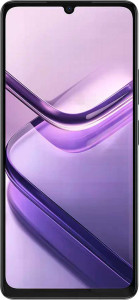
Doogee Note 58 Pro
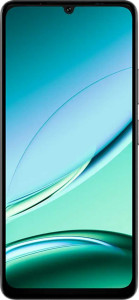
Doogee Note 59 Pro

Doogee Note 58 Pro Doogee Note 59 Pro

Overview

Welcome to our detailed spec comparison between the Doogee Note 58 Pro and the Doogee Note 59 Pro. While these two budget-friendly smartphones share a surprising amount of common ground — including their display, battery, and software — they diverge in some meaningful ways. Key battlegrounds include chipset performance, camera capabilities, and connectivity options like 5G support, making the choice between them less straightforward than it might first appear.

Common Features

  • Both phones have no water resistance rating.
  • Both phones are 8.6 mm thick.
  • Both phones are 77.5 mm wide and 168 mm tall.
  • Neither phone has a rugged build.
  • Both phones feature an LCD IPS display with a 6.75″ screen size.
  • Both phones have a pixel density of 260 ppi and a resolution of 720 x 1600 px.
  • Neither phone has branded damage-resistant glass.
  • Both phones come with 256 GB of internal storage and 8 GB of RAM.
  • Both phones use a GPU with an 850 MHz clock speed.
  • Both phones support 64-bit processing and use big.LITTLE technology.
  • Both phones use DDR4 memory.
  • Both phones have an 8 MP front camera.
  • Neither phone has built-in optical image stabilization.
  • Both phones support 1080p video recording at 30 fps on the main camera.
  • Both phones run Android 15.
  • Both phones have a 6250 mAh battery with fast charging support.
  • Neither phone supports wireless charging.
  • Both phones have a 3.5 mm audio jack.
  • Both phones support Wi-Fi 4 and Wi-Fi 5, Bluetooth 5, NFC, and have a fingerprint scanner.
  • Both phones have two SIM card slots, an external memory slot, and USB Type-C with USB 2.0.

Main Differences

  • The Doogee Note 58 Pro weighs 186 g while the Doogee Note 59 Pro weighs 199 g.
  • The Doogee Note 58 Pro uses the Unisoc T615 chipset while the Doogee Note 59 Pro uses the Unisoc T8200.
  • The Doogee Note 58 Pro has a Mali G57 GPU while the Doogee Note 59 Pro has a Mali G57 MC2 GPU.
  • CPU speed is 2 x 1.8 & 6 x 1.6 GHz on the Doogee Note 58 Pro and 2 x 2.3 & 6 x 2.1 GHz on the Doogee Note 59 Pro.
  • RAM speed is 1866 MHz on the Doogee Note 58 Pro and 2133 MHz on the Doogee Note 59 Pro.
  • The semiconductor size is 12 nm on the Doogee Note 58 Pro and 6 nm on the Doogee Note 59 Pro.
  • Maximum memory amount is 12 GB on the Doogee Note 58 Pro and 10 GB on the Doogee Note 59 Pro.
  • The main camera resolution is 28 MP on the Doogee Note 58 Pro and 50 MP on the Doogee Note 59 Pro.
  • The main camera aperture is f/2.2 on the Doogee Note 58 Pro and f/1.8 on the Doogee Note 59 Pro.
  • The Doogee Note 58 Pro has a dual-lens main camera while the Doogee Note 59 Pro has a single-lens main camera.
  • Laser autofocus is present on the Doogee Note 58 Pro but not available on the Doogee Note 59 Pro.
  • FM radio is present on the Doogee Note 58 Pro but not available on the Doogee Note 59 Pro.
  • 5G support is available on the Doogee Note 59 Pro but not present on the Doogee Note 58 Pro.
Specs Comparison
Doogee Note 58 Pro

Doogee Note 58 Pro

Doogee Note 59 Pro

Doogee Note 59 Pro

Design:
water resistance None None
weight 186 g 199 g
thickness 8.6 mm 8.6 mm
width 77.5 mm 77.5 mm
height 168 mm 168 mm
volume 111.972 cm³ 111.972 cm³
has a rugged build
can be folded

In terms of physical design, the Doogee Note 58 Pro and Doogee Note 59 Pro are virtually identical twins. Both share the exact same dimensions — 168 mm tall, 77.5 mm wide, and 8.6 mm thick — resulting in the same volume of 111.972 cm³. In practice, this means users would experience the same one-handed grip, the same pocket fit, and the same overall form factor with either device.

The only measurable difference in this category is weight: the Note 58 Pro comes in at 186 g, while the Note 59 Pro is noticeably heavier at 199 g — a difference of 13 grams. While that gap may sound small on paper, it is perceptible during extended use such as long calls, gaming sessions, or prolonged reading, where the lighter device tends to cause less hand fatigue over time.

Neither phone offers water resistance, a rugged build, or a foldable form factor, so both are standard candy-bar smartphones with no durability premium. Given that all specs in this group are identical except for weight, the Note 58 Pro holds a clear edge in Design purely by being the lighter option, making it the more comfortable device to carry and use daily.

Display:
Display type LCD, IPS LCD, IPS
screen size 6.75" 6.75"
pixel density 260 ppi 260 ppi
resolution 720 x 1600 px 720 x 1600 px
has branded damage-resistant glass
supports HDR10
supports HDR10+
Always-On Display
supports Dolby Vision
Has a secondary screen
has a touch screen

When it comes to the display, both the Doogee Note 58 Pro and Doogee Note 59 Pro are completely identical — there is not a single differentiating spec between them. Both feature a 6.75″ LCD IPS panel at a 720 x 1600 px resolution, yielding a pixel density of 260 ppi. That density sits in the acceptable range for everyday use at normal viewing distances, though fine text and detailed imagery will not appear as crisp as on a Full HD or higher-resolution display.

The choice of LCD IPS technology means colors will be reasonably accurate and viewing angles decent, but users should not expect the deep blacks or vivid contrast that OLED panels deliver. Neither phone supports HDR10, HDR10+, or Dolby Vision, so streaming HDR content from platforms like Netflix will not be rendered with expanded color or contrast. There is also no Always-On Display functionality, which is a minor convenience trade-off for users who like glanceable notifications.

Since every display specification is a perfect match across both devices, this category is an absolute tie. A buyer's display experience will be indistinguishable between the two phones, meaning this spec group offers no basis for choosing one over the other.

Performance:
internal storage 256GB 256GB
RAM 8GB 8GB
Chipset (SoC) name Unisoc T615 Unisoc T8200
GPU name Mali G57 Mali G57 MC2
CPU speed 2 x 1.8 & 6 x 1.6 GHz 2 x 2.3 & 6 x 2.1 GHz
GPU clock speed 850 MHz 850 MHz
Has integrated LTE
RAM speed 1866 MHz 2133 MHz
semiconductor size 12 nm 6 nm
Supports 64-bit
Has integrated graphics
Uses big.LITTLE technology
maximum memory amount 12GB 10GB
DDR memory version 4 4

Performance is where these two phones begin to diverge meaningfully. The Note 58 Pro runs on the Unisoc T615, built on a 12 nm process, while the Note 59 Pro steps up to the Unisoc T8200, manufactured on a more modern 6 nm node. That halving of the semiconductor size is significant: smaller nodes generally translate to better power efficiency and improved thermal management, meaning the Note 59 Pro can sustain workloads longer without throttling and with less battery drain under load.

The CPU clock speed gap reinforces this advantage. The Note 58 Pro's cores run at 1.8 / 1.6 GHz, whereas the Note 59 Pro's cores clock in at a faster 2.3 / 2.1 GHz — a roughly 25–30% uplift across both the performance and efficiency clusters. Combined with faster RAM at 2133 MHz versus 1866 MHz on the Note 58 Pro, the Note 59 Pro should feel noticeably more responsive when multitasking or launching apps. Both phones match on base RAM (8 GB) and storage (256 GB), and both support RAM expansion — though interestingly, the Note 58 Pro allows expansion up to 12 GB compared to the Note 59 Pro's cap of 10 GB.

Overall, the Note 59 Pro holds a clear performance edge: its newer chipset architecture, higher CPU clocks, and faster memory make it the stronger performer in this category. The Note 58 Pro's slightly higher maximum RAM ceiling is a minor footnote that does not offset the broader silicon advantage of its sibling.

Cameras:
megapixels (main camera) 28 MP 50 MP
wide aperture (main camera) 2.2f 1.8f
Has a dual-lens (or multi-lens) main camera
megapixels (front camera) 8MP 8MP
has built-in optical image stabilization
video recording (main camera) 1080 x 30 fps 1080 x 30 fps
Has a dual-tone LED flash
number of flash LEDs 1 1
has a BSI sensor
has a CMOS sensor
has continuous autofocus when recording movies
Has phase-detection autofocus for photos
supports slow-motion video recording
has a built-in HDR mode
has manual exposure
has a flash
has manual ISO
has a serial shot mode
has manual focus
has a front camera
Has laser autofocus
Shoots 360° panorama
has manual white balance
shoots raw
has touch autofocus
has manual shutter speed
can create panoramas in-camera
wide aperture (front camera) 2.2f 2.2f
Has a front-facing LED flash
has a dual-lens (or multi-lens) front camera
supports HDR10 recording
supports Dolby Vision recording
has a front-facing camera under the display
Has a RGB LED flash
has 3D photo/video recording capabilities

The main camera is where the sharpest trade-offs between these two phones emerge. The Note 59 Pro shoots at 50 MP with a wider f/1.8 aperture, while the Note 58 Pro offers 28 MP at f/2.2. Both differences carry real-world weight: more megapixels allow for greater detail retention and more flexibility when cropping shots, while the wider aperture on the Note 59 Pro admits significantly more light — an advantage that directly translates to brighter, less noisy photos in dim environments.

The Note 58 Pro counters with two notable hardware features the Note 59 Pro lacks: a dual-lens rear camera and laser autofocus. A second lens typically adds a depth or wide-angle perspective, offering compositional versatility. Laser autofocus, meanwhile, can lock onto subjects faster and more reliably in low-contrast scenes compared to purely contrast-based systems. These are genuine functional advantages, not just spec-sheet entries. Both phones are otherwise evenly matched on video capabilities — capped at 1080p at 30 fps with no OIS — and share the same 8 MP front camera and identical manual control feature sets.

On balance, the Note 59 Pro holds the stronger camera profile for most users: its higher resolution and meaningfully wider aperture are likely to produce better everyday and low-light stills. The Note 58 Pro's dual-lens and laser autofocus are worthwhile perks, but they do not fully offset the light-gathering and resolution gap at the heart of the comparison.

Operating system:
Android version Android 15 Android 15
has clipboard warnings
has location privacy options
has camera/microphone privacy options
has Mail Privacy Protection
has theme customization
can block app tracking
blocks cross-site tracking
has on-device machine learning
has notification permissions
has media picker
Can play games while they download
has dark mode
has Wi-Fi password sharing
has battery health check
has an extra dim mode
has focus modes
has dynamic theming
can offload apps
Has customizable notifications
has Live Text
has full-page screenshots
supports split screen
gets direct OS updates
has PiP
Can be used as a PC
Has sharing intents
has a child lock
Supports widgets
Is free and open source
Has offline voice recognition
has voice commands
Tracks the current position of a mobile device
is a multi-user system
has Quick Start

Both the Doogee Note 58 Pro and Doogee Note 59 Pro ship with Android 15, placing them on equal footing with the latest publicly available Android release. This brings a modern privacy framework to both devices — including camera and microphone access controls, location privacy options, app tracking blocks, and clipboard warnings — giving users a solid degree of transparency over how their data is used by installed applications.

The software feature set is extensive and identical across both phones. Everyday usability perks like split-screen multitasking, Picture-in-Picture, dynamic theming, dark mode, and customizable notifications are all present. On-device machine learning and offline voice recognition round out a capable feature list that covers the needs of most Android users without requiring a cloud connection for basic assistant tasks. Neither device supports direct OS updates, meaning future Android version upgrades will depend on Doogee's own update schedule rather than arriving straight from Google.

Since every single software specification is a mirror image between the two devices, this category is a complete tie. No advantage can be attributed to either phone based on the provided data, and a buyer's software experience will be indistinguishable regardless of which model they choose.

Battery:
battery power 6250 mAh 6250 mAh
has wireless charging
Supports fast charging
has a removable battery
has a battery level indicator
has a rechargeable battery

Battery capacity is a straightforward story here: both the Doogee Note 58 Pro and Doogee Note 59 Pro pack an identical 6250 mAh cell. That is a generously sized battery by mainstream smartphone standards, comfortably above the 5000 mAh typical of most mid-range devices, and suggests both phones are well-positioned for heavy daily use — potentially stretching into two-day territory for moderate users.

Both devices support fast charging, which helps offset the time cost of refilling such a large cell, and neither offers wireless charging — a common omission at this price tier. The battery is non-removable on both, which is standard practice across nearly all modern smartphones. There are no further distinctions in charging or power management specs between the two.

With every battery specification being identical, this category is an unambiguous tie. Prospective buyers will get exactly the same endurance and charging experience from either device, so battery life should play no role in deciding between them.

Audio:
has a socket for a 3.5 mm audio jack
has stereo speakers
has aptX
has LDAC
has aptX HD
has aptX Adaptive
has aptX Lossless
Has a radio

Audio hardware is largely a shared story between these two phones, with one notable exception. Both the Doogee Note 58 Pro and Doogee Note 59 Pro retain a 3.5 mm headphone jack — a practical inclusion that is increasingly rare, allowing users to connect wired headphones without an adapter. Neither device offers stereo speakers, meaning audio output is limited to a single mono speaker, which is a tangible limitation for media consumption like video or music playback without headphones.

Neither phone supports high-resolution Bluetooth audio codecs such as aptX, LDAC, or their variants, so wireless listeners using compatible headphones will not benefit from enhanced audio quality beyond standard Bluetooth transmission. This is a common trade-off at this segment and unlikely to matter to casual listeners, but audiophiles relying on wireless hi-res audio should take note.

The sole differentiator is the built-in FM radio, which is present on the Note 58 Pro but absent on the Note 59 Pro. For users who rely on terrestrial radio — whether for news, local broadcasts, or use in areas with limited data connectivity — this is a genuine functional advantage. It gives the Note 58 Pro a narrow edge in this category, modest in scope but meaningful for the specific audience that values it.

Connectivity & Features:
release date January 2025 March 2025
has 5G support
Wi-Fi version Wi-Fi 4 (802.11n), Wi-Fi 5 (802.11ac) Wi-Fi 4 (802.11n), Wi-Fi 5 (802.11ac)
SIM cards 2 SIM 2 SIM
Bluetooth version 5 5
has an external memory slot
Has USB Type-C
USB version 2 2
has NFC
Has a fingerprint scanner
has emergency SOS via satellite
has crash detection
is DLNA-certified
has a gyroscope
supports ANT+
Has a heart rate monitor
has GPS
has a compass
supports Wi-Fi
Has an infrared sensor
has an accelerometer
has a cellular module
Has a barometer
has an HDMI output
Uses 3D facial recognition
Has an iris scanner
Stylus included
supports Galileo
Has motion tracking
Has optical tracking
Has a built-in projector

Across the broad landscape of connectivity and features, these two phones are nearly identical — but one difference stands out immediately: the Doogee Note 59 Pro supports 5G, while the Note 58 Pro is limited to 4G. For users in areas with 5G coverage, this means significantly faster mobile data speeds and lower latency — a meaningful advantage for streaming, cloud gaming, or heavy data use on the go. It also provides a degree of future-proofing as 5G networks continue to expand globally.

Everything else in this category is a match. Both phones share Wi-Fi 5 support, Bluetooth 5.0, NFC, a fingerprint scanner, dual SIM capability, an external memory slot, and USB Type-C (USB 2.0). The sensor suite — gyroscope, accelerometer, compass, and GPS with Galileo support — is identical across both devices. NFC is worth highlighting as a shared positive: it enables contactless payments and quick device pairing, which adds genuine everyday convenience at this price point.

The verdict here is clear: the Note 59 Pro has a decisive connectivity edge solely by virtue of its 5G capability. For buyers in 5G-served markets or those planning to keep their phone for several years as 4G networks phase down, this is a consequential differentiator. Users in regions with limited 5G rollout will find both phones functionally equivalent in day-to-day wireless use.

Miscellaneous:
has a video light
Has sapphire glass display
Has a curved display
Has an e-paper display

The Miscellaneous category offers very little to differentiate the Doogee Note 58 Pro and Doogee Note 59 Pro. Both share a video light — essentially a torch that stays on during video recording to illuminate subjects in dark environments — and neither features a curved display, sapphire glass, or an e-paper screen. The absence of sapphire glass means neither phone carries the extreme scratch resistance associated with that material, which is standard at this price tier.

With every spec in this group being identical, this category is a complete tie and provides no grounds for choosing one device over the other.

Comparison Summary & Verdict

Both the Doogee Note 58 Pro and the Doogee Note 59 Pro deliver a solid foundation: a large 6.75″ LCD display, a generous 6250 mAh battery with fast charging, 256 GB of storage, and Android 15. However, their differences point each device toward a distinct type of user. The Doogee Note 59 Pro pulls ahead in raw performance thanks to its 6 nm Unisoc T8200 chipset, faster CPU and RAM speeds, a higher-resolution 50 MP main camera with a wider f/1.8 aperture, and critically, 5G connectivity — making it the stronger choice for users who want a more future-proof device. The Doogee Note 58 Pro, on the other hand, is lighter at 186 g, includes a dual-lens camera with laser autofocus, and retains an FM radio, appealing to users who value versatility and practicality in everyday use.

Doogee Note 58 Pro
Buy Doogee Note 58 Pro if...

Buy the Doogee Note 58 Pro if you prefer a lighter phone with a dual-lens camera, laser autofocus, and FM radio, and do not need 5G connectivity.

Doogee Note 59 Pro
Buy Doogee Note 59 Pro if...

Buy the Doogee Note 59 Pro if you want faster performance from a newer 6 nm chipset, a higher-resolution 50 MP camera with a wider aperture, and future-proof 5G support.