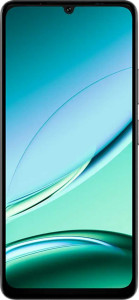
Doogee Note 59 5G
Doogee Note 59 Pro

Doogee Note 59 5G Doogee Note 59 Pro

Overview

Welcome to our in-depth spec comparison between the Doogee Note 59 5G and the Doogee Note 59 Pro. These two siblings share a surprising amount of DNA, from their 6.75″ LCD IPS display and Unisoc T8200 chipset to their 6250 mAh battery and 5G connectivity. Yet the devil is in the details, and key questions around internal storage and camera resolution may be the deciding factors for your next purchase. Read on to see exactly where each phone stands.

Common Features

  • Both phones have no water resistance rating.
  • Both phones weigh 199 g.
  • Both phones are 8.6 mm thick.
  • Both phones are 77.5 mm wide and 168 mm tall.
  • Neither phone has a rugged build.
  • Both phones feature an LCD IPS display with a 6.75″ screen size.
  • Both phones have a pixel density of 260 ppi and a resolution of 720 x 1600 px.
  • Both phones support a 120Hz refresh rate.
  • Neither phone has branded damage-resistant glass.
  • HDR10 support is not available on either phone.
  • Both phones are powered by the Unisoc T8200 chipset with a Mali G57 MC2 GPU.
  • Both phones come with 8GB of RAM running at 2133 MHz.
  • Both phones have a CPU speed of 2 x 2.3 GHz and 6 x 2.1 GHz cores.
  • Both phones are built on a 6 nm semiconductor process.
  • Both phones have integrated LTE support.
  • Both phones have a wide aperture of f/1.8 on the main camera.
  • Neither phone has a dual-lens or multi-lens main camera.
  • Both phones have an 8MP front camera.
  • Neither phone has built-in optical image stabilization.
  • Both phones record video at 1080p 30 fps on the main camera.
  • Neither phone has a dual-tone LED flash; each has a single LED flash.
  • Neither phone has a BSI sensor.
  • Both phones run Android 15.
  • Both phones support clipboard warnings and location privacy options.
  • Both phones support camera and microphone privacy options.
  • Neither phone has Mail Privacy Protection.
  • Both phones support theme customization and can block app tracking.
  • Both phones have a 6250 mAh battery.
  • Neither phone supports wireless charging.
  • Both phones support fast charging and come with a charger included.
  • Neither phone has a removable battery.
  • Both phones have a 3.5 mm audio jack.
  • Neither phone has stereo speakers.
  • Neither phone supports aptX, aptX HD, aptX Adaptive, aptX Lossless, or LDAC.
  • Neither phone has a radio.
  • Both phones support 5G connectivity.
  • Both phones support Wi-Fi 4 (802.11n) and Wi-Fi 5 (802.11ac).
  • Both phones have dual SIM card slots.
  • Both phones have Bluetooth 5.
  • Both phones have an external memory slot.
  • Both phones have USB Type-C with USB 2.0.
  • NFC is available on both phones.
  • Both phones have a video light.
  • Neither phone has a sapphire glass, curved, or e-paper display.

Main Differences

  • Internal storage is 128GB on the Doogee Note 59 5G and 256GB on the Doogee Note 59 Pro.
  • The main camera resolution is 16MP on the Doogee Note 59 5G and 50MP on the Doogee Note 59 Pro.
Specs Comparison
Doogee Note 59 5G

Doogee Note 59 5G

Doogee Note 59 Pro

Doogee Note 59 Pro

Design:
water resistance None None
weight 199 g 199 g
thickness 8.6 mm 8.6 mm
width 77.5 mm 77.5 mm
height 168 mm 168 mm
volume 111.972 cm³ 111.972 cm³
has a rugged build
can be folded

In terms of design, the Doogee Note 59 5G and the Doogee Note 59 Pro are completely identical across every measured dimension. Both share the same 168 × 77.5 × 8.6 mm footprint, the same 199 g weight, and the same 111.972 cm³ volume. In practice, this means users will experience no physical difference whatsoever when holding or pocketing either device.

Neither model offers any form of water resistance, a rugged build, or a foldable form factor. The 8.6 mm thickness is moderate — not exceptionally slim, but not bulky either — and the 199 g weight sits in the mid-range for modern smartphones, which most users will find comfortable for extended use without feeling heavy.

With zero differentiation across all design specs, this category is an absolute tie. If design is a deciding factor in your purchase, it offers no basis for choosing one model over the other — the decision will have to rest entirely on other specification groups.

Display:
Display type LCD, IPS LCD, IPS
screen size 6.75" 6.75"
pixel density 260 ppi 260 ppi
resolution 720 x 1600 px 720 x 1600 px
refresh rate 120Hz 120Hz
has branded damage-resistant glass
supports HDR10
supports HDR10+
Always-On Display
supports Dolby Vision
Has a secondary screen
has a touch screen

Both the Doogee Note 59 5G and the Doogee Note 59 Pro feature an identical 6.75″ LCD IPS panel running at 720 × 1600 px and 260 ppi. That pixel density is on the lower end for a screen this size — text and images will look acceptably sharp at normal viewing distances, but users coming from a Full HD+ display will likely notice a softness, particularly when reading small text or viewing detailed images.

The one genuinely positive shared trait is the 120Hz refresh rate, which is a meaningful real-world upgrade over standard 60Hz panels. Scrolling feels noticeably smoother and UI interactions more responsive — a feature typically associated with mid-range and premium devices. However, neither phone supports HDR10, Dolby Vision, or any branded damage-resistant glass, which keeps the display experience firmly in the budget tier despite the high refresh rate.

As with the design category, this is a complete tie — every display specification is identical across both models. The 120Hz refresh rate is a genuine highlight, but the HD+ resolution and absence of any HDR or glass protection are shared limitations. Display quality cannot serve as a differentiator between these two phones.

Performance:
internal storage 128GB 256GB
RAM 8GB 8GB
Chipset (SoC) name Unisoc T8200 Unisoc T8200
GPU name Mali G57 MC2 Mali G57 MC2
CPU speed 2 x 2.3 & 6 x 2.1 GHz 2 x 2.3 & 6 x 2.1 GHz
GPU clock speed 850 MHz 850 MHz
Has integrated LTE
RAM speed 2133 MHz 2133 MHz
semiconductor size 6 nm 6 nm
Supports 64-bit
Has integrated graphics
Uses big.LITTLE technology
maximum memory amount 10GB 10GB
DDR memory version 4 4

Under the hood, both phones are built around the same Unisoc T8200 chipset — an octa-core design manufactured on a 6 nm process, paired with a Mali G57 MC2 GPU. The 6 nm fabrication node is a solid choice at this price tier, delivering reasonable power efficiency. The big.LITTLE CPU configuration (2 performance cores at 2.3 GHz + 6 efficiency cores at 2.1 GHz) is well-suited for everyday tasks like browsing, streaming, and light multitasking, though it is not positioned for heavy gaming or demanding workloads.

RAM is identical on both models at 8GB (DDR4, 2133 MHz), expandable to a maximum of 10GB via virtual RAM. Where the two phones finally diverge is internal storage: the Note 59 Pro doubles the baseline to 256GB, compared to 128GB on the Note 59 5G. In practical terms, 256GB comfortably accommodates large app libraries, offline media, and years of photos and videos without requiring careful file management — a meaningful quality-of-life advantage for users who tend to fill up their phones.

On raw processing power, this is an unambiguous tie — the silicon, GPU, RAM configuration, and architecture are completely shared. But the Doogee Note 59 Pro earns a clear edge in this category purely on the strength of its doubled storage capacity, which is a tangible, everyday advantage that cannot be offset by software or settings.

Cameras:
megapixels (main camera) 16 MP 50 MP
wide aperture (main camera) 1.8f 1.8f
Has a dual-lens (or multi-lens) main camera
megapixels (front camera) 8MP 8MP
has built-in optical image stabilization
video recording (main camera) 1080 x 30 fps 1080 x 30 fps
Has a dual-tone LED flash
number of flash LEDs 1 1
has a BSI sensor
has a CMOS sensor
has continuous autofocus when recording movies
Has phase-detection autofocus for photos
supports slow-motion video recording
has a built-in HDR mode
has manual exposure
has a flash
optical zoom 0x 0x
has manual ISO
has a serial shot mode
has manual focus
has a front camera
Has laser autofocus
Shoots 360° panorama
has manual white balance
shoots raw
has touch autofocus
has manual shutter speed
can create panoramas in-camera
wide aperture (front camera) 2.2f 2.2f
Has timelapse function
Has a front-facing LED flash
has a dual-lens (or multi-lens) front camera
supports HDR10 recording
supports Dolby Vision recording
has a front-facing camera under the display
Has a RGB LED flash
has 3D photo/video recording capabilities

The camera systems on these two phones are nearly mirror images of each other — same f/1.8 aperture, same single-lens rear setup, same 8MP front camera, and an identical feature set covering phase-detection autofocus, continuous autofocus during video, HDR mode, panorama, timelapse, and a solid range of manual controls. The one exception that sets them apart is the main sensor resolution: the Note 59 5G shoots at 16MP, while the Note 59 Pro steps up to 50MP.

That resolution gap is significant on paper. A 50MP sensor captures considerably more detail, which translates to sharper crops, better results when zooming into a shot in post, and more flexibility when printing or displaying images at larger sizes. However, it is worth noting that both phones are capped at 1080p at 30fps video, have no optical image stabilization, and lack a BSI sensor — meaning low-light performance and video quality remain constrained on both models regardless of the megapixel count.

The Doogee Note 59 Pro takes a clear win in this category on the strength of its 50MP main camera alone. For users who prioritize photo detail and cropping flexibility, that advantage is real and meaningful. Those focused primarily on video or low-light shooting will find both phones similarly limited, but for stills, the Pro's sensor resolution is the decisive differentiator here.

Operating system:
Android version Android 15 Android 15
has clipboard warnings
has location privacy options
has camera/microphone privacy options
has Mail Privacy Protection
has theme customization
can block app tracking
blocks cross-site tracking
has on-device machine learning
has notification permissions
has media picker
Can play games while they download
has dark mode
has Wi-Fi password sharing
has battery health check
has an extra dim mode
has focus modes
has dynamic theming
can offload apps
Has customizable notifications
has Live Text
has full-page screenshots
supports split screen
gets direct OS updates
has PiP
Can be used as a PC
Has sharing intents
has a child lock
Supports widgets
Is free and open source
Has offline voice recognition
has voice commands
Tracks the current position of a mobile device
is a multi-user system
has Quick Start

Running Android 15 out of the box, both the Note 59 5G and the Note 59 Pro arrive with a modern and capable software foundation. The feature set is generous for budget-tier devices — dynamic theming, split-screen multitasking, Picture-in-Picture, offline voice recognition, on-device machine learning, and a robust suite of privacy controls (camera/microphone permissions, app tracking blocks, location options) are all present on both handsets.

One shared limitation worth flagging is the absence of direct OS updates — meaning neither phone receives updates pushed straight from Google. Users are dependent on Doogee's own update schedule, which at this price tier is often infrequent or short-lived. This is a long-term software support concern relevant to both models equally. The lack of Wi-Fi password sharing and focus modes are minor omissions, but the absence of direct updates carries more practical weight for security-conscious buyers.

This category is a complete tie. Every single software feature and limitation is shared identically across both phones. The Android 15 base is a genuine strength, but the update delivery caveat applies equally to both. Software experience offers no basis for choosing one over the other.

Battery:
battery power 6250 mAh 6250 mAh
has wireless charging
Supports fast charging
comes with a charger
has a removable battery
has a battery level indicator
has a rechargeable battery

A 6250 mAh battery is a standout spec at any price point, and both the Note 59 5G and the Note 59 Pro carry it equally. Paired with a relatively modest HD+ display and a power-efficient 6 nm chipset, that capacity is well-positioned to deliver multi-day battery life under typical usage — a meaningful advantage for users who want to go longer between charges or who frequently find themselves away from a power source.

Fast charging support on both models is a welcome complement to that large cell, helping to offset the longer top-up times that high-capacity batteries can sometimes require. Neither phone offers wireless charging, which is a common omission at this tier and unlikely to disappoint its target audience. The battery is non-removable, which is standard practice across virtually all modern smartphones.

Battery life is a clear shared strength for both devices, but the category ends in a complete tie — every specification is identical. Longevity and charging capability give no advantage to either the Note 59 5G or the Note 59 Pro.

Audio:
has a socket for a 3.5 mm audio jack
has stereo speakers
has aptX
has LDAC
has aptX HD
has aptX Adaptive
has aptX Lossless
Has a radio

Audio is a area where both phones share the same modest profile. The retention of a 3.5mm headphone jack is a genuine plus — increasingly rare even on budget devices — giving users the freedom to use wired headphones without an adapter. That said, the overall audio picture is limited: neither model features stereo speakers, meaning all speaker output comes from a single driver, which noticeably constrains loudness, spatial separation, and immersion when watching video or listening to music without headphones.

On the wireless audio side, the absence of any high-resolution Bluetooth codecs — no aptX, no LDAC, no aptX HD — means that users pairing Bluetooth headphones will be limited to standard SBC or AAC quality at best. For casual listening this is unlikely to matter, but audiophiles or owners of high-end wireless headphones will not be able to extract the full potential of their equipment. There is also no FM radio on either device.

This category is a complete tie — the audio specification is identical across both phones, strengths and weaknesses alike. The headphone jack is a welcome inclusion, but the single-speaker setup and lack of hi-res Bluetooth codecs are shared limitations that keep both firmly in budget audio territory.

Connectivity & Features:
release date March 2025 March 2025
has 5G support
Wi-Fi version Wi-Fi 4 (802.11n), Wi-Fi 5 (802.11ac) Wi-Fi 4 (802.11n), Wi-Fi 5 (802.11ac)
SIM cards 2 SIM 2 SIM
Bluetooth version 5 5
has an external memory slot
Has USB Type-C
USB version 2 2
has NFC
Has a fingerprint scanner
has emergency SOS via satellite
has crash detection
is DLNA-certified
has a gyroscope
supports ANT+
Has a heart rate monitor
has GPS
has a compass
supports Wi-Fi
Has an infrared sensor
has an accelerometer
has a cellular module
Has a barometer
has an HDMI output
Uses 3D facial recognition
Has an iris scanner
Stylus included
supports Galileo
Has motion tracking
Has optical tracking
Has a built-in projector

Connectivity is a genuine strength for both phones relative to their price tier. 5G support is the headline feature, future-proofing both devices for faster network speeds where coverage is available. Add to that NFC for contactless payments, Bluetooth 5 for stable wireless peripheral connections, dual-SIM capability, and an external memory slot, and the connectivity package punches meaningfully above budget expectations.

A few nuances are worth noting. Wi-Fi tops out at Wi-Fi 5 (802.11ac) — perfectly capable for most home and office environments, though Wi-Fi 6 is increasingly common even at this price point. USB is Type-C but limited to USB 2.0 speeds, which means data transfers will be slower than on devices with USB 3.x. The sensor suite covers the everyday essentials — GPS with Galileo support, gyroscope, accelerometer, and compass — making both phones fully competent for navigation and standard app functionality.

Every connectivity and feature specification is identical across the two models, making this another complete tie. The shared feature set is actually quite competitive for budget 5G phones — NFC and 5G together are a strong combination — but neither the Note 59 5G nor the Note 59 Pro holds any advantage over the other in this category.

Miscellaneous:
has a video light
Has sapphire glass display
Has a curved display
Has an e-paper display

The miscellaneous category covers a handful of niche display and hardware traits, and both phones land in exactly the same place across all of them. Both include a video light — essentially a torch that stays on during video recording, a small but practical feature for shooting in dim environments. Neither device features a curved display, an e-paper panel, or sapphire glass protection, all of which are firmly premium or specialist territory and are not expected at this price point.

This is a complete tie with no differentiators between the Note 59 5G and the Note 59 Pro. The specs in this group are minimal and largely confirmatory rather than decisive — the video light is a modest practical plus shared by both, and the absent features are unsurprising given the devices' positioning.

Comparison Summary & Verdict

After a thorough side-by-side review, the Doogee Note 59 5G and the Doogee Note 59 Pro emerge as near-identical twins in most respects, sharing the same chassis, display, chipset, RAM, battery, and connectivity features. The real fork in the road comes down to two specifications: internal storage and main camera resolution. The Doogee Note 59 Pro pulls ahead with a generous 256GB of storage and a significantly higher-resolution 50MP main camera, making it the stronger choice for users who shoot a lot of photos or store large amounts of media. The Doogee Note 59 5G, on the other hand, covers the essentials with its 128GB of storage and 16MP camera at what is typically a lower price point, suiting budget-conscious buyers who do not need the extra camera detail or space.

Doogee Note 59 5G
Buy Doogee Note 59 5G if...

Buy the Doogee Note 59 5G if you want a capable 5G smartphone with solid core specs and do not need a high-resolution camera or large onboard storage.

Doogee Note 59 Pro
Buy Doogee Note 59 Pro if...

Buy the Doogee Note 59 Pro if you want more onboard storage and a significantly higher-resolution 50MP main camera for sharper, more detailed photos.