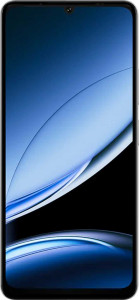
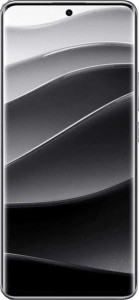
Panel technology is where these two phones diverge most dramatically. The Doogee Note 59 Pro Plus uses an LCD IPS panel, while the Redmi Note 14 Pro 5G features an OLED/AMOLED display — a fundamental difference that cascades across nearly every visual quality metric. OLED screens produce true blacks by switching off individual pixels, deliver richer contrast, and render colors with greater vibrancy than LCD. For media consumption, gaming, or anything viewed in varying lighting conditions, this alone is a substantial gap.
The pixel density numbers make that gap even wider. The Doogee resolves at 720 × 1600 px across its larger 6.75″ screen, yielding just 260 ppi — a density where individual pixels can become visible at normal viewing distances. The Redmi, on a slightly smaller 6.67″ panel, packs 1220 × 2712 px for a sharpness of 446 ppi, which is nearly twice the density. Text, fine detail, and high-resolution images will appear noticeably crisper on the Redmi. Both phones match at a 120Hz refresh rate, so scrolling and animations feel equally fluid on either device.
The Redmi further pulls ahead with a full suite of premium display features the Doogee lacks entirely: HDR10, HDR10+, and Dolby Vision support for tone-mapped streaming content, an Always-On Display for glanceable notifications, and branded damage-resistant glass for added scratch and impact protection. The Doogee offers none of these. The verdict here is unambiguous — the Redmi Note 14 Pro 5G holds a commanding display advantage across panel quality, resolution, and feature set.