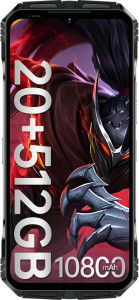
Doogee S118 Pro
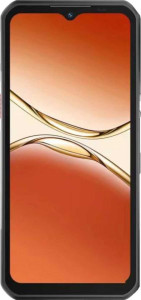
Oukitel WP55 Ultra

Doogee S118 Pro Oukitel WP55 Ultra

Overview

When choosing between the Doogee S118 Pro and the Oukitel WP55 Ultra, rugged smartphone fans are faced with a genuinely competitive matchup. Both devices share a waterproof build, a large 6.58-inch display, and a massive battery, yet they diverge in meaningful ways across display technology, raw performance, and everyday usability features. Which one earns a place in your pocket? Read on as we break down the specs side by side.

Common Features

  • Both phones are waterproof with a rugged build and cannot be folded.
  • Both devices share the same 6.58″ screen size.
  • Both displays offer a pixel density of 401 ppi.
  • Both screens have a resolution of 1080 x 2408 px.
  • Both displays support a 120Hz refresh rate.
  • Both phones feature branded damage-resistant glass on the display.
  • HDR10 support is not available on either product.
  • HDR10+ support is not available on either product.
  • Dolby Vision support is not available on either product.
  • Both phones come with 512GB of internal storage.
  • Both devices have integrated LTE connectivity.
  • Both are built on a 6 nm semiconductor process.
  • Both support 64-bit processing and use big.LITTLE technology.
  • Both phones support DirectX 12 and have integrated graphics.
  • Both cameras feature a 108MP main sensor as part of a multi-lens setup.
  • Both phones have a 32MP front camera.
  • Optical image stabilization is not available on either product.
  • Both devices run on Android with theme customization, clipboard warnings, location privacy options, and camera/microphone privacy options.
  • Cross-site tracking blocking is not available on either product.
  • Both phones support 5G, dual SIM, Bluetooth 5.2, NFC, USB Type-C (USB 2.0), external memory slots, and a maximum download speed of 2770 MBits/s.
  • Both devices support fast charging at 33W and come with a charger included.
  • Neither phone has wireless charging or a removable battery.
  • Both phones feature stereo speakers and do not support aptX, LDAC, aptX HD, aptX Adaptive, aptX Lossless, or aptX HD audio codecs.
  • Both phones have a video light and lack a sapphire glass display, curved display, or e-paper display.
  • Both Wi-Fi configurations include Wi-Fi 4 (802.11n), Wi-Fi 5 (802.11ac), and Wi-Fi 6 (802.11ax) support.

Main Differences

  • Weight is 376 g on Doogee S118 Pro and 367 g on Oukitel WP55 Ultra.
  • Thickness is 17.9 mm on Doogee S118 Pro and 15.3 mm on Oukitel WP55 Ultra.
  • Width is 83.1 mm on Doogee S118 Pro and 81 mm on Oukitel WP55 Ultra.
  • Height is 178.5 mm on Doogee S118 Pro and 172.2 mm on Oukitel WP55 Ultra.
  • Volume is 265.52 cm³ on Doogee S118 Pro and 213.41 cm³ on Oukitel WP55 Ultra.
  • IP rating is IP68 on Doogee S118 Pro and IP69 on Oukitel WP55 Ultra.
  • Display type is LCD IPS on Doogee S118 Pro and OLED/AMOLED on Oukitel WP55 Ultra.
  • Gorilla Glass version is Gorilla Glass Victus on Doogee S118 Pro and Gorilla Glass 5 on Oukitel WP55 Ultra.
  • RAM is 8GB on Doogee S118 Pro and 12GB on Oukitel WP55 Ultra.
  • AnTuTu benchmark score is 387,300 on Doogee S118 Pro and 488,970 on Oukitel WP55 Ultra.
  • Chipset is MediaTek Dimensity 7050 on Doogee S118 Pro and MediaTek Dimensity 7025 on Oukitel WP55 Ultra.
  • GPU is Mali G68 MP4 on Doogee S118 Pro and IMG BXM-8-256 on Oukitel WP55 Ultra.
  • CPU speed is 2 x 2.6 & 6 x 2 GHz on Doogee S118 Pro and 2 x 2.5 & 6 x 2 GHz on Oukitel WP55 Ultra.
  • Geekbench 6 multi-core score is 2257 on Doogee S118 Pro and 2291 on Oukitel WP55 Ultra.
  • Geekbench 6 single-core score is 936 on Doogee S118 Pro and 884 on Oukitel WP55 Ultra.
  • GPU clock speed is 950 MHz on Doogee S118 Pro and 900 MHz on Oukitel WP55 Ultra.
  • RAM speed is 3200 MHz on Doogee S118 Pro and 2750 MHz on Oukitel WP55 Ultra.
  • Shading units count is 64 on Doogee S118 Pro and 18 on Oukitel WP55 Ultra.
  • Main camera configuration is 108 & 20 & 8 MP on Doogee S118 Pro and 108 & 5 & 8 MP on Oukitel WP55 Ultra.
  • Dual-tone LED flash is present on Doogee S118 Pro but not available on Oukitel WP55 Ultra.
  • Number of flash LEDs is 2 on Doogee S118 Pro and 1 on Oukitel WP55 Ultra.
  • Slow-motion video recording is supported on Doogee S118 Pro but not available on Oukitel WP55 Ultra.
  • Front camera aperture is f/1.8 on Doogee S118 Pro and f/2.2 on Oukitel WP55 Ultra.
  • Android version is Android 14 on Doogee S118 Pro and Android 15 on Oukitel WP55 Ultra.
  • App offloading is supported on Oukitel WP55 Ultra but not available on Doogee S118 Pro.
  • Battery capacity is 10,800 mAh on Doogee S118 Pro and 11,000 mAh on Oukitel WP55 Ultra.
  • A 3.5 mm audio jack is present on Oukitel WP55 Ultra but not available on Doogee S118 Pro.
  • FM radio is available on Doogee S118 Pro but not present on Oukitel WP55 Ultra.
Specs Comparison
Doogee S118 Pro

Doogee S118 Pro

Oukitel WP55 Ultra

Oukitel WP55 Ultra

Design:
water resistance Waterproof Waterproof
weight 376 g 367 g
thickness 17.9 mm 15.3 mm
width 83.1 mm 81 mm
height 178.5 mm 172.2 mm
volume 265.516965 cm³ 213.40746 cm³
Ingress Protection (IP) rating IP68 IP69
has a rugged build
can be folded

The Doogee S118 Pro and Oukitel WP55 Ultra both feature waterproof designs, but they differ slightly in other aspects of their construction. The S118 Pro weighs 376 g, while the WP55 Ultra is slightly lighter at 367 g. In terms of size, the S118 Pro is a bit larger, measuring 178.5 mm in height, 83.1 mm in width, and 17.9 mm in thickness. In contrast, the WP55 Ultra stands at 172.2 mm in height, 81 mm in width, and is thinner at 15.3 mm.

Both devices have rugged builds, which means they are designed for durability in tough conditions. The Doogee S118 Pro has an IP68 rating for ingress protection, while the Oukitel WP55 Ultra has an even higher IP69 rating, offering slightly better protection against dust and water. Both phones cannot be folded, ensuring a solid, rigid design for both models.

When it comes to volume, the S118 Pro has a total of 265.52 cm³, which is larger compared to the WP55 Ultra's 213.41 cm³. This difference reflects the S118 Pro's larger size and more substantial build.

Display:
Display type LCD, IPS OLED/AMOLED
screen size 6.58" 6.58"
pixel density 401 ppi 401 ppi
resolution 1080 x 2408 px 1080 x 2408 px
refresh rate 120Hz 120Hz
has branded damage-resistant glass
Gorilla Glass version Gorilla Glass Victus Gorilla Glass 5
supports HDR10
supports HDR10+
supports Dolby Vision
Has a secondary screen
has a touch screen

On paper, these two screens look nearly identical: the same 6.58″ size, the same 1080 x 2408 resolution, the same 401 ppi pixel density, and the same 120Hz refresh rate. For everyday sharpness and scroll smoothness, users of either phone will have an equivalent experience. The real divergence, however, lies in the underlying panel technology — and it is a significant one.

The Oukitel WP55 Ultra uses an OLED/AMOLED panel, while the Doogee S118 Pro relies on an LCD IPS display. This gap matters in several practical ways: OLED panels produce true blacks by switching off individual pixels, resulting in higher contrast ratios and more vibrant colors — especially noticeable when viewing content outdoors or in varied lighting conditions common to rugged phone use cases. OLED screens are also thinner and more power-efficient when displaying dark content, which can contribute to battery savings in dark-mode-heavy usage. The S118 Pro's IPS panel is perfectly capable and offers consistent brightness across viewing angles, but it cannot match the visual punch of AMOLED technology.

On screen protection, the S118 Pro counters with Gorilla Glass Victus — a newer and more drop-resistant generation than the Gorilla Glass 5 found on the WP55 Ultra. For a rugged device that is likely to take impacts, this is a meaningful real-world advantage. Taken together, the WP55 Ultra wins on display quality, while the S118 Pro offers superior glass durability; the Oukitel WP55 Ultra holds the overall display edge for most users who prioritize screen experience, but buyers in high-drop environments may weigh the S118 Pro's stronger glass protection more heavily.

Performance:
internal storage 512GB 512GB
RAM 8GB 12GB
AnTuTu benchmark score 387300 488970
Chipset (SoC) name MediaTek Dimensity 7050 MediaTek Dimensity 7025
GPU name Mali G68 MP4 IMG BXM-8-256
CPU speed 2 x 2.6 & 6 x 2 GHz 2 x 2.5 & 6 x 2 GHz
Geekbench 6 result (multi) 2257 2291
Geekbench 6 result (single) 936 884
GPU clock speed 950 MHz 900 MHz
Has integrated LTE
RAM speed 3200 MHz 2750 MHz
semiconductor size 6 nm 6 nm
Supports 64-bit
DirectX version DirectX 12 DirectX 12
Has integrated graphics
Uses big.LITTLE technology
Has NX bit
Uses HMP
OpenCL version 2 2
memory channels 4 4
maximum memory amount 16GB 16GB
uses multithreading
DDR memory version 5 5
shading units 64 18

At the chipset level, both phones run on a 6 nm MediaTek Dimensity processor with identical storage (512GB) and share the same architectural foundations — big.LITTLE core arrangement, DDR5 memory, and a 2 x 2.6 GHz (S118 Pro) versus 2 x 2.5 GHz (WP55 Ultra) peak clock speed. These are closely matched mid-range platforms, and real-world day-to-day tasks will feel similar on both. However, the benchmarks reveal a nuanced split rather than a clean winner.

The Oukitel WP55 Ultra posts a notably higher AnTuTu score of 488,970 versus the S118 Pro's 387,300 — a roughly 26% gap that would typically suggest a meaningful performance lead. Yet Geekbench 6 tells a more complicated story: single-core performance actually favors the Doogee S118 Pro (936 vs 884), while multi-core scores are nearly identical. Single-core performance is often more representative of how snappy an app feels to open or how responsive the UI is, so the S118 Pro's edge there is practically relevant. The WP55 Ultra's extra 12GB of RAM versus 8GB does, however, give it a real multitasking advantage — more apps stay resident in memory, reducing reload times during heavy usage.

The GPU comparison is where the S118 Pro makes its strongest case: the Mali G68 MP4 with 64 shading units at 950 MHz substantially outguns the WP55 Ultra's IMG BXM-8-256 with just 18 shading units at 900 MHz. For gaming or any graphically intensive workload, the S118 Pro's GPU is a significant advantage. Weighing everything, neither phone dominates cleanly — the WP55 Ultra leads in AnTuTu and RAM capacity, while the S118 Pro holds the edge in GPU capability and single-core responsiveness, making the right choice dependent on whether the user prioritizes multitasking or graphics performance.

Cameras:
megapixels (main camera) 108 & 20 & 8 MP 108 & 5 & 8 MP
Has a dual-lens (or multi-lens) main camera
megapixels (front camera) 32MP 32MP
has built-in optical image stabilization
Has a dual-tone LED flash
number of flash LEDs 2 1
has a BSI sensor
has a CMOS sensor
has continuous autofocus when recording movies
Has phase-detection autofocus for photos
supports slow-motion video recording
has a built-in HDR mode
has manual exposure
has a flash
optical zoom 0x 0x
has manual ISO
has a serial shot mode
has manual focus
has a front camera
Has laser autofocus
Shoots 360° panorama
has manual white balance
shoots raw
has touch autofocus
has manual shutter speed
can create panoramas in-camera
wide aperture (front camera) 1.8f 2.2f
Has a front-facing LED flash
has a dual-lens (or multi-lens) front camera
supports HDR10 recording
supports Dolby Vision recording
has a front-facing camera under the display
Has a RGB LED flash
has 3D photo/video recording capabilities

The two phones share a 108MP primary sensor, an 8MP tertiary lens, and a 32MP front camera — giving them an identical foundation for everyday photography. Neither offers optical image stabilization or optical zoom, which is typical for rugged phones in this segment. However, a few targeted differences meaningfully separate them once you look past the headline numbers.

The most impactful gap is in the secondary rear camera: the Doogee S118 Pro pairs its main sensor with a 20MP secondary lens, compared to just 5MP on the WP55 Ultra. A 20MP secondary sensor offers substantially more detail and flexibility for depth mapping or wide-angle use cases, whereas a 5MP lens is closer to a token inclusion. The S118 Pro also supports slow-motion video recording, a feature entirely absent on the WP55 Ultra — a notable omission for users who want creative video options. The flash setup further favors the S118 Pro: its dual-tone LED flash with two LEDs produces more natural-looking light across different skin tones and environments, versus the WP55 Ultra's single, non-dual-tone LED.

For selfies, the S118 Pro's front camera aperture of f/1.8 versus the WP55 Ultra's f/2.2 is a practical advantage in low-light conditions — a wider aperture admits more light, reducing noise and improving clarity indoors or at night. Across all camera dimensions analyzed here, the Doogee S118 Pro holds a clear edge: it outperforms on the secondary lens resolution, offers slow-motion recording, has a superior flash arrangement, and captures more light on the front camera.

Operating system:
Android version Android 14 Android 15
has clipboard warnings
has location privacy options
has camera/microphone privacy options
has Mail Privacy Protection
has theme customization
can block app tracking
blocks cross-site tracking
has on-device machine learning
has notification permissions
has media picker
Can play games while they download
has dark mode
has Wi-Fi password sharing
has battery health check
has an extra dim mode
has focus modes
has dynamic theming
can offload apps
Has customizable notifications
has Live Text
has full-page screenshots
supports split screen
gets direct OS updates
has PiP
Can be used as a PC
Has sharing intents
has a child lock
Supports widgets
Is free and open source
Has offline voice recognition
has voice commands
Tracks the current position of a mobile device
is a multi-user system
has Quick Start

The software gap between these two phones is narrow but clear. The Oukitel WP55 Ultra ships with Android 15, while the Doogee S118 Pro runs Android 14. For most users, the day-to-day experience will feel very similar — both offer the same broad suite of privacy controls, productivity features like split-screen and Picture-in-Picture, dark mode, dynamic theming, and offline voice recognition. Neither receives direct OS updates from Google, which is a shared limitation worth noting for long-term software support expectations.

The only functional difference in the provided specs beyond the version number is that the WP55 Ultra supports app offloading, while the S118 Pro does not. App offloading automatically removes infrequently used apps while preserving their data, freeing up storage without requiring manual management — a useful quality-of-life feature, particularly on a device with a fixed internal storage ceiling. It is a minor but genuine practical advantage for users who install many apps over time.

Taken together, the Oukitel WP55 Ultra holds a modest edge in this category: a more recent Android version means access to the latest platform security patches and behavioral improvements at launch, and app offloading adds a small but real storage management benefit. The gap is not dramatic — both phones are well-featured at the OS level — but the WP55 Ultra starts from a more current software baseline.

Battery:
battery power 10800 mAh 11000 mAh
has wireless charging
Supports fast charging
charging speed 33W 33W
comes with a charger
has a removable battery
has a battery level indicator
has a rechargeable battery

Battery is one area where these two phones are about as evenly matched as specs can get. The Oukitel WP55 Ultra carries an 11,000 mAh cell versus the Doogee S118 Pro's 10,800 mAh — a difference of just 200 mAh, or under 2%. Both are exceptionally large batteries by any standard, firmly in the category of multi-day endurance devices under typical usage. For the target audience of rugged phone buyers — field workers, outdoor enthusiasts, or anyone far from a power outlet — this scale of battery is a core selling point, and both deliver it equally well in practical terms.

Charging is identical across the board: both support 33W fast charging, ship with a charger included, and lack wireless charging. At 33W, a battery of this size will still take a meaningful amount of time to fill from empty — this is not rapid top-up territory — but the wired fast charging support ensures neither phone is left waiting excessively. The absence of wireless charging is consistent with the rugged category, where sealed ports and robust construction take priority over charging convenience.

Given the negligible 200 mAh gap and completely matched charging specs, this category is effectively a tie. No data here provides a meaningful real-world advantage to either device, and buyers should treat battery as a shared strength of both phones rather than a differentiator.

Audio:
has a socket for a 3.5 mm audio jack
has stereo speakers
has aptX
has LDAC
has aptX HD
has aptX Adaptive
has aptX Lossless
Has a radio

Both phones feature stereo speakers and neither supports high-resolution Bluetooth audio codecs — no aptX, LDAC, or any of their variants. For wireless listening, this means audio quality over Bluetooth is capped at standard levels on both devices, which is a shared limitation rather than a differentiator. Where the two phones diverge is in a pair of opposing hardware features that cater to different user needs.

The Oukitel WP55 Ultra includes a 3.5mm headphone jack, which the Doogee S118 Pro lacks entirely. For a rugged phone — frequently used in environments where Bluetooth connectivity may be unreliable, where wired earbuds are worn under safety gear, or where simplicity and zero-latency audio matter — the presence of a headphone jack is a genuinely practical feature. It also means compatibility with a far wider range of audio accessories without adapters. The S118 Pro's omission of this port is a meaningful trade-off in this context.

The S118 Pro counters with a built-in FM radio, absent on the WP55 Ultra. For users in remote or emergency situations where cellular and internet connectivity are unavailable, FM radio provides a valuable off-grid information channel. These two features serve different but legitimate use cases, making this category a matter of user priority rather than an outright win — though for the broadest audio versatility, the WP55 Ultra's headphone jack is likely the more universally useful advantage.

Connectivity & Features:
release date January 2025 September 2025
has 5G support
Wi-Fi version Wi-Fi 4 (802.11n), Wi-Fi 5 (802.11ac), Wi-Fi 6 (802.11ax) Wi-Fi 4 (802.11n), Wi-Fi 6 (802.11ax), Wi-Fi 5 (802.11ac)
SIM cards 2 SIM 2 SIM
Bluetooth version 5.2 5.2
has an external memory slot
Has USB Type-C
USB version 2 2
has NFC
download speed 2770 MBits/s 2770 MBits/s
Has a fingerprint scanner
has emergency SOS via satellite
has crash detection
is DLNA-certified
has a gyroscope
supports ANT+
Has a heart rate monitor
has GPS
has a compass
supports Wi-Fi
Has an infrared sensor
has an accelerometer
has a cellular module
Has a barometer
has an HDMI output
Uses 3D facial recognition
Has an iris scanner
Stylus included
supports Galileo
Has motion tracking
Has optical tracking
Has a built-in projector

Rarely does a spec group produce a result this definitive: across every single connectivity and features data point provided, the Doogee S118 Pro and Oukitel WP55 Ultra are identical. Both support 5G, Wi-Fi 6, Bluetooth 5.2, and NFC, and both top out at the same 2770 Mbits/s download speed. Dual SIM, USB Type-C at USB 2.0, and expandable storage via microSD are shared across the board. For connectivity breadth, either phone delivers the same modern feature set.

The sensor suite is equally matched: both include GPS with Galileo support, a gyroscope, accelerometer, compass, and fingerprint scanner. Neither offers a barometer, heart rate monitor, infrared sensor, or satellite SOS — features sometimes found on more specialized rugged or outdoor-focused devices. The shared absence of these sensors is worth noting for users with specific field-use requirements, but it is a limitation common to both rather than a weakness of one.

With zero differentiating data points in this entire category, the verdict is an unambiguous tie. Connectivity and features will not factor into a decision between these two phones — buyers should look entirely to other specification groups to make their choice.

Miscellaneous:
has a video light
Has sapphire glass display
Has a curved display
Has an e-paper display

The miscellaneous spec group for these two phones is as brief as it is conclusive. Every data point is shared: both include a video light, and neither features a sapphire glass display, curved screen, or e-paper panel. There is simply nothing here that separates them.

This is a clear tie — the miscellaneous category offers no basis for differentiation between the Doogee S118 Pro and the Oukitel WP55 Ultra. Buyers should rely entirely on other specification groups when making their decision.

Comparison Summary & Verdict

After a thorough comparison, both phones prove themselves as capable rugged companions, but they cater to slightly different priorities. The Doogee S118 Pro stands out with its Gorilla Glass Victus display, a higher-clocked GPU, dual-tone flash, slow-motion video recording, and a built-in FM radio — making it the stronger pick for multimedia and camera enthusiasts. The Oukitel WP55 Ultra, on the other hand, counters with an OLED/AMOLED screen, a higher AnTuTu score, 12GB of RAM, a larger 11,000 mAh battery, a 3.5mm headphone jack, Android 15, and the slimmer, lighter form factor — appealing to users who prioritize smooth performance and display quality in a more pocketable package. Neither phone is a clear-cut winner; your ideal choice hinges on what trade-offs matter most to you.

Doogee S118 Pro
Buy Doogee S118 Pro if...

Buy the Doogee S118 Pro if you value Gorilla Glass Victus protection, slow-motion video recording, a dual-tone flash, and a built-in FM radio over raw benchmark performance.

Oukitel WP55 Ultra
Buy Oukitel WP55 Ultra if...

Buy the Oukitel WP55 Ultra if you want a vibrant OLED display, more RAM, a higher AnTuTu score, a 3.5mm headphone jack, and the latest Android 15 in a slimmer and lighter body.