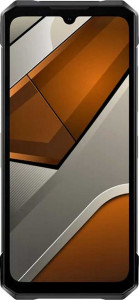
Doogee S200 Max
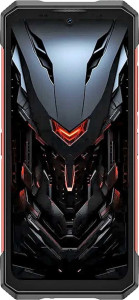
Doogee S200 Plus

Doogee S200 Max Doogee S200 Plus

Overview

Welcome to our in-depth comparison of the Doogee S200 Max and the Doogee S200 Plus, two rugged Android smartphones that share a surprising amount of DNA yet diverge sharply in key areas. Both phones arrive with IP68 waterproofing, a 6.72″ 120Hz LCD display, and 512GB of storage, but the real story unfolds when you examine their battery capacity, chipset performance, and camera feature sets. Read on to discover which device better suits your needs.

Common Features

  • Both phones are waterproof with an IP68 ingress protection rating.
  • Both phones share the same width of 82.5 mm and height of 179.5 mm.
  • Both phones feature a rugged build and cannot be folded.
  • Both phones use an LCD IPS display with a 6.72″ screen size.
  • Both phones have a pixel density of 392 ppi and a resolution of 1080 x 2400 px.
  • Both phones support a 120Hz refresh rate.
  • Damage-resistant branded glass is not present on either phone.
  • HDR10 and HDR10+ support are not available on either phone.
  • Both phones offer 512GB of internal storage.
  • Both phones support LTE, 64-bit processing, DirectX 12, big.LITTLE technology, HMP, and have integrated graphics.
  • Both phones have 8 CPU threads.
  • Both phones feature a triple main camera setup at 100, 20, and 2 MP, along with a 32 MP front camera.
  • Optical image stabilization is not available on either phone.
  • Both phones support phase-detection autofocus for photos and continuous autofocus during video recording.
  • Both phones run Android with clipboard warnings, location privacy options, camera and microphone privacy options, theme customization, on-device machine learning, and the ability to block app tracking.
  • Cross-site tracking blocking is not available on either phone, and neither supports Mail Privacy Protection.
  • Both phones support fast charging but lack wireless charging, and have a non-removable rechargeable battery with a battery level indicator.
  • Both phones feature stereo speakers, a built-in radio, but lack LDAC and aptX Lossless audio support.
  • Both phones support 5G, dual SIM, external memory, USB Type-C (USB 2.0), and NFC, and include a fingerprint scanner.
  • Emergency SOS via satellite is not available on either phone.

Main Differences

  • Weight is 364 g on the Doogee S200 Max and 379 g on the Doogee S200 Plus.
  • Thickness is 25.5 mm on the Doogee S200 Max and 19.1 mm on the Doogee S200 Plus.
  • Volume is 377.623125 cm³ on the Doogee S200 Max and 282.847125 cm³ on the Doogee S200 Plus.
  • The secondary screen resolution is 240 x 240 px on the Doogee S200 Max and 466 x 466 px on the Doogee S200 Plus.
  • RAM is 16 GB on the Doogee S200 Max and 12 GB on the Doogee S200 Plus.
  • The chipset is MediaTek Dimensity 7050 on the Doogee S200 Max and MediaTek Dimensity 7300 on the Doogee S200 Plus.
  • The GPU is Mali G68 MP4 on the Doogee S200 Max and Mali G615 MC2 on the Doogee S200 Plus.
  • CPU speed is 2 x 2.6 & 6 x 2 GHz on the Doogee S200 Max and 4 x 2.5 & 4 x 2 GHz on the Doogee S200 Plus.
  • Geekbench 6 multi-core score is 2257 on the Doogee S200 Max and 2932 on the Doogee S200 Plus.
  • Geekbench 6 single-core score is 936 on the Doogee S200 Max and 1026 on the Doogee S200 Plus.
  • GPU clock speed is 950 MHz on the Doogee S200 Max and 1047 MHz on the Doogee S200 Plus.
  • RAM speed is 3200 MHz on the Doogee S200 Max and 6400 MHz on the Doogee S200 Plus.
  • Semiconductor size is 6 nm on the Doogee S200 Max and 4 nm on the Doogee S200 Plus.
  • A dual-tone LED flash with 2 LEDs is present on the Doogee S200 Max, while the Doogee S200 Plus has a single LED flash without dual-tone.
  • Slow-motion video recording is supported on the Doogee S200 Max but not available on the Doogee S200 Plus.
  • A timelapse function is available on the Doogee S200 Max but not on the Doogee S200 Plus.
  • The Doogee S200 Max runs Android 15, while the Doogee S200 Plus runs Android 14.
  • App offloading is supported on the Doogee S200 Max but not on the Doogee S200 Plus.
  • Battery capacity is 22000 mAh on the Doogee S200 Max and 10100 mAh on the Doogee S200 Plus.
  • Charging speed is 66W on the Doogee S200 Max and 33W on the Doogee S200 Plus.
  • A 3.5 mm audio jack is present on the Doogee S200 Max but not available on the Doogee S200 Plus.
  • Wi-Fi support includes Wi-Fi 4, 5, and 6 on the Doogee S200 Max, while the Doogee S200 Plus also adds Wi-Fi 6E.
  • Bluetooth version is 5.2 on the Doogee S200 Max and 5.4 on the Doogee S200 Plus.
  • Download speed is 2770 MBits/s on the Doogee S200 Max and 3270 MBits/s on the Doogee S200 Plus.
  • Upload speed is 1250 MBits/s on the Doogee S200 Max and 3270 MBits/s on the Doogee S200 Plus.
Specs Comparison
Doogee S200 Max

Doogee S200 Max

Doogee S200 Plus

Doogee S200 Plus

Design:
water resistance Waterproof Waterproof
weight 364 g 379 g
thickness 25.5 mm 19.1 mm
width 82.5 mm 82.5 mm
height 179.5 mm 179.5 mm
volume 377.623125 cm³ 282.847125 cm³
Ingress Protection (IP) rating IP68 IP68
has a rugged build
can be folded

Both the Doogee S200 Max and S200 Plus share the same rugged DNA: identical IP68 waterproof certification, the same 179.5 × 82.5 mm footprint, and a hardened build that makes neither suitable for folding. For day-to-day durability, they are effectively tied — both can handle submersion and the physical punishment typical of rugged-class devices.

Where they diverge meaningfully is in thickness and overall bulk. The S200 Max is notably thicker at 25.5 mm versus the S200 Plus at 19.1 mm — a difference of over 6 mm that translates directly into how the phone sits in a pocket or fits in the hand. That extra girth also inflates the Max's volume to 377.6 cm³, compared to just 282.8 cm³ for the Plus — roughly 33% more physical bulk. Interestingly, despite being the larger device, the S200 Max is actually 15 g lighter (364 g vs. 379 g), which suggests the additional internal space in the Max may be filled with lower-density components such as a larger battery or additional structural air gaps.

From a design standpoint, the S200 Plus holds a clear advantage for users who prioritize a more manageable, less obtrusive form factor. Its significantly slimmer profile makes it far easier to pocket and handle daily, without sacrificing any of the shared ruggedness or waterproofing. The S200 Max's extra thickness and volume are only justified if what fills that space — likely examined in other spec groups — offers a compelling enough trade-off.

Display:
Display type LCD, IPS LCD, IPS
screen size 6.72" 6.72"
pixel density 392 ppi 392 ppi
resolution 1080 x 2400 px 1080 x 2400 px
refresh rate 120Hz 120Hz
has branded damage-resistant glass
supports HDR10
supports HDR10+
Always-On Display
supports Dolby Vision
Has a secondary screen
resolution (secondary screen) 240 x 240px 466 x 466px
has a touch screen

On the primary display, the S200 Max and S200 Plus are virtually identical: both offer a 6.72″ IPS LCD panel running at 1080 × 2400 px, 392 ppi, and a smooth 120Hz refresh rate. Neither supports HDR10, Dolby Vision, or branded damage-resistant glass, and neither has an Always-On Display mode. For a rugged-tier device, the 120Hz refresh rate is a genuine highlight — it makes scrolling and navigation feel noticeably fluid — but the absence of any HDR support means color and contrast ceiling is limited by the LCD technology itself.

The only differentiator in this group lies in the secondary screen resolution. Both phones carry a secondary display — a feature common to rugged phones for at-a-glance notifications without waking the main panel — but the S200 Plus pulls ahead with a 466 × 466 px secondary screen versus the S200 Max's 240 × 240 px. That nearly four-fold increase in pixel count means the S200 Plus can render sharper icons, more legible text, and richer information on that auxiliary panel, making it genuinely more useful in practice rather than a token addition.

Given that the primary displays are a complete tie, the S200 Plus holds the edge in this group solely on the strength of its superior secondary screen. For users who rely on that panel for quick status checks — especially with gloves on or in demanding environments where pulling out the main screen is inconvenient — the higher resolution makes a meaningful difference.

Performance:
internal storage 512GB 512GB
RAM 16GB 12GB
Chipset (SoC) name MediaTek Dimensity 7050 MediaTek Dimensity 7300
GPU name Mali G68 MP4 Mali G615 MC2
CPU speed 2 x 2.6 & 6 x 2 GHz 4 x 2.5 & 4 x 2 GHz
Geekbench 6 result (multi) 2257 2932
Geekbench 6 result (single) 936 1026
GPU clock speed 950 MHz 1047 MHz
Has integrated LTE
RAM speed 3200 MHz 6400 MHz
semiconductor size 6 nm 4 nm
Supports 64-bit
DirectX version DirectX 12 DirectX 12
Has integrated graphics
Uses big.LITTLE technology
CPU threads 8 threads 8 threads
Uses HMP
maximum memory amount 16GB 16GB
DDR memory version 5 5

The chipset gap here is significant. The S200 Plus runs on the MediaTek Dimensity 7300, built on a newer 4 nm process, while the S200 Max uses the older Dimensity 7050 on a 6 nm node. A smaller semiconductor process typically means better power efficiency and more thermal headroom — both critical in a rugged device that may run demanding tasks in hot or physically stressful environments. The Geekbench 6 scores reflect this advantage directly: the S200 Plus leads in both single-core (1026 vs. 936) and multi-core (2932 vs. 2257) performance, the latter being a roughly 30% gap that will be felt in sustained workloads, multitasking, and anything CPU-intensive.

The memory story is more nuanced. The S200 Max counters with 16 GB of RAM versus the S200 Plus's 12 GB, which on paper suggests more headroom for keeping apps in memory. However, the S200 Plus's RAM runs at 6400 MHz — double the S200 Max's 3200 MHz — meaning data moves between the CPU and memory considerably faster. In practice, the Plus's higher memory bandwidth tends to complement the faster chip more effectively than raw RAM quantity alone, especially since 12 GB is already well above what most Android workloads require. The GPU picture similarly favors the Plus, with its Mali G615 MC2 clocked at 1047 MHz edging out the Max's Mali G68 MP4 at 950 MHz.

Across every performance metric in this group — CPU benchmark scores, process node efficiency, GPU clock speed, and memory bandwidth — the S200 Plus holds a clear and consistent advantage. The S200 Max's extra 4 GB of RAM is a modest trade-off that does not offset the broader generational gap between the two chipsets.

Cameras:
megapixels (main camera) 100 & 20 & 2 MP 100 & 20 & 2 MP
Has a dual-lens (or multi-lens) main camera
megapixels (front camera) 32MP 32MP
has built-in optical image stabilization
Has a dual-tone LED flash
number of flash LEDs 2 1
has a BSI sensor
has a CMOS sensor
has continuous autofocus when recording movies
Has phase-detection autofocus for photos
supports slow-motion video recording
has a built-in HDR mode
has manual exposure
has a flash
has manual ISO
has a serial shot mode
has manual focus
has a front camera
Has laser autofocus
Shoots 360° panorama
has manual white balance
shoots raw
has touch autofocus
has manual shutter speed
can create panoramas in-camera
Has timelapse function
Has a front-facing LED flash
has a dual-lens (or multi-lens) front camera
supports HDR10 recording
supports Dolby Vision recording
has a front-facing camera under the display
Has a RGB LED flash
has 3D photo/video recording capabilities

At the hardware level, the two phones are mirror images: both feature a triple-lens rear setup at 100 & 20 & 2 MP, a 32 MP front camera, phase-detection autofocus, continuous autofocus during video, and an identical suite of manual controls covering ISO, exposure, focus, and white balance. Neither includes optical image stabilization or RAW shooting, which are notable absences at this tier but consistent across both devices.

The differences emerge in the finer details of flash and video capability. The S200 Max is equipped with a dual-tone LED flash using two LEDs, which produces more natural-looking light across different environments compared to the single LED on the S200 Plus — a practical advantage for close-range photography in low light. More significantly, the S200 Max also supports slow-motion video recording and a timelapse function, neither of which the S200 Plus offers. These are not niche features: slow-motion is frequently used for capturing fast-moving subjects on a job site or outdoors, and timelapse adds creative and documentary utility that the Plus simply cannot match.

Despite being the weaker performer in other spec groups, the S200 Max takes a clear win in cameras. Its better flash hardware, slow-motion video support, and timelapse capability give it a meaningful edge for users who rely on their phone's camera in varied real-world conditions. The S200 Plus offers an equivalent still photography setup but falls short on video versatility.

Operating system:
Android version Android 15 Android 14
has clipboard warnings
has location privacy options
has camera/microphone privacy options
has Mail Privacy Protection
has theme customization
can block app tracking
blocks cross-site tracking
has on-device machine learning
has notification permissions
has media picker
Can play games while they download
has dark mode
has Wi-Fi password sharing
has battery health check
has an extra dim mode
has focus modes
has dynamic theming
can offload apps
Has customizable notifications
has Live Text
has full-page screenshots
supports split screen
gets direct OS updates
has PiP
Can be used as a PC
Has sharing intents
has a child lock
Supports widgets
Is free and open source
Has offline voice recognition
has voice commands
Tracks the current position of a mobile device
is a multi-user system
has Quick Start

The software gap between these two devices is straightforward but meaningful. The S200 Max ships with Android 15 while the S200 Plus runs Android 14 — a full generation behind. Since neither device receives direct OS updates, the version each launches with is likely the version it stays on for most users. That makes the S200 Max's newer Android release a lasting advantage, bringing with it the latest privacy refinements, security patches, and system-level improvements baked into Android 15 from the outset.

Across the rest of the feature set, the two phones are nearly identical — both support dark mode, dynamic theming, split screen, Picture-in-Picture, customizable notifications, on-device machine learning, and a full complement of privacy controls. The one additional functional difference is app offloading: the S200 Max supports it, the S200 Plus does not. The ability to offload unused apps frees up storage while preserving app data, a useful capability on a device where internal storage may fill up over time with field-use files and media.

The S200 Max holds the clear edge in this group. The combination of a more current Android version and app offloading support — on a device that won't receive pushed OS updates — makes the Max the more future-proofed option out of the box from a software standpoint.

Battery:
battery power 22000 mAh 10100 mAh
has wireless charging
Supports fast charging
charging speed 66W 33W
has a removable battery
has a battery level indicator
has a rechargeable battery

This is arguably the most dramatic gap across all spec groups. The S200 Max packs a 22000 mAh battery — more than double the S200 Plus's 10100 mAh. To put that in context, 10100 mAh is already well above the typical flagship smartphone battery of around 5000 mAh, making the Plus a long-endurance device in its own right. The Max, however, operates in an entirely different category: a 22000 mAh cell is closer to a power bank than a conventional phone battery, and it almost certainly accounts for the extra thickness and volume noted in the Design group.

Charging speed follows a similar pattern. The S200 Max supports 66W fast charging versus the S200 Plus's 33W — exactly twice as fast. This matters because a battery more than twice the size needs that extra wattage just to remain practical to recharge. Even at 66W, filling a 22000 mAh cell takes considerably longer than charging the Plus's 10100 mAh at 33W. Neither device supports wireless charging, which is a typical trade-off in rugged handsets where sealed construction takes priority.

The S200 Max wins this group decisively for any user where battery longevity is the primary concern — think multi-day field deployments, remote work, or scenarios where a charger simply isn't accessible. The S200 Plus is no slouch, but it is a conventional high-capacity phone battery; the Max is in a class of its own for sheer endurance.

Audio:
has a socket for a 3.5 mm audio jack
has stereo speakers
has LDAC
has aptX Lossless
Has a radio

Shared features first: both devices offer stereo speakers and a built-in FM radio — the latter being a genuinely useful inclusion on a rugged phone, enabling offline audio reception without cellular data in remote areas. Neither supports high-fidelity wireless codecs like LDAC or aptX Lossless, so Bluetooth audio quality is on equal footing for both.

The single differentiator in this group is significant for a certain class of user: the S200 Max retains a 3.5 mm headphone jack, while the S200 Plus omits it entirely. On a rugged device, this is more than a convenience feature. Wired audio connections are inherently more reliable in noisy, wet, or physically demanding environments where Bluetooth pairing can be interrupted or impractical. Workers wearing hearing protection, using PTT headsets, or operating in RF-congested settings often depend on a wired connection — making the headphone jack a functional tool rather than a legacy port.

The S200 Max holds the edge in this group. For the rugged device audience these phones target, the presence of a 3.5 mm jack on the Max versus its absence on the Plus is a tangible real-world advantage, not merely a spec-sheet footnote.

Connectivity & Features:
release date August 2025 March 2025
has 5G support
Wi-Fi version Wi-Fi 4 (802.11n), Wi-Fi 6 (802.11ax), Wi-Fi 5 (802.11ac) Wi-Fi 4 (802.11n), Wi-Fi 5 (802.11ac), Wi-Fi 6 (802.11ax), Wi-Fi 6E (802.11ax)
SIM cards 2 SIM 2 SIM
Bluetooth version 5.2 5.4
has an external memory slot
Has USB Type-C
USB version 2 2
has NFC
download speed 2770 MBits/s 3270 MBits/s
upload speed 1250 MBits/s 3270 MBits/s
Has a fingerprint scanner
has emergency SOS via satellite
has crash detection
is DLNA-certified
has a gyroscope
supports ANT+
Has a heart rate monitor
has GPS
has a compass
supports Wi-Fi
Has an infrared sensor
has an accelerometer
has a cellular module
Has a barometer
has an HDMI output
Uses 3D facial recognition
Has an iris scanner
Stylus included
supports Galileo
Has motion tracking
Has optical tracking
Has a built-in projector

The foundation is identical: both phones offer 5G, dual SIM, NFC, USB Type-C, expandable storage, GPS with Galileo support, and a matching sensor suite including gyroscope, accelerometer, and compass. For most day-to-day connectivity needs, users of either device are on equal footing.

The meaningful gaps emerge in wireless performance. The S200 Plus supports Wi-Fi 6E in addition to the Wi-Fi 6 found on both devices, giving it access to the less congested 6 GHz band — a practical advantage in dense environments like warehouses, job sites, or urban areas with heavy Wi-Fi traffic. Its cellular speeds are also notably stronger: the Plus reaches 3270 Mbits/s on both upload and download, while the S200 Max tops out at 2770 Mbits/s down and 1250 Mbits/s up. That upload gap — more than 2.6× in the Plus's favor — is particularly relevant for rugged use cases involving live video streaming, large file transfers, or cloud backups from the field. Bluetooth follows the same trend, with the Plus running version 5.4 against the Max's 5.2, offering incrementally better connection stability and efficiency.

Across every wireless metric in this group, the S200 Plus holds a consistent and clear advantage. The Wi-Fi 6E support, substantially faster upload speeds, and newer Bluetooth version collectively make it the stronger connected device — a meaningful consideration for users who depend on reliable, high-throughput data transfer in demanding environments.
Miscellaneous:
has a video light
Has sapphire glass display
Has a curved display
Has an e-paper display

The Miscellaneous group offers no differentiation between these two devices. Every spec listed here is identical: both include a video light, and neither features sapphire glass, a curved display, or an e-paper secondary panel. This is a complete tie by the data provided.

The shared video light is worth acknowledging as a practical rugged-device feature — it functions as a sustained illumination source for filming in dark conditions, distinct from a standard camera flash. Its presence on both phones reflects the field-use orientation of the S200 lineup. The absence of sapphire glass on either device is a minor note; while sapphire offers superior scratch resistance, it remains rare outside of premium smartwatches and niche devices due to cost and brittleness trade-offs.

Based strictly on this group's specs, the two devices are evenly matched with no advantage to either side.

Comparison Summary & Verdict

After a thorough review of every specification, it is clear that these two phones serve distinctly different users. The Doogee S200 Max is the undisputed choice for anyone who demands exceptional endurance in the field, thanks to its massive 22000 mAh battery with 66W fast charging, a 3.5mm audio jack, slow-motion video, timelapse, and Android 15 out of the box. Its extra RAM and thicker, more rugged frame reinforce its identity as a true outdoor workhorse. The Doogee S200 Plus, on the other hand, delivers a noticeably faster experience through its MediaTek Dimensity 7300 chipset, higher Geekbench scores, faster RAM, a smaller 4nm process node, Wi-Fi 6E, Bluetooth 5.4, and a sharper secondary screen, all in a slimmer and lighter body. If raw battery life and camera versatility are your priorities, the S200 Max wins; if you want a more powerful and portable rugged phone with better connectivity, the S200 Plus is the smarter pick.

Doogee S200 Max
Buy Doogee S200 Max if...

Buy the Doogee S200 Max if you need the longest possible battery life on a single charge, value a 3.5mm headphone jack, or rely on camera features like slow-motion recording and timelapse.

Doogee S200 Plus
Buy Doogee S200 Plus if...

Buy the Doogee S200 Plus if you want a slimmer, lighter rugged phone with a faster chipset, quicker RAM, Wi-Fi 6E, and stronger overall benchmark performance.