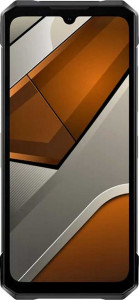
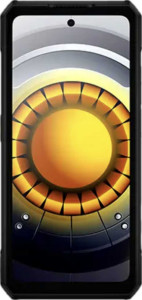
On paper, these two phones look nearly identical in configuration — both carry 16GB of RAM, 512GB of internal storage, DDR5 memory, and 8-thread big.LITTLE CPU architectures. But the silicon underneath tells a more divided story. The S200 Max runs on the MediaTek Dimensity 7050, built on a 6nm process, while the Armor 30 Pro steps up to the Dimensity 7300 on a 4nm node. That smaller fabrication process is not just a number — it means the 7300 can deliver more performance per watt, running cooler and more efficiently under sustained load, which matters considerably in a rugged device used outdoors or in demanding conditions.
The benchmarks validate the architectural gap. In Geekbench 6, the Armor 30 Pro scores 2932 multi-core and 1026 single-core, versus 2257 multi-core and 936 single-core for the S200 Max — roughly a 30% lead in multi-threaded tasks and about a 10% edge in single-core performance. Real-world impact: faster app launches, snappier multitasking, and more headroom for computationally intensive tasks like navigation, image processing, or running work apps simultaneously. The GPU advantage reinforces this — the Armor 30 Pro's Mali G615 MC2 clocked at 1047 MHz outpaces the S200 Max's Mali G68 MP4 at 950 MHz. Equally notable is the RAM speed gap: 6400 MHz on the Armor 30 Pro versus 3200 MHz on the S200 Max, meaning the faster chip also feeds data to its CPU far more quickly.
The Ulefone Armor 30 Pro wins this group decisively. Across chipset generation, process node, benchmark scores, GPU clock speed, and RAM throughput, it outperforms the S200 Max on every measurable performance dimension. For users who need their rugged phone to double as a capable workhorse — not just survive the elements — the Armor 30 Pro is the stronger performer by a clear margin.