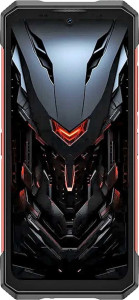
On paper, the Doogee S200 Plus looks compelling with its 100 MP primary sensor against the Samsung Galaxy A56 5G's 50 MP main shooter. In practice, however, megapixel count is one of the least reliable indicators of camera quality, and a single spec undercuts the Doogee's advantage entirely: the absence of optical image stabilization (OIS). The A56 5G includes OIS, which physically compensates for hand movement during capture. This matters enormously for low-light photography, where longer exposures amplify blur, and for video, where even subtle shake becomes visually distracting. Without OIS, the Doogee's high-resolution sensor is more susceptible to motion blur in the exact conditions where detail retrieval matters most.
The video feature gap reinforces this advantage further. The Samsung supports slow-motion video recording and a timelapse function, neither of which the Doogee offers. Both phones cap out at 2160p at 30 fps for standard recording, but the A56 5G's additional video modes give it considerably more creative versatility. On the selfie side, the Doogee counters with a 32 MP front camera versus the Samsung's 12 MP, which could yield more detail in ideal lighting conditions, though aperture and sensor size — not listed here — are equally important factors.
Outside these differences, the two phones share a remarkably similar feature set: triple rear cameras, phase-detection autofocus, continuous autofocus during recording, HDR mode, and a full suite of manual controls. The fundamentals are covered on both sides. However, OIS alone represents a meaningful real-world advantage that affects the majority of everyday shooting scenarios, giving the Samsung Galaxy A56 5G the clearer edge in this category.