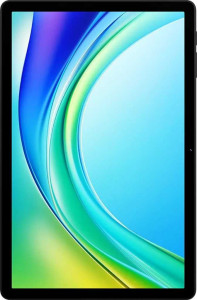
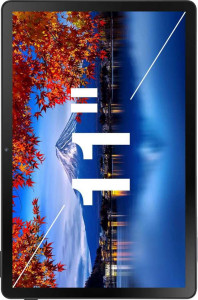
Doogee Tab G6 Plus
Doogee U11 Pro

Doogee Tab G6 Plus Doogee U11 Pro

Overview

Welcome to our in-depth spec comparison between the Doogee Tab G6 Plus and the Doogee U11 Pro — two Android tablets that share a surprising amount of common ground while diverging in some meaningful ways. Both feature an 11-inch display, 256GB of storage, and an 8000+ mAh battery, yet key battlegrounds emerge around processing performance, camera capabilities, connectivity options, and battery capacity. Read on to find out which tablet suits your needs best.

Common Features

  • Neither product includes a stylus.
  • Neither product has a detachable keyboard.
  • Neither product has a backlit keyboard.
  • Neither product offers water resistance.
  • Both products share the same 11″ screen size.
  • Both products have a resolution of 1280 x 800 px.
  • Both products feature a 90Hz refresh rate.
  • Neither product has branded damage-resistant glass.
  • HDR10 support is not available on either product.
  • Both products have a touch screen.
  • Both products offer 256GB of internal storage.
  • Both products have an external memory slot.
  • Both products use a 12 nm semiconductor size.
  • Both products support 64-bit processing.
  • Both products have integrated LTE.
  • Both products use big.LITTLE technology.
  • Both products have integrated graphics.
  • Both products feature 8 CPU threads.
  • Both products have a 5MP front camera.
  • Both products have a flash.
  • Both products have a front camera.
  • Both products have a built-in HDR mode.
  • Neither product can create panoramas in-camera.
  • Both products have touch autofocus.
  • Neither product offers optical zoom.
  • Neither product has a BSI sensor.
  • Neither product supports aptX, aptX HD, LDAC, aptX Low Latency, aptX Adaptive, or aptX Lossless.
  • Both products have stereo speakers.
  • Both products have a 3.5mm audio jack.
  • Both products support fast charging.
  • Neither product supports wireless charging.
  • Both products have a battery level indicator.
  • Both products have a rechargeable, non-removable battery.
  • Both products support Wi-Fi 4 (802.11n) and Wi-Fi 5 (802.11ac).
  • Both products have on-device machine learning.
  • Both products have clipboard warnings.
  • Both products have location privacy options.
  • Both products have camera and microphone privacy options.
  • Both products can block app tracking.
  • Cross-site tracking blocking is not available on either product.
  • Both products use DDR4 memory.

Main Differences

  • Weight is 554 g on Doogee Tab G6 Plus and 537 g on Doogee U11 Pro.
  • Thickness is 8.1 mm on Doogee Tab G6 Plus and 7.9 mm on Doogee U11 Pro.
  • Pixel density is 138 ppi on Doogee Tab G6 Plus and 137 ppi on Doogee U11 Pro.
  • RAM is 8GB on Doogee Tab G6 Plus and 6GB on Doogee U11 Pro.
  • The chipset is Unisoc T7280 on Doogee Tab G6 Plus and Unisoc T7200 on Doogee U11 Pro.
  • The GPU is Mali-G57MC on Doogee Tab G6 Plus and Mali G57 MP1 on Doogee U11 Pro.
  • CPU speed is 8 x 1.9 GHz on Doogee Tab G6 Plus and 2 x 1.6 & 6 x 1.6 GHz on Doogee U11 Pro.
  • Geekbench 6 multi-core result is 1541 on Doogee Tab G6 Plus and 1391 on Doogee U11 Pro.
  • Geekbench 6 single-core result is 497 on Doogee Tab G6 Plus and 371 on Doogee U11 Pro.
  • GPU clock speed is 850 MHz on Doogee Tab G6 Plus and 650 MHz on Doogee U11 Pro.
  • RAM speed is 1866 MHz on Doogee Tab G6 Plus and 1600 MHz on Doogee U11 Pro.
  • Maximum memory amount is 12GB on Doogee Tab G6 Plus and 14GB on Doogee U11 Pro.
  • Shading units total 32 on Doogee Tab G6 Plus and 64 on Doogee U11 Pro.
  • Main camera resolution is 8MP on Doogee Tab G6 Plus and 13MP on Doogee U11 Pro.
  • Main camera video recording is 1080p at 30 fps on Doogee Tab G6 Plus and 1080p at 60 fps on Doogee U11 Pro.
  • Slow-motion video recording is supported on Doogee Tab G6 Plus but not available on Doogee U11 Pro.
  • FM radio is present on Doogee U11 Pro but not available on Doogee Tab G6 Plus.
  • Battery capacity is 8000 mAh on Doogee Tab G6 Plus and 8580 mAh on Doogee U11 Pro.
  • A cellular module is present on Doogee Tab G6 Plus but not available on Doogee U11 Pro.
  • GPS is available on Doogee U11 Pro but not present on Doogee Tab G6 Plus.
  • Upload speed is 150 Mbit/s on Doogee Tab G6 Plus and 100 Mbit/s on Doogee U11 Pro.
Specs Comparison
Doogee Tab G6 Plus

Doogee Tab G6 Plus

Doogee U11 Pro

Doogee U11 Pro

Design:
weight 554 g 537 g
thickness 8.1 mm 7.9 mm
Stylus included
Has a detachable keyboard
Has a backlit keyboard
water resistance None None
Has tilt sensitivity

In terms of design, the Doogee Tab G6 Plus and Doogee U11 Pro are remarkably similar, differing only in minor physical dimensions. The U11 Pro is marginally lighter at 537 g versus 554 g, and fractionally thinner at 7.9 mm compared to 8.1 mm. While these gaps are small, they can translate to a slightly more comfortable experience during extended one-handed use or when carrying the tablet for long periods.

Both devices share the same set of omissions: no stylus, no detachable or backlit keyboard, no water resistance, and no tilt sensitivity. This means neither tablet is positioned as a productivity-focused or ruggedized device — they are straightforward consumer slates without premium accessories or environmental protection built in.

The U11 Pro holds a narrow edge in design strictly based on the provided specs, thanks to its slightly reduced weight and thickness. That said, the real-world difference is minimal, and for most users the two tablets will feel essentially equivalent in hand. Neither product differentiates itself meaningfully through design features beyond basic form factor.

Display:
screen size 11" 11"
resolution 1280 x 800 px 1280 x 800 px
pixel density 138 ppi 137 ppi
Display type IPS, LCD LCD, IPS
refresh rate 90Hz 90Hz
has branded damage-resistant glass
supports HDR10
has a touch screen
Has sapphire glass display
supports HDR10+
supports Dolby Vision
Has an e-paper display

The display specs for the Doogee Tab G6 Plus and Doogee U11 Pro are virtually identical across every measurable dimension. Both feature an 11-inch IPS LCD panel running at 1280 x 800 resolution with a 90Hz refresh rate — and the pixel density difference of 138 ppi versus 137 ppi is so negligible it is imperceptible to the human eye.

The 90Hz refresh rate is a genuine practical advantage both tablets share over standard 60Hz panels, delivering noticeably smoother scrolling and animations during everyday use. However, the 1280 x 800 resolution at this screen size yields a relatively modest pixel density, which means fine text and detailed images will appear softer compared to higher-resolution competitors. Neither device supports HDR10, Dolby Vision, or any form of damage-resistant glass, placing them firmly in the budget tier where display fidelity and durability coatings are typically sacrificed to control cost.

This is a clear tie. There is no meaningful difference between these two displays — a buyer choosing between these tablets should look to other specification groups to make their decision, as the screen experience will be effectively identical on both devices.

Performance:
internal storage 256GB 256GB
RAM 8GB 6GB
Chipset (SoC) name Unisoc T7280 Unisoc T7200
GPU name Mali-G57MC Mali G57 MP1
CPU speed 8 x 1.9 GHz 2 x 1.6 & 6 x 1.6 GHz
Geekbench 6 result (multi) 1541 1391
Geekbench 6 result (single) 497 371
has an external memory slot
semiconductor size 12 nm 12 nm
Supports 64-bit
Has integrated LTE
Uses big.LITTLE technology
Has integrated graphics
GPU clock speed 850 MHz 650 MHz
CPU threads 8 threads 8 threads
RAM speed 1866 MHz 1600 MHz
maximum memory amount 12GB 14GB
Android version Android 15 Android 15
Thermal Design Power (TDP) 10W 10W
shading units 32 64
eMMC version 5.1 5.1

Under the hood, the Doogee Tab G6 Plus holds a meaningful performance advantage. Its Unisoc T7280 chipset pairs eight cores clocked at 1.9 GHz with 8 GB of RAM running at 1866 MHz, while the U11 Pro's Unisoc T7200 runs all eight cores at a lower 1.6 GHz and ships with only 6 GB of RAM at 1600 MHz. The real-world impact of this gap is confirmed by the Geekbench 6 scores: the G6 Plus leads in both single-core (497 vs 371) and multi-core (1541 vs 1391) results. The single-core gap is especially relevant since most everyday tasks — app launches, UI responsiveness, web browsing — rely heavily on single-thread performance.

GPU performance tells a similarly one-sided story for the G6 Plus, which runs its Mali-G57 at 850 MHz versus the U11 Pro's 650 MHz. The U11 Pro does list more shading units (64 vs 32), but the significantly lower clock speed limits how much practical benefit those units can deliver. One area where the U11 Pro technically edges out its sibling is maximum expandable RAM, supporting up to 14 GB compared to the G6 Plus's 12 GB ceiling — though both ship with less RAM than their respective maximums, making this a less impactful distinction in day-to-day use.

Overall, the G6 Plus has a clear performance edge. Its higher CPU clocks, larger base RAM, faster memory bus, and superior benchmark scores add up to a device that will handle multitasking and heavier workloads more comfortably — a tangible differentiator for users who push their tablet beyond basic media consumption.

Cameras:
megapixels (main camera) 8 MP 13 MP
megapixels (front camera) 5MP 5MP
video recording (main camera) 1080 x 30 fps 1080 x 60 fps
has a flash
has a front camera
has a built-in HDR mode
can create panoramas in-camera
supports slow-motion video recording
has touch autofocus
optical zoom 0x 0x
has a BSI sensor
has manual white balance
has a CMOS sensor
supports HDR10 recording
has continuous autofocus when recording movies
supports Dolby Vision recording
Has a front-facing LED flash
number of flash LEDs 1 1
has manual ISO
has a video light
Shoots 360° panorama
has a serial shot mode
has built-in optical image stabilization
has 3D photo/video recording capabilities
Has a dual-tone LED flash
has manual focus
Has a RGB LED flash
has manual exposure
has manual shutter speed

The main camera is where these two tablets part ways most clearly. The Doogee U11 Pro steps up with a 13 MP rear shooter compared to the Tab G6 Plus's 8 MP sensor — a meaningful resolution gap that translates to more detail in stills and greater flexibility when cropping. The U11 Pro also records video at 1080p 60 fps versus the G6 Plus's 1080p 30 fps, which produces smoother footage for action scenes or fast-moving subjects. Front cameras are identical at 5 MP on both devices.

The G6 Plus counters with one notable capability the U11 Pro lacks: slow-motion video recording. For users who occasionally want to capture slow-motion clips, this is a genuine functional advantage. Both tablets otherwise share the same manual controls — ISO, white balance, focus, and exposure — as well as HDR mode, touch autofocus, and continuous autofocus during video. Neither offers optical zoom or optical image stabilization, which is typical at this price tier.

On balance, the U11 Pro holds the camera edge. Its higher-resolution main sensor and smoother 60 fps video capability will benefit a broader range of everyday shooting scenarios than the G6 Plus's slow-motion mode. The G6 Plus's slow-motion feature is a useful differentiator, but the U11 Pro's advantages in resolution and video fluidity are more consistently impactful for typical tablet camera use.

Audio:
has aptX
has aptX HD
has LDAC
has aptX Low Latency
has aptX Adaptive
has aptX Lossless
has stereo speakers
has a socket for a 3.5 mm audio jack
Has a radio

Audio hardware is largely a wash between these two tablets. Both the Doogee Tab G6 Plus and Doogee U11 Pro offer stereo speakers and a 3.5 mm headphone jack — the latter being an increasingly rare convenience that wired headphone users will appreciate. Neither device supports any high-quality Bluetooth audio codec such as aptX, LDAC, or their variants, meaning wireless audio is limited to standard SBC or AAC quality.

The only differentiator in this group is the U11 Pro's built-in FM radio, which the G6 Plus lacks entirely. For users in areas with good FM coverage who want to tune in without consuming mobile data, this is a genuine — if niche — functional advantage.

The U11 Pro holds a narrow edge here solely due to its FM radio inclusion. For the majority of users focused on media playback or wireless audio, the two tablets are effectively tied; but the radio capability gives the U11 Pro a small practical advantage for those who value it.

Battery:
battery power 8000 mAh 8580 mAh
Supports fast charging
has wireless charging
has a battery level indicator
has a rechargeable battery
has a removable battery

Battery capacity is close but not identical. The Doogee U11 Pro packs an 8580 mAh cell versus the Tab G6 Plus's 8000 mAh — a difference of 580 mAh, or roughly 7%. At this scale, that gap is unlikely to be dramatic in daily use, but it does point to a modest advantage in endurance for the U11 Pro during long sessions of video playback, browsing, or reading.

Both tablets support fast charging and share the same fundamental battery structure — non-removable and rechargeable — with no wireless charging on either device. The absence of wireless charging is unsurprising at this price tier, and fast charging support on both ensures that topping up from low battery remains reasonably convenient regardless of which device you choose.

The U11 Pro has a slight battery edge by virtue of its larger capacity, though the margin is modest enough that real-world longevity will depend heavily on usage patterns and screen-on time. For users prioritizing all-day stamina without recharging, the U11 Pro's extra headroom is a tangible if incremental advantage.

Connectivity & Features:
release date May 2025 April 2025
Wi-Fi version Wi-Fi 4 (802.11n), Wi-Fi 5 (802.11ac) Wi-Fi 4 (802.11n), Wi-Fi 5 (802.11ac)
has Mail Privacy Protection
has on-device machine learning
has clipboard warnings
has location privacy options
has camera/microphone privacy options
can block app tracking
blocks cross-site tracking
supports split screen
has Live Text
has notification permissions
has full-page screenshots
has Quick Start
has theme customization
has Wi-Fi password sharing
has PiP
Can play games while they download
has an extra dim mode
can offload apps
has focus modes
has media picker
has dynamic theming
has dark mode
has battery health check
Has USB Type-C
has a cellular module
has 5G support
is a multi-user system
gets direct OS updates
has GPS
has a child lock
has an HDMI output
has NFC
Has a fingerprint scanner
Supports widgets
Bluetooth version 5 5
download speed 300 MBits/s 300 MBits/s
has a gyroscope
Is free and open source
Has offline voice recognition
has a compass
upload speed 150 MBits/s 100 MBits/s
supports Wi-Fi
Has sharing intents
Has customizable notifications
Uses 3D facial recognition
supports Galileo
Has a barometer
has an accelerometer
has voice commands
Has an iris scanner
Has a built-in projector
supports Ethernet
Has an infrared sensor
Tracks the current position of a mobile device

Despite sharing an extensive list of features, two meaningful divergences set these tablets apart. The Doogee Tab G6 Plus includes a cellular module — meaning it can connect to mobile networks independently of Wi-Fi — while the U11 Pro does not, making the U11 Pro a Wi-Fi-only device. Conversely, the U11 Pro includes GPS, while the G6 Plus omits it entirely. These are essentially opposite trade-offs: the G6 Plus gains connectivity freedom away from Wi-Fi, while the U11 Pro gains location accuracy for navigation and location-aware apps.

A smaller but notable difference is upload speed: the G6 Plus supports 150 Mbits/s upload versus the U11 Pro's 100 Mbits/s, which could matter for users who regularly upload large files or make video calls over Wi-Fi. Beyond these points, the feature set is virtually identical — both run on Bluetooth 5, support Wi-Fi 5, offer USB Type-C, split-screen, Picture-in-Picture, dark mode, and a broad suite of privacy and customization options.

Declaring a single winner here depends entirely on use case. The G6 Plus is the stronger choice for users who need standalone mobile connectivity, while the U11 Pro suits users who stay within Wi-Fi range but value accurate GPS for navigation. Neither holds a universal advantage — this is one of the most use-case-dependent trade-offs across the entire comparison.

Miscellaneous:
DDR memory version 4 4

This group contains a single shared specification: both the Doogee Tab G6 Plus and Doogee U11 Pro use DDR4 memory. DDR4 is a well-established standard that provides a solid balance of bandwidth and power efficiency for tablet workloads, and its presence on both devices confirms neither has an architectural memory-type advantage over the other.

This is a complete tie. With only one data point available and both products identical on it, this group offers no basis for differentiation between the two tablets.

Comparison Summary & Verdict

After a thorough comparison, both tablets serve overlapping audiences but cater to different priorities. The Doogee Tab G6 Plus stands out with its stronger CPU and GPU performance — backed by higher Geekbench 6 scores, a faster GPU clock, and more RAM — making it the better pick for users who demand snappier multitasking and smoother graphics. It also supports slow-motion video recording and offers a cellular module for mobile connectivity. The Doogee U11 Pro, on the other hand, counters with a larger 8580 mAh battery, a higher-resolution 13MP main camera with 60fps video, built-in GPS, and an FM radio, making it a well-rounded companion for everyday use and outdoor activities. Neither product is a clear overall winner — your choice should hinge on whether raw performance or versatile everyday features matter more to you.

Doogee Tab G6 Plus
Buy Doogee Tab G6 Plus if...

Buy the Doogee Tab G6 Plus if you prioritize stronger processing performance, better GPU power, more RAM, and need a cellular module for on-the-go connectivity.

Doogee U11 Pro
Buy Doogee U11 Pro if...

Buy the Doogee U11 Pro if you value a larger battery, a higher-resolution main camera with 60fps video, built-in GPS, and the convenience of an FM radio.