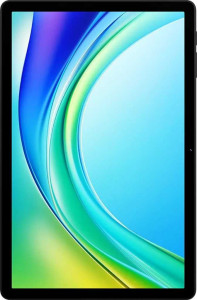
Doogee Tab G6
Doogee Tab G6 Plus

Doogee Tab G6 Doogee Tab G6 Plus

Overview

Welcome to our in-depth comparison of the Doogee Tab G6 and the Doogee Tab G6 Plus. These two Android tablets share the same physical design, display, and core features, yet diverge in meaningful ways under the hood. The key battlegrounds in this comparison are processing performance and RAM capacity, making this a particularly interesting match-up for users deciding how much power they truly need from their next tablet.

Common Features

  • Both tablets weigh 554 g.
  • Both tablets have a thickness of 8.1 mm.
  • Both tablets share the same dimensions of 257.3 mm width and 168.8 mm height.
  • Both tablets feature an 11″ IPS LCD display.
  • Both tablets have a resolution of 1280 x 800 px with a pixel density of 138 ppi.
  • Both tablets support a 90Hz refresh rate.
  • Damage-resistant glass is not available on either tablet.
  • HDR10 support is not available on either tablet.
  • Both tablets come with 256GB of internal storage.
  • Both tablets support external memory expansion.
  • Both tablets are built on a 12 nm semiconductor process.
  • Both tablets use big.LITTLE CPU technology.
  • Both tablets have integrated LTE connectivity.
  • Both tablets feature an 8 MP main camera and a 5 MP front camera.
  • Both tablets support 1080p video recording at 30 fps on the main camera.
  • Both tablets have stereo speakers and a 3.5 mm audio jack.
  • Both tablets have an 8000 mAh battery with fast charging support.
  • Wireless charging is not available on either tablet.
  • Both tablets support Wi-Fi 4 (802.11n) and Wi-Fi 5 (802.11ac).
  • Both tablets use DDR4 memory.

Main Differences

  • RAM is 6GB on the Doogee Tab G6 and 8GB on the Doogee Tab G6 Plus.
  • The chipset is the Unisoc T7250 on the Doogee Tab G6 and the Unisoc T7280 on the Doogee Tab G6 Plus.
  • The GPU is the Mali G57 on the Doogee Tab G6 and the Mali-G57MC on the Doogee Tab G6 Plus.
  • CPU speed is 2 x 1.8 & 6 x 1.6 GHz on the Doogee Tab G6 and 8 x 1.9 GHz on the Doogee Tab G6 Plus.
  • Geekbench 6 multi-core score is 1461 on the Doogee Tab G6 and 1541 on the Doogee Tab G6 Plus.
  • Geekbench 6 single-core score is 437 on the Doogee Tab G6 and 497 on the Doogee Tab G6 Plus.
  • The number of shading units is 64 on the Doogee Tab G6 and 32 on the Doogee Tab G6 Plus.
Specs Comparison
Doogee Tab G6

Doogee Tab G6

Doogee Tab G6 Plus

Doogee Tab G6 Plus

Design:
weight 554 g 554 g
thickness 8.1 mm 8.1 mm
width 257.3 mm 257.3 mm
height 168.8 mm 168.8 mm
volume 351.801144 cm³ 351.801144 cm³
Stylus included
Has a detachable keyboard
Has a backlit keyboard
water resistance None None
Has tilt sensitivity

In terms of physical design, the Doogee Tab G6 and Doogee Tab G6 Plus are identical across every measurable dimension: both weigh 554 g, share the same 8.1 mm thickness, and match exactly in width (257.3 mm), height (168.8 mm), and total volume (351.80 cm³). This means the two tablets are physically interchangeable in terms of cases, stands, or any form-factor accessories — there is no ergonomic distinction between them whatsoever.

Neither device offers any design accessories or advanced input features: both lack a stylus, a detachable keyboard, a backlit keyboard, and any form of tilt sensitivity. Water resistance is absent on both, which is worth noting for users who plan to use the tablet outdoors or in environments prone to moisture exposure.

From a design standpoint, this is a complete tie. There is no differentiator — not even a marginal one — between the two products in this category. A buyer choosing between these two tablets should look entirely to other spec groups (such as performance, display, or battery) to make their decision, as design offers zero basis for preference.

Display:
screen size 11" 11"
resolution 1280 x 800 px 1280 x 800 px
pixel density 138 ppi 138 ppi
Display type IPS, LCD IPS, LCD
refresh rate 90Hz 90Hz
has branded damage-resistant glass
has anti-reflection coating
supports HDR10
has a touch screen
Has sapphire glass display
supports HDR10+
supports Dolby Vision
Has an e-paper display

Both the Doogee Tab G6 and Doogee Tab G6 Plus feature an identical 11″ IPS LCD panel running at a resolution of 1280 x 800 px, yielding a pixel density of 138 ppi. At this screen size, that pixel density lands in the lower-mid range — fine for casual browsing, video streaming, and reading, but noticeably soft compared to higher-resolution tablets where text and fine detail appear sharper.

The shared 90Hz refresh rate is a genuine practical advantage at this price tier, delivering smoother scrolling and more responsive touch interactions than the standard 60Hz found on many budget tablets. However, neither display offers branded damage-resistant glass or an anti-reflection coating, making both more vulnerable to scratches and harder to use comfortably under direct light. The complete absence of HDR10, HDR10+, and Dolby Vision support also means neither tablet can render high-dynamic-range content as intended — a limitation for media-focused users.

As with the Design category, this is a complete tie. Every display specification is shared between the two devices without exception. Buyers seeking a display differentiator between these two models will need to look elsewhere, as the screen experience will be entirely indistinguishable in day-to-day use.

Performance:
internal storage 256GB 256GB
RAM 6GB 8GB
Chipset (SoC) name Unisoc T7250 Unisoc T7280
GPU name Mali G57 Mali-G57MC
CPU speed 2 x 1.8 & 6 x 1.6 GHz 8 x 1.9 GHz
Geekbench 6 result (multi) 1461 1541
Geekbench 6 result (single) 437 497
has an external memory slot
semiconductor size 12 nm 12 nm
Supports 64-bit
Has integrated LTE
Uses big.LITTLE technology
Has integrated graphics
GPU clock speed 850 MHz 850 MHz
CPU threads 8 threads 8 threads
RAM speed 1866 MHz 1866 MHz
maximum memory amount 12GB 12GB
Android version Android 15 Android 15
Thermal Design Power (TDP) 10W 10W
shading units 64 32
eMMC version 5.1 5.1

The clearest distinction between these two tablets lies in their chipsets and memory. The Doogee Tab G6 Plus runs on the Unisoc T7280 with 8GB of RAM, while the standard G6 pairs the Unisoc T7250 with 6GB of RAM. The CPU architecture also differs: the G6 uses a classic big.LITTLE split of 2 performance cores at 1.8 GHz and 6 efficiency cores at 1.6 GHz, whereas the G6 Plus runs all 8 cores at a uniform 1.9 GHz. In practice, this gives the G6 Plus a more consistent clock speed across all threads, which benefits sustained workloads and multitasking.

Benchmark results confirm the G6 Plus advantage, albeit modestly. Its Geekbench 6 single-core score of 497 versus the G6's 437 represents roughly a 14% lead, and the multi-core gap (1541 vs. 1461) is similarly incremental. These are not transformative differences in everyday use — both tablets will handle browsing, streaming, and light productivity without issue — but the G6 Plus will feel somewhat smoother under heavier loads and benefits from the additional 2GB of RAM, which reduces app reloading and supports better long-term multitasking. One notable anomaly: despite the G6 Plus winning on CPU, the G6 carries 64 GPU shading units compared to just 32 on the G6 Plus, with both sharing the same 850 MHz GPU clock. This could give the G6 a theoretical edge in certain graphics-bound tasks, though no GPU benchmark data is provided to confirm real-world impact.

Overall, the G6 Plus holds a clear performance edge in CPU throughput and RAM headroom. The shading unit discrepancy is an interesting footnote, but the higher chip tier, more uniform CPU configuration, and extra RAM make the G6 Plus the stronger performer by the data available here.

Cameras:
megapixels (main camera) 8 MP 8 MP
megapixels (front camera) 5MP 5MP
video recording (main camera) 1080 x 30 fps 1080 x 30 fps
has a flash
has a front camera
has a built-in HDR mode
can create panoramas in-camera
supports slow-motion video recording
has touch autofocus
optical zoom 0x 0x
has a BSI sensor
has manual white balance
has a CMOS sensor
supports HDR10 recording
has continuous autofocus when recording movies
supports Dolby Vision recording
Has a front-facing LED flash
number of flash LEDs 1 1
has manual ISO
has a video light
Shoots 360° panorama
has a serial shot mode
has built-in optical image stabilization
has 3D photo/video recording capabilities
Has a dual-tone LED flash
has manual focus
Has a RGB LED flash
has manual exposure
has manual shutter speed

Camera hardware is another area where the two tablets are completely indistinguishable. Both the Doogee Tab G6 and G6 Plus carry an 8 MP rear camera and a 5 MP front camera, with video capped at 1080p at 30 fps on the main shooter. For a tablet, these are functional rather than impressive specs — adequate for video calls, document scanning, and occasional casual shots, but not a serious imaging tool by any measure.

The feature set shared between them is reasonably capable for the category: both support touch autofocus, continuous autofocus during video recording, slow-motion video, built-in HDR mode, and a useful suite of manual controls including ISO, white balance, focus, and exposure. The presence of a video light is a practical bonus for low-light video calls. On the downside, neither has optical image stabilization, a BSI sensor, or any optical zoom — all common omissions at this tier that limit low-light performance and telephoto capability.

With every camera specification matching exactly, this is an unambiguous tie. No differentiation exists between the two models on imaging, and neither device makes a compelling case as a camera-forward tablet regardless of which variant a buyer chooses.

Audio:
has aptX
has aptX HD
has LDAC
has aptX Low Latency
has aptX Adaptive
has aptX Lossless
has stereo speakers
has a socket for a 3.5 mm audio jack
Has a radio

On the audio front, both the Doogee Tab G6 and G6 Plus offer the same setup: stereo speakers and a 3.5 mm headphone jack. The stereo speaker configuration is a meaningful plus for media consumption on a tablet, providing a wider, more immersive soundstage than a single mono speaker. The retained headphone jack is equally welcome, allowing users to connect wired headphones or earbuds without needing an adapter — a convenience that many devices at this tier have quietly dropped.

Where both tablets fall short is in Bluetooth audio codec support. Neither device offers aptX, LDAC, or any of their variants. This means wireless audio is limited to the standard SBC codec, which delivers acceptable but compressed sound quality. Users who prioritize high-fidelity wireless listening will need to rely on the headphone jack instead to avoid Bluetooth compression artifacts.

As with every other category so far, this is a complete tie. The audio feature set is identical across both models, and the choice between them has no bearing whatsoever on the listening experience.

Battery:
battery power 8000 mAh 8000 mAh
Supports fast charging
has wireless charging
has a battery level indicator
has a rechargeable battery
has a removable battery

Battery capacity is a strong suit shared equally by both tablets. An 8000 mAh cell is a generous allotment for an 11-inch tablet, and paired with a relatively modest display and mid-range chipset, both the Doogee Tab G6 and G6 Plus should deliver comfortable all-day — and potentially multi-day — endurance under typical usage patterns such as browsing, streaming, and light productivity.

Fast charging support on both models is a practical benefit, reducing downtime when the battery does eventually need topping up. The absence of wireless charging is a minor limitation but entirely expected at this price tier and unlikely to be a dealbreaker for most users. Neither device has a removable battery, which is standard practice for slim modern tablets.

Once again, this category yields a complete tie. Every battery specification is shared between the two models without exception. Battery life and charging behavior will be effectively identical across both variants, so this group provides no basis for choosing one over the other.

Connectivity & Features:
release date May 2025 May 2025
Wi-Fi version Wi-Fi 4 (802.11n), Wi-Fi 5 (802.11ac) Wi-Fi 4 (802.11n), Wi-Fi 5 (802.11ac)
SIM cards 1 SIM 1 SIM
has Mail Privacy Protection
has on-device machine learning
has clipboard warnings
has location privacy options
has camera/microphone privacy options
can block app tracking
blocks cross-site tracking
supports split screen
has Live Text
has notification permissions
has full-page screenshots
has Quick Start
has theme customization
has Wi-Fi password sharing
has PiP
Can play games while they download
has an extra dim mode
can offload apps
has focus modes
has media picker
has dynamic theming
has dark mode
has battery health check
Has USB Type-C
has a cellular module
has 5G support
is a multi-user system
gets direct OS updates
has GPS
has a child lock
has an HDMI output
has NFC
Has a fingerprint scanner
Supports widgets
Bluetooth version 5 5
download speed 300 MBits/s 300 MBits/s
has a gyroscope
Is free and open source
Has offline voice recognition
has a compass
upload speed 150 MBits/s 150 MBits/s
supports Wi-Fi
Has sharing intents
Has customizable notifications
Uses 3D facial recognition
supports Galileo
Has a barometer
has an accelerometer
has voice commands
Has an iris scanner
Has a built-in projector
supports Ethernet
Has an infrared sensor
Tracks the current position of a mobile device

Connectivity fundamentals are identical across both tablets. The Doogee Tab G6 and G6 Plus both support Wi-Fi 5 (802.11ac) with matched download and upload speeds of 300 Mbits/s and 150 Mbits/s respectively, alongside Bluetooth 5 and a cellular module — though neither supports 5G, capping mobile data at LTE speeds. The absence of NFC rules out contactless payments and quick device pairing, and there is no GPS chip, which significantly limits standalone navigation use cases. Position tracking is present via other means, but users needing reliable turn-by-turn navigation will be dependent on network-based location.

On the software and features side, both devices offer a notably capable Android experience for the price tier: split-screen multitasking, Picture-in-Picture, dark mode, dynamic theming, widgets, multi-user support, and a solid set of privacy controls including app tracking blocking, location privacy options, and camera/microphone controls. The lack of a fingerprint scanner on either device is a notable omission for security-conscious users, leaving them reliant on PIN or pattern unlock. Neither tablet receives direct OS updates, which is a long-term consideration for security and feature longevity.

This group is yet another complete tie — every connectivity specification and software feature is shared between the two models without a single point of divergence. Buyers evaluating these tablets on connectivity or feature set will find no reason to favor one variant over the other.

Miscellaneous:
DDR memory version 4 4

The only data point in this group is the DDR4 memory standard, shared by both the Doogee Tab G6 and G6 Plus. DDR4 is a well-established memory generation that offers a solid balance of bandwidth and power efficiency for mid-range devices — it supports the performance characteristics already noted in the Performance category, including the 1866 MHz RAM speed common to both tablets.

With a single spec and no divergence between the two models, this is an inevitable tie. The Miscellaneous group adds no new differentiating information and confirms only that both tablets draw from the same memory architecture foundation.

Comparison Summary & Verdict

Both the Doogee Tab G6 and the Doogee Tab G6 Plus offer an identical physical experience: the same 11″ IPS LCD display, 90Hz refresh rate, 8000 mAh battery with fast charging, stereo speakers, and 256GB of storage. The real distinction lies in their internals. The Doogee Tab G6 Plus steps ahead with the Unisoc T7280 chipset, 8GB of RAM, and higher Geekbench 6 scores in both single and multi-core tests, making it the stronger choice for users who multitask heavily or demand snappier performance. The Doogee Tab G6, powered by the Unisoc T7250 with 6GB of RAM, remains a capable and fully-featured tablet for everyday tasks. Choose the standard model if budget is a priority; opt for the Plus if you want a noticeable performance edge.

Doogee Tab G6
Buy Doogee Tab G6 if...

Buy the Doogee Tab G6 if you want a cost-effective tablet for everyday use and do not require the extra RAM or the performance boost of the Plus model.

Doogee Tab G6 Plus
Buy Doogee Tab G6 Plus if...

Buy the Doogee Tab G6 Plus if you need stronger multitasking capability, thanks to its 8GB of RAM, faster Unisoc T7280 chipset, and higher benchmark scores.