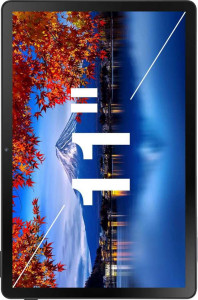
Doogee Tab G6
Doogee U11 Pro

Doogee Tab G6 Doogee U11 Pro

Overview

Welcome to our in-depth spec comparison between the Doogee Tab G6 and the Doogee U11 Pro — two 11-inch Android tablets from the same manufacturer that take surprisingly different paths. While they share a common display size, storage capacity, and audio setup, the battlegrounds between them span raw processing performance, camera capabilities, connectivity options, and battery endurance. Read on to discover which of these two budget-friendly tablets is the right fit for your needs.

Common Features

  • Neither product includes a stylus.
  • Neither product has a detachable keyboard.
  • Neither product has a backlit keyboard.
  • Neither product offers water resistance.
  • Both products share the same 11″ screen size.
  • Both products have a resolution of 1280 x 800 px.
  • Both products feature a 90Hz refresh rate.
  • Neither product has branded damage-resistant glass.
  • HDR10 support is not available on either product.
  • Both products have a touchscreen.
  • Both products come with 256GB of internal storage.
  • Both products have 6GB of RAM.
  • Both products include an external memory slot.
  • Both products use a 12 nm semiconductor process.
  • Both products support 64-bit processing.
  • Both products have integrated LTE.
  • Both products use big.LITTLE technology.
  • Both products have integrated graphics.
  • Both products have a 5MP front camera.
  • Both products have a flash.
  • Both products support HDR mode in-camera.
  • Neither product can create panoramas in-camera.
  • Both products support touch autofocus.
  • Neither product offers optical zoom.
  • Both products lack aptX, aptX HD, LDAC, aptX Low Latency, aptX Adaptive, and aptX Lossless audio support.
  • Both products have stereo speakers.
  • Both products include a 3.5mm audio jack.
  • Both products support fast charging.
  • Neither product supports wireless charging.
  • Both products have a non-removable rechargeable battery.
  • Both products support Wi-Fi 4 (802.11n) and Wi-Fi 5 (802.11ac).
  • Both products support on-device machine learning.
  • Both products have clipboard warnings.
  • Both products have location privacy options.
  • Both products have camera and microphone privacy options.
  • Both products can block app tracking.
  • Neither product blocks cross-site tracking.
  • Both products use DDR4 memory.

Main Differences

  • Weight is 554 g on Doogee Tab G6 and 537 g on Doogee U11 Pro.
  • Thickness is 8.1 mm on Doogee Tab G6 and 7.9 mm on Doogee U11 Pro.
  • Pixel density is 138 ppi on Doogee Tab G6 and 137 ppi on Doogee U11 Pro.
  • The chipset is Unisoc T7250 on Doogee Tab G6 and Unisoc T7200 on Doogee U11 Pro.
  • The GPU is Mali G57 on Doogee Tab G6 and Mali G57 MP1 on Doogee U11 Pro.
  • CPU speed is 2 x 1.8 & 6 x 1.6 GHz on Doogee Tab G6 and 2 x 1.6 & 6 x 1.6 GHz on Doogee U11 Pro.
  • Geekbench 6 multi-core score is 1461 on Doogee Tab G6 and 1391 on Doogee U11 Pro.
  • Geekbench 6 single-core score is 437 on Doogee Tab G6 and 371 on Doogee U11 Pro.
  • GPU clock speed is 850 MHz on Doogee Tab G6 and 650 MHz on Doogee U11 Pro.
  • RAM speed is 1866 MHz on Doogee Tab G6 and 1600 MHz on Doogee U11 Pro.
  • Maximum memory amount is 12GB on Doogee Tab G6 and 14GB on Doogee U11 Pro.
  • GPU execution units number 2 on Doogee Tab G6 and 1 on Doogee U11 Pro.
  • Main camera resolution is 8 MP on Doogee Tab G6 and 13 MP on Doogee U11 Pro.
  • Video recording on the main camera is 1080p at 30 fps on Doogee Tab G6 and 1080p at 60 fps on Doogee U11 Pro.
  • Slow-motion video recording is supported on Doogee Tab G6 but not available on Doogee U11 Pro.
  • FM radio is present on Doogee U11 Pro but not available on Doogee Tab G6.
  • Battery capacity is 8000 mAh on Doogee Tab G6 and 8580 mAh on Doogee U11 Pro.
  • A cellular module is present on Doogee Tab G6 but not available on Doogee U11 Pro.
  • GPS is available on Doogee U11 Pro but not present on Doogee Tab G6.
  • Upload speed is 150 Mbit/s on Doogee Tab G6 and 100 Mbit/s on Doogee U11 Pro.
  • Geekbench 5 single-core score is 357 on Doogee Tab G6 and 313 on Doogee U11 Pro.
  • Geekbench 5 multi-core score is 1350 on Doogee Tab G6 and 1175 on Doogee U11 Pro.
Specs Comparison
Doogee Tab G6

Doogee Tab G6

Doogee U11 Pro

Doogee U11 Pro

Design:
weight 554 g 537 g
thickness 8.1 mm 7.9 mm
Stylus included
Has a detachable keyboard
Has a backlit keyboard
water resistance None None
Has tilt sensitivity

In terms of design, the Doogee Tab G6 and Doogee U11 Pro are remarkably similar, sharing the same fundamental build philosophy. Both lack a stylus, detachable keyboard, backlit keyboard, tilt sensitivity, and any form of water resistance — meaning neither tablet is aimed at creative professionals or users who need durability in wet environments.

The only measurable differences lie in physical dimensions: the U11 Pro is marginally lighter at 537 g versus 554 g, and slightly thinner at 7.9 mm compared to 8.1 mm. In practice, a 17 g weight difference is barely perceptible during typical use, though it could matter slightly during extended handheld sessions. The 0.2 mm thickness gap is effectively invisible to the touch.

Overall, the two tablets are nearly identical from a design standpoint. The U11 Pro holds a very marginal edge in portability, but the gap is so small that it should not be a deciding factor for most users. If design is your primary concern, consider these products essentially tied.

Display:
screen size 11" 11"
resolution 1280 x 800 px 1280 x 800 px
pixel density 138 ppi 137 ppi
Display type IPS, LCD LCD, IPS
refresh rate 90Hz 90Hz
has branded damage-resistant glass
supports HDR10
has a touch screen
Has sapphire glass display
supports HDR10+
supports Dolby Vision
Has an e-paper display

The display specifications for the Doogee Tab G6 and Doogee U11 Pro are functionally identical. Both feature an 11-inch IPS LCD panel running at 1280 x 800 resolution with a 90Hz refresh rate — and the pixel density difference of 138 ppi versus 137 ppi is so negligible it is imperceptible to the human eye.

The 90Hz refresh rate is a welcome inclusion at this tier, lending noticeably smoother scrolling and more fluid UI animations compared to standard 60Hz panels. However, the 1280 x 800 resolution on an 11-inch screen yields a relatively low pixel density overall, meaning text and fine details will appear softer than on higher-resolution competitors. Neither tablet supports HDR10, Dolby Vision, or damage-resistant glass, which caps their suitability for media-focused or heavy-use scenarios.

This category is a clear tie. The two tablets deliver an essentially identical visual experience, with no meaningful distinction between them on any display metric that matters in daily use.

Performance:
internal storage 256GB 256GB
RAM 6GB 6GB
Chipset (SoC) name Unisoc T7250 Unisoc T7200
GPU name Mali G57 Mali G57 MP1
CPU speed 2 x 1.8 & 6 x 1.6 GHz 2 x 1.6 & 6 x 1.6 GHz
Geekbench 6 result (multi) 1461 1391
Geekbench 6 result (single) 437 371
has an external memory slot
semiconductor size 12 nm 12 nm
Supports 64-bit
Has integrated LTE
Uses big.LITTLE technology
Has integrated graphics
GPU clock speed 850 MHz 650 MHz
CPU threads 8 threads 8 threads
RAM speed 1866 MHz 1600 MHz
Has TrustZone
maximum memory amount 12GB 14GB
Android version Android 15 Android 15
Thermal Design Power (TDP) 10W 10W
GPU execution units 2 1
L3 cache 1 MB 1 MB
OpenGL ES version 3.2 3.2
shading units 64 64
eMMC version 5.1 5.1
OpenCL version 2 2

Beneath their near-identical exteriors, the Doogee Tab G6 and Doogee U11 Pro diverge meaningfully in raw processing power. The Tab G6 runs on the Unisoc T7250, whose two performance cores clock in at 1.8 GHz — versus the T7200 in the U11 Pro, where all cores are capped at 1.6 GHz. That advantage is confirmed by the Geekbench 6 results: the Tab G6 scores 437 (single-core) and 1461 (multi-core), compared to 371 and 1391 for the U11 Pro. The single-core gap is particularly significant, as most everyday tasks — app launches, UI responsiveness, web browsing — rely heavily on single-threaded performance.

The GPU picture tells a similar story. The Tab G6's Mali G57 runs at 850 MHz with 2 execution units, while the U11 Pro's variant operates at only 650 MHz with a single execution unit. Combined with the Tab G6's faster 1866 MHz RAM versus the U11 Pro's 1600 MHz, the Tab G6 should deliver a noticeably snappier experience in graphics-light gaming and GPU-accelerated tasks. The U11 Pro does counter with a higher maximum RAM ceiling of 14 GB versus 12 GB, though at the base 6 GB both ship with, this advantage is theoretical rather than immediate.

The Tab G6 holds a clear performance edge in this category. Across CPU speed, GPU clock, and benchmark scores, it consistently outpaces the U11 Pro — and for users prioritizing day-to-day snappiness, that lead is real and measurable.

Cameras:
megapixels (main camera) 8 MP 13 MP
megapixels (front camera) 5MP 5MP
video recording (main camera) 1080 x 30 fps 1080 x 60 fps
has a flash
has a front camera
has a built-in HDR mode
can create panoramas in-camera
supports slow-motion video recording
has touch autofocus
optical zoom 0x 0x
has a BSI sensor
has manual white balance
has a CMOS sensor
supports HDR10 recording
has continuous autofocus when recording movies
supports Dolby Vision recording
Has a front-facing LED flash
number of flash LEDs 1 1
has manual ISO
has a video light
Shoots 360° panorama
has a serial shot mode
has built-in optical image stabilization
has 3D photo/video recording capabilities
Has a dual-tone LED flash
has manual focus
Has a RGB LED flash
has manual exposure
has manual shutter speed

Camera hardware is where the Doogee U11 Pro pulls ahead most visibly. Its 13 MP main shooter offers a meaningful resolution advantage over the Tab G6's 8 MP sensor — more pixels translate to finer detail in stills and greater cropping flexibility. The U11 Pro also records video at 1080p 60 fps versus the Tab G6's 1080p 30 fps, which results in noticeably smoother footage, particularly for fast-moving subjects.

The Tab G6 does claw back one point: it supports slow-motion video recording, a feature absent on the U11 Pro. For users who occasionally want to capture slow-motion clips, this is a genuine differentiator. Elsewhere, the two tablets are evenly matched — both share a 5 MP front camera, HDR mode, touch autofocus, continuous autofocus during recording, and a comparable set of manual controls including ISO, white balance, focus, and exposure.

On balance, the U11 Pro holds the camera edge, driven by its higher-resolution sensor and smoother 60 fps video output. The Tab G6's slow-motion capability is a notable consolation, but for users who prioritize photo quality and fluid video, the U11 Pro is the stronger choice in this category.

Audio:
has aptX
has aptX HD
has LDAC
has aptX Low Latency
has aptX Adaptive
has aptX Lossless
has stereo speakers
has a socket for a 3.5 mm audio jack
Has a radio

Audio hardware is largely a wash between the two tablets. Both the Doogee Tab G6 and Doogee U11 Pro include stereo speakers and a 3.5 mm headphone jack — a combination that is increasingly rare at this price tier and genuinely useful for wired headphone users. Neither device supports any high-quality Bluetooth audio codec such as aptX, LDAC, or their variants, which means wireless audio is limited to standard SBC or AAC quality.

The one distinguishing feature here is the U11 Pro's inclusion of a built-in FM radio — an old-school but practical addition for users who want access to local broadcasts without consuming mobile data or relying on streaming services. It is a niche feature, but in markets where FM radio remains widely used, it adds tangible value.

For most users the two tablets are evenly matched on audio. The U11 Pro earns a narrow edge solely due to its FM radio capability — a minor but exclusive feature that the Tab G6 simply does not offer.

Battery:
battery power 8000 mAh 8580 mAh
Supports fast charging
has wireless charging
has a battery level indicator
has a rechargeable battery
has a removable battery

Battery capacity is one area where the two tablets diverge just enough to be worth noting. The Doogee U11 Pro packs an 8580 mAh cell versus the 8000 mAh in the Tab G6 — a difference of 580 mAh, or roughly 7%. On an identical display and chipset platform, that margin could translate to anywhere from 30 minutes to an hour of additional screen-on time depending on usage patterns, which is a meaningful but not dramatic real-world gap.

Both tablets support fast charging and share the same fundamental battery architecture — sealed, rechargeable, non-removable. Neither offers wireless charging, so there are no additional convenience features to differentiate them on that front.

The U11 Pro holds a modest but genuine edge in this category. A larger battery is an unambiguous advantage all else being equal, and while 580 mAh is not a transformative difference, users who prioritize longevity between charges will find the U11 Pro the more capable option.

Connectivity & Features:
release date May 2025 April 2025
Wi-Fi version Wi-Fi 4 (802.11n), Wi-Fi 5 (802.11ac) Wi-Fi 4 (802.11n), Wi-Fi 5 (802.11ac)
has Mail Privacy Protection
has on-device machine learning
has clipboard warnings
has location privacy options
has camera/microphone privacy options
can block app tracking
blocks cross-site tracking
supports split screen
has Live Text
has notification permissions
has full-page screenshots
has Quick Start
has theme customization
has Wi-Fi password sharing
has PiP
Can play games while they download
has an extra dim mode
can offload apps
has focus modes
has media picker
has dynamic theming
has dark mode
has battery health check
Has USB Type-C
has a cellular module
has 5G support
is a multi-user system
gets direct OS updates
has GPS
has a child lock
has an HDMI output
has NFC
Has a fingerprint scanner
Supports widgets
Bluetooth version 5 5
download speed 300 MBits/s 300 MBits/s
has a gyroscope
Is free and open source
Has offline voice recognition
has a compass
upload speed 150 MBits/s 100 MBits/s
supports Wi-Fi
Has sharing intents
Has customizable notifications
Uses 3D facial recognition
supports Galileo
Has a barometer
has an accelerometer
has voice commands
Has an iris scanner
Has a built-in projector
supports Ethernet
Has an infrared sensor
Tracks the current position of a mobile device

Across the broad sweep of connectivity and software features, these two tablets are remarkably well-matched — but three specific differences are worth examining closely. Most significantly, the Doogee Tab G6 includes a cellular module while the U11 Pro does not. This means the Tab G6 can connect to mobile networks independently, functioning without a Wi-Fi network — a practical advantage for users who need internet access on the go. The U11 Pro, by contrast, is Wi-Fi only, tethering it to hotspots or home networks.

The U11 Pro counters with built-in GPS, which the Tab G6 lacks. Dedicated GPS enables accurate standalone navigation and location services without relying on network-based positioning, making the U11 Pro more capable for mapping and location-aware applications. The Tab G6 does still track device position, but without a dedicated GPS chip. There is also a minor upload speed difference — 150 Mbits/s on the Tab G6 versus 100 Mbits/s on the U11 Pro — though in everyday use this gap is rarely felt. All other connectivity specs, including Wi-Fi version, Bluetooth 5, and the full suite of software privacy and multitasking features, are identical.

This category comes down to use case. Users who need untethered mobile connectivity will find the Tab G6 the more versatile choice, while those who prioritize location accuracy and navigation should lean toward the U11 Pro. Neither product holds an outright overall edge — it is a meaningful trade-off rather than a clear winner.

Miscellaneous:
Geekbench 5 result (single) 357 313
Geekbench 5 result (multi) 1350 1175
DDR memory version 4 4

The Geekbench 5 results in this group reinforce what the Geekbench 6 scores already suggested in the Performance category. The Doogee Tab G6 leads with a single-core score of 357 and a multi-core score of 1350, while the U11 Pro trails at 313 single-core and 1175 multi-core. The single-core gap of roughly 14% is the more telling figure, as it reflects the Tab G6's faster performance cores in tasks that cannot be parallelized — which covers the majority of typical daily interactions.

Both tablets use DDR4 memory, meaning there is no architectural difference in memory type to account for any performance variation. The benchmark gap is therefore a direct reflection of the chipset differences already identified, and these Geekbench 5 results serve as consistent corroboration across two separate benchmark suites.

The Tab G6 is the clear winner here. With leads in both single- and multi-core results across Geekbench 5, its processing advantage over the U11 Pro is not an anomaly — it is a consistent and reproducible pattern.

Comparison Summary & Verdict

After examining all the specs, both tablets serve distinct audiences. The Doogee Tab G6 stands out for users who need cellular connectivity on the go, benefit from stronger processing performance backed by higher Geekbench scores and a faster GPU clock, and enjoy slow-motion video recording. On the other hand, the Doogee U11 Pro appeals to those who value a higher-resolution 13MP rear camera, built-in GPS navigation, FM radio, a marginally slimmer and lighter build, and a slightly larger 8580 mAh battery. Neither product is an outright winner — your choice should be driven by whether connectivity and performance or camera quality and navigation matter more to you.

Doogee Tab G6
Buy Doogee Tab G6 if...

Buy the Doogee Tab G6 if you need built-in cellular connectivity and want stronger overall processing performance with a faster GPU and higher benchmark scores.

Doogee U11 Pro
Buy Doogee U11 Pro if...

Buy the Doogee U11 Pro if you prioritize a higher-resolution rear camera, built-in GPS, FM radio support, and a slightly larger battery for longer usage sessions.