Doogee V Max S
Tecno Camon 40 Pro 4G

Doogee V Max S Tecno Camon 40 Pro 4G

Overview

Welcome to our in-depth comparison of the Doogee V Max S and the Tecno Camon 40 Pro 4G — two smartphones that couldn't be more different in philosophy. One is a rugged powerhouse built around a massive battery and 5G connectivity, while the other is a sleek, stylish daily driver with a premium display and a high-resolution front camera. In this head-to-head, we examine key battlegrounds including battery capacity, display quality, camera performance, and overall performance to help you find your perfect match.

Common Features

  • Both products are waterproof with an IP68 ingress protection rating.
  • Neither product can be folded.
  • Both products feature damage-resistant glass on their displays.
  • HDR10 support is not available on either product.
  • HDR10+ support is not available on either product.
  • Dolby Vision support is not available on either product.
  • Neither product has a secondary screen.
  • Both products have a touch screen.
  • Both products come with 256GB of internal storage.
  • Both products have integrated LTE support.
  • Both products use a 6 nm semiconductor.
  • Both products support 64-bit processing.
  • Both products have integrated graphics.
  • Both products use big.LITTLE technology with 8 CPU threads.
  • Both products have a multi-lens main camera with a dual-tone LED flash.
  • Both products have a CMOS sensor and support phase-detection autofocus.
  • Both products support slow-motion video recording and have a built-in HDR mode.
  • Both products lack wireless charging but support fast charging.
  • Neither product has a removable battery, and both have a rechargeable battery with a battery level indicator.
  • Both products have stereo speakers, no 3.5mm audio jack, and FM radio support.
  • Both products support NFC, have a fingerprint scanner, use USB Type-C, and accommodate 2 SIM cards.
  • Crash detection and emergency SOS via satellite are not available on either product.
  • Both products have clipboard warnings and location privacy options.
  • Camera and microphone privacy options are available on both products.
  • Mail Privacy Protection is not available on either product.
  • Both products support theme customization and can block app tracking.
  • Cross-site tracking blocking is not present on either product.
  • Both products have on-device machine learning capabilities.
  • Neither product has a sapphire glass display or an e-paper display.
  • Both products have a video light.

Main Differences

  • Weight is 536 g on Doogee V Max S and 178 g on Tecno Camon 40 Pro 4G.
  • Thickness is 26.3 mm on Doogee V Max S and 7.3 mm on Tecno Camon 40 Pro 4G.
  • Width is 83.1 mm on Doogee V Max S and 74.6 mm on Tecno Camon 40 Pro 4G.
  • Height is 178.5 mm on Doogee V Max S and 164.3 mm on Tecno Camon 40 Pro 4G.
  • Volume is 390.117105 cm³ on Doogee V Max S and 89.474494 cm³ on Tecno Camon 40 Pro 4G.
  • A rugged build is present on Doogee V Max S but not on Tecno Camon 40 Pro 4G.
  • Display type is LCD IPS on Doogee V Max S and OLED/AMOLED on Tecno Camon 40 Pro 4G.
  • Screen size is 6.58″ on Doogee V Max S and 6.78″ on Tecno Camon 40 Pro 4G.
  • Pixel density is 401 ppi on Doogee V Max S and 393 ppi on Tecno Camon 40 Pro 4G.
  • Refresh rate is 120Hz on Doogee V Max S and 144Hz on Tecno Camon 40 Pro 4G.
  • Gorilla Glass version is Gorilla Glass 5 on Doogee V Max S and Gorilla Glass 7i on Tecno Camon 40 Pro 4G.
  • Always-On Display is available on Tecno Camon 40 Pro 4G but not on Doogee V Max S.
  • RAM is 8GB on Doogee V Max S and 12GB on Tecno Camon 40 Pro 4G.
  • Chipset is MediaTek Dimensity 7050 on Doogee V Max S and MediaTek Helio G100 on Tecno Camon 40 Pro 4G.
  • GPU is Mali G68 MP4 on Doogee V Max S and Mali G57 on Tecno Camon 40 Pro 4G.
  • CPU speed is 2 x 2.6 & 6 x 2 GHz on Doogee V Max S and 2 x 2.2 & 6 x 2 GHz on Tecno Camon 40 Pro 4G.
  • RAM speed is 3200 MHz on Doogee V Max S and 4266 MHz on Tecno Camon 40 Pro 4G.
  • DirectX version is DirectX 12 on Doogee V Max S and DirectX 11 on Tecno Camon 40 Pro 4G.
  • Maximum memory amount is 16GB on Doogee V Max S and 12GB on Tecno Camon 40 Pro 4G.
  • DDR memory version is DDR5 on Doogee V Max S and DDR4 on Tecno Camon 40 Pro 4G.
  • Main camera resolution is 108 & 20 & 2 MP on Doogee V Max S and 50 & 8 MP on Tecno Camon 40 Pro 4G.
  • Front camera resolution is 16MP on Doogee V Max S and 50MP on Tecno Camon 40 Pro 4G.
  • Optical image stabilization is available on Tecno Camon 40 Pro 4G but not on Doogee V Max S.
  • Main camera video recording is 2160p at 30fps on Doogee V Max S and 2160p at 60fps on Tecno Camon 40 Pro 4G.
  • Number of flash LEDs is 1 on Doogee V Max S and 2 on Tecno Camon 40 Pro 4G.
  • Android version is Android 14 on Doogee V Max S and Android 15 on Tecno Camon 40 Pro 4G.
  • App offloading is supported on Tecno Camon 40 Pro 4G but not on Doogee V Max S.
  • Battery capacity is 22000 mAh on Doogee V Max S and 5200 mAh on Tecno Camon 40 Pro 4G.
  • Charging speed is 33W on Doogee V Max S and 45W on Tecno Camon 40 Pro 4G.
  • A charger is included with Tecno Camon 40 Pro 4G but not with Doogee V Max S.
  • 5G support is present on Doogee V Max S but not on Tecno Camon 40 Pro 4G.
  • Wi-Fi support includes Wi-Fi 6 on Doogee V Max S but only up to Wi-Fi 5 on Tecno Camon 40 Pro 4G.
  • An external memory slot is available on Doogee V Max S but not on Tecno Camon 40 Pro 4G.
  • Download speed is 2770 MBits/s on Doogee V Max S and 650 MBits/s on Tecno Camon 40 Pro 4G.
  • Upload speed is 1250 MBits/s on Doogee V Max S and 150 MBits/s on Tecno Camon 40 Pro 4G.
  • An infrared sensor is present on Tecno Camon 40 Pro 4G but not on Doogee V Max S.
  • A curved display is featured on Tecno Camon 40 Pro 4G but not on Doogee V Max S.
Specs Comparison
Doogee V Max S

Doogee V Max S

Tecno Camon 40 Pro 4G

Tecno Camon 40 Pro 4G

Design:
water resistance Waterproof Waterproof
weight 536 g 178 g
thickness 26.3 mm 7.3 mm
width 83.1 mm 74.6 mm
height 178.5 mm 164.3 mm
volume 390.117105 cm³ 89.474494 cm³
Ingress Protection (IP) rating IP68 IP68
has a rugged build
can be folded

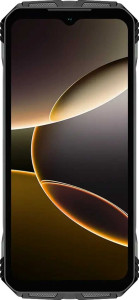
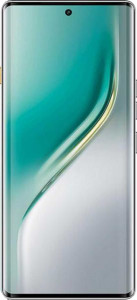
Both phones share an IP68 waterproof rating, meaning neither has an edge in water resistance — each can withstand submersion under the same certified conditions. That, however, is where the physical similarities end. The Doogee V Max S is a purpose-built rugged device, and its dimensions make that unmistakably clear: at 26.3 mm thick and weighing a substantial 536 g, it is built to absorb punishment rather than slip into a pocket. The Tecno Camon 40 Pro 4G, by contrast, is a conventional smartphone at 7.3 mm thin and just 178 g — roughly one-third the weight of its counterpart.

That weight gap — 358 g — is not a minor ergonomic footnote. In practice, holding the Doogee for extended periods, making calls, or using it one-handed will feel noticeably more fatiguing. Its volume of 390 cm³ versus the Tecno's 89 cm³ means it occupies more than four times the physical space, making pocket carry genuinely inconvenient. The Doogee's rugged construction — reinforced chassis, thicker body — is the direct cause of this bulk, and it is a deliberate trade-off for durability on job sites or in extreme environments.

The design edge depends entirely on the use case. For users who need drop resistance, construction-site durability, or outdoor ruggedness, the Doogee V Max S is the clear fit. For anyone prioritizing everyday comfort, pocketability, and lightweight handling, the Tecno Camon 40 Pro 4G wins decisively — it is simply a far more manageable device for daily life.
Display:
Display type LCD, IPS OLED/AMOLED
screen size 6.58" 6.78"
pixel density 401 ppi 393 ppi
resolution 1080 x 2408 px 1080 x 2463 px
refresh rate 120Hz 144Hz
has branded damage-resistant glass
Gorilla Glass version Gorilla Glass 5 Gorilla Glass 7i
supports HDR10
supports HDR10+
Always-On Display
supports Dolby Vision
Has a secondary screen
has a touch screen

The most consequential difference here is panel technology. The Tecno Camon 40 Pro 4G uses an OLED/AMOLED display, which delivers true blacks, higher contrast, and more vibrant colors by lighting pixels individually. The Doogee V Max S relies on an LCD IPS panel — perfectly capable for everyday tasks, but fundamentally unable to match OLED's contrast depth or color pop, particularly in dark environments or when watching video content.

The Tecno also edges ahead on refresh rate — 144Hz versus the Doogee's 120Hz — meaning scrolling and animations appear marginally smoother, though both are solidly in the fluid-display tier. Screen sizes and pixel densities are close enough to be functionally identical in hand. Where the glass protection matters, though, the Tecno carries Gorilla Glass 7i against the Doogee's Gorilla Glass 5 — a newer generation that offers improved scratch and drop resistance, which is somewhat ironic given the Doogee's rugged positioning. The Tecno's Always-On Display support is a small but practical daily convenience the Doogee lacks entirely.

The Tecno Camon 40 Pro 4G holds a clear display advantage — better panel tech, a higher refresh rate, newer protective glass, and an Always-On Display. For a device that is not marketed as rugged, its screen outperforms the Doogee's in nearly every qualitative dimension that matters to everyday users.

Performance:
internal storage 256GB 256GB
RAM 8GB 12GB
Chipset (SoC) name MediaTek Dimensity 7050 MediaTek Helio G100
GPU name Mali G68 MP4 Mali G57
CPU speed 2 x 2.6 & 6 x 2 GHz 2 x 2.2 & 6 x 2 GHz
GPU clock speed 950 MHz 1000 MHz
Has integrated LTE
RAM speed 3200 MHz 4266 MHz
semiconductor size 6 nm 6 nm
Supports 64-bit
DirectX version DirectX 12 DirectX 11
Has integrated graphics
OpenGL ES version 3.2 3.2
Uses big.LITTLE technology
CPU threads 8 threads 8 threads
Uses HMP
Has TrustZone
OpenCL version 2 2
maximum memory amount 16GB 12GB
Thermal Design Power (TDP) 5W 5W
DDR memory version 5 4

Underneath, these two phones run on very different chipsets despite sharing the same 6 nm manufacturing process. The Doogee V Max S is powered by the MediaTek Dimensity 7050, a more capable modern SoC, while the Tecno Camon 40 Pro 4G uses the MediaTek Helio G100 — a chip primarily oriented toward gaming at the mid-range tier but outclassed by the Dimensity in architectural generation. The Doogee's performance cores clock higher at 2.6 GHz versus the Tecno's 2.2 GHz, a gap that translates to snappier single-core tasks like app launches and UI responsiveness.

On GPU, the Doogee's Mali G68 MP4 is a wider, more capable graphics unit than the Tecno's Mali G57, and its DirectX 12 support signals better long-term compatibility with graphics workloads compared to the Tecno's DirectX 11. The Tecno counters with more out-of-the-box RAM — 12 GB versus 8 GB — which helps with sustained multitasking and keeping more apps alive in the background. However, the Doogee supports up to 16 GB maximum memory and runs the faster DDR5 standard, whereas the Tecno tops out at 12 GB on DDR4.

The Doogee V Max S holds the overall performance edge: its chipset is architecturally stronger, its peak CPU speed is higher, and its GPU is more capable — advantages that matter for gaming and compute-heavy tasks. The Tecno's higher base RAM is a real practical benefit for multitasking, but it does not offset the Doogee's broader silicon advantage.

Cameras:
megapixels (main camera) 108 & 20 & 2 MP 50 & 8 MP
wide aperture (main camera) 1.9 & 1.8 & 2.4f 1.9f
Has a dual-lens (or multi-lens) main camera
megapixels (front camera) 16MP 50MP
has built-in optical image stabilization
video recording (main camera) 2160 x 30 fps 2160 x 60 fps
Has a dual-tone LED flash
number of flash LEDs 1 2
has a BSI sensor
has a CMOS sensor
has continuous autofocus when recording movies
Has phase-detection autofocus for photos
supports slow-motion video recording
has a built-in HDR mode
has manual exposure
has a flash
has manual ISO
has a serial shot mode
has manual focus
has a front camera
Has laser autofocus
Shoots 360° panorama
has manual white balance
has touch autofocus
has manual shutter speed
can create panoramas in-camera
wide aperture (front camera) 1.8f 2.5f
Has timelapse function
Has a front-facing LED flash
has a dual-lens (or multi-lens) front camera
supports HDR10 recording
supports Dolby Vision recording
has a front-facing camera under the display
Has a RGB LED flash
has 3D photo/video recording capabilities

Raw megapixel counts tell a complicated story here. The Doogee V Max S leads with a 108 MP primary sensor backed by a 20 MP secondary — impressive on paper, but megapixels alone do not determine image quality. The Tecno Camon 40 Pro 4G pairs a 50 MP main lens with an 8 MP secondary, and critically, it adds optical image stabilization (OIS) — a feature the Doogee entirely lacks. OIS physically counteracts hand shake during capture, producing sharper photos in low light and smoother handheld video; its absence on the Doogee is a meaningful gap that no megapixel advantage fully compensates for.

In video, the Tecno pulls further ahead: it records 4K at 60 fps compared to the Doogee's 4K at 30 fps. Double the frame rate means noticeably smoother motion in footage and more flexibility in post-production. The Tecno also carries two flash LEDs versus the Doogee's one, improving dual-tone flash balance for more natural-looking artificial light shots. On selfies, the gap flips dramatically — the Tecno sports a 50 MP front camera against the Doogee's 16 MP, though the Doogee's wider front aperture of f/1.8 versus the Tecno's f/2.5 gives it a low-light selfie advantage that partially offsets the resolution difference.

Despite the Doogee's headline-grabbing main sensor resolution, the Tecno Camon 40 Pro 4G holds the camera edge overall. OIS and 4K/60fps video are practical, everyday advantages that affect every shot and clip; a much higher-resolution front camera adds further weight to the Tecno's case for users who prioritize camera versatility.

Operating system:
Android version Android 14 Android 15
has clipboard warnings
has location privacy options
has camera/microphone privacy options
has Mail Privacy Protection
has theme customization
can block app tracking
blocks cross-site tracking
has on-device machine learning
has notification permissions
has media picker
Can play games while they download
has dark mode
has Wi-Fi password sharing
has battery health check
has an extra dim mode
has focus modes
has dynamic theming
can offload apps
Has customizable notifications
has Live Text
has full-page screenshots
supports split screen
gets direct OS updates
has PiP
Can be used as a PC
Has sharing intents
has a child lock
Supports widgets
Is free and open source
Has offline voice recognition
has voice commands
Tracks the current position of a mobile device
is a multi-user system
has Quick Start

These two phones run nearly identical software feature sets, which makes this one of the closest categories in the entire comparison. The single most meaningful difference is the Android version: the Tecno Camon 40 Pro 4G ships with Android 15, while the Doogee V Max S launches on Android 14. A newer Android version brings the latest privacy improvements, UI refinements, and security patches out of the box — and since neither device receives direct OS updates according to the specs, whatever version each ships with is likely to define its long-term software experience.

The only other functional difference worth noting is app offloading: the Tecno supports it, the Doogee does not. Offloading allows the system to automatically remove rarely used apps while retaining their data, freeing up storage without requiring manual intervention — a minor but convenient storage management tool. Everything else — split-screen, picture-in-picture, dynamic theming, on-device machine learning, privacy controls, and the full suite of Android productivity features — is identical across both devices.

The Tecno Camon 40 Pro 4G takes a narrow but clear edge here, purely by virtue of launching on a newer Android version and including app offloading. For a category this closely matched, those are the only meaningful levers, and the Tecno holds both of them.

Battery:
battery power 22000 mAh 5200 mAh
has wireless charging
Supports fast charging
charging speed 33W 45W
comes with a charger
has a removable battery
has a battery level indicator
has a rechargeable battery

Battery capacity is where the Doogee V Max S makes its most dramatic statement in this entire comparison. At 22,000 mAh, its cell is not merely large — it is in a category of its own, dwarfing the Tecno Camon 40 Pro 4G's already-respectable 5,200 mAh by more than four times. In practical terms, while the Tecno would comfortably last a full day of heavy use, the Doogee is engineered for multi-day operation without a charge — or to serve as a power bank for other devices in field or outdoor scenarios. This is a defining feature of its rugged device identity.

Charging speed partially offsets the capacity gap. The Tecno supports 45W fast charging versus the Doogee's 33W, meaning topping up the Tecno's smaller battery will be significantly quicker in absolute time. Filling the Doogee's enormous cell even at 33W will take considerably longer, so users who need rapid turnaround between charges will find the Tecno more convenient in that respect. Notably, the Tecno also includes a charger in the box — the Doogee does not, which is a tangible out-of-box inconvenience given its slower charging standard. Neither device supports wireless charging.

The winner here depends entirely on what the user values. For sheer endurance and time away from a power outlet, the Doogee V Max S is in a league of its own. For faster top-ups and everyday practicality, the Tecno Camon 40 Pro 4G is the more convenient device — and it actually comes with the charger needed to do it.

Audio:
has a socket for a 3.5 mm audio jack
has stereo speakers
has aptX
has aptX HD
has aptX Adaptive
Has a radio

Audio is the most evenly matched category in this entire comparison — the Doogee V Max S and the Tecno Camon 40 Pro 4G are spec-for-spec identical across every provided data point. Both offer stereo speakers for wider, more immersive sound than a mono setup, both include a built-in radio, and both omit a 3.5 mm headphone jack, meaning wired audio requires a USB-C adapter on either device. Neither supports aptX, aptX HD, or aptX Adaptive for enhanced Bluetooth audio quality.

This is a clear tie with no differentiator to declare. Users who rely heavily on wired headphones will face the same adapter dependency on both phones, and those streaming audio wirelessly will get the same baseline Bluetooth codec support from each. The stereo speaker setup on both is a welcome feature for media consumption, but the provided specs give no basis to distinguish one implementation from the other.

Connectivity & Features:
release date April 2025 March 2025
has 5G support
Wi-Fi version Wi-Fi 4 (802.11n), Wi-Fi 5 (802.11ac), Wi-Fi 6 (802.11ax) Wi-Fi 4 (802.11n), Wi-Fi 5 (802.11ac)
SIM cards 2 SIM 2 SIM
has an external memory slot
Has USB Type-C
USB version 2 2
has NFC
download speed 2770 MBits/s 650 MBits/s
upload speed 1250 MBits/s 150 MBits/s
Has a fingerprint scanner
has emergency SOS via satellite
has crash detection
is DLNA-certified
has a gyroscope
supports ANT+
Has a heart rate monitor
has GPS
has a compass
supports Wi-Fi
Has an infrared sensor
has an accelerometer
has a cellular module
Has a barometer
has an HDMI output
Uses 3D facial recognition
Has an iris scanner
Stylus included
supports Galileo
Has motion tracking
Has optical tracking
Has a built-in projector

Cellular and wireless connectivity is where the Doogee V Max S pulls ahead most decisively in this category. It supports 5G, while the Tecno Camon 40 Pro 4G is limited to 4G LTE — a fundamental network-tier difference reflected directly in their data speeds: the Doogee reaches download speeds of 2770 Mbits/s versus the Tecno's 650 Mbits/s, and upload speeds of 1250 Mbits/s against just 150 Mbits/s. For users in 5G-covered areas, this translates to dramatically faster file transfers, smoother streaming at high resolutions, and more responsive cloud-dependent applications. The Doogee also supports Wi-Fi 6 (802.11ax), adding lower latency and better performance in congested network environments, while the Tecno tops out at Wi-Fi 5.

Storage flexibility is another Doogee advantage: it includes an external memory slot for expandable storage, which the Tecno lacks entirely. Given that both ship with 256 GB internally, this matters most to users who accumulate large media libraries or work with high-bitrate video. On the other side, the Tecno carries an infrared sensor — absent on the Doogee — allowing it to function as a universal remote for TVs and appliances, a niche but genuinely useful everyday convenience.

The Doogee V Max S holds a clear and substantial connectivity edge: 5G support, Wi-Fi 6, and vastly superior data throughput are network advantages that compound over the device's lifetime, especially as 5G coverage continues to expand. The Tecno's infrared sensor is a welcome extra, but it does not come close to offsetting the Doogee's lead in this group.

Miscellaneous:
has a video light
Has sapphire glass display
Has a curved display
Has an e-paper display

This is a slim category with limited data, and three of the four specs are identical — both phones include a video light, neither features sapphire glass, and neither uses an e-paper display. The only differentiator is that the Tecno Camon 40 Pro 4G has a curved display, while the Doogee V Max S does not. A curved screen gives the device a more premium, seamless aesthetic and can make edge-to-edge swiping feel more natural in hand — though it can also make screen protectors slightly harder to fit.

Given how little separates these two phones in this category, the Tecno holds a marginal edge purely by virtue of its curved display adding a design flourish the Doogee lacks. It is not a functionally significant advantage, but for users who value a more refined, premium look, it is the only distinguishing factor the data provides here.

Comparison Summary & Verdict

After a thorough comparison, both phones serve very different audiences. The Doogee V Max S is the clear choice for users who need extreme endurance, thanks to its enormous 22000 mAh battery, rugged IP68-certified build, 5G connectivity, and expandable storage — making it ideal for outdoor adventurers or heavy field users who can't afford to run out of power. On the other hand, the Tecno Camon 40 Pro 4G shines as a refined everyday smartphone, offering a superior OLED display with 144Hz refresh rate, a 50MP front camera with optical image stabilization, a slimmer and lighter design, and Android 15 out of the box. If portability, camera quality, and display experience matter most to you, the Tecno Camon 40 Pro 4G is the stronger everyday companion.

Doogee V Max S
Buy Doogee V Max S if...

Buy the Doogee V Max S if you need an unstoppable battery life with its massive 22000 mAh cell, a rugged build for tough environments, 5G support, and expandable storage.

Tecno Camon 40 Pro 4G
Buy Tecno Camon 40 Pro 4G if...

Buy the Tecno Camon 40 Pro 4G if you prioritize a slim premium design, a vibrant OLED display with a 144Hz refresh rate, a superior 50MP selfie camera with optical image stabilization, and a lighter everyday experience.