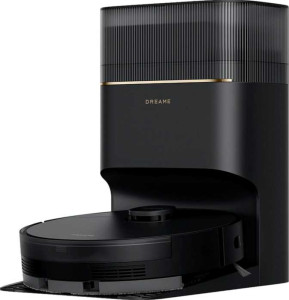
Dreame D20 Pro Plus
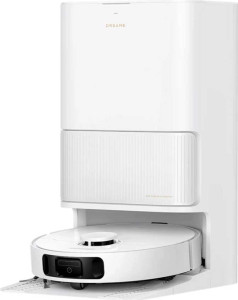
Dreame L40s Ultra AE

Dreame D20 Pro Plus Dreame L40s Ultra AE

Overview

When choosing between the Dreame D20 Pro Plus and the Dreame L40s Ultra AE, shoppers face a genuinely compelling trade-off. Both robots share a strong foundation — HEPA filtration, smart mapping, self-emptying capability, and voice assistant support — yet they diverge sharply in areas like suction power, mopping functionality, and battery runtime. Whether you prioritize a lighter, longer-lasting cleaner or a more powerful all-in-one solution will define which of these two Dreame robots is the right fit for your home.

Common Features

  • Both products include a HEPA filter.
  • Both products include an allergy filter.
  • Both products are compatible with Google Assistant.
  • Both products work with Alexa.
  • Both products have a width of 350 mm.
  • Both products have a thickness of 350 mm.
  • Both products come with a 1-year warranty.
  • Both products support mapping.
  • Both products support no-go zones.
  • Both products support remote smartphone control.
  • Both products have an obstacle sensor.
  • Both products support problem area cleaning.
  • Both products are self-emptying.
  • Both products have carpet detection.
  • Neither product gets stuck during cleaning.
  • Neither product has a display.
  • Neither product has twin side brushes.
  • Both products include washable filters.
  • Both products automatically adjust their height.
  • Neither product indicates when full.
  • Both products clean all floor types.
  • Both products offer 4 cleaning modes.
  • Both products support mopping.
  • Both products have an electrostatic filtration system.
  • Both products have a battery capacity of 5200 mAh.
  • Both products have a charge time of 4 hours.
  • Neither product has an overheating indicator.
  • Neither product has a removable battery.
  • Both products support auto-off.

Main Differences

  • Audible noise is 60 dB on Dreame D20 Pro Plus and 63 dB on Dreame L40s Ultra AE.
  • Weight is 3265 g on Dreame D20 Pro Plus and 4230 g on Dreame L40s Ultra AE.
  • Height is 96.9 mm on Dreame D20 Pro Plus and 103.5 mm on Dreame L40s Ultra AE.
  • Volume is 11870.25 cm³ on Dreame D20 Pro Plus and 12678.75 cm³ on Dreame L40s Ultra AE.
  • Estimated empty time is 150 days on Dreame D20 Pro Plus and 100 days on Dreame L40s Ultra AE.
  • Docking station size is 59266.24 cm³ on Dreame D20 Pro Plus and 91829.58 cm³ on Dreame L40s Ultra AE.
  • Mop cleaning is available on Dreame L40s Ultra AE but not on Dreame D20 Pro Plus.
  • Mop drying is available on Dreame L40s Ultra AE but not on Dreame D20 Pro Plus.
  • Dustbin capacity is 0.5 l on Dreame D20 Pro Plus and 0.32 l on Dreame L40s Ultra AE.
  • Dreame L40s Ultra AE uses bags for dust collection, while Dreame D20 Pro Plus does not.
  • Suction power is 13000 Pa on Dreame D20 Pro Plus and 19000 Pa on Dreame L40s Ultra AE.
  • A dirt sensor is present on Dreame D20 Pro Plus but not available on Dreame L40s Ultra AE.
  • UV light is present on Dreame D20 Pro Plus but not available on Dreame L40s Ultra AE.
  • Runtime is 285 minutes on Dreame D20 Pro Plus and 160 minutes on Dreame L40s Ultra AE.
  • Operating power consumption is 46W on Dreame D20 Pro Plus and 38W on Dreame L40s Ultra AE.
Specs Comparison
Dreame D20 Pro Plus

Dreame D20 Pro Plus

Dreame L40s Ultra AE

Dreame L40s Ultra AE

General info:
has HEPA filter
audible noise 60 dB 63 dB
has an allergy filter
compatible with Google Assistant
works with Alexa
release date May 2025 June 2025
weight 3265 g 4230 g
width 350 mm 350 mm
height 96.9 mm 103.5 mm
thickness 350 mm 350 mm
volume 11870.25 cm³ 12678.75 cm³
warranty period 1 years 1 years
estimated empty time 150 days 100 days
docking station size 59266.24 cm³ 91829.58 cm³

Both the Dreame D20 Pro Plus and the Dreame L40s Ultra AE share a strong baseline of smart home compatibility — supporting both Google Assistant and Alexa — and both include a HEPA allergy filter, making them equally suitable for allergy-sensitive households. Their footprint is identical at 350 × 350 mm, and both carry a 1-year warranty. Where they begin to diverge is in physical bulk and acoustic output.

The D20 Pro Plus is notably lighter at 3,265 g versus the L40s Ultra AE's 4,230 g — a nearly 1 kg difference that reflects a more compact robot body (96.9 mm tall vs 103.5 mm). More practically, the D20 Pro Plus operates at 60 dB while the L40s Ultra AE runs at 63 dB; that 3 dB gap is perceptually about twice as loud, meaning the L40s is meaningfully noisier during cleaning cycles. The L40s Ultra AE also comes with a significantly larger docking station (91,829 cm³ vs 59,266 cm³), which signals a more feature-rich base unit but demands considerably more floor space.

A standout practical difference is the estimated empty time: the D20 Pro Plus can go 150 days before its dustbin needs attention, compared to only 100 days for the L40s Ultra AE — a 50% longer hands-off interval. For users who prioritize low maintenance, the D20 Pro Plus holds a clear edge in this group. The L40s Ultra AE's larger dock hints at additional auto-cleaning capabilities, but based solely on the data provided, the D20 Pro Plus offers a quieter, lighter, and less maintenance-demanding package overall.

Features:
has mapping
supports no-go zones
supports a remote smartphone
has an obstacle sensor
has problem area cleaning
is self-emptying
has carpet detection
doesn't get stuck
supports virtual barriers
has route mapping
Has voice prompts
auto docking
has anti-fall sensor
can be scheduled
has a remote control
has water level adjustment
supports Wi-Fi
has mop cleaning
has mop raising
has mop drying

Across the core autonomy and navigation feature set, these two robots are essentially identical. Both support mapping, no-go zones, virtual barriers, route mapping, obstacle sensing, anti-fall sensors, scheduled cleaning, carpet detection, and smartphone control — a comprehensive suite that puts them on equal footing for day-to-day intelligent floor management. Neither offers a physical remote control, which is a minor but shared limitation for users who prefer not to reach for their phone.

The only meaningful divergence in this group lies entirely in mopping capability. The Dreame D20 Pro Plus supports mop raising and water level adjustment, but critically lacks mop cleaning and mop drying. This means its mop pad must be manually removed and cleaned between sessions — a hands-on chore that undermines the robot's otherwise autonomous design. The L40s Ultra AE, by contrast, adds both mop cleaning and mop drying to the same mop-raising foundation, enabling a fully self-maintaining wet-cleaning cycle where the dock washes and dries the pad automatically.

For households that primarily vacuum, this distinction is irrelevant. But for anyone who relies on mopping as a regular part of their cleaning routine, the L40s Ultra AE holds a decisive edge — its mop maintenance loop is genuinely hands-free, while the D20 Pro Plus demands periodic user intervention to keep the mop hygienic and effective.

Design:
dustbin capacity 0.5 l 0.32 l
Has a display
has twin side brushes
has included washable filters
automatically adjusts its height
Indicates when full
uses bags

The most consequential design difference here is how each robot handles collected debris. The Dreame D20 Pro Plus uses a bagless system, while the L40s Ultra AE relies on disposable bags. In practice, bags contain dust and allergens more securely during emptying — a meaningful benefit for allergy sufferers — but they introduce an ongoing consumable cost and the inconvenience of replacements running out. The bagless D20 Pro Plus avoids that recurring expense, though emptying its bin can release more airborne particles.

On raw bin capacity, the D20 Pro Plus also has a notable lead: its onboard dustbin holds 0.5 l compared to the L40s Ultra AE's 0.32 l — roughly 56% more volume before the robot needs to return to its dock. In a self-emptying setup this matters less during a single clean, but in scenarios where the dock is far away or the robot is mid-cycle in a large area, the larger bin provides more operational flexibility.

The remaining design attributes — automatic height adjustment, washable filters, no twin side brushes, and no display — are shared equally between the two. Given the tradeoffs, neither product dominates outright: the D20 Pro Plus wins on bin size and lower running costs, while the L40s Ultra AE's bagged collection offers a cleaner, more contained emptying experience. The right choice depends largely on whether the user prioritizes convenience and containment or cost-free maintenance.

Cleaning power:
suction power 13000 Pa 19000 Pa
cleans all floor types
cleaning modes 4 4
mops
has a dirt sensor
Has an electrostatic filtration system
has UV light

Suction power is where these two robots part ways most dramatically. The Dreame L40s Ultra AE delivers 19,000 Pa of suction versus 13,000 Pa on the D20 Pro Plus — a roughly 46% increase. In real-world terms, this gap is most felt on thick carpets, deep-pile rugs, and in homes with pets, where embedded hair and fine debris demand sustained, high-pressure airflow to extract effectively. Both clean all floor types and offer the same 4 cleaning modes, so the structural versatility is equal — it's raw pulling force where the L40s pulls ahead.

The D20 Pro Plus counters with two cleaning-intelligence features absent on the L40s Ultra AE: a dirt sensor and UV light. The dirt sensor allows the robot to detect and concentrate effort on heavily soiled areas automatically, which can compensate somewhat for lower suction on problem spots. The UV light adds a sanitization dimension, targeting bacteria and microbes on hard floors — a feature with genuine appeal for households with young children or allergy concerns. Both models include an electrostatic filtration system, and both mop, keeping parity on those fronts.

Ultimately, the L40s Ultra AE holds the edge for sheer cleaning power — its suction advantage is substantial enough to matter in demanding environments. The D20 Pro Plus offers a more intelligent and hygiene-focused cleaning package with its dirt sensor and UV capability, making it a stronger fit for users who prioritize smart resource allocation and surface sanitization over maximum suction force.

Power:
battery power 5200 mAh 5200 mAh
runtime 285 min 160 min
charge time 4 hours 4 hours
operating power consumption 46W 38W
Has an overheating indicator
has a removable battery
has auto-off

Starting from an identical foundation — both robots pack a 5200 mAh battery and take 4 hours to fully recharge — the runtime figures tell a striking story. The Dreame D20 Pro Plus runs for 285 minutes per charge, while the L40s Ultra AE manages only 160 minutes. That is nearly twice the endurance from the same battery capacity, and the explanation lies in power consumption: the D20 Pro Plus draws 46W during operation versus 38W for the L40s Ultra AE. Paradoxically, the L40s consumes less power yet delivers far shorter runtime, strongly suggesting it operates at higher suction intensity or runs more power-hungry subsystems — consistent with its 19,000 Pa suction advantage noted in cleaning specs.

In practical terms, 285 minutes of runtime is enough to clean very large homes in a single pass without interruption, whereas 160 minutes, while still respectable, may require a mid-session recharge in larger spaces. Both robots support auto-off and, given their self-docking capability, can resume after recharging — but more frequent dock returns add time to the overall cleaning cycle and increase wear on the docking routine.

On pure power efficiency, the D20 Pro Plus holds a clear advantage in this group: it extracts significantly more cleaning time from the same battery. The L40s Ultra AE's shorter runtime is a tangible trade-off for its higher suction output, and users with larger floor plans should weigh that carefully.

Comparison Summary & Verdict

After examining every specification, these two robots clearly target different types of users. The Dreame D20 Pro Plus stands out for its impressive 285-minute runtime, lighter 3265 g body, larger 0.5 l bagless dustbin, and useful extras like a dirt sensor and UV light — making it the smarter pick for those who want extended cleaning sessions, low maintenance costs, and a more compact docking station. The Dreame L40s Ultra AE, on the other hand, counters with a commanding 19000 Pa suction power, integrated mop cleaning and drying, and a bag-based dust collection system preferred by allergy sufferers — ideal for households needing deep cleaning across multiple floor types with a true all-in-one solution. Neither robot is objectively superior; your choice should come down to whether runtime and simplicity or raw power and mopping capability matter most to you.

Dreame D20 Pro Plus
Buy Dreame D20 Pro Plus if...

Buy the Dreame D20 Pro Plus if you want a longer battery runtime of 285 minutes, a lighter robot with a larger bagless dustbin, and handy extras like a dirt sensor and UV light.

Dreame L40s Ultra AE
Buy Dreame L40s Ultra AE if...

Buy the Dreame L40s Ultra AE if you need superior 19000 Pa suction power and an integrated mop cleaning and drying system for a true all-in-one floor care experience.