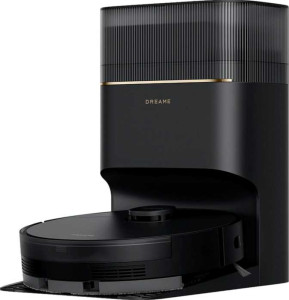
Dreame D20 Pro Plus
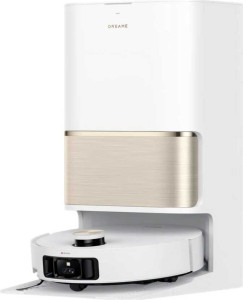
Dreame L50 Ultra

Dreame D20 Pro Plus Dreame L50 Ultra

Overview

Welcome to our in-depth specification comparison between the Dreame D20 Pro Plus and the Dreame L50 Ultra. Both robots share a strong foundation — HEPA filtration, self-emptying docks, smart mapping, and voice assistant support — yet they take meaningfully different approaches when it comes to cleaning versatility, suction power, and everyday usability. Read on to discover which of these two capable robot vacuums is the right fit for your home.

Common Features

  • Both products include a HEPA filter.
  • An allergy filter is available on both products.
  • Both products are compatible with Google Assistant.
  • Both products work with Alexa.
  • The warranty period is 1 year on both products.
  • Mapping is supported on both products.
  • No-go zones are supported on both products.
  • Remote smartphone control is supported on both products.
  • An obstacle sensor is present on both products.
  • Problem area cleaning is available on both products.
  • Both products are self-emptying.
  • Carpet detection is available on both products.
  • Neither product gets stuck during operation.
  • Neither product has a display.
  • Twin side brushes are not included on either product.
  • Washable filters are included with both products.
  • Both products automatically adjust their height.
  • Neither product indicates when its dustbin is full.
  • Both products clean all floor types.
  • Both products offer 4 cleaning modes.
  • Both products have an electrostatic filtration system.
  • The charge time is 4 hours on both products.
  • Neither product has an overheating indicator.
  • Neither product has a removable battery.
  • Auto-off is available on both products.

Main Differences

  • Audible noise is 60 dB on the Dreame D20 Pro Plus and 70 dB on the Dreame L50 Ultra.
  • Weight is 3265 g on the Dreame D20 Pro Plus and 4440 g on the Dreame L50 Ultra.
  • Width is 350 mm on the Dreame D20 Pro Plus and 352 mm on the Dreame L50 Ultra.
  • Height is 96.9 mm on the Dreame D20 Pro Plus and 97 mm on the Dreame L50 Ultra.
  • Thickness is 350 mm on the Dreame D20 Pro Plus and 348 mm on the Dreame L50 Ultra.
  • Volume is 11870.25 cm³ on the Dreame D20 Pro Plus and 11882.112 cm³ on the Dreame L50 Ultra.
  • Estimated empty time is 150 days on the Dreame D20 Pro Plus and 75 days on the Dreame L50 Ultra.
  • Docking station size is 59266.24 cm³ on the Dreame D20 Pro Plus and 91518.82 cm³ on the Dreame L50 Ultra.
  • Mop cleaning is available on the Dreame L50 Ultra but not on the Dreame D20 Pro Plus.
  • Mop drying is available on the Dreame L50 Ultra but not on the Dreame D20 Pro Plus.
  • Dustbin capacity is 0.5 l on the Dreame D20 Pro Plus and 0.4 l on the Dreame L50 Ultra.
  • The Dreame L50 Ultra uses bags, while the Dreame D20 Pro Plus does not.
  • Suction power is 13000 Pa on the Dreame D20 Pro Plus and 19500 Pa on the Dreame L50 Ultra.
  • A dirt sensor is present on the Dreame D20 Pro Plus but not on the Dreame L50 Ultra.
  • UV light is present on the Dreame D20 Pro Plus but not on the Dreame L50 Ultra.
  • Battery power is 5200 mAh on the Dreame D20 Pro Plus and 6400 mAh on the Dreame L50 Ultra.
  • Runtime is 285 minutes on the Dreame D20 Pro Plus and 220 minutes on the Dreame L50 Ultra.
  • Operating power consumption is 46W on the Dreame D20 Pro Plus and 38W on the Dreame L50 Ultra.
Specs Comparison
Dreame D20 Pro Plus

Dreame D20 Pro Plus

Dreame L50 Ultra

Dreame L50 Ultra

General info:
has HEPA filter
audible noise 60 dB 70 dB
has an allergy filter
compatible with Google Assistant
works with Alexa
release date May 2025 March 2025
weight 3265 g 4440 g
width 350 mm 352 mm
height 96.9 mm 97 mm
thickness 350 mm 348 mm
volume 11870.25 cm³ 11882.112 cm³
warranty period 1 years 1 years
estimated empty time 150 days 75 days
docking station size 59266.24 cm³ 91518.82 cm³

Both the Dreame D20 Pro Plus and Dreame L50 Ultra share a strong foundation of shared features: HEPA and allergy filtration, full compatibility with both Google Assistant and Alexa, and a 1-year warranty. Their physical footprints are nearly identical — width, height, and overall robot volume differ by only a few millimeters and cubic centimeters — so neither will struggle more than the other navigating under furniture or in tight spaces.

The more meaningful differences emerge in noise, weight, and dock characteristics. The L50 Ultra operates at 70 dB versus the D20 Pro Plus's 60 dB, a 10 dB gap that is perceptually significant: in practice, the L50 Ultra will sound roughly twice as loud during cleaning cycles, which matters in quieter households or when running schedules during work-from-home hours. The L50 Ultra also weighs 4440 g compared to 3265 g for the D20 Pro Plus — a difference relevant primarily when manually lifting or relocating the unit. Its docking station is also substantially larger at 91518 cm³ versus 59266 cm³, meaning it demands considerably more floor space.

On autonomy, the D20 Pro Plus has a clear practical edge: its estimated empty time of 150 days is double the L50 Ultra's 75 days, meaning far less frequent dustbin or consumable maintenance. Overall, for users prioritizing quieter operation, a more compact dock, and lower maintenance frequency, the D20 Pro Plus holds a notable advantage across this general spec group.

Features:
has mapping
supports no-go zones
supports a remote smartphone
has an obstacle sensor
has problem area cleaning
is self-emptying
has carpet detection
doesn't get stuck
supports virtual barriers
has route mapping
Has voice prompts
auto docking
has anti-fall sensor
can be scheduled
has a remote control
has water level adjustment
supports Wi-Fi
has mop cleaning
has mop raising
has mop drying

Across the core smart navigation and safety feature set, these two robots are essentially identical — both offer mapping, no-go zones, virtual barriers, obstacle sensing, anti-fall protection, scheduled cleaning, auto-docking, voice prompts, and smartphone control. For the vast majority of daily autonomous cleaning tasks, neither has an edge over the other.

The differentiator lies entirely in mopping capability. The D20 Pro Plus includes mop raising — which helps it avoid soaking carpets — but it lacks mop cleaning and mop drying. In practice, this means the mop pad must be manually removed and washed, and without drying, a damp pad left on the dock can develop odors or bacteria over time. The L50 Ultra, by contrast, supports the full mopping lifecycle: it can raise the mop, automatically clean the pad, and dry it afterward. This is a meaningful quality-of-life difference for households that rely heavily on wet floor cleaning, as it dramatically reduces manual intervention and hygiene upkeep.

For users who vacuum only or handle mopping manually, the feature parity is near-total and neither robot pulls ahead. But for anyone prioritizing a truly hands-off mopping experience, the L50 Ultra holds a clear and significant advantage in this category.

Design:
dustbin capacity 0.5 l 0.4 l
Has a display
has twin side brushes
has included washable filters
automatically adjusts its height
Indicates when full
uses bags

Shared design traits between these two robots include washable filters, automatic height adjustment, and the absence of twin side brushes or an onboard display — none of which create any practical distinction between them in day-to-day use.

The two meaningful divergences are dustbin capacity and disposal method. The D20 Pro Plus holds 0.5 liters versus the L50 Ultra's 0.4 liters — a modest but real 25% difference that can matter in larger homes or high-debris environments where the robot is docking and emptying frequently. More consequential is the fact that the L50 Ultra uses bags while the D20 Pro Plus does not. Bagged systems contain dust and allergens more hygienically during disposal — a genuine advantage for allergy sufferers — but they introduce an ongoing consumable cost and the inconvenience of sourcing replacements. Bagless systems are cheaper to maintain over time but can release fine particles when emptied.

Which design approach is preferable depends on the user's priorities. For lower long-term running costs and one fewer consumable to track, the D20 Pro Plus has a slight edge. For cleaner, more hygienic dustbin emptying, the L50 Ultra's bagged system is the more considered choice — though neither robot is without trade-offs in this category.

Cleaning power:
suction power 13000 Pa 19500 Pa
cleans all floor types
cleaning modes 4 4
mops
has a dirt sensor
Has an electrostatic filtration system
has UV light

Raw suction power is where these two robots diverge most sharply. The L50 Ultra delivers 19500 Pa versus the D20 Pro Plus's 13000 Pa — a 50% increase that translates directly to more effective deep cleaning on carpets, better pickup of heavier debris, and stronger performance in homes with pets. Both robots clean all floor types and offer the same number of cleaning modes, so the gap isn't in versatility but in sheer pulling force.

The D20 Pro Plus counters with two features the L50 Ultra lacks: a dirt sensor and UV light. The dirt sensor enables the robot to intelligently detect and concentrate cleaning effort on heavily soiled areas, which can partially compensate for lower suction on particularly dirty patches. UV light adds a layer of surface sanitization — useful in households concerned about bacteria or allergens on hard floors. The L50 Ultra, without these, relies on brute suction and its electrostatic filtration system — which both models share — to handle cleaning quality.

For households with thick carpets, heavy foot traffic, or pets, the L50 Ultra's suction advantage is the more impactful specification in this group. The D20 Pro Plus's dirt sensor and UV light are meaningful additions, but they complement rather than replace raw cleaning power, giving the L50 Ultra a clear overall edge in cleaning performance.

Power:
battery power 5200 mAh 6400 mAh
runtime 285 min 220 min
charge time 4 hours 4 hours
operating power consumption 46W 38W
Has an overheating indicator
has a removable battery
has auto-off

Despite carrying a larger 6400 mAh battery compared to the D20 Pro Plus's 5200 mAh, the L50 Ultra delivers a notably shorter runtime of 220 minutes versus 285 minutes — a 65-minute gap that is practically significant. This apparent paradox is explained by power consumption: the D20 Pro Plus draws 46W during operation while the L50 Ultra draws 38W, yet the L50 Ultra's higher-performance hardware — including its substantially more powerful suction motor — consumes its larger battery reserve faster in real-world use. For large homes or multi-room cleaning sessions, the D20 Pro Plus's extended runtime means fewer mid-cycle returns to the dock and more continuous coverage per charge.

Charge time is identical at 4 hours for both, so neither has a recovery advantage after a depleted battery. Both also share auto-off functionality and lack a removable battery, meaning neither can be hot-swapped for extended sessions.

On balance, the D20 Pro Plus holds a clear edge in this category purely through runtime: nearly an extra hour per charge cycle is a tangible advantage for larger spaces. The L50 Ultra's bigger battery is effectively offset by its more power-intensive operation, making runtime — not battery size — the metric that matters here.

Comparison Summary & Verdict

After examining every specification, a clear picture emerges for each product. The Dreame D20 Pro Plus stands out with its quieter 60 dB operation, significantly longer 285-minute runtime, extended 150-day estimated empty cycle, a built-in dirt sensor and UV light, and a more compact docking station — making it an excellent choice for those who value endurance and low-maintenance daily cleaning. The Dreame L50 Ultra, on the other hand, counters with a powerful 19500 Pa suction, an integrated mop cleaning and drying system, a larger battery, and a more robust build — positioning it as the stronger option for households that need deep cleaning performance across both hard floors and carpets. Neither product is a universal winner; your ideal pick depends entirely on whether you prioritize runtime and convenience or raw cleaning power and mopping capability.

Dreame D20 Pro Plus
Buy Dreame D20 Pro Plus if...

Buy the Dreame D20 Pro Plus if you want a quieter robot vacuum with a longer runtime, a more compact dock, and added features like a dirt sensor and UV light for thorough everyday cleaning.

Dreame L50 Ultra
Buy Dreame L50 Ultra if...

Buy the Dreame L50 Ultra if you need maximum suction power and an integrated mop cleaning and drying system to handle both deep vacuuming and floor washing in one robot.