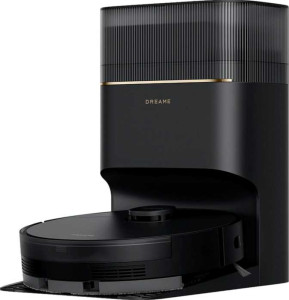
Dreame D20 Pro Plus
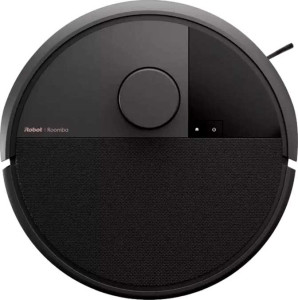
iRobot Roomba Max 705 Vac

Dreame D20 Pro Plus iRobot Roomba Max 705 Vac

Overview

When choosing between the Dreame D20 Pro Plus and the iRobot Roomba Max 705 Vac, shoppers are faced with two capable robot vacuums that share a surprising amount of common ground — including identical 13000 Pa suction power, self-emptying docks, and smart home compatibility. Yet key differences in mopping capability, battery runtime, and design philosophy make this a genuinely interesting matchup worth exploring in detail.

Common Features

  • Both products include a HEPA filter.
  • Both products include an allergy filter.
  • Both products produce an audible noise level of 60 dB.
  • Both products are compatible with Google Assistant.
  • Both products work with Alexa.
  • Both products have a thickness of 350 mm.
  • Both products carry a warranty period of 1 year.
  • Both products support mapping.
  • Both products support no-go zones.
  • Both products support remote smartphone control.
  • Both products have an obstacle sensor.
  • Both products have problem area cleaning.
  • Both products are self-emptying.
  • Both products have carpet detection.
  • Neither product gets stuck during cleaning.
  • Neither product has a display.
  • Neither product has twin side brushes.
  • Both products offer a suction power of 13000 Pa.
  • Both products clean all floor types.
  • Both products have 4 cleaning modes.
  • Both products are capable of mopping.
  • Both products have a dirt sensor.
  • Both products have a charge time of 4 hours.
  • Both products have an auto-off feature.

Main Differences

  • Weight is 3265 g on Dreame D20 Pro Plus and 3400 g on iRobot Roomba Max 705 Vac.
  • Width is 350 mm on Dreame D20 Pro Plus and 345 mm on iRobot Roomba Max 705 Vac.
  • Height is 96.9 mm on Dreame D20 Pro Plus and 104 mm on iRobot Roomba Max 705 Vac.
  • Volume is 11870.25 cm³ on Dreame D20 Pro Plus and 12558 cm³ on iRobot Roomba Max 705 Vac.
  • Estimated empty time is 150 days on Dreame D20 Pro Plus and 75 days on iRobot Roomba Max 705 Vac.
  • Docking station size is 59266.24 cm³ on Dreame D20 Pro Plus and 10624.44 cm³ on iRobot Roomba Max 705 Vac.
  • Mop cleaning is available on iRobot Roomba Max 705 Vac but not on Dreame D20 Pro Plus.
  • Mop drying is available on iRobot Roomba Max 705 Vac but not on Dreame D20 Pro Plus.
  • Dustbin capacity is 0.5 l on Dreame D20 Pro Plus and 0.38 l on iRobot Roomba Max 705 Vac.
  • Washable filters are included with Dreame D20 Pro Plus but not with iRobot Roomba Max 705 Vac.
  • Automatic height adjustment is present on Dreame D20 Pro Plus but not on iRobot Roomba Max 705 Vac.
  • A full dustbin indicator is present on iRobot Roomba Max 705 Vac but not on Dreame D20 Pro Plus.
  • UV light is present on Dreame D20 Pro Plus but not on iRobot Roomba Max 705 Vac.
  • Battery power is 5200 mAh on Dreame D20 Pro Plus and 5000 mAh on iRobot Roomba Max 705 Vac.
  • Runtime is 285 minutes on Dreame D20 Pro Plus and 210 minutes on iRobot Roomba Max 705 Vac.
  • Operating power consumption is 46W on Dreame D20 Pro Plus and 33W on iRobot Roomba Max 705 Vac.
Specs Comparison
Dreame D20 Pro Plus

Dreame D20 Pro Plus

iRobot Roomba Max 705 Vac

iRobot Roomba Max 705 Vac

General info:
has HEPA filter
audible noise 60 dB 60 dB
has an allergy filter
compatible with Google Assistant
works with Alexa
release date May 2025 May 2025
weight 3265 g 3400 g
width 350 mm 345 mm
height 96.9 mm 104 mm
thickness 350 mm 350 mm
volume 11870.25 cm³ 12558 cm³
warranty period 1 years 1 years
estimated empty time 150 days 75 days
docking station size 59266.24 cm³ 10624.44 cm³

At their core, both the Dreame D20 Pro Plus and the iRobot Roomba Max 705 Vac share a strong foundation of identical smart-home features — HEPA and allergy filtration, 60 dB operating noise, and full compatibility with both Google Assistant and Alexa. This means neither robot has an edge in air quality performance or voice control integration, and day-to-day noise levels will feel virtually indistinguishable to users.

Where the two diverge meaningfully is in the maintenance cycle versus footprint tradeoff. The Dreame's estimated empty time of 150 days is exactly double the Roomba's 75 days, which translates directly to half as many trips to deal with the dustbin — a genuine quality-of-life advantage for hands-off users. However, this comes at a steep spatial cost: the Dreame's docking station occupies roughly 59,266 cm³, compared to the Roomba's far more compact 10,624 cm³. The Roomba's dock takes up less than one-fifth the space, making it dramatically easier to tuck away in smaller homes or tight corners.

On physical form, the Dreame is slightly lighter at 3,265 g versus the Roomba's 3,400 g, and its lower profile (96.9 mm tall vs. 104 mm) gives it a modest edge at fitting under low furniture. Overall, neither product dominates outright: the Dreame D20 Pro Plus wins on maintenance convenience and low-clearance reach, while the Roomba Max 705 Vac wins decisively on docking station footprint — making the right choice largely dependent on how much floor space a user is willing to dedicate to the base unit.

Features:
has mapping
supports no-go zones
supports a remote smartphone
has an obstacle sensor
has problem area cleaning
is self-emptying
has carpet detection
doesn't get stuck
supports virtual barriers
has route mapping
Has voice prompts
auto docking
has anti-fall sensor
can be scheduled
has a remote control
has water level adjustment
supports Wi-Fi
has mop cleaning
has mop raising
has mop drying

Across the vast majority of smart features, these two robots are functionally identical — both offer mapping, no-go zones, virtual barriers, obstacle and anti-fall sensors, carpet detection, self-emptying, auto-docking, scheduling, and smartphone control. For most users evaluating navigation intelligence and automation depth, this category is essentially a draw at a very high tier of capability.

The sole but significant split comes down to wet cleaning. The Dreame D20 Pro Plus lists mop raising but lacks both mop cleaning and mop drying, which raises a practical concern: without an automated mop cleaning cycle, the mop pad must be maintained manually, limiting how truly hands-free the mopping experience can be. The iRobot Roomba Max 705 Vac, by contrast, supports all three — active mopping, self-cleaning of the mop pad, and mop drying — forming a complete, closed-loop wet-cleaning workflow that requires far less user intervention and reduces the risk of mildew from a damp pad sitting idle in the dock.

For households that primarily vacuum and only mop occasionally, this gap may be tolerable. But for anyone who relies on regular automated mopping as a core use case, the Roomba Max 705 Vac holds a clear and decisive advantage in this group — its mop cleaning and drying capabilities elevate it from a vacuum-first robot with a mop attachment to a genuinely capable two-in-one cleaning system.

Design:
dustbin capacity 0.5 l 0.38 l
Has a display
has twin side brushes
has included washable filters
automatically adjusts its height
Indicates when full

The most practically relevant differentiator here is dustbin capacity. The Dreame D20 Pro Plus carries a 0.5 L onboard bin versus the Roomba Max 705 Vac's 0.38 L — a roughly 32% larger reservoir. Since both robots are self-emptying, this difference mainly matters during long cleaning runs in heavily soiled environments where the bin might fill before the robot returns to dock. For most normal-sized homes, neither capacity will be a bottleneck, but the Dreame holds a marginal edge in high-debris scenarios.

The two robots split interestingly on maintenance design. The Dreame includes washable filters, which reduces the ongoing cost of consumables — a filter that can be rinsed and reused rather than replaced is a meaningful long-term saving. The Roomba counters with a full-bin indicator, giving users a clear signal when the onboard bin needs attention, which is more useful in non-self-emptying usage scenarios or when the dock's own bag is filling. The Dreame also automatically adjusts its height to adapt to different floor surfaces, while the Roomba does not — a real-world advantage when transitioning between hard floors and varying carpet pile heights.

On balance, the Dreame D20 Pro Plus takes a modest but clear edge in this group: its larger dustbin, included washable filters, and automatic height adjustment collectively represent more user-friendly, lower-cost-of-ownership design choices. The Roomba's full-bin indicator is a useful convenience, but it does not offset the practical advantages stacked on the Dreame's side.

Cleaning power:
suction power 13000 Pa 13000 Pa
cleans all floor types
cleaning modes 4 4
mops
has a dirt sensor
has UV light

Cleaning power is where these two robots are most evenly matched. Both deliver 13,000 Pa of suction — a strong figure in the current robot vacuum market — and both cover all floor types across 4 cleaning modes, with dirt sensors that automatically intensify effort in heavily soiled areas. For the overwhelming majority of cleaning tasks, users will find no meaningful performance difference between the two.

The only spec that separates them here is the Dreame D20 Pro Plus's inclusion of UV light sanitization, which the Roomba Max 705 Vac lacks entirely. UV light can help reduce bacteria and allergens on floor surfaces beyond what suction alone achieves — a feature with particular appeal to households with allergy sufferers, pets, or young children who spend time on the floor. That said, the practical efficacy of UV sanitization in fast-moving robot vacuums depends on dwell time and coverage, so its real-world impact should be understood as a supplementary hygiene measure rather than a deep-clean guarantee.

Still, as the sole differentiator in an otherwise perfectly matched group, the Dreame D20 Pro Plus earns a narrow edge here. With identical suction, modes, floor compatibility, and dirt sensing, UV light is the one additional layer of cleaning capability that tips the balance — modest in magnitude, but real in value for hygiene-conscious users.

Power:
battery power 5200 mAh 5000 mAh
runtime 285 min 210 min
charge time 4 hours 4 hours
operating power consumption 46W 33W
has auto-off

Runtime is where this group's story is told most clearly. The Dreame D20 Pro Plus runs for 285 minutes per charge versus the Roomba Max 705 Vac's 210 minutes — a 75-minute, or roughly 36%, advantage. In practical terms, this gap is the difference between a robot that can confidently handle large multi-room homes in a single pass and one that may need to pause, recharge, and resume in larger spaces. Both robots share an identical 4-hour charge time, so the Dreame simply delivers more cleaning per cycle without requiring any additional wait.

The battery capacity difference — 5,200 mAh for the Dreame versus 5,000 mAh for the Roomba — is modest on its own and does not fully account for the runtime gap. The more telling figure is operating power consumption: the Dreame draws 46W compared to the Roomba's 33W. This means the Dreame is working harder — likely running more powerful motors or additional systems — yet still achieves a longer runtime, suggesting its battery-to-efficiency engineering is well-optimized. The Roomba's lower draw does make it the leaner operator, but that efficiency advantage does not translate into a longer cleaning window.

Both units include auto-off functionality, ensuring neither wastes energy sitting idle. Overall though, the Dreame D20 Pro Plus holds a meaningful edge in this group — its combination of greater battery capacity and substantially longer runtime makes it the stronger choice for larger homes or users who prioritize uninterrupted, single-session cleaning coverage.

Comparison Summary & Verdict

Both robots are strong performers, but they cater to different needs. The Dreame D20 Pro Plus stands out with a longer 285-minute runtime, a larger 0.5 l dustbin, included washable filters, UV light sanitization, and automatic height adjustment — making it a compelling choice for those who prioritize cleaning endurance and hygiene. On the other hand, the iRobot Roomba Max 705 Vac brings integrated mop cleaning and drying to the table, a more compact docking station, and a full-bin indicator, appealing to users who want an all-in-one vacuum-and-mop solution in a slightly more space-conscious package. Both share the same suction power, noise level, and smart home integrations, so the decision ultimately comes down to whether extended vacuuming performance or wet mopping functionality matters more for your home.

Dreame D20 Pro Plus
Buy Dreame D20 Pro Plus if...

Buy the Dreame D20 Pro Plus if you want a longer runtime, a larger dustbin, washable filters, UV light, and automatic height adjustment without needing integrated mopping.

iRobot Roomba Max 705 Vac
Buy iRobot Roomba Max 705 Vac if...

Buy the iRobot Roomba Max 705 Vac if you need a robot that combines vacuuming with mop cleaning and drying, and prefer a more compact docking station with a full-bin indicator.