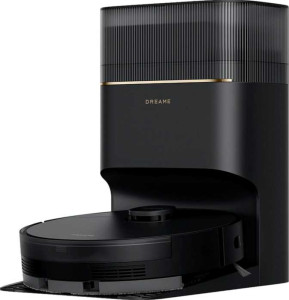
Dreame D20 Pro Plus
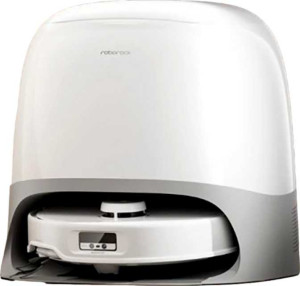
Roborock P20 Ultra

Dreame D20 Pro Plus Roborock P20 Ultra

Overview

When shopping for a high-end robot vacuum, the Dreame D20 Pro Plus and the Roborock P20 Ultra quickly rise to the top of the shortlist. Both machines share a strong common foundation — HEPA filtration, self-emptying bases, and intelligent mapping — yet they take meaningfully different approaches to suction power, mopping capability, and battery endurance. Dig into the full specification breakdown below to discover which one truly fits your home.

Common Features

  • Both products include a HEPA filter.
  • Both products include an allergy filter.
  • Both products are compatible with Google Assistant.
  • Both products work with Amazon Alexa.
  • Both products have a thickness of 350 mm.
  • Both products come with a 1-year warranty.
  • Both products support mapping functionality.
  • Both products support no-go zones.
  • Both products support remote smartphone control.
  • Both products have an obstacle sensor.
  • Both products support problem area cleaning.
  • Both products are self-emptying.
  • Both products have carpet detection.
  • Neither product gets stuck during operation.
  • Neither product has a display.
  • Neither product has twin side brushes.
  • Both products include washable filters.
  • Both products automatically adjust their height.
  • Both products clean all floor types.
  • Both products offer 4 cleaning modes.
  • Both products have an electrostatic filtration system.
  • Both products have a battery capacity of 5200 mAh.
  • Neither product has an overheating indicator.
  • Neither product has a removable battery.
  • Both products support auto-off functionality.

Main Differences

  • Audible noise is 60 dB on Dreame D20 Pro Plus and 64.5 dB on Roborock P20 Ultra.
  • Weight is 3265 g on Dreame D20 Pro Plus and 3800 g on Roborock P20 Ultra.
  • Width is 350 mm on Dreame D20 Pro Plus and 353 mm on Roborock P20 Ultra.
  • Height is 96.9 mm on Dreame D20 Pro Plus and 79.8 mm on Roborock P20 Ultra.
  • Volume is 11870.25 cm³ on Dreame D20 Pro Plus and 9859.29 cm³ on Roborock P20 Ultra.
  • Estimated empty time is 150 days on Dreame D20 Pro Plus and 56 days on Roborock P20 Ultra.
  • Docking station size is 59266.24 cm³ on Dreame D20 Pro Plus and 88315.8 cm³ on Roborock P20 Ultra.
  • Mop cleaning is available on Roborock P20 Ultra but not on Dreame D20 Pro Plus.
  • Mop drying is available on Roborock P20 Ultra but not on Dreame D20 Pro Plus.
  • Dustbin capacity is 0.5 l on Dreame D20 Pro Plus and 0.77 l on Roborock P20 Ultra.
  • A full dustbin indicator is present on Roborock P20 Ultra but not on Dreame D20 Pro Plus.
  • Roborock P20 Ultra uses bags for dust collection, while Dreame D20 Pro Plus does not.
  • Suction power is 13000 Pa on Dreame D20 Pro Plus and 22000 Pa on Roborock P20 Ultra.
  • A dirt sensor is present on Dreame D20 Pro Plus but not on Roborock P20 Ultra.
  • UV light is present on Dreame D20 Pro Plus but not on Roborock P20 Ultra.
  • Runtime is 285 minutes on Dreame D20 Pro Plus and 180 minutes on Roborock P20 Ultra.
  • Charge time is 4 hours on Dreame D20 Pro Plus and 2.5 hours on Roborock P20 Ultra.
  • Operating power consumption is 46W on Dreame D20 Pro Plus and 50W on Roborock P20 Ultra.
Specs Comparison
Dreame D20 Pro Plus

Dreame D20 Pro Plus

Roborock P20 Ultra

Roborock P20 Ultra

General info:
has HEPA filter
audible noise 60 dB 64.5 dB
has an allergy filter
compatible with Google Assistant
works with Alexa
release date May 2025 March 2025
weight 3265 g 3800 g
width 350 mm 353 mm
height 96.9 mm 79.8 mm
thickness 350 mm 350 mm
volume 11870.25 cm³ 9859.29 cm³
warranty period 1 years 1 years
estimated empty time 150 days 56 days
docking station size 59266.24 cm³ 88315.8 cm³

Both the Dreame D20 Pro Plus and the Roborock P20 Ultra share a strong foundation of general features: HEPA and allergy filtration, full smart-home compatibility with both Google Assistant and Alexa, and an identical 1-year warranty. For allergy sufferers or smart-home users, neither product holds an edge here — they are effectively tied on these fronts.

The more meaningful differences emerge when you look at the physical and operational specs. The D20 Pro Plus is notably lighter at 3,265 g versus the P20 Ultra's 3,800 g, which matters when manually lifting the unit for maintenance. The P20 Ultra, however, is significantly slimmer at 79.8 mm tall compared to 96.9 mm for the D20 Pro Plus — nearly 17 mm shorter, which translates to a real ability to slide under lower furniture like sofas or bed frames. On noise, the D20 Pro Plus runs quieter at 60 dB versus 64.5 dB — a difference of 4.5 dB that is perceptible to the human ear, making the Dreame the better choice for noise-sensitive environments.

The starkest gap is in the estimated empty time: the D20 Pro Plus goes 150 days between dustbin empties versus just 56 days for the P20 Ultra — nearly three times longer, suggesting a substantially larger auto-empty capacity. The trade-off is dock footprint: the P20 Ultra's docking station is considerably larger at 88,315 cm³ versus 59,266 cm³, meaning it demands more floor space. Overall, the D20 Pro Plus holds a clear advantage in this group for users who prioritize low maintenance and quiet operation, while the P20 Ultra's slimmer profile gives it an edge in low-clearance home environments.

Features:
has mapping
supports no-go zones
supports a remote smartphone
has an obstacle sensor
has problem area cleaning
is self-emptying
has carpet detection
doesn't get stuck
supports virtual barriers
has route mapping
Has voice prompts
auto docking
has anti-fall sensor
can be scheduled
has a remote control
has water level adjustment
supports Wi-Fi
has mop cleaning
has mop raising
has mop drying

Across the core feature set, these two robots are remarkably well-matched. Both support advanced mapping with no-go zones, virtual barriers, and route mapping; both are self-emptying, auto-docking, and schedulable; and both include obstacle sensing, anti-fall sensors, carpet detection, and smartphone control via Wi-Fi. For the vast majority of day-to-day smart-cleaning needs, users of either robot will find an equally capable and modern feature stack.

The decisive split comes down to mopping capabilities. The Roborock P20 Ultra supports mop cleaning, mop raising, and mop drying — a complete, self-contained wet-cleaning cycle. The Dreame D20 Pro Plus, by contrast, offers mop raising and water level adjustment but lacks both mop cleaning (automated mop pad washing) and mop drying. In practice, this means the D20 Pro Plus requires the user to manually clean and dry the mop pad, reintroducing a maintenance step that many buyers of premium robots are specifically trying to eliminate.

For users who primarily vacuum and use mopping only occasionally, the D20 Pro Plus's feature parity across all non-mop functions keeps it competitive. But for anyone who wants a truly hands-off, automated floor-washing experience, the P20 Ultra holds a clear advantage in this group — its closed-loop mop maintenance system is a meaningful upgrade in real-world convenience.

Design:
dustbin capacity 0.5 l 0.77 l
Has a display
has twin side brushes
has included washable filters
automatically adjusts its height
Indicates when full
uses bags

Shared design choices between the two robots include the absence of a display, no twin side brushes, included washable filters, and automatic height adjustment — so neither product differentiates itself on those fronts. The more telling differences lie in how each robot handles the dirt it collects.

The Roborock P20 Ultra carries a noticeably larger onboard dustbin at 0.77 l versus 0.5 l on the Dreame D20 Pro Plus — a 54% capacity advantage that can matter during long cleaning sessions or in larger homes, as a fuller bin can reduce suction efficiency mid-run. The P20 Ultra also uses bags in its auto-empty station and includes a full-bin indicator, while the D20 Pro Plus is bagless and offers no such alert. Bags add an ongoing consumable cost but significantly reduce dust exposure during emptying — a practical benefit for allergy sufferers — while the full-bin indicator gives users a clearer signal of when maintenance is actually needed.

The right choice here depends on priorities. The D20 Pro Plus's bagless design eliminates recurring costs and its washable filter keeps long-term expenses low, but the absence of a full-bin indicator means users must monitor the station manually. The P20 Ultra's larger dustbin, bagged emptying, and full-bin alert together create a more self-sufficient and hygienic maintenance experience, giving it a clear design edge for users who prioritize convenience and cleanliness over running costs.

Cleaning power:
suction power 13000 Pa 22000 Pa
cleans all floor types
cleaning modes 4 4
mops
has a dirt sensor
Has an electrostatic filtration system
has UV light

When it comes to raw suction, the gap between these two robots is substantial. The Roborock P20 Ultra delivers 22,000 Pa of suction versus 13,000 Pa on the Dreame D20 Pro Plus — nearly 70% more pulling force. In practical terms, this translates to more reliable deep cleaning on carpets, better extraction of embedded pet hair, and stronger performance in homes with mixed flooring. Both robots clean all floor types and offer the same number of 4 cleaning modes, so the P20 Ultra's advantage here is purely about intensity, not versatility.

The D20 Pro Plus counters with two features the P20 Ultra lacks: a dirt sensor and UV light. The dirt sensor allows the robot to detect heavily soiled areas and automatically increase cleaning effort in those spots — a smart compensation for lower peak suction. UV light adds a sanitization layer beyond mechanical cleaning, which can appeal to households with hygiene concerns. The P20 Ultra, meanwhile, relies on brute suction force rather than adaptive detection, and skips the UV function entirely.

Both share electrostatic filtration and mopping capability, keeping them on equal footing for overall floor-type coverage. On balance, the P20 Ultra holds the cleaning power edge for homes that demand deep carpet extraction or handle heavy debris loads, while the D20 Pro Plus's dirt sensor and UV light make it a more intelligent and hygiene-focused cleaner for lighter-duty or mixed-surface use cases.

Power:
battery power 5200 mAh 5200 mAh
runtime 285 min 180 min
charge time 4 hours 2.5 hours
operating power consumption 46W 50W
Has an overheating indicator
has a removable battery
has auto-off

Starting from an identical 5200 mAh battery, identical auto-off functionality, and no removable battery on either unit, the two robots share the same energy foundation — yet they use it very differently. The Dreame D20 Pro Plus extracts a remarkable 285 minutes of runtime from that capacity, compared to just 180 minutes on the Roborock P20 Ultra. That 105-minute gap is significant in practice: the D20 Pro Plus can cover considerably larger floor areas on a single charge, or complete multiple cleaning passes in medium-sized homes without interruption.

The explanation likely lies in power draw. The P20 Ultra consumes 50W during operation versus 46W for the D20 Pro Plus — and when combined with the P20 Ultra's higher suction output noted elsewhere, the battery is simply depleted faster. The trade-off for the P20 Ultra's shorter runtime is a much faster 2.5-hour charge time, compared to 4 hours for the D20 Pro Plus. For users who run cleaning cycles during the day and want the robot ready again quickly, the P20 Ultra's faster turnaround is a genuine convenience advantage.

Ultimately, the right priority depends on home size and usage patterns. For larger homes or users who want uninterrupted single-session cleaning, the D20 Pro Plus holds a clear runtime edge. For smaller spaces where cleaning cycles are shorter and quick recharging matters more, the P20 Ultra's faster charge time largely offsets its reduced runtime.

Comparison Summary & Verdict

Having examined every specification, the ideal choice comes down to how you prioritize cleaning performance versus versatility. The Dreame D20 Pro Plus is the stronger pick for users who want a quieter robot vacuum with a remarkable 285-minute runtime, built-in UV light sanitation, and a dirt sensor for precision cleaning — all in a lighter, more compact form factor with a smaller docking station footprint. The Roborock P20 Ultra, however, is purpose-built for complete floor care: its dominant 22000 Pa suction, integrated mop cleaning and drying, larger 0.77 l dustbin with a fullness indicator, and faster 2.5-hour charge time make it the definitive choice for homes with hard floors that benefit from regular wet mopping. Choose the D20 Pro Plus for endurance and targeted vacuuming; choose the P20 Ultra for an all-in-one deep-clean experience.

Dreame D20 Pro Plus
Buy Dreame D20 Pro Plus if...

Buy the Dreame D20 Pro Plus if you prioritize a longer runtime, quieter operation, UV light sanitation, and a compact docking station, and have no need for integrated mopping.

Roborock P20 Ultra
Buy Roborock P20 Ultra if...

Buy the Roborock P20 Ultra if you want maximum suction power combined with full mop cleaning and drying, a larger dustbin, and a faster recharge time for complete floor care.