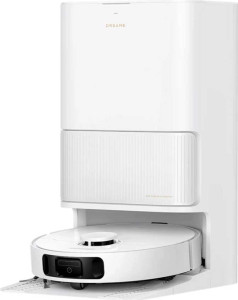
Dreame L40s Ultra AE
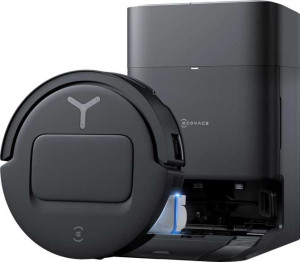
Ecovacs Deebot T80 Omni

Dreame L40s Ultra AE Ecovacs Deebot T80 Omni

Overview

Choosing between the Dreame L40s Ultra AE and the Ecovacs Deebot T80 Omni means weighing two capable robot vacuums that share a strong foundation of features yet diverge in meaningful ways. Both are self-emptying, support mapping and no-go zones, and integrate with major smart home platforms. The key battlegrounds in this comparison come down to suction power and dustbin capacity on one side, versus battery life and runtime on the other, making the decision more nuanced than it first appears.

Common Features

  • Both products include a HEPA filter.
  • Both products feature an allergy filter.
  • Both products are compatible with Google Assistant.
  • Both products work with Alexa.
  • Both products support mapping.
  • Both products support no-go zones.
  • Both products support remote smartphone control.
  • Both products have an obstacle sensor.
  • Both products support problem area cleaning.
  • Both products are self-emptying.
  • Both products have carpet detection.
  • Neither product gets stuck during operation.
  • Neither product has a display.
  • Neither product has twin side brushes.
  • Both products include washable filters.
  • Both products automatically adjust their height.
  • Neither product indicates when the dustbin is full.
  • Both products use bags.
  • Both products clean all floor types.
  • Both products offer 4 cleaning modes.
  • Both products are capable of mopping.
  • Neither product has UV light.
  • Neither product has a removable battery.
  • Both products have an auto-off feature.

Main Differences

  • Audible noise is 63 dB on Dreame L40s Ultra AE and 63.4 dB on Ecovacs Deebot T80 Omni.
  • Weight is 4230 g on Dreame L40s Ultra AE and 4950 g on Ecovacs Deebot T80 Omni.
  • Width is 350 mm on Dreame L40s Ultra AE and 351 mm on Ecovacs Deebot T80 Omni.
  • Height is 103.5 mm on Dreame L40s Ultra AE and 98 mm on Ecovacs Deebot T80 Omni.
  • Thickness is 350 mm on Dreame L40s Ultra AE and 353 mm on Ecovacs Deebot T80 Omni.
  • Volume is 12678.75 cm³ on Dreame L40s Ultra AE and 12142.494 cm³ on Ecovacs Deebot T80 Omni.
  • Docking station size is 91829.58 cm³ on Dreame L40s Ultra AE and 77571 cm³ on Ecovacs Deebot T80 Omni.
  • Dustbin capacity is 0.32 l on Dreame L40s Ultra AE and 0.26 l on Ecovacs Deebot T80 Omni.
  • Suction power is 19000 Pa on Dreame L40s Ultra AE and 18000 Pa on Ecovacs Deebot T80 Omni.
  • A dirt sensor is present on Ecovacs Deebot T80 Omni but not available on Dreame L40s Ultra AE.
  • Battery power is 5200 mAh on Dreame L40s Ultra AE and 6400 mAh on Ecovacs Deebot T80 Omni.
  • Runtime is 160 minutes on Dreame L40s Ultra AE and 220 minutes on Ecovacs Deebot T80 Omni.
  • Charge time is 4 hours on Dreame L40s Ultra AE and 3.25 hours on Ecovacs Deebot T80 Omni.
  • Operating power consumption is 38W on Dreame L40s Ultra AE and 75W on Ecovacs Deebot T80 Omni.
Specs Comparison
Dreame L40s Ultra AE

Dreame L40s Ultra AE

Ecovacs Deebot T80 Omni

Ecovacs Deebot T80 Omni

General info:
has HEPA filter
audible noise 63 dB 63.4 dB
has an allergy filter
compatible with Google Assistant
works with Alexa
release date June 2025 March 2025
weight 4230 g 4950 g
width 350 mm 351 mm
height 103.5 mm 98 mm
thickness 350 mm 353 mm
volume 12678.75 cm³ 12142.494 cm³
docking station size 91829.58 cm³ 77571 cm³

Both the Dreame L40s Ultra AE and the Ecovacs Deebot T80 Omni share a strong common foundation in terms of smart home compatibility and filtration. Both units support Google Assistant and Alexa, and both include a HEPA and allergy filter — meaning neither product offers an advantage for households with allergy concerns or smart home integration preferences.

Where the two diverge meaningfully is in their physical characteristics. The L40s Ultra AE is noticeably lighter at 4230 g versus the T80 Omni's 4950 g — a difference of 720 g that matters when manually lifting or repositioning the robot. The T80 Omni, however, sits slightly lower at 98 mm tall compared to 103.5 mm, giving it a marginal edge at fitting under low-clearance furniture. Audible noise is virtually identical at 63 dB vs 63.4 dB — a difference imperceptible in real-world use.

The most practical divergence for many users will be the docking station footprint: the L40s Ultra AE's base occupies approximately 91,830 cm³, while the T80 Omni's dock is considerably more compact at 77,571 cm³ — roughly 15% smaller. In tighter living spaces, the T80 Omni's dock is a genuine advantage. Overall, the T80 Omni edges ahead on space efficiency, while the L40s Ultra AE has the edge in robot weight. Neither product is a clear winner in this category; the right choice depends on whether floor space for the dock or ease of manual handling matters more to the user.

Features:
has mapping
supports no-go zones
supports a remote smartphone
has an obstacle sensor
has problem area cleaning
is self-emptying
has carpet detection
doesn't get stuck
supports virtual barriers
has route mapping
Has voice prompts
auto docking
has anti-fall sensor
can be scheduled
has a remote control
has water level adjustment
supports Wi-Fi
has mop cleaning
has mop raising
has mop drying

Across the entire features category, the Dreame L40s Ultra AE and the Ecovacs Deebot T80 Omni are in a complete dead heat — every single capability listed is shared by both. This is notable because the feature set is genuinely comprehensive: both robots offer mapping, no-go zones, virtual barriers, and route mapping, forming a robust navigation and zoning package that gives users precise control over where and how the robot cleans.

On the mopping side, both units cover the full automation loop — mop cleaning, mop raising, and mop drying are all present. Mop raising is particularly important for homes with mixed flooring, as it prevents the wet mop pad from dragging across carpets. Mop drying reduces odor and bacterial buildup between sessions, a quality-of-life feature that distinguishes premium robots from mid-range ones. The inclusion of self-emptying and auto docking on both further reduces manual intervention, making either robot well-suited for set-and-forget routines.

With no differentiating features on either side — not even a remote control, which both lack — this group results in a complete tie. A buyer cannot use the feature list alone to choose between these two robots; the decision must rest entirely on other spec groups such as cleaning performance, hardware specs, or physical design.

Design:
dustbin capacity 0.32 l 0.26 l
Has a display
has twin side brushes
has included washable filters
automatically adjusts its height
Indicates when full
uses bags

The design specs for these two robots are largely aligned, with one tangible difference standing out: the Dreame L40s Ultra AE carries a 0.32 l onboard dustbin versus the Ecovacs Deebot T80 Omni's 0.26 l. While neither robot relies heavily on its onboard bin — both are self-emptying and use bags in their docking stations — a larger onboard capacity acts as a buffer during longer cleaning sessions, reducing the risk of performance degradation if the robot runs longer than expected before returning to dock.

Beyond that, the two robots share every other design attribute in this group. Both automatically adjust their height to handle varying floor surfaces, both include washable filters, and neither features a display or twin side brushes. The absence of a full-bin indicator on both units is worth noting: users will need to rely on their app or the docking station's own bag-full detection rather than any signal from the robot itself.

The L40s Ultra AE holds a narrow edge in this group purely on dustbin capacity. It is not a decisive advantage given the self-emptying design of both products, but in real-world use — particularly in larger homes or during deep-clean sessions — that extra 0.06 l of buffer capacity can make a modest practical difference.

Cleaning power:
suction power 19000 Pa 18000 Pa
cleans all floor types
cleaning modes 4 4
mops
has a dirt sensor
has UV light

Suction power is the headline figure here: the Dreame L40s Ultra AE delivers 19,000 Pa versus the Ecovacs Deebot T80 Omni's 18,000 Pa. That 1,000 Pa gap — roughly 5.5% more suction — sits at the margin of what is perceptible in everyday cleaning, but it can make a real difference on high-pile carpets or in homes with pets, where dislodging embedded debris demands consistent peak power. Both robots clean all floor types and share the same four cleaning modes, so the structural cleaning versatility is identical.

The more meaningful functional differentiator in this group is the T80 Omni's inclusion of a dirt sensor, which the L40s Ultra AE lacks. A dirt sensor allows the robot to detect concentrated debris areas and automatically increase passes or suction in those spots — a smart compensation that can, in practice, partially offset the suction deficit. For users who want the robot to intelligently respond to varying floor conditions rather than apply uniform cleaning throughout, this is a genuinely useful capability.

This group produces a split result: the L40s Ultra AE has the raw suction edge, while the T80 Omni counters with smarter dirt detection. Pet owners or those with heavily carpeted homes may favor the higher Pa rating, whereas users prioritizing adaptive, efficient cleaning in mixed-use spaces will find the dirt sensor the more practical advantage. Neither robot wins this group outright.

Power:
battery power 5200 mAh 6400 mAh
runtime 160 min 220 min
charge time 4 hours 3.25 hours
operating power consumption 38W 75W
has a removable battery
has auto-off

The power specs tell a clear story in favor of the Ecovacs Deebot T80 Omni. Its 6,400 mAh battery versus the Dreame L40s Ultra AE's 5,200 mAh translates directly into a substantial runtime advantage: 220 minutes compared to 160 minutes — a full hour more per charge. For larger homes or multi-room layouts where a single uninterrupted run is preferable, that extra 60 minutes is a meaningful real-world advantage, reducing the likelihood of mid-clean recharging interruptions.

Charge time further compounds this gap in a counterintuitive way. Despite its larger battery, the T80 Omni recharges in 3.25 hours while the L40s Ultra AE takes 4 hours — meaning the T80 Omni not only runs longer but also returns to full readiness faster. The trade-off is operating power consumption: the T80 Omni draws 75W during use, nearly double the L40s Ultra AE's 38W. Over time, this higher draw will result in greater electricity consumption, which is worth factoring in for cost-conscious or environmentally minded users who run their robot daily.

Both robots share auto-off functionality and neither offers a removable battery, so those factors cancel out. On balance, the T80 Omni holds a clear advantage in this group — its longer runtime and faster recharge make it the stronger performer for demanding cleaning schedules, with the only real concession being higher energy consumption per session.

Comparison Summary & Verdict

After reviewing all available specifications, both the Dreame L40s Ultra AE and the Ecovacs Deebot T80 Omni emerge as well-rounded robot vacuums built on a shared set of strong core features. The Dreame L40s Ultra AE distinguishes itself with a higher suction power of 19000 Pa and a larger dustbin capacity of 0.32 l, making it a compelling choice for users who prioritize raw cleaning strength and fewer interruptions at the dock. It is also the lighter and more compact of the two. The Ecovacs Deebot T80 Omni, however, pulls ahead with a notably longer runtime of 220 minutes, a faster charge time of 3.25 hours, and the added intelligence of a dirt sensor, which enables more adaptive and autonomous cleaning. Its smaller docking station footprint is a practical bonus for space-conscious homes. Ultimately, the right choice depends on whether you value peak cleaning power or extended, smarter autonomy.

Dreame L40s Ultra AE
Buy Dreame L40s Ultra AE if...

Buy the Dreame L40s Ultra AE if you prioritize stronger suction power and a larger dustbin capacity, and prefer a lighter, more compact robot vacuum overall.

Ecovacs Deebot T80 Omni
Buy Ecovacs Deebot T80 Omni if...

Buy the Ecovacs Deebot T80 Omni if you need a longer runtime and faster recharging, and want the added benefit of a built-in dirt sensor for smarter, more autonomous cleaning sessions.