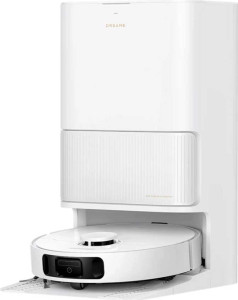
Dreame L40s Ultra AE
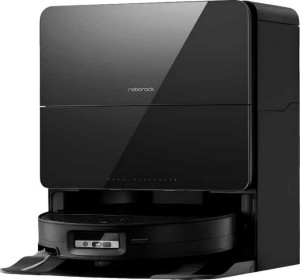
Roborock Saros 10

Dreame L40s Ultra AE Roborock Saros 10

Overview

When choosing between the Dreame L40s Ultra AE and the Roborock Saros 10, you are looking at two high-end robot vacuums that share a strong common foundation — including HEPA filtration, self-emptying docking stations, obstacle sensing, and full smart home compatibility — yet diverge noticeably in areas like battery life, suction power, and physical design. This detailed spec comparison will help you identify which of these premium cleaners is the right match for your home.

Common Features

  • Both products include a HEPA filter.
  • Both products have an allergy filter.
  • Both products are compatible with Google Assistant.
  • Both products work with Alexa.
  • Both products have a thickness of 350 mm.
  • Both products come with a 1-year warranty.
  • Both products support mapping.
  • Both products support no-go zones.
  • Both products support remote smartphone control.
  • Both products have an obstacle sensor.
  • Both products support problem area cleaning.
  • Both products are self-emptying.
  • Both products have carpet detection.
  • Neither product gets stuck.
  • Neither product has twin side brushes.
  • Both products include washable filters.
  • Both products automatically adjust their height.
  • Both products use bags.
  • Both products clean all floor types and mop.
  • Neither product has UV light.
  • Neither product has a removable battery.

Main Differences

  • Audible noise is 63 dB on Dreame L40s Ultra AE and 68 dB on Roborock Saros 10.
  • Weight is 4230 g on Dreame L40s Ultra AE and 5000 g on Roborock Saros 10.
  • Width is 350 mm on Dreame L40s Ultra AE and 353 mm on Roborock Saros 10.
  • Height is 103.5 mm on Dreame L40s Ultra AE and 79.8 mm on Roborock Saros 10.
  • Volume is 12678.75 cm³ on Dreame L40s Ultra AE and 9859.29 cm³ on Roborock Saros 10.
  • Estimated empty time is 100 days on Dreame L40s Ultra AE and 49 days on Roborock Saros 10.
  • Docking station size is 91829.58 cm³ on Dreame L40s Ultra AE and 84581.2 cm³ on Roborock Saros 10.
  • Dustbin capacity is 0.32 l on Dreame L40s Ultra AE and 0.27 l on Roborock Saros 10.
  • A display is present on Roborock Saros 10 but not available on Dreame L40s Ultra AE.
  • A full indicator is present on Roborock Saros 10 but not available on Dreame L40s Ultra AE.
  • Suction power is 19000 Pa on Dreame L40s Ultra AE and 22000 Pa on Roborock Saros 10.
  • A dirt sensor is present on Roborock Saros 10 but not available on Dreame L40s Ultra AE.
  • Battery power is 5200 mAh on Dreame L40s Ultra AE and 6400 mAh on Roborock Saros 10.
  • Runtime is 160 min on Dreame L40s Ultra AE and 220 min on Roborock Saros 10.
  • Charge time is 4 hours on Dreame L40s Ultra AE and 2.5 hours on Roborock Saros 10.
  • Operating power consumption is 38W on Dreame L40s Ultra AE and 60W on Roborock Saros 10.
Specs Comparison
Dreame L40s Ultra AE

Dreame L40s Ultra AE

Roborock Saros 10

Roborock Saros 10

General info:
has HEPA filter
audible noise 63 dB 68 dB
has an allergy filter
compatible with Google Assistant
works with Alexa
release date June 2025 February 2025
weight 4230 g 5000 g
width 350 mm 353 mm
height 103.5 mm 79.8 mm
thickness 350 mm 350 mm
volume 12678.75 cm³ 9859.29 cm³
warranty period 1 years 1 years
estimated empty time 100 days 49 days
docking station size 91829.58 cm³ 84581.2 cm³

Both the Dreame L40s Ultra AE and the Roborock Saros 10 share a strong foundation in general usability: each carries a HEPA and allergy filter, full compatibility with both Google Assistant and Alexa, and a 1-year warranty. For allergy-sensitive households, neither has an edge here — both are equally equipped.

Where the differences become meaningful is in physical design and noise. The Saros 10 is notably heavier at 5000 g versus the L40s Ultra AE's 4230 g, yet it achieves a significantly slimmer profile at 79.8 mm tall compared to 103.5 mm — a gap of over 23 mm that allows the Saros 10 to slip under lower furniture. The L40s Ultra AE counters with a quieter operation at 63 dB versus the Saros 10's 68 dB, a difference that is perceptible in quiet home environments. Their footprints are nearly identical in width and thickness.

On the practical maintenance front, the L40s Ultra AE holds a clear advantage: its estimated empty time of 100 days nearly doubles the Saros 10's 49 days, meaning the dustbin requires roughly half as many manual interventions over the course of a year. The L40s Ultra AE's docking station is also larger at 91829.58 cm³ versus 84581.2 cm³, which likely accounts for its greater auto-empty capacity. Overall, the Dreame L40s Ultra AE edges ahead in this group for users who prioritize low maintenance and quieter operation, while the Roborock Saros 10 has the advantage for those needing to navigate low-clearance furniture.

Features:
has mapping
supports no-go zones
supports a remote smartphone
has an obstacle sensor
has problem area cleaning
is self-emptying
has carpet detection
doesn't get stuck
supports virtual barriers
has route mapping
Has voice prompts
auto docking
has anti-fall sensor
can be scheduled
has a remote control
has water level adjustment
supports Wi-Fi
has mop cleaning
has mop raising
has mop drying

Across the entire features spectrum, the Dreame L40s Ultra AE and the Roborock Saros 10 are in complete lockstep. Every capability listed — from mapping and no-go zones to mop cleaning, mop raising, and mop drying — is present on both devices. Neither supports a physical remote control, and both offer the full suite of smart-home essentials: Wi-Fi connectivity, smartphone control, scheduling, and voice prompts.

The mopping feature set is worth highlighting as a collective strength shared by both. The combination of mop raising (lifting the mop pad automatically when carpet is detected) and mop drying (drying the pad inside the dock) represents a genuinely hands-off wet-cleaning experience — and both robots deliver this equally. Similarly, both robots tackle real-world navigation challenges with obstacle sensors, anti-fall sensors, and a ″doesn't get stuck″ designation, suggesting comparable intelligent self-recovery capabilities.

This group results in a complete tie. There is not a single feature differentiator between these two products in this category. Buyers comparing them purely on features will need to look to other specification groups — such as performance, cleaning hardware, or physical design — to find meaningful separation.

Design:
dustbin capacity 0.32 l 0.27 l
Has a display
has twin side brushes
has included washable filters
automatically adjusts its height
Indicates when full
uses bags

The design specs reveal a small but telling split between these two robots. Both use bags for dust collection, include washable filters, automatically adjust height, and forgo twin side brushes — so the shared baseline is solid. The meaningful divergence shows up in two areas: dustbin capacity and onboard intelligence.

The Dreame L40s Ultra AE holds a 0.32 l dustbin compared to the Saros 10's 0.27 l — an 18% difference that matters most during long cleaning sessions in larger homes, where a smaller bin may require the robot to return to dock sooner to empty. On the other side, the Roborock Saros 10 counters with two practical advantages: an onboard display and a full-bin indicator. The display provides at-a-glance status without needing a smartphone app, while the full-bin alert is a genuinely useful quality-of-life feature that the L40s Ultra AE lacks entirely — meaning users must manually check or rely on the app to know when the bin needs attention.

This group ends in a narrow split depending on priorities. The Dreame L40s Ultra AE has the edge in raw dustbin capacity, which supports less-interrupted cleaning. But the Roborock Saros 10 offers more user-facing convenience through its display and full-bin notification. Users who value autonomy and capacity lean toward the Dreame; those who prefer tactile feedback and proactive alerts will find the Saros 10 more thoughtfully designed.

Cleaning power:
suction power 19000 Pa 22000 Pa
cleans all floor types
mops
has a dirt sensor
has UV light

Suction power is where the Roborock Saros 10 pulls ahead most concretely in this group. Its 22000 Pa of suction outpaces the Dreame L40s Ultra AE's 19000 Pa by roughly 16% — a gap that translates to more effective pickup of embedded debris, fine dust, and pet hair, particularly on carpets or textured surfaces where particles resist easy extraction. Both robots clean all floor types and include mopping, so the suction difference is the primary performance variable here.

The Saros 10 also carries a dirt sensor, which the L40s Ultra AE lacks. This feature allows the robot to detect concentrated soiling and automatically increase cleaning passes or suction intensity in affected areas, rather than applying uniform effort across the entire floor. In practical terms, this means the Saros 10 can self-optimize its cleaning without user input — a meaningful advantage in homes with uneven dirt distribution. Neither robot offers UV light sanitization, so that is a non-factor in this comparison.

The Roborock Saros 10 holds a clear edge in cleaning power. The combination of higher raw suction and an adaptive dirt sensor gives it both a quantitative and qualitative advantage over the Dreame L40s Ultra AE in this category. For users in high-traffic homes or households with pets, these differences are likely to be noticeable in day-to-day cleaning results.

Power:
battery power 5200 mAh 6400 mAh
runtime 160 min 220 min
charge time 4 hours 2.5 hours
operating power consumption 38W 60W
has a removable battery

Battery and runtime specs tell a decisive story here. The Roborock Saros 10 carries a 6400 mAh battery against the Dreame L40s Ultra AE's 5200 mAh, and that larger capacity directly funds its standout runtime advantage: 220 minutes versus 160 minutes — a full hour more per charge. For larger homes or multi-room layouts, that extra 60 minutes can mean the difference between completing a full clean in a single run versus requiring a mid-session recharge and resume cycle.

The charge time picture flips the narrative further in the Saros 10's favor. Despite its larger battery, it recharges in just 2.5 hours, while the L40s Ultra AE takes 4 hours to reach full charge — a 60% longer wait. The trade-off is power consumption: the Saros 10 draws 60W during operation compared to the L40s Ultra AE's more frugal 38W, which accounts for both the faster charging and its higher suction output noted in other groups. Over time, the Saros 10 will consume meaningfully more electricity per cleaning session. Neither robot offers a removable battery, so long-term serviceability is equal.

The Roborock Saros 10 dominates this category. Its combination of longer runtime and faster recharge makes it significantly more practical for demanding cleaning schedules, and the higher energy draw is a reasonable trade-off for most users. The Dreame L40s Ultra AE is the more energy-efficient option, but its shorter runtime and slower charge cycle put it at a real disadvantage for larger spaces.

Comparison Summary & Verdict

Both the Dreame L40s Ultra AE and the Roborock Saros 10 are accomplished premium robot vacuums, but they cater to subtly different priorities. The Dreame L40s Ultra AE stands out with its quieter operation at 63 dB, a larger dustbin of 0.32 l, a longer estimated empty time of 100 days, and a more compact weight of 4230 g — making it an excellent choice for noise-sensitive households that value a low-maintenance, set-and-forget experience. The Roborock Saros 10, on the other hand, counters with superior 22000 Pa suction power, a significantly longer 220-minute runtime, faster 2.5-hour charging, a built-in dirt sensor, and a handy display with a full indicator — features that appeal to users who want maximum cleaning performance and smarter on-device feedback. Choose the Dreame L40s Ultra AE for quiet efficiency and extended autonomy; choose the Roborock Saros 10 for raw cleaning power and advanced onboard intelligence.

Dreame L40s Ultra AE
Buy Dreame L40s Ultra AE if...

Buy the Dreame L40s Ultra AE if you want a quieter robot vacuum with a larger dustbin, longer time between empties, and a lighter, more compact build.

Roborock Saros 10
Buy Roborock Saros 10 if...

Buy the Roborock Saros 10 if you prioritize stronger suction power, a longer battery runtime, faster charging, and smarter onboard features like a dirt sensor and full indicator display.