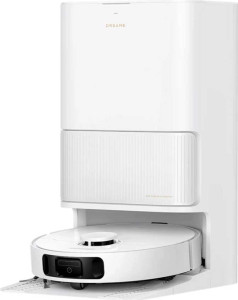
Dreame L40s Ultra AE
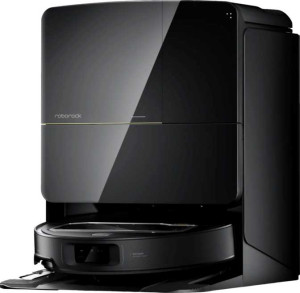
Roborock Saros Z70

Dreame L40s Ultra AE Roborock Saros Z70

Overview

When choosing between the Dreame L40s Ultra AE and the Roborock Saros Z70, you are looking at two premium self-emptying robot vacuums that share a strong common foundation yet take noticeably different approaches to cleaning power, battery endurance, and everyday usability. Both models handle all floor types, support smart home integration, and offer autonomous dust disposal, making the finer distinctions all the more critical to examine before making your decision.

Common Features

  • Both products include a HEPA filter.
  • Both products include an allergy filter.
  • Both products are compatible with Google Assistant.
  • Both products work with Alexa.
  • Both products have a thickness of 350 mm.
  • Both products come with a 1-year warranty.
  • Both products support mapping.
  • Both products support no-go zones.
  • Both products support remote smartphone control.
  • Both products have an obstacle sensor.
  • Both products support problem area cleaning.
  • Both products are self-emptying.
  • Both products have carpet detection.
  • Neither product has twin side brushes.
  • Both products include washable filters.
  • Both products automatically adjust their height.
  • Both products use bags.
  • Both products clean all floor types.
  • Both products can mop.
  • UV light is not available on either product.
  • Neither product has a removable battery.

Main Differences

  • Audible noise is 63 dB on Dreame L40s Ultra AE and 68 dB on Roborock Saros Z70.
  • Weight is 4230 g on Dreame L40s Ultra AE and 5000 g on Roborock Saros Z70.
  • Width is 350 mm on Dreame L40s Ultra AE and 353 mm on Roborock Saros Z70.
  • Height is 103.5 mm on Dreame L40s Ultra AE and 79.8 mm on Roborock Saros Z70.
  • Volume is 12678.75 cm³ on Dreame L40s Ultra AE and 9859.29 cm³ on Roborock Saros Z70.
  • Estimated empty time is 100 days on Dreame L40s Ultra AE and 49 days on Roborock Saros Z70.
  • Docking station size is 91829.58 cm³ on Dreame L40s Ultra AE and 88315.8 cm³ on Roborock Saros Z70.
  • Dustbin capacity is 0.32 l on Dreame L40s Ultra AE and 0.4 l on Roborock Saros Z70.
  • A display is present on Roborock Saros Z70 but not available on Dreame L40s Ultra AE.
  • A full indicator is present on Roborock Saros Z70 but not available on Dreame L40s Ultra AE.
  • Suction power is 19000 Pa on Dreame L40s Ultra AE and 22000 Pa on Roborock Saros Z70.
  • Number of cleaning modes is 4 on Dreame L40s Ultra AE and 10 on Roborock Saros Z70.
  • A dirt sensor is present on Roborock Saros Z70 but not available on Dreame L40s Ultra AE.
  • Battery power is 5200 mAh on Dreame L40s Ultra AE and 6400 mAh on Roborock Saros Z70.
  • Runtime is 160 min on Dreame L40s Ultra AE and 290 min on Roborock Saros Z70.
  • Charge time is 4 hours on Dreame L40s Ultra AE and 2.5 hours on Roborock Saros Z70.
  • Operating power consumption is 38W on Dreame L40s Ultra AE and 60W on Roborock Saros Z70.
Specs Comparison
Dreame L40s Ultra AE

Dreame L40s Ultra AE

Roborock Saros Z70

Roborock Saros Z70

General info:
has HEPA filter
audible noise 63 dB 68 dB
has an allergy filter
compatible with Google Assistant
works with Alexa
release date June 2025 January 2025
weight 4230 g 5000 g
width 350 mm 353 mm
height 103.5 mm 79.8 mm
thickness 350 mm 350 mm
volume 12678.75 cm³ 9859.29 cm³
warranty period 1 years 1 years
estimated empty time 100 days 49 days
docking station size 91829.58 cm³ 88315.8 cm³

Both robots share the same essential smart-home foundation: HEPA and allergy filtration, full compatibility with Google Assistant and Alexa, and identical 1-year warranties. Their footprints are virtually the same at 350 mm × 350 mm, meaning neither has a navigational edge in tight spaces laterally. The real physical divergence is in height: the Saros Z70 sits at just 79.8 mm tall versus the L40s Ultra AE's 103.5 mm, giving the Z70 a meaningful advantage in slipping under low-clearance furniture like sofas and bed frames where many messes accumulate.

On acoustics, the L40s Ultra AE runs at 63 dB compared to the Z70's 68 dB. A 5 dB gap is not subtle — it represents roughly a perceived doubling in loudness, which matters significantly if you run cleaning cycles during calls, sleep hours, or in open-plan living areas. The L40s Ultra AE is the quieter machine by a clear margin. Weight also differs: the Z70 at 5000 g is about 770 g heavier than the L40s Ultra AE's 4230 g, though for a robot vacuum this mainly affects portability between floors rather than cleaning performance.

Perhaps the most practically significant differentiator is the estimated empty time: the L40s Ultra AE can go approximately 100 days before its dust bag needs attention, versus just 49 days for the Z70 — roughly twice as long between maintenance interventions. This translates directly to less hands-on upkeep in busy households. Overall, the Dreame L40s Ultra AE holds the edge in general usability thanks to lower noise and far less frequent emptying, while the Roborock Saros Z70 counters with its slimmer profile for under-furniture reach.

Features:
has mapping
supports no-go zones
supports a remote smartphone
has an obstacle sensor
has problem area cleaning
is self-emptying
has carpet detection
doesn't get stuck
supports virtual barriers
has route mapping
Has voice prompts
auto docking
has anti-fall sensor
can be scheduled
has a remote control
has water level adjustment
supports Wi-Fi
has mop cleaning
has mop raising
has mop drying

Across every single feature in this group, the Dreame L40s Ultra AE and the Roborock Saros Z70 are in complete lockstep. Both deliver the full modern premium feature set: mapping with no-go zones and virtual barriers, obstacle sensing, anti-fall protection, carpet detection, and problem-area cleaning. The complete mop suite — cleaning, raising, and drying — is present on both, as is self-emptying, auto docking, scheduling, water level adjustment, and Wi-Fi connectivity with smartphone remote control.

This level of parity is notable. It means neither robot cuts corners on automation or convenience. Features like mop raising (automatically lifting the mop pad over carpets) and mop drying (reducing mildew buildup in the dock) are no longer differentiators here — they are table stakes that both products fully meet. The absence of a physical remote control on both is equally shared and reflects the industry-wide shift toward app-first control paradigms.

The verdict for this group is an unambiguous tie. The feature sets are functionally identical across all 20 tracked specifications. A buyer cannot use this category to separate these two robots — the decision will come down entirely to other groups such as cleaning performance, navigation hardware, or the general characteristics analyzed previously.

Design:
dustbin capacity 0.32 l 0.4 l
Has a display
has twin side brushes
has included washable filters
automatically adjusts its height
Indicates when full
uses bags

The shared design DNA here is solid: both robots use bagged collection with washable filters and automatically adjust their height, meaning neither requires manual intervention for mixed floor types and both keep fine dust sealed during emptying. The single-side-brush configuration is also identical, so edge-cleaning geometry is not a differentiator.

Where the Roborock Saros Z70 pulls ahead is in two practical details. Its onboard dustbin is 0.4 l versus the L40s Ultra AE's 0.32 l — a 25% larger capacity that provides more buffer between empties, particularly useful in high-debris environments or multi-pet households. More meaningfully, the Saros Z70 also includes a full indicator that alerts you when the bin is at capacity, whereas the L40s Ultra AE offers no such warning. Without it, users must rely on the schedule or intuition to know when to intervene, which somewhat undercuts the convenience of an otherwise autonomous system.

The Saros Z70 additionally features an onboard display, which the L40s Ultra AE lacks entirely. For at-a-glance status checks without reaching for a phone, this is a genuine quality-of-life advantage. Taken together, the Roborock Saros Z70 holds a clear edge in this group — not through any single dramatic difference, but through a consistent set of design touches that reduce the friction of day-to-day ownership.

Cleaning power:
suction power 19000 Pa 22000 Pa
cleans all floor types
cleaning modes 4 10
mops
has a dirt sensor
has UV light

Raw suction is where the gap opens up first. The Roborock Saros Z70 delivers 22,000 Pa of suction against the Dreame L40s Ultra AE's 19,000 Pa — a roughly 16% advantage that translates most noticeably on deep-pile carpets and in corners where compacted debris resists lighter airflow. For hard floors, both are more than sufficient, but in carpet-heavy homes the Saros Z70's headroom is a real functional edge.

The cleaning mode count tells a similarly one-sided story: 10 modes on the Saros Z70 versus 4 on the L40s Ultra AE. More modes mean finer-grained control over how the robot behaves in different rooms or on different surfaces — users can tailor intensity, pattern, and mop behavior with considerably more granularity. The Saros Z70 also adds a dirt sensor, which automatically intensifies cleaning when it detects a high-debris area. This is a meaningful intelligence upgrade: rather than applying uniform effort across the entire floor, the robot concentrates power where it is actually needed, improving both thoroughness and efficiency. The L40s Ultra AE has no equivalent sensor.

Both robots mop and handle all floor types equally on paper, and neither offers UV sanitization. But the cumulative weight of stronger suction, a far broader mode range, and adaptive dirt detection gives the Roborock Saros Z70 a clear and well-rounded advantage in this group — particularly for households with carpets or higher-than-average cleaning demands.

Power:
battery power 5200 mAh 6400 mAh
runtime 160 min 290 min
charge time 4 hours 2.5 hours
operating power consumption 38W 60W
has a removable battery

The battery story here is decisively in the Roborock Saros Z70's favor. Its 6,400 mAh pack versus the Dreame L40s Ultra AE's 5,200 mAh is a 23% capacity advantage, but the real-world runtime gap is even more dramatic: 290 minutes versus 160 minutes — nearly double. For larger homes, this is the difference between completing a full clean in a single uninterrupted run versus requiring a mid-job return to the dock to recharge, which disrupts cleaning patterns and extends total job time considerably.

Charge time flips the equation partially back toward the Saros Z70 again: it refills in 2.5 hours compared to the L40s Ultra AE's 4 hours. A faster charge means less total downtime between sessions, which compounds the runtime advantage — the Saros Z70 not only runs longer but recovers faster when it does need power. The trade-off is power consumption: the Saros Z70 draws 60W during operation against the L40s Ultra AE's 38W, meaning it will have a higher energy footprint over time. For most users the cost difference will be negligible, but it is worth noting for those running multiple daily cycles.

Neither robot offers a removable battery, so long-term serviceability is identical. Overall, the Roborock Saros Z70 holds a commanding advantage in this group — its combination of significantly longer runtime and faster recharge makes it the substantially more capable machine for larger floor plans or demanding daily cleaning routines.

Comparison Summary & Verdict

After examining every specification, these two robots serve overlapping but distinct audiences. The Dreame L40s Ultra AE stands out for its quieter operation at 63 dB, its significantly lighter 4230 g build, and its impressive 100-day empty cycle, making it ideal for noise-sensitive households that want minimal maintenance involvement. The Roborock Saros Z70, on the other hand, dominates in raw cleaning capability with 22000 Pa suction, 10 cleaning modes, a built-in dirt sensor, a longer 290-minute runtime, and faster 2.5-hour recharging, making it the stronger choice for larger homes or users who demand maximum versatility and hands-on control via its onboard display.

Dreame L40s Ultra AE
Buy Dreame L40s Ultra AE if...

Buy the Dreame L40s Ultra AE if you prioritize quieter operation, a lighter unit, and an exceptionally long 100-day automatic empty cycle that minimizes maintenance.

Roborock Saros Z70
Buy Roborock Saros Z70 if...

Buy the Roborock Saros Z70 if you need superior suction power, a much longer battery runtime, more cleaning modes, and faster recharging for larger or more demanding cleaning tasks.