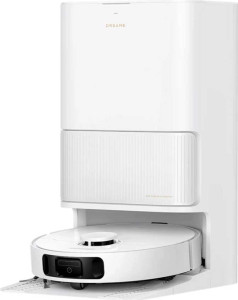
Dreame L40s Ultra AE
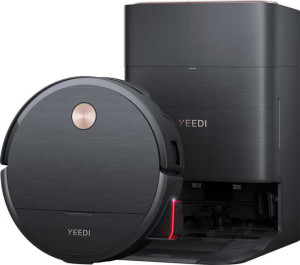
Yeedi S16 Plus

Dreame L40s Ultra AE Yeedi S16 Plus

Overview

When choosing between the Dreame L40s Ultra AE and the Yeedi S16 Plus, robot vacuum enthusiasts face a genuinely interesting dilemma. Both models share a strong foundation — HEPA filtration, self-emptying docks, mopping capability, and smart home integration — yet they diverge meaningfully in areas like suction power, battery life, and core design philosophy. This detailed spec comparison will help you understand exactly where each robot pulls ahead.

Common Features

  • Both products include a HEPA filter.
  • Both products include an allergy filter.
  • Both products are compatible with Google Assistant.
  • Both products work with Alexa.
  • Both products come with a 1-year warranty.
  • Both products have mapping capability.
  • Both products support no-go zones.
  • Both products support remote smartphone control.
  • Both products have an obstacle sensor.
  • Both products support problem area cleaning.
  • Both products are self-emptying.
  • Both products have carpet detection.
  • Both products do not get stuck.
  • Neither product has a display.
  • Neither product has twin side brushes.
  • Both products include washable filters.
  • Both products clean all floor types.
  • Both products offer 4 cleaning modes.
  • Both products are capable of mopping.
  • Both products have an auto-off feature.

Main Differences

  • Audible noise is 63 dB on Dreame L40s Ultra AE and 65 dB on Yeedi S16 Plus.
  • Weight is 4230 g on Dreame L40s Ultra AE and 4100 g on Yeedi S16 Plus.
  • Width is 350 mm on Dreame L40s Ultra AE and 352 mm on Yeedi S16 Plus.
  • Height is 103.5 mm on Dreame L40s Ultra AE and 99 mm on Yeedi S16 Plus.
  • Thickness is 350 mm on Dreame L40s Ultra AE and 353 mm on Yeedi S16 Plus.
  • Volume is 12678.75 cm³ on Dreame L40s Ultra AE and 12301.344 cm³ on Yeedi S16 Plus.
  • Estimated empty time is 100 days on Dreame L40s Ultra AE and 90 days on Yeedi S16 Plus.
  • Docking station size is 91829.58 cm³ on Dreame L40s Ultra AE and 81796 cm³ on Yeedi S16 Plus.
  • Virtual barrier support is available on Dreame L40s Ultra AE but not on Yeedi S16 Plus.
  • Dustbin capacity is 0.32 l on Dreame L40s Ultra AE and 0.3 l on Yeedi S16 Plus.
  • Automatic height adjustment is present on Dreame L40s Ultra AE but not available on Yeedi S16 Plus.
  • Full indicator is present on Yeedi S16 Plus but not available on Dreame L40s Ultra AE.
  • Dreame L40s Ultra AE uses bags for dust collection, while Yeedi S16 Plus does not.
  • Suction power is 19000 Pa on Dreame L40s Ultra AE and 16600 Pa on Yeedi S16 Plus.
  • A dirt sensor is present on Yeedi S16 Plus but not available on Dreame L40s Ultra AE.
  • UV light is present on Yeedi S16 Plus but not available on Dreame L40s Ultra AE.
  • Battery power is 5200 mAh on Dreame L40s Ultra AE and 6400 mAh on Yeedi S16 Plus.
  • Runtime is 160 min on Dreame L40s Ultra AE and 252 min on Yeedi S16 Plus.
  • Charge time is 4 hours on Dreame L40s Ultra AE and 3 hours on Yeedi S16 Plus.
  • Operating power consumption is 38W on Dreame L40s Ultra AE and 100W on Yeedi S16 Plus.
  • A removable battery is available on Yeedi S16 Plus but not on Dreame L40s Ultra AE.
Specs Comparison
Dreame L40s Ultra AE

Dreame L40s Ultra AE

Yeedi S16 Plus

Yeedi S16 Plus

General info:
has HEPA filter
audible noise 63 dB 65 dB
has an allergy filter
compatible with Google Assistant
works with Alexa
release date June 2025 April 2025
weight 4230 g 4100 g
width 350 mm 352 mm
height 103.5 mm 99 mm
thickness 350 mm 353 mm
volume 12678.75 cm³ 12301.344 cm³
warranty period 1 years 1 years
estimated empty time 100 days 90 days
docking station size 91829.58 cm³ 81796 cm³

Both the Dreame L40s Ultra AE and the Yeedi S16 Plus share a strong baseline of general features: HEPA and allergy filtration, full smart home integration via both Google Assistant and Alexa, and a one-year warranty. For users with allergies or pets, neither has an edge on filtration capability — both are equally equipped.

Where differences emerge is in the details. The Dreame is marginally louder at 63 dB versus the Yeedi's 65 dB — a 2 dB gap that, while technically measurable, is barely perceptible to the human ear in practice. Physically, the Yeedi is slightly more compact: its 99 mm height versus the Dreame's 103.5 mm gives it a small but real advantage at navigating under low-clearance furniture. Its docking station footprint is also notably smaller at 81,796 cm³ compared to the Dreame's 91,829 cm³, which matters in tighter living spaces. On the other hand, the Dreame's dustbin is estimated to go 100 days before emptying versus the Yeedi's 90 days — a meaningful convenience advantage for low-maintenance users.

Overall, this group is closely matched. The Yeedi S16 Plus holds a slight edge for space-constrained homes thanks to its lower profile and smaller dock, while the Dreame L40s Ultra AE edges ahead on bin autonomy. Neither product has a dominant general-info advantage; the decision here largely comes down to whether floor clearance and dock footprint or longer dustbin intervals matter more to the individual buyer.

Features:
has mapping
supports no-go zones
supports a remote smartphone
has an obstacle sensor
has problem area cleaning
is self-emptying
has carpet detection
doesn't get stuck
supports virtual barriers
has route mapping
Has voice prompts
auto docking
has anti-fall sensor
can be scheduled
has a remote control
has water level adjustment
supports Wi-Fi
has mop cleaning
has mop raising
has mop drying

Across the features category, these two robots are remarkably well-matched. Both offer a comprehensive modern skill set: full mapping with no-go zones, obstacle sensing, problem-area cleaning, carpet detection, anti-fall protection, self-emptying, auto-docking, and a complete mopping suite that includes mop raising, cleaning, and drying. For the vast majority of users, either robot will deliver an equally capable autonomous cleaning experience out of the box.

The one concrete differentiator in this group is virtual barriers — supported by the Dreame L40s Ultra AE but absent on the Yeedi S16 Plus. In practice, virtual barriers let users draw invisible boundary lines within a single room, offering finer spatial control than no-go zones alone. This matters in open-plan homes where you want to block off a specific corridor or section of a room without excluding an entire mapped zone. The Yeedi's lack of this feature is a real limitation for users who need that level of precision, even though no-go zones cover many common use cases.

The Dreame L40s Ultra AE takes a clear, if narrow, edge here. The feature gap is small in absolute terms, but virtual barriers add meaningful flexibility in complex floor plans. Users with straightforward, compartmentalized home layouts may never miss the feature on the Yeedi — but for anyone managing open or multi-zone spaces, the Dreame's advantage is tangible.

Design:
dustbin capacity 0.32 l 0.3 l
Has a display
has twin side brushes
has included washable filters
automatically adjusts its height
Indicates when full
uses bags

The design category surfaces some genuinely meaningful trade-offs between these two robots. The most consequential split is in dust collection: the Dreame L40s Ultra AE uses bags, while the Yeedi S16 Plus is bagless. Bags contain debris more hygienically during disposal — a real benefit for allergy sufferers — but represent an ongoing consumable cost. Bagless systems are cheaper to maintain over time but can release fine particles back into the air when emptied. Neither approach is objectively superior; it comes down to personal preference and running-cost tolerance.

Two other design choices cut in opposite directions. The Dreame's ability to automatically adjust its height is a practical advantage on mixed-flooring homes, allowing it to seamlessly transition between hard floors and rugs without manual intervention or getting stuck. The Yeedi counters with a full-bin indicator, which the Dreame lacks — a small but useful quality-of-life feature that tells you when the onboard dustbin needs attention, rather than leaving you to guess. The dustbin capacities themselves (0.32 l vs 0.3 l) are too close to matter in practice.

This group ends in a genuine split rather than a clear winner. The Dreame L40s Ultra AE has a practical edge for multi-surface homes thanks to automatic height adjustment, while the Yeedi S16 Plus offers a lower-maintenance, bagless setup with helpful full-bin feedback. The ″right″ choice here depends almost entirely on whether the user prioritizes clean, contained disposal or ongoing cost savings.

Cleaning power:
suction power 19000 Pa 16600 Pa
cleans all floor types
cleaning modes 4 4
mops
has a dirt sensor
has UV light

Suction power is where the Dreame L40s Ultra AE makes its strongest statement in this comparison. At 19,000 Pa versus the Yeedi S16 Plus's 16,600 Pa, the Dreame delivers roughly 14% more suction — a gap that is meaningful in real-world terms. Higher Pascal ratings translate directly to better performance on deep-pile carpets and more reliable pickup of heavier debris like pet litter or rice. Both robots clean all floor types and share the same four cleaning modes, so the structural capability is equal; it is the raw pulling force where the Dreame pulls ahead.

The Yeedi compensates with two features the Dreame lacks: a dirt sensor and UV light. The dirt sensor allows the robot to detect and re-clean particularly soiled areas automatically, which can partially offset the suction gap in everyday messes by applying more passes where needed. The UV light adds a layer of surface sanitization — relevant for households with hygiene concerns, though its practical efficacy depends on dwell time and coverage. These are genuine additions, not gimmicks, but they address different aspects of cleanliness than raw suction does.

For cleaning power specifically, the Dreame L40s Ultra AE holds the advantage — its suction lead is substantial enough to matter on challenging surfaces. The Yeedi's dirt sensor and UV light are useful complements, but they do not close the gap when brute vacuuming performance is the primary measure. Users with heavy-traffic floors or thick carpets will find the Dreame more capable; those prioritizing smart soil detection and sanitization on predominantly hard floors may find the Yeedi's feature set more aligned with their needs.

Power:
battery power 5200 mAh 6400 mAh
runtime 160 min 252 min
charge time 4 hours 3 hours
operating power consumption 38W 100W
has a removable battery
has auto-off

The power category is dominated by the Yeedi S16 Plus on nearly every headline metric. Its 6,400 mAh battery dwarfs the Dreame's 5,200 mAh, and the real-world impact is dramatic: a runtime of 252 minutes versus just 160 minutes — nearly an hour and a half longer per charge. For large homes or multi-room cleaning sessions, that gap can mean the difference between completing a full clean in a single run versus requiring a mid-clean recharge. The Yeedi also recharges faster, returning to full capacity in 3 hours compared to the Dreame's 4 hours, and uniquely offers a removable battery, which extends the robot's long-term serviceability.

The one figure that cuts against the Yeedi is operating power consumption: 100W versus the Dreame's notably lean 38W. This means the Yeedi draws more than 2.5 times the electricity during operation. For users running the robot daily, that difference will show up on energy bills over time. The Dreame's efficiency also partly explains its lower battery capacity — it simply needs less energy to run. Still, it is worth noting that absolute energy cost for a robot vacuum remains modest regardless of wattage, so this gap is a consideration rather than a dealbreaker.

The Yeedi S16 Plus holds a clear advantage in this group. The combination of longer runtime, faster charging, and a removable battery makes it the stronger choice for anyone prioritizing uninterrupted cleaning coverage and long-term battery maintainability. The Dreame's efficiency edge is real but unlikely to outweigh a 92-minute runtime deficit for most users.

Comparison Summary & Verdict

After examining every spec, both robots prove capable, but they cater to different priorities. The Dreame L40s Ultra AE leads with a class-topping 19000 Pa suction power, automatic height adjustment, virtual barrier support, and a longer estimated empty time of 100 days — making it the stronger pick for deep-cleaning performance and hands-off convenience. The Yeedi S16 Plus, on the other hand, counters with a significantly longer 252-minute runtime, a larger 6400 mAh removable battery, faster 3-hour charging, a built-in dirt sensor, and UV light — advantages that suit larger homes and users who value extended, uninterrupted cleaning sessions. If raw cleaning power and smarter zone control matter most, lean toward the Dreame. If battery endurance and sensor-driven cleaning intelligence are your priority, the Yeedi is the more compelling choice.

Dreame L40s Ultra AE
Buy Dreame L40s Ultra AE if...

Buy the Dreame L40s Ultra AE if you want maximum suction power, virtual barrier support, and automatic height adjustment with a longer 100-day empty cycle for truly low-maintenance cleaning.

Yeedi S16 Plus
Buy Yeedi S16 Plus if...

Buy the Yeedi S16 Plus if you need a longer runtime of up to 252 minutes, a removable battery, faster charging, and added cleaning intelligence from a built-in dirt sensor and UV light.