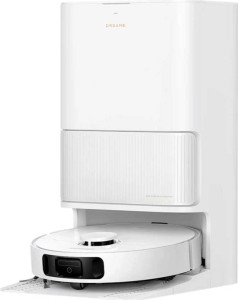
Dreame L40s Ultra CE
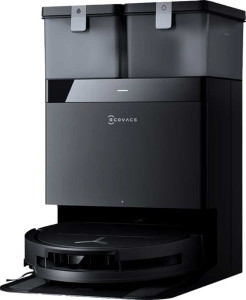
Ecovacs Deebot T50 Omni

Dreame L40s Ultra CE Ecovacs Deebot T50 Omni

Overview

When shopping for a high-end robot vacuum, the choice between the Dreame L40s Ultra CE and the Ecovacs Deebot T50 Omni is far from straightforward. Both machines arrive packed with premium features, yet they take subtly different approaches to cleaning efficiency, battery endurance, and physical design. In this detailed comparison, we put their specs side by side to help you understand exactly where each model excels and which one is the better fit for your home.

Common Features

  • Both products include a HEPA filter.
  • Both products include an allergy filter.
  • Both products produce 63 dB of audible noise.
  • Both products are compatible with Google Assistant.
  • Both products work with Alexa.
  • Mapping is supported on both products.
  • No-go zones are supported on both products.
  • Remote smartphone control is supported on both products.
  • An obstacle sensor is present on both products.
  • Problem area cleaning is available on both products.
  • Both products are self-emptying.
  • Carpet detection is available on both products.
  • Neither product gets stuck.
  • Neither product has a display.
  • Neither product has twin side brushes.
  • Both products include washable filters.
  • Both products automatically adjust their height.
  • Neither product indicates when full.
  • Both products use bags.
  • Both products clean all floor types.
  • Both products offer 4 cleaning modes.
  • Both products can mop.
  • Neither product has UV light.
  • Both products have a 5200 mAh battery.
  • Neither product has a removable battery.
  • Both products have an auto-off feature.

Main Differences

  • Weight is 4230 g on Dreame L40s Ultra CE and 3700 g on Ecovacs Deebot T50 Omni.
  • Width is 350 mm on Dreame L40s Ultra CE and 351.6 mm on Ecovacs Deebot T50 Omni.
  • Height is 103.5 mm on Dreame L40s Ultra CE and 81 mm on Ecovacs Deebot T50 Omni.
  • Thickness is 350 mm on Dreame L40s Ultra CE and 352.7 mm on Ecovacs Deebot T50 Omni.
  • Volume is 12678.75 cm³ on Dreame L40s Ultra CE and 10044.75 cm³ on Ecovacs Deebot T50 Omni.
  • Docking station size is 91829.58 cm³ on Dreame L40s Ultra CE and 88984.35 cm³ on Ecovacs Deebot T50 Omni.
  • Dustbin capacity is 0.32 l on Dreame L40s Ultra CE and 0.26 l on Ecovacs Deebot T50 Omni.
  • Suction power is 13000 Pa on Dreame L40s Ultra CE and 12800 Pa on Ecovacs Deebot T50 Omni.
  • A dirt sensor is present on Ecovacs Deebot T50 Omni but not available on Dreame L40s Ultra CE.
  • Runtime is 160 min on Dreame L40s Ultra CE and 175 min on Ecovacs Deebot T50 Omni.
  • Charge time is 4 hours on Dreame L40s Ultra CE and 3.25 hours on Ecovacs Deebot T50 Omni.
  • Operating power consumption is 38W on Dreame L40s Ultra CE and 75W on Ecovacs Deebot T50 Omni.
Specs Comparison
Dreame L40s Ultra CE

Dreame L40s Ultra CE

Ecovacs Deebot T50 Omni

Ecovacs Deebot T50 Omni

General info:
has HEPA filter
audible noise 63 dB 63 dB
has an allergy filter
compatible with Google Assistant
works with Alexa
release date May 2025 March 2025
weight 4230 g 3700 g
width 350 mm 351.6 mm
height 103.5 mm 81 mm
thickness 350 mm 352.7 mm
volume 12678.75 cm³ 10044.75492 cm³
docking station size 91829.58 cm³ 88984.35 cm³

In terms of smart home compatibility and filtration, these two robots are virtually identical: both carry a HEPA allergy filter and integrate with Google Assistant and Alexa, and both operate at exactly 63 dB of audible noise — a level comparable to a normal conversation. For users choosing between them on these criteria alone, there is no meaningful difference.

Where the two diverge is in physical footprint. The Ecovacs Deebot T50 Omni is noticeably lighter at 3,700 g versus the Dreame L40s Ultra CE's 4,230 g — a difference of 530 g that matters when manually lifting the robot for maintenance or transport. More practically, the T50 Omni stands only 81 mm tall compared to the L40s Ultra CE's 103.5 mm, translating to a robot body volume of roughly 10,045 cm³ versus 12,679 cm³. That lower profile gives the T50 Omni a real-world edge in navigating under sofas, beds, and low furniture where the L40s Ultra CE may simply not fit.

The docking stations are close in size — 88,984 cm³ for the T50 Omni versus 91,830 cm³ for the L40s Ultra CE — so neither holds a significant advantage in base footprint. Overall, the T50 Omni has the edge in this group: its lighter weight and considerably lower profile make it the more physically versatile robot for homes with limited under-furniture clearance.

Features:
has mapping
supports no-go zones
supports a remote smartphone
has an obstacle sensor
has problem area cleaning
is self-emptying
has carpet detection
doesn't get stuck
supports virtual barriers
has route mapping
Has voice prompts
auto docking
has anti-fall sensor
can be scheduled
has a remote control
has water level adjustment
supports Wi-Fi
has mop cleaning
has mop raising
has mop drying

Across all 20 features in this group, the Dreame L40s Ultra CE and the Ecovacs Deebot T50 Omni are in complete lockstep — every capability present on one is present on the other, and neither offers a remote control. That level of parity at this tier is notable: both robots cover the full spectrum of modern autonomous cleaning, from mapping and no-go zones to obstacle sensing and anti-fall protection, making either a genuinely hands-off daily driver.

The mopping feature set is where premium robots most visibly differentiate themselves from mid-range alternatives, and here again both machines are equally equipped. Mop raising (to protect carpets), mop cleaning (self-washing the pad at the dock), and mop drying (to prevent mildew) are all present on both — a trifecta that eliminates most manual intervention in a typical cleaning cycle. Combined with self-emptying, auto docking, and scheduling, both robots are genuinely set-and-forget systems.

This group is a clear tie. No feature separates these two products; the decision will need to rest on other spec groups such as suction power, battery life, or physical design.

Design:
dustbin capacity 0.32 l 0.26 l
Has a display
has twin side brushes
has included washable filters
automatically adjusts its height
Indicates when full
uses bags

Most design specs here are shared: both robots lack a display, use a single side brush, include washable filters, automatically adjust their height over different floor surfaces, and use bags for dust collection rather than bagless bins. The bagged system is worth noting — it keeps dust more hygienically contained during emptying and reduces allergen exposure, but it does introduce an ongoing consumable cost for both owners equally.

The one measurable difference is dustbin capacity: the Dreame L40s Ultra CE holds 0.32 l on the robot itself, versus 0.26 l on the Ecovacs Deebot T50 Omni. In practical terms, since both are self-emptying systems that offload debris to a dock bag automatically, the robot-side bin capacity rarely becomes a limiting factor during normal use — it only matters if the robot needs to complete a very large cleaning run without docking. The gap of 0.06 l is modest and unlikely to be felt day-to-day.

Neither robot signals when its dock bag is full, meaning users must check manually or track bag changes on their own. Overall, this group is effectively a tie, with the L40s Ultra CE holding a marginal and largely academic edge in on-board bin size.

Cleaning power:
suction power 13000 Pa 12800 Pa
cleans all floor types
cleaning modes 4 4
mops
has a dirt sensor
has UV light

Suction power is the headline spec in this group, and the gap is razor-thin: the Dreame L40s Ultra CE delivers 13,000 Pa versus the Ecovacs Deebot T50 Omni's 12,800 Pa. A difference of 200 Pa at this performance tier is functionally imperceptible — both robots operate well beyond the threshold needed to handle pet hair, fine dust, and debris on hard floors and carpets alike. Both also cover all floor types and offer the same 4 cleaning modes, so neither holds a structural advantage in versatility.

The more meaningful differentiator here is the dirt sensor on the T50 Omni, which the L40s Ultra CE lacks. A dirt sensor allows the robot to detect concentrations of debris in real time and automatically increase passes or suction in heavily soiled areas — a genuinely useful capability in homes with pets or high foot traffic. The L40s Ultra CE, without this sensor, applies the same cleaning logic uniformly across the floor regardless of actual dirt levels.

On raw suction the two are essentially tied, but the Ecovacs Deebot T50 Omni takes the edge in this group thanks to its dirt sensor, which adds an adaptive intelligence layer to cleaning that the Dreame cannot match based on the available data.

Power:
battery power 5200 mAh 5200 mAh
runtime 160 min 175 min
charge time 4 hours 3.25 hours
operating power consumption 38W 75W
has a removable battery
has auto-off

Both robots pack the same 5,200 mAh battery and share auto-off functionality, but the similarities end there. The Ecovacs Deebot T50 Omni delivers a longer runtime of 175 minutes compared to the Dreame L40s Ultra CE's 160 minutes — a 15-minute advantage that can make the difference between completing a full clean of a larger home in one pass or requiring a mid-run recharge and dock cycle.

The charge time gap is equally notable: the T50 Omni returns to full charge in 3.25 hours versus 4 hours for the L40s Ultra CE — nearly 45 minutes faster. For users who run cleaning cycles during the day and want the robot ready again quickly, this is a tangible convenience advantage. Interestingly, the T50 Omni draws significantly more operating power at 75W compared to the L40s Ultra CE's 38W, which likely drives its faster charging capability. The L40s Ultra CE's lower power draw, despite not translating into a runtime lead, does suggest more conservative energy consumption during operation.

The Ecovacs Deebot T50 Omni has a clear edge in this group: it runs longer on the same battery capacity and recharges faster — two practical wins that directly reduce downtime in daily use.

Comparison Summary & Verdict

After reviewing every specification, both robots prove themselves as capable, feature-rich performers that share a strong common foundation — self-emptying docks, HEPA filtration, mopping, mapping, and a generous 5200 mAh battery. The differences, however, are meaningful. The Dreame L40s Ultra CE edges ahead on raw suction power at 13000 Pa, offers a larger 0.32 l dustbin, and draws a notably lower 38W during operation, making it the more energy-efficient choice. On the other side, the Ecovacs Deebot T50 Omni is lighter, significantly slimmer at just 81 mm tall, runs longer on a single charge at 175 minutes, recharges faster in 3.25 hours, and uniquely includes a dirt sensor for smarter cleaning decisions. Choose the Dreame if dustbin size and energy efficiency matter most to you; opt for the Ecovacs if you need a slimmer profile, longer runtime, and intelligent dirt detection.

Dreame L40s Ultra CE
Buy Dreame L40s Ultra CE if...

Buy the Dreame L40s Ultra CE if you prioritize a larger dustbin capacity, slightly higher suction power, and lower energy consumption during operation.

Ecovacs Deebot T50 Omni
Buy Ecovacs Deebot T50 Omni if...

Buy the Ecovacs Deebot T50 Omni if you need a slimmer, lighter robot that runs longer per charge, recharges faster, and uses a built-in dirt sensor for smarter automatic cleaning.